Delirium: Causes, Symptoms, Diagnosis & Treatment — Complete Guide

Updated: 1 day ago
Medically reviewed by Dr. Baraa Alnahhal, MD · Last reviewed: October 2026
Quick Answer: What Is Delirium?
Delirium is a serious, sudden change in mental abilities that causes confusion and loss of awareness of surroundings. Unlike dementia, it develops over hours to days, and symptoms often come and go, worsening at night. It is usually triggered by infection, medicines, surgery or a nutrient imbalance. Because it is often treatable, report sudden confusion to the healthcare team immediately. [1]
What the research says
Simple, non-drug care can prevent delirium in hospital. A Cochrane review of 22 trials (5,718 adults) found that multicomponent non-pharmacological programs probably reduce delirium incidence compared with usual care (10.5% vs 18.4%; risk ratio 0.57, 95% CI 0.46–0.71; 14 trials, 3,693 participants), with no clear effect on in-hospital deaths. (Burton et al., Cochrane Database Syst Rev, 2021) [3]
Delirium is linked to lasting cognitive decline. In a meta-analysis of 24 studies (3,562 patients with delirium and 6,987 without), delirium was associated with significantly worse cognition at least 3 months later (Hedges g = 0.45, 95% CI 0.34–0.57 across 23 studies), and in every study the delirium group had worse cognition at the final time point. (Goldberg et al., JAMA Neurol, 2020) [4]
Reviewing medicines helped in long-term care. In a Cochrane review that found only two trials (3,636 participants), one large cluster-randomized trial (3,538 residents) of a computer-flagged, pharmacist-led medication review reported a large reduction in delirium (12-month hazard ratio 0.42, 95% CI 0.34–0.51); the authors called the overall evidence very limited. (Clegg et al., Cochrane Database Syst Rev, 2014) [5]
Simple hospital routines can prevent delirium. In 852 hospitalized adults aged 70 and older, a program targeting sleep, mobility, hydration, vision, hearing and orientation lowered delirium from 15.0% to 9.9% (Inouye et al., New England Journal of Medicine, 1999 [6]).
The approach works across many hospitals. A meta-analysis of 14 studies of the Hospital Elder Life Program found it roughly halved the odds of delirium (odds ratio 0.47) and cut falls by 42%, while saving hospital costs (Hshieh et al., American Journal of Geriatric Psychiatry, 2018 [7]).
Delirium at a Glance
Core problem: Sudden confusion and reduced awareness of surroundings
Speed of onset: Hours to a few days (dementia takes months to years)
Symptom pattern: Comes and goes; worse at night or in unfamiliar settings
Most at risk: Hospitalized older adults, ICU patients, long-term care residents
Common causes: Infection, medicines, surgery, low sodium, alcohol or drug withdrawal
Three types: Hyperactive, hypoactive, mixed
Diagnosis: Medical history, mental status review, physical/neurological exams, blood and urine tests
Treatment: Address the cause, supportive care, and a calm healing environment
What Is Delirium?
Delirium is a serious, fast-developing change in a person's mental abilities. It causes confusion and makes people unaware of their surroundings.
The speed of onset is its defining feature. Symptoms typically appear over a few hours or a few days, and they often come and go — sometimes disappearing entirely for stretches of time. Symptoms also tend to be worse in dark or unfamiliar settings, such as at night or in a hospital room.
Delirium usually happens alongside another medical problem, such as an infection, pain, or fever. Its effects come from the brain's signaling system: when signals in the brain are not sent and received correctly, confusion results.
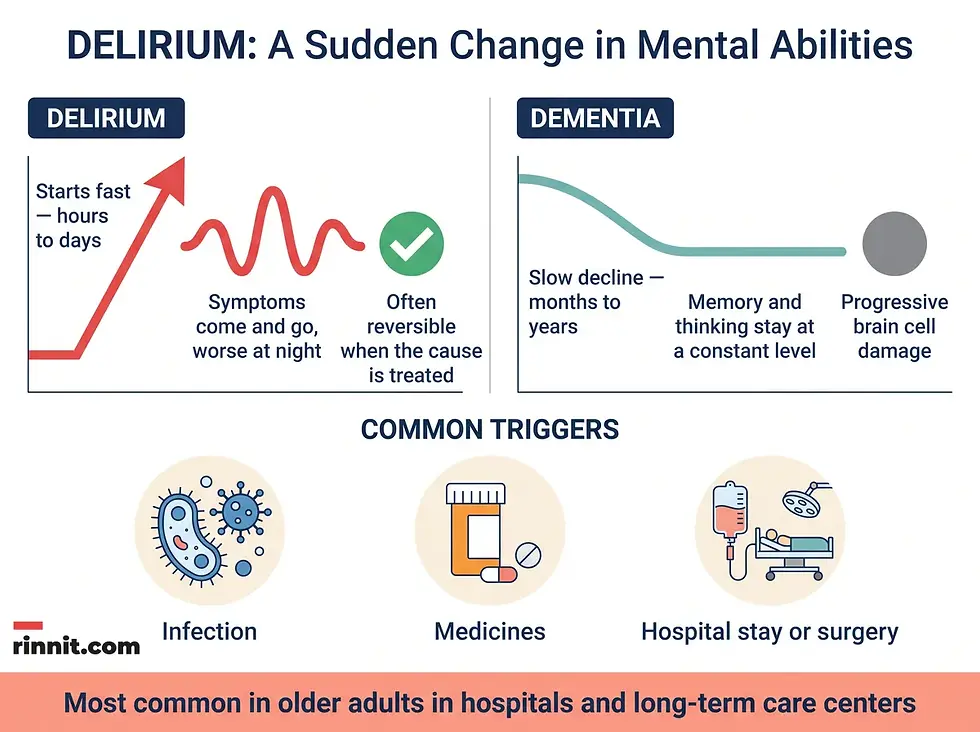
Delirium versus dementia. Delirium starts fast, fluctuates, and is often reversible once the cause is treated — while dementia is a slow, steady decline caused by brain cell damage.
Delirium Symptoms: Three Categories of Warning Signs
Symptoms tend to appear together with another condition and often fluctuate during the day. They fall into three broad groups. [1]
1. Less Awareness of Surroundings
The person may have trouble focusing on a conversation or following changes in topic, get stuck on one idea instead of answering questions, become easily distracted, or withdraw with little activity or response to the world.
2. Poor Thinking Skills
This shows up as poor memory — especially forgetting recent events — not knowing where they are or who they are, trouble with speech or finding words, rambling or hard-to-understand speech, trouble understanding others, and difficulty reading or writing.
3. Behavior and Emotional Changes
These changes can be dramatic: anxiety, fear, or distrust of others; depression; a short temper; sudden elation; lack of interest and emotion; quick mood swings; personality changes; hallucinations (seeing things others don't); restlessness; calling out or moaning; quiet withdrawal; sluggish movement; and flipped sleep habits — awake at night and sleeping through the day.
The 3 Types of Delirium
Hyperactive: Restless, pacing, anxious, quick mood swings, hallucinations, crying out, may resist care. This is the easiest type to recognize.
Hypoactive: Low activity, sluggish, drowsy, dazed, not interacting with others. It is easily missed — mistaken for "just resting."
Mixed: Switches quickly between restless/agitated and sluggish/drowsy. The fluctuating pattern confuses observers.
The hypoactive type deserves special attention: because these patients are quiet and withdrawn, delirium often goes unnoticed until it becomes severe.
Delirium vs. Dementia
Delirium and dementia can look similar, and some people have both. But they are fundamentally different:
Onset speed: Fast — hours to days in delirium; slow — months to years in dementia.
Symptom pattern: Comes and goes, even within one day, in delirium; a fairly constant level, with better and worse times of day, in dementia.
Attention: Hard to stay focused in delirium; usually alert in the early stages of dementia.
Cause: An acute, often treatable trigger in delirium; brain cell damage in dementia, with Alzheimer's disease the most common cause.
Delirium frequently happens in people who already have dementia. But an episode of delirium does not automatically mean someone has dementia — and dementia should not be diagnosed during a delirium episode, because test results may be inaccurate.
Causes: What Triggers Delirium?
Delirium may have a single cause, several causes at once, or sometimes no identifiable cause at all. The most common triggers include: [1]
Infections — urinary tract infections, pneumonia, the flu, or COVID-19, especially in older adults. Fever and new infections are a key cause in children too.
Medicines — either the drugs themselves or their side effects.
Alcohol or drug use or withdrawal.
Serious medical conditions — stroke, heart attack, worsening lung or liver disease, or an injury from a fall.
Nutrient imbalances — low sodium or low calcium levels.
Hospital events — surgery or procedures requiring anesthesia, serious or terminal illness.
Toxin exposure — such as carbon monoxide or other poisons.
Everyday stressors on the brain — poor nutrition, dehydration (loss of body fluid), lack of sleep, intense emotional stress, and pain.
Certain medicine categories are more likely to trigger delirium — alone or in combination — including drugs used to treat pain, sleep disorders, mood disorders (anxiety and depression), allergies, asthma, swelling, Parkinson's disease, and spasms or convulsions.
Risk Factors
Any condition that leads to a hospital stay raises the risk of delirium — especially recovery from surgery or time in the intensive care unit. Delirium is most common in older adults who are hospitalized and in people living in long-term care centers. Additional risk factors include:
Brain disorders such as dementia, stroke, or Parkinson's disease.
Past delirium episodes.
Vision or hearing loss.
Substance use or withdrawal, including alcohol and other drugs.
Multiple medical conditions at the same time.
Complications: How Long Does Delirium Last?
Delirium may last only a few hours, or it may stretch across days, weeks, or even months. The complications depend heavily on how quickly the underlying cause is treated — faster treatment usually means a shorter recovery.
Recovery also depends on how healthy the person was before delirium started:
People in better health are more likely to fully recover their thinking skills.
People with dementia may experience an overall decline in memory and thinking after an episode.
In seriously ill people, delirium is more likely to lead to a general health decline, poor recovery from surgery, a need for long-term care, and a higher risk of death.
When to See a Doctor
Sudden confusion in a loved one is a signal to act quickly:
Contact a healthcare professional as soon as possible — especially if there are also signs of infection, such as a cough or urinary concerns.
If the person is in a hospital or long-term care center, tell the nursing staff or healthcare team right away.
Your knowledge of the person's normal thinking and abilities is a critical part of the diagnosis — describe what has changed.
How Delirium Is Diagnosed
Diagnosis combines recent medical history with physical and mental testing: [2]
Recent medical history: Questions about the past day or two: new infection? new medicine? injury or new pain (such as chest pain)? headaches, weakness, alcohol or drug use?
Mental status review: Checks awareness, attention, and thinking — through conversation or formal tests. Family and caregiver input on recent changes is especially valuable.
Physical and neurological exams: Checks vision, balance, coordination, and reflexes to rule out stroke or other disease as the cause.
Other tests: Blood and urine tests; brain imaging when other information can't make the diagnosis.
Treatment: The 3-Step Approach
Treatment begins by addressing whatever caused the delirium — stopping triggering medicines, treating an infection, or correcting a nutrient deficiency. After that, the focus shifts to creating the best setting for healing the body and calming the brain. [2]
Step 1: Supportive Care
The healthcare team works to prevent additional complications by:
Providing fluids and nutrition.
Assisting with movement.
Treating pain.
Ensuring the person can breathe easily.
Managing bladder control issues and constipation.
Avoiding IV lines or bladder tubes whenever possible.
Keeping surroundings and caregivers consistent and including family members and familiar people in care.
Step 2: Medicines (When Needed)
If you are a family member or caregiver, review all medicines with the healthcare team — some may be stopped or reduced. Medicines may also be prescribed to manage pain (when pain is driving the delirium) or to calm agitation or confusion — specifically when symptoms make medical exams or treatment impossible, put the person or others in danger, or don't improve with other measures. These medicines are usually stopped or lowered once symptoms resolve.
Step 3: A Calm, Familiar Environment
Supportive care extends to the room itself: consistent routines, familiar faces, and an environment matched to the time of day.

A complete guide to delirium — the warning signs to watch, the three types, common triggers, and the step-by-step treatment approach.
Prevention: What Families Can Do
Several habits help prevent delirium or make it less serious when it occurs:
Get good sleep.
Stay calm and aware of surroundings.
Prevent or quickly treat medical concerns, such as infections.
Avoid sleep medicines such as diphenhydramine (found in some allergy and sleep aids).
In the hospital, prevention is harder — room changes, invasive procedures, loud noises, poor lighting, and missed sleep all feed confusion. If you're worried a hospitalized loved one is at risk, speak to the healthcare team.
Coping and Support: A Caregiver's Playbook
Caregivers have real power to prevent and ease delirium. The guidance breaks into four areas:
Encourage good sleep. Provide a calm, quiet setting; use lighting that matches the time of day; keep a regular daytime schedule; and encourage activity during the day.
Foster calmness and awareness. Provide a clock and calendar and use them together; communicate simply about changes in activity; keep familiar objects and pictures nearby without clutter; approach the person calmly and identify yourself; avoid arguments; use comforting touch when it helps; lower noise; and make sure eyeglasses and hearing aids are worn.
Prevent health concerns. Give medicines on schedule; provide plenty of fluids and a healthy diet; encourage regular physical activity; and seek prompt treatment for possible issues like an infection.
Care for the caregiver. Caring for someone with delirium is exhausting. Join a caregiver support group, learn about the condition, ask the healthcare team for pamphlets and resources, and share caregiving with family and friends so you get breaks.
Preparing for the Appointment
If you're the primary caregiver of someone with delirium, you'll likely arrange the appointment and supply the healthcare team with key information.
What You Can Do Beforehand
List all medicines — prescriptions, over-the-counter drugs, and supplements — with doses and any recent changes.
Note the names and contact information of everyone who provides care.
Describe symptoms and when they started, including changes that came before the delirium (pain, fever, coughing).
Write down your questions.
What the Doctor Will Likely Ask
What are the symptoms, and when did they begin?
Any recent fever, cough, urinary tract infection, or signs of pain?
Any recent head injury or trauma?
How were memory, thinking, and everyday independence before symptoms started?
Are medicines being taken as directed — and when was the most recent dose?
Any new medicines, supplements, or changes in alcohol or drug use?
Has the person seemed depressed, withdrawn, unsafe, distrustful, or fearful?
Have they seen or heard things no one else does?
Any new physical symptoms, such as chest or stomach pain?
Delirium FAQ
What is delirium and how fast does it develop?
Delirium is a serious, sudden change in mental abilities that causes confusion and reduced awareness of surroundings. Symptoms typically appear over a few hours or a few days and often come and go, worsening at night or in unfamiliar settings.
How is delirium different from dementia?
Delirium develops quickly over hours or days and fluctuates — symptoms can disappear and return within a single day. Dementia develops slowly over months or years and stays at a relatively constant level. Delirium is usually tied to a treatable trigger, while dementia results from progressive brain cell damage.
What are the three types of delirium?
Hyperactive delirium involves restlessness, agitation, pacing, and sometimes hallucinations — the easiest type to recognize. Hypoactive delirium involves sluggishness, drowsiness, and withdrawal — the easiest to miss. Mixed delirium switches quickly between both patterns.
What commonly causes delirium in older adults?
The most common triggers are infections (especially urinary tract infections and pneumonia), medicines and their side effects, hospital stays and surgery, alcohol or drug use or withdrawal, low sodium levels, and serious medical conditions such as stroke or heart attack. Poor sleep, pain, and stress can contribute as well. [1]
Is delirium reversible?
Often, yes — especially when the underlying cause is found and treated quickly. Recovery time usually depends on how healthy the person was before the episode. However, in seriously ill people, thinking skills may not fully return to their previous level.
Can family members help prevent delirium?
Yes. Encourage good sleep in a calm, quiet setting; keep lighting matched to the time of day; provide a clock and calendar; communicate simply; ensure eyeglasses and hearing aids are used; keep medicines on schedule; provide fluids and a healthy diet; and avoid sleep aids containing diphenhydramine.
Should sudden confusion in an elderly person be treated as an emergency?
Yes. Sudden confusion is not a normal part of aging and usually signals an underlying medical problem such as infection or a medication reaction. Contact the healthcare team immediately — if the person is in a hospital or care center, tell the nursing staff right away.
Conclusion
Delirium is a sudden, fast-developing confusion — not normal aging, not a personality change, and not always dementia. Because it usually has a physical cause, speed matters at every step.
Three lessons to remember from this guide:
Speed defines it: delirium arrives in hours to days and fluctuates — dementia unfolds slowly and steadily.
Look for the trigger: infections, medicines, surgery, low sodium, and withdrawal are the usual suspects — finding and treating the cause is the first and most important step of treatment.
Everyone can help: families prevent delirium through good sleep, familiar surroundings, clear communication, and watching eyeglasses and hearing aids — and caregivers must care for themselves too.
If you're caring for a loved one with memory problems, understanding how delirium differs from progressive memory loss is essential. Our complete guide to Alzheimer's disease explains the slow-onset side of memory decline.
This article is for informational purposes only and is not a substitute for professional medical advice, diagnosis, or treatment. Always consult a qualified healthcare provider about any medical condition.
Related Reading
Mental Status Exam: What It Checks, What Happens and What the Results Mean explains how providers check thinking, mood, behavior and memory, and what abnormal results can mean.
BIMS Score: What the Brief Interview for Mental Status Measures and How to Interpret It explains the 15-point memory screen used in nursing homes.
References
Mayo Clinic Staff. Delirium — Symptoms and causes. Mayo Clinic. April 18, 2026. https://www.mayoclinic.org/diseases-conditions/delirium/symptoms-causes/syc-20371386
Mayo Clinic Staff. Delirium — Diagnosis and treatment. Mayo Clinic. April 18, 2026. https://www.mayoclinic.org/diseases-conditions/delirium/diagnosis-treatment/drc-20371391
Burton JK, Craig LE, Yong SQ, et al. Non-pharmacological interventions for preventing delirium in hospitalised non-ICU patients. Cochrane Database Syst Rev. 2021;7(7):CD013307. PMID 34280303. https://doi.org/10.1002/14651858.CD013307.pub2
Goldberg TE, Chen C, Wang Y, et al. Association of delirium with long-term cognitive decline: a meta-analysis. JAMA Neurol. 2020;77(11):1373-1381. PMID 32658246. https://doi.org/10.1001/jamaneurol.2020.2273
Clegg A, Siddiqi N, Heaven A, Young J, Holt R. Interventions for preventing delirium in older people in institutional long-term care. Cochrane Database Syst Rev. 2014;(1):CD009537. PMID 24488526. https://doi.org/10.1002/14651858.CD009537.pub2
Inouye SK, et al. A multicomponent intervention to prevent delirium in hospitalized older patients. N Engl J Med. 1999;340(9):669-676. PMID 10053175. https://doi.org/10.1056/NEJM199903043400901
Hshieh TT, et al. Hospital Elder Life Program: Systematic Review and Meta-analysis of Effectiveness. Am J Geriatr Psychiatry. 2018;26(10):1015-1033. PMID 30076080. https://doi.org/10.1016/j.jagp.2018.06.007



Comments