Cystitis: Symptoms, Causes, and Treatment

Updated: 3 days ago
Medically reviewed by Dr. Baraa Alnahhal, MD · Last reviewed: October 2026
Quick answer
Cystitis is bladder inflammation, usually from a bacterial UTI caused by E. coli entering through the urethra. Signs include a strong urge to urinate, burning, frequent small amounts of urine and pelvic discomfort. Antibiotics are first-line treatment, taken exactly as prescribed without stopping early. Seek care for fever, back pain or vomiting, which may signal a kidney infection. [1] [2]
What the research says
According to PubMed:
Cranberry products reduce UTI risk in some groups, but not all. A Cochrane review of 50 studies with 8,857 participants found that cranberry products reduced the risk of symptomatic, culture-verified UTIs (risk ratio 0.70, 95% CI 0.58 to 0.84; moderate-certainty evidence from 26 studies with 6,211 participants). The benefit was seen in women with recurrent UTIs (RR 0.74, 95% CI 0.55 to 0.99), in children, and in people prone to UTIs after a medical intervention, but there was little or no benefit in older adults in institutions, pregnant women, or people with bladder-emptying problems. (Williams et al., DOI).
Treating symptoms with ibuprofen instead of antibiotics cuts antibiotic use, but with trade-offs. In a randomized trial of 494 women aged 18 to 65 with typical symptoms of an uncomplicated UTI (42 German general practices), women given ibuprofen for three days instead of a single dose of fosfomycin received significantly fewer antibiotic courses, and two thirds recovered without any antibiotics. However, they had a significantly higher burden of symptoms and more of them developed a kidney infection (pyelonephritis). The authors concluded this is an approach to discuss with women who are willing to avoid immediate antibiotics and accept a somewhat higher burden of symptoms. (Gágyor et al., DOI).
Two commonly used antibiotics performed similarly. A systematic review and meta-analysis of four randomized trials (three in women with uncomplicated UTI) comparing single-dose fosfomycin with nitrofurantoin found no significant differences in clinical cure (RR 0.95, 95% CI 0.81 to 1.12) or microbiological cure (RR 0.96, 95% CI 0.84 to 1.08) within 4 weeks of treatment. (Konwar et al., DOI).
Study details are from PubMed abstracts.
What is cystitis?
Cystitis (sis-TIE-tis) is the medical term for inflammation of the bladder. When tissue becomes inflamed, it swells and feels warm, and the area can become painful. [1]
Most of the time, cystitis happens when bacteria cause an infection. This is a urinary tract infection, or UTI. A bladder infection can be painful and disruptive. It can also become a serious health problem if the infection travels up to the kidneys.
But infection is not the only route. Cystitis can also result from a reaction to certain medicines or radiation therapy. Everyday irritants such as hygiene products, spermicide jelly, or long-term catheter use can inflame the bladder as well. And cystitis can appear as a complication of another illness.
Key fact | What to know |
What it is | Inflammation of the bladder; usually a bacterial urinary tract infection |
Most common cause | E. coli bacteria entering the urethra and multiplying |
Who is affected most | Women, because a shorter urethra gives bacteria a shorter path to the bladder |
Main symptoms | Urgent need to urinate, burning with urination, pelvic pressure or discomfort |
Standard treatment | Antibiotics for three days to a week, taken exactly as prescribed |
If untreated | The infection can spread to the kidneys and cause lasting damage |
How do the bladder and urinary system work?
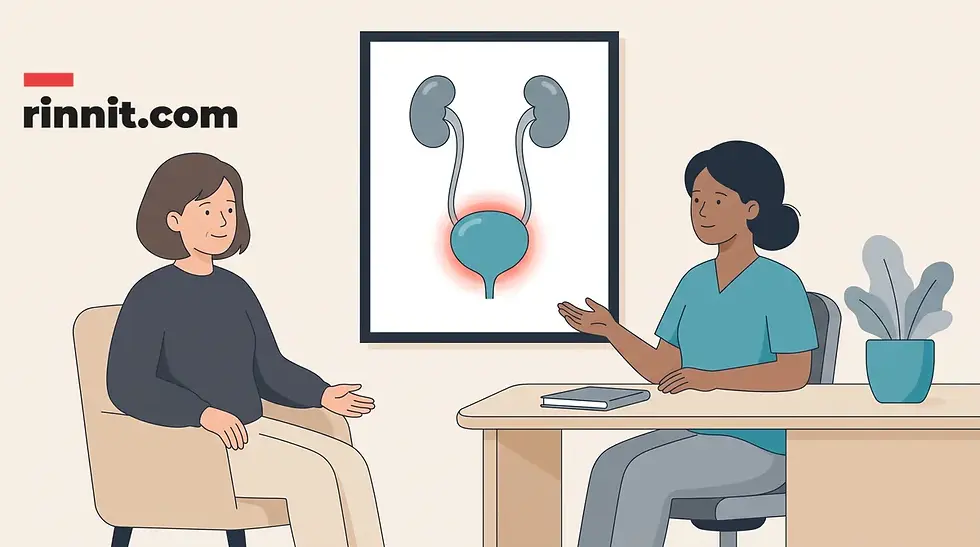
Your urinary system includes the kidneys, ureters, bladder, and urethra, and all four work together to remove waste from your body. [1]
The kidneys are a pair of bean-shaped organs toward the back of the upper abdomen. They filter waste from the blood, regulate the balance of many substances, and produce urine. Narrow tubes called ureters carry urine from the kidneys to the bladder, which stores it until you are ready to urinate. Urine then leaves the body through a small tube called the urethra.
Understanding this pathway matters because cystitis follows it: bacteria enter through the urethra, and without treatment the infection can travel back up toward the kidneys.
What are the symptoms of cystitis?
The signs of cystitis center on urination and the lower abdomen. Symptoms may include: [1]
Symptom | What it feels like |
Urgent need to urinate | A strong, persistent urge that is hard to ignore |
Burning or pain | Discomfort that flares during urination |
Frequent, small amounts | Needing the toilet often but passing little |
Blood in urine (hematuria) | Pink, red, or cola-colored urine |
Cloudy or strong-smelling urine | Urine that looks murky or has an unusual odor |
Pelvic discomfort | Aching or soreness in the pelvis |
Lower abdominal pressure | A feeling of pressure below the belly button |
Low-grade fever | A mild temperature, often with other symptoms |
In young children, new episodes of accidental daytime wetting can also signal a UTI. Nighttime bed-wetting on its own is not likely to be caused by a UTI.
When should you see a doctor about cystitis?
Some cystitis signs mean the infection may be reaching the kidneys. Get medical help right away if you have: [1]
Back or side pain
Fever and chills
Nausea and vomiting
Even without those warning signs, call your healthcare provider if urgent, frequent, or painful urination lasts for several hours or longer, or if you notice blood in your urine. Also call if you have had a UTI before and new symptoms mimic a previous one, or if cystitis symptoms return after you finish antibiotics — you may need a different medicine.
If your child starts having daytime wetting accidents, contact the child's healthcare provider. And in otherwise healthy men, cystitis is rare, so any symptoms should be checked by a provider.
What causes cystitis?
Most cystitis starts when bacteria, usually E. coli, enter the urinary tract through the urethra and multiply.
Bacterial cystitis
Most cystitis starts when bacteria outside the body enter the urinary tract through the urethra and begin to multiply. The great majority of cases are caused by one type of bacteria: Escherichia coli (E. coli), a common gut bacterium. Other types of bacteria can cause infections too. [1]
In women, bacterial bladder infections can happen after sex. But even women who are not sexually active get UTIs, because the genital area often naturally harbors bacteria that can cause cystitis.
Noninfectious cystitis
Although bacterial infection is the most common cause, several noninfectious factors can also inflame the bladder: [1]

Type | How it happens |
Bacterial | Bacteria, most often E. coli, enter the urethra and multiply in the bladder |
Interstitial cystitis | Chronic inflammation, also called painful bladder syndrome; the cause is not clear and most cases occur in women |
Chemical | Sensitivity to chemicals in bubble bath, personal hygiene sprays, or spermicidal jelly triggers an allergic-type reaction in the bladder |
Drug-related | Some medicines, such as certain chemotherapy drugs, inflame the bladder as their broken-down components exit the body |
Radiation | Radiation treatment of the pelvic area causes inflammatory changes in bladder tissue |
Foreign-body | Long-term catheter use raises the chance of bacterial infection and tissue damage, both of which inflame the bladder |
Condition-related | Cystitis can complicate diabetes, kidney stones, an enlarged prostate, or spinal cord injury |
What are the risk factors for cystitis?
Anyone can develop cystitis, but some people are more likely to get bladder infections or repeated UTIs. The key reason is anatomy: women have a short urethra, so bacteria have less distance to travel to reach the bladder. [1]
Risk factor | Why it raises risk |
Sexual activity | During sex, bacteria can be pushed into the urethra |
Diaphragms | Using a diaphragm increases UTI risk; diaphragms with spermicide raise it further |
Pregnancy | Hormone changes during pregnancy can increase the risk of a bladder infection |
Menopause | Hormone changes after menopause often lead to UTIs |
Blocked urine flow | A bladder stone or enlarged prostate interferes with normal emptying |
Immune system changes | Conditions such as diabetes, HIV infection, and cancer treatment weaken defenses |
Long-term catheters | Prolonged use raises the risk of bacterial infections and bladder tissue damage |
As a rule of thumb, cystitis is rare in generally healthy men.
What complications can cystitis cause?
When cystitis is treated promptly with the right medicine, bladder infections rarely lead to complications. Without treatment, the picture changes. [1]
The most serious complication is a kidney infection, also called pyelonephritis (pie-uh-low-nuh-FRY-tis). An untreated bladder infection can travel up the ureters, and kidney infections may permanently damage the kidneys.
Blood in the urine is another complication. With cystitis, blood cells can appear in the urine — often only visible under a microscope, a condition called microscopic hematuria. It usually clears after treatment. If blood cells continue to appear afterward, a specialist visit may be needed to find the cause. Visible blood, called gross hematuria, happens rarely with typical bacterial cystitis but may be more common after chemotherapy or radiation-related cystitis.
How is cystitis diagnosed?
If you have cystitis symptoms, see a healthcare provider promptly. In many cases, a provider can diagnose cystitis based on your symptoms and medical history alone. [2]
When more information is needed for diagnosis or a treatment plan, your provider may recommend:
Test | What it checks |
Urine analysis | You collect a small sample; the provider checks for signs of infection such as bacteria, blood, or pus. If bacteria are found, a urine culture can identify the exact type causing the infection |
Imaging (X-ray or ultrasound) | Usually not needed for cystitis, but it can help find other causes of bladder inflammation, such as a tumor or an anatomy problem |
How is cystitis treated?
Antibiotics are the first-line treatment for bacterial cystitis. The drug chosen and the length of treatment depend on your overall health and the specific bacteria found in your urine. Treatment for noninfectious cystitis depends on its cause. [2] [5]
Bacterial cystitis
With a first-time infection, symptoms usually improve a great deal within the first few days of antibiotics. The course typically runs three days to a week, depending on severity.
The most important instruction: take the pills exactly as directed, and do not stop early even when you feel better. Finishing the course makes sure the infection is completely gone.
Situation | Typical approach |
First-time infection | Antibiotics for three days to a week; symptoms usually improve within the first few days |
Recurrent infections | A longer antibiotic course; possible referral to a urologist or nephrologist to look for underlying urologic problems; sometimes a single antibiotic dose after sex helps |
Hospital-acquired infection | More challenging to treat, because hospital bacteria are often resistant to common UTI antibiotics; different antibiotics and approaches may be needed |
After menopause | A provider may offer vaginal estrogen cream as part of treatment, but only if it does not increase your risk of other health problems |
Interstitial cystitis
There is no single treatment that works best for interstitial cystitis, because the cause of the inflammation is uncertain. To relieve symptoms, you might use medication taken as a pill, or medicine placed directly into the bladder through a tube. Another option is nerve stimulation, which uses mild electrical pulses to relieve pelvic pain and urinary frequency. Surgery is a last resort, considered only when other treatments fail — and even then it might not relieve the pain. [2]
Other noninfectious forms
People who are sensitive to chemicals in products such as bubble bath or spermicide may ease symptoms and prevent further episodes simply by avoiding those products. Drinking plenty of fluids helps flush out substances that irritate the bladder. When cystitis develops as a complication of chemotherapy or radiation therapy, treatment focuses on managing pain with medicine. [2]
How can cystitis be prevented?
Self-care measures to prevent repeated bladder infections have not been well studied, but many providers recommend the following habits: [1] [3]
Prevention habit | Why it helps |
Drink plenty of liquids, especially water | Flushes bacteria out of the urinary tract; especially important after chemotherapy or radiation therapy, particularly on treatment days |
Urinate frequently | Don't delay using the toilet when you feel the urge |
Wipe front to back after a bowel movement | Prevents bacteria from the anal region from spreading to the vagina and urethra |
Take showers rather than tub baths | May help if you are prone to infections |
Gently wash the genital area daily | Avoid harsh soaps and vigorous washing; the delicate skin can become irritated |
Empty your bladder soon after sex | Drink a full glass of water to help flush bacteria |
Avoid deodorant sprays and hygiene products in the genital area | These products can irritate the urethra and bladder |
The cranberry question
Cranberry juice or tablets containing proanthocyanidin are often recommended to reduce the risk of recurrent bladder infections. Research in this area is inconsistent, though some evidence suggests cranberry may prevent recurrent infections in some people. [1] [4]
Cranberry products are generally considered safe for healthy people without medical conditions. But as a home remedy, be careful if you take the blood-thinning medication warfarin (Coumadin) — a possible interaction could lead to bleeding, although the evidence is mixed. [1] [4]
One thing is clear: cranberry has not been shown to be an effective treatment for a bladder infection you already have. [1] [4]
How can you care for yourself at home while recovering from cystitis?
Cystitis can be painful. To ease discomfort at home, use a heating pad placed on your lower abdomen, which may soothe bladder pressure or pain. [2]
Stay hydrated with plenty of fluids. While the infection clears, avoid coffee, alcohol, soft drinks with caffeine, and citrus juices. Avoid spicy foods too. All of these can irritate the bladder and make the frequent, urgent need to urinate worse. [2]
How should you prepare for a cystitis appointment?
If you have cystitis symptoms, start with your primary care provider. After an initial visit, you may be referred to a doctor who specializes in urinary tract disorders (a urologist or nephrologist). [2]
What you can do beforehand
Ask whether you need to do anything in advance, such as collecting a urine sample
Write down your symptoms, including any that seem unrelated to cystitis
Make a list of all medicines, vitamins, and supplements you take
Take a family member or friend along if possible — appointments are easy to remember incorrectly
Write down questions to ask your provider
Questions worth asking
What is likely causing my symptoms?
Are there other possible causes?
What tests do I need?
What treatment approach do you recommend?
If the first treatment does not work, what happens next?
Am I at risk of complications?
Could this problem happen again, and how can I prevent it?
Should I see a specialist?
What your doctor is likely to ask
When did you first notice symptoms, and how much pain are you in?
How often do you use the bathroom, and do you feel better after urinating?
Have you been treated for a bladder or kidney infection before?
Do you have low back pain or a fever?
Have you noticed vaginal discharge or blood in your urine?
Are you sexually active, and do you use birth control? What kind?
Could you be pregnant?
Are you being treated for other medical conditions?
Have you ever used a catheter?
What medicines, vitamins, or supplements do you take?
Conclusion
Cystitis is common, uncomfortable, and usually very treatable. The burning urgency that sends people to the bathroom every twenty minutes typically begins responding to antibiotics within days, and most courses wrap up within a week. The keys are acting promptly, finishing every antibiotic pill exactly as prescribed, and knowing the kidney-infection warning signs that call for urgent care: back or side pain, fever and chills, and nausea or vomiting.
Not every case is bacterial. Chemical products, radiation therapy, certain medications, and chronic conditions such as interstitial cystitis can inflame the bladder in different ways, and each needs its own approach. If symptoms keep returning, a specialist referral can look for the underlying cause rather than treating one episode at a time.
Next steps: If you suspect cystitis, see a healthcare provider — a simple urine test can confirm it. While you recover, drink plenty of water, avoid bladder irritants, and empty your bladder soon after sex.
Frequently asked questions
Is cystitis the same as a urinary tract infection?
Almost always, yes. Cystitis means inflammation of the bladder, and most of the time that inflammation comes from a bacterial infection of the urinary tract — a UTI. But cystitis can also be noninfectious, caused by chemicals, radiation, certain medicines, catheters, or chronic conditions such as interstitial cystitis. [1]
How long does cystitis take to go away?
With antibiotics, symptoms usually improve a lot within the first few days. The full course runs three days to a week depending on severity. The crucial step is finishing the entire course exactly as prescribed — stopping early when you feel better is what lets the infection linger or return. [2]
Can cystitis go away on its own?
Bacterial cystitis can occasionally clear without treatment, but leaving it untreated is risky. An untreated bladder infection can spread to the kidneys and cause an infection that may permanently damage them. Because treatment is simple and effective, seeing a provider promptly is the safer path. [1]
Why do women get cystitis so much more than men?
The main reason is anatomy. Women have a short urethra, so bacteria have a much shorter distance to travel from outside the body to reach the bladder. Sexual activity, diaphragm use, pregnancy, and menopause-related hormone changes add further risk. In generally healthy men, cystitis is rare — which is why any male symptoms should be evaluated. [1]
Can cranberry juice cure cystitis?
No. Cranberry juice or proanthocyanidin tablets have not been shown to treat an existing bladder infection. They may help prevent recurrent infections in some people, although the research is inconsistent. Be cautious with cranberry products if you take the blood thinner warfarin (Coumadin), because a possible interaction could lead to bleeding. [1] [4]
Related reading on Rinnit
Urinary Tract Infection (UTI): Symptoms, Causes, Treatment, and Prevention — the broader infection that most cystitis belongs to
Kidney Stones: Symptoms, Causes, and Treatment Guide — a cause of blocked urine flow that raises infection risk
Overactive Bladder: Symptoms, Causes, and Treatment Explained — urgency and frequency without infection
Benign Prostatic Hyperplasia (BPH): Symptoms, Causes, and Treatment — a common cause of urinary flow problems in men
This article is for general education and is not a substitute for professional medical advice, diagnosis, or treatment. Always consult a qualified healthcare professional about your individual situation.
References
Mayo Clinic Staff. Cystitis - Symptoms and causes. Mayo Clinic. April 29, 2025. https://www.mayoclinic.org/diseases-conditions/cystitis/symptoms-causes/syc-20371306
Mayo Clinic Staff. Cystitis - Diagnosis and treatment. Mayo Clinic. April 29, 2025. https://www.mayoclinic.org/diseases-conditions/cystitis/diagnosis-treatment/drc-20371311
National Institute of Diabetes and Digestive and Kidney Diseases. Bladder infection (urinary tract infection—UTI) in adults. NIDDK. April 2024. https://www.niddk.nih.gov/health-information/urologic-diseases/bladder-infection-uti-in-adults
National Center for Complementary and Integrative Health. Cranberry. NCCIH. November 2024. https://www.nccih.nih.gov/health/cranberry
European Association of Urology. EAU guidelines on urological infections: the guideline. Uroweb. Limited update March 2026. https://uroweb.org/guidelines/urological-infections/chapter/the-guideline
Williams G, Hahn D, Stephens JH, et al. Cranberries for preventing urinary tract infections. Cochrane Database Syst Rev. 2023;4(4):CD001321. PMID 37068952. https://doi.org/10.1002/14651858.CD001321.pub6
Gágyor I, Bleidorn J, Kochen MM, et al. Ibuprofen versus fosfomycin for uncomplicated urinary tract infection in women: randomised controlled trial. BMJ. 2015;351:h6544. PMID 26698878. https://doi.org/10.1136/bmj.h6544
Konwar M, Gogtay NJ, Ravi R, et al. Evaluation of efficacy and safety of fosfomycin versus nitrofurantoin for the treatment of uncomplicated lower urinary tract infection (UTI) in women: a systematic review and meta-analysis. J Chemother. 2022;34(3):139-148. PMID 34151754. https://doi.org/10.1080/1120009X.2021.1938949



Comments