Bone Marrow Failure: Causes, Symptoms, and Treatment Explained

Updated: 3 days ago
Medically reviewed by Dr. Baraa Alnahhal, MD · Last reviewed: October 2026
Quick answer
Bone marrow failure is a condition in which the bone marrow doesn't produce enough platelets, red blood cells or white blood cells. It can be acquired or inherited and causes bleeding, bruising, fatigue, frequent infections and pale skin [1]. It is serious and sometimes life-threatening, requiring lifelong treatment, and a stem cell transplant is the only long-term treatment [1].
What the research says
According to PubMed:
Adding eltrombopag to standard treatment improved responses in severe aplastic anemia. In a randomized phase 3 trial of previously untreated patients, 101 received horse antithymocyte globulin plus cyclosporine and 96 received the same plus eltrombopag. Complete response at 3 months was 10% versus 22% (odds ratio 3.2; 95% CI 1.3 to 7.8; P=0.01), and overall response at 6 months was 41% versus 68%. Severe adverse events were similar between the groups. (Peffault de Latour et al., N Engl J Med, 2022) [2].
Stem cell transplant gave most children with Fanconi anemia long-term survival. In a retrospective study of 813 children with Fanconi anemia (median age at transplant 8.8 years), five-year overall survival was 83% and event-free survival was 78%. Survival was 88% with a matched family donor and 86% with a matched unrelated donor, versus 72% and 70% with mismatched or haploidentical donors. The authors concluded transplant should be offered at a younger age when a well-matched donor is available. (Lum et al., Blood, 2024) [3].
Telling inherited from immune bone marrow failure changes care. A review from the National Institutes of Health notes that immune aplastic anemia is the commonest bone marrow failure and is a diagnosis of exclusion, so evaluation includes bone marrow histology, flow cytometry, karyotyping and sometimes genetic testing. (Groarke et al., Best Pract Res Clin Haematol, 2021) [4].
Study details are from PubMed abstracts.
What is bone marrow failure?
Bone marrow failure happens when your bone marrow doesn't produce enough of the red blood cells, white blood cells, or platelets that help keep your body working. To understand what goes wrong, it helps to know what each cell type does. Platelets help your blood to clot. Red blood cells carry oxygen throughout your body. White blood cells fight infection.
Bone marrow failure usually is a complication of other medical conditions, but it can also happen for no known reason. Healthcare providers can treat bone marrow failure with medication and procedures that temporarily ease symptoms, but an allogeneic stem cell transplant is the only long-term treatment for bone marrow failure [1].

What types of bone marrow failure are there?
There are two types of bone marrow failure.
Type | How it develops |
Acquired | Experts don't know all the reasons why people develop acquired bone marrow failure, but research shows it may happen from having certain diseases or being exposed to certain chemicals or medications; it develops over time |
Inherited | May happen if you inherit gene changes (mutations) from one or both of your biological parents; healthcare providers call this a bone marrow failure syndrome |
How common is bone marrow failure?
It's not common. Each year, 65 in 1 million babies born in the U.S. have inherited disorders that cause bone marrow failure [1]. Another example is the inherited disorder Fanconi anemia, which affects 1 to 5 in 1 million people [1].

What are the symptoms?
Symptoms vary depending on what's causing the bone marrow failure. People with inherited bone marrow failure may start showing symptoms at age 2. Research shows that people with an acquired form of the condition may have symptoms that appear between ages 20 and 25 or after age 65 [1].
Regardless of when they start, the most common bone marrow failure symptoms are:
Symptom | What you may notice |
Excessive bleeding | Bleeding more than usual |
Unexplained bruising | Bruises without an obvious cause |
Fatigue | Feeling unusually tired |
Bone pain | Pain in your bones |
Fever and chills | Elevated temperature |
Frequent bacterial infections | Getting bacterial infections often |
Headaches | Recurring head pain |
Shortness of breath (dyspnea) | Trouble catching your breath |
Pale skin | Skin color paler than usual |
Petechiae | Tiny spots of blood under your skin |
What causes bone marrow failure?
You may develop bone marrow failure if you have bone marrow failure syndrome, if you have a blood cancer or blood disorder or develop certain types of blood disorders, cancer, or infections, or if you're exposed to chemicals, drugs, and medication that increase your risk. Sometimes, the condition happens for no known reason. Healthcare providers may call this "idiopathic bone marrow failure."
Researchers believe there's a connection between autoimmunity and bone marrow failure. Autoimmunity is when your immune system mistakenly targets your bone marrow [1].
What are bone marrow failure syndromes?
These are inherited conditions with related or similar signs or symptoms:
Syndrome | What it affects |
Congenital agranulocytosis (Kostmann syndrome) | Neutrophils, a type of white blood cell |
Congenital amegakaryocytic thrombocytopenia (CAMT) | Megakaryocytes — bone marrow cells that help make platelets |
Diamond-Blackfan anemia | Red blood cell production (chronic condition) |
Dyskeratosis congenita | Symptoms include skin changes that are an early symptom of bone marrow failure |
Fanconi anemia | The most common bone marrow failure syndrome |
Reticular dysgenesis | A form of severe combined immunodeficiency (SCID) — body doesn't make enough mature T-cells |
Severe congenital neutropenia | Lower-than-usual neutrophils, a type of white blood cell |
Shwachman-Diamond syndrome | The pancreas, bone marrow, and bones |
The chance of passing on these conditions depends on the inheritance pattern. If one of your biological parents has the condition and its symptoms (autosomal dominant), there's a 50% chance you'll develop that condition and have an increased risk of bone marrow failure syndrome. Your risk drops to 25% if both biological parents carry a genetic mutation for the same type of bone marrow failure syndrome but neither has the condition (autosomal recessive) [1].
Which blood cancers raise the risk?
You have an increased risk of bone marrow failure if you have lymphoma, multiple myeloma, or myelodysplastic syndrome [1].
Which blood disorders raise the risk?
Some people are born with these conditions; others develop them over time:
Blood disorder | What happens |
Aplastic anemia | A rare blood disorder that damages your bone marrow so it can't make new blood cells and platelets; providers may use "aplastic anemia" when talking about bone marrow failure |
Cytopenias | Includes autoimmune neutropenia, idiopathic neutropenia, and large granular lymphocyte leukemia |
Paroxysmal nocturnal hemoglobinuria | Your immune system breaks down red blood cells |
Pure red cell aplasia | Another inherited condition that affects red blood cell production |
Which viral infections raise the risk?
The following viral infections may increase your risk: cytomegalovirus, Epstein-Barr virus, HIV, parvovirus B19, and viral hepatitis [1].
Chemotherapy and/or radiation therapy for cancer may increase your risk of developing bone marrow failure. Likewise, exposure to chemicals and solvents used in some insecticides and pesticides may increase your risk [1].
How is bone marrow failure diagnosed?
A healthcare provider will first ask about your symptoms, your medical history, and your family medical history. They'll also do a physical exam, and may do blood tests and imaging tests as well.
Blood tests may include a ceruloplasmin test, a complete blood count (CBC), a ferritin test, a folate deficiency test, and a vitamin B12 deficiency test. Imaging tests may include an MRI scan, a PET scan, and an ultrasound [1].
Depending on the results of blood and imaging tests, your provider may do a bone marrow biopsy. They may also recommend genetic testing that would detect mutations that cause bone marrow failure. Your provider may do tests for certain infections or to rule out other conditions, and will explain why they're doing each test and what the tests may show.
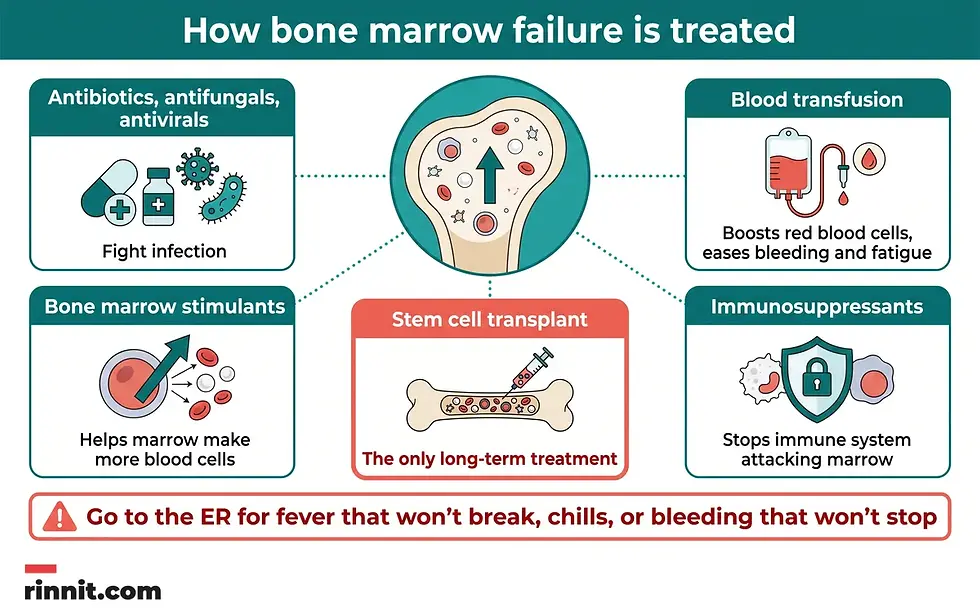
How is bone marrow failure treated?
Your treatment will depend on the type of bone marrow failure (inherited or acquired), the severity of your situation, your age and overall health, and your symptoms.
Treatment | What it does |
Antibiotics, antifungal, and antiviral medication | To fight infection |
Blood transfusion | To increase red blood cells and ease symptoms like bleeding and fatigue |
Bone marrow stimulants | Help your bone marrow make more blood cells |
Immunosuppressants | Help stop your immune system from attacking your bone marrow |
Allogeneic stem cell (bone marrow) transplant | The only long-term treatment for bone marrow failure |
What are the treatment complications and side effects?
Complications and side effects vary depending on the treatment, but stem cell (bone marrow) transplants may cause the most significant issues, including graft vs. host disease and infection [1].
What are the complications of bone marrow failure?
Bone marrow failure can be life-threatening and may also cause the following complications, even after treatment: bacterial or viral infections, bleeding, blood cancers like acute myeloid leukemia (AML) or myelodysplasia, cancerous tumors like osteosarcoma and rhabdomyosarcoma, and squamous cell carcinoma [1].
What is the outlook?
Your prognosis — what you can expect to happen after treatment — depends on several factors, including the condition type, your age and overall health, and how well your body responds to treatment. In general, people with bone marrow failure need ongoing medical treatment and support, but everyone is different. To understand your prognosis, ask your healthcare provider about next steps after your initial treatment.
Is bone marrow failure a terminal illness?
It's a very serious illness that may be life-threatening. Most people with bone marrow failure receive treatment from experienced specialists, including oncologists and hematologists.
What is the life expectancy?
Life expectancy for people with bone marrow failure can range from months to a full lifespan [1]. You're unique and your experience may differ from everyone else's — your healthcare provider is your best resource since they know you and your situation.
Can bone marrow failure be prevented?
Unfortunately, you can't reduce your risk of inherited bone marrow failure. Avoiding chemicals that are associated with bone marrow suppression may reduce your risk of developing some acquired bone marrow failure [1]. Prompt treatment can help relieve your symptoms and improve your quality of life.
How do you take care of yourself?
The best way to live with bone marrow failure is to take care of your general health. Don't use tobacco products, and cut back on or stop drinking beverages that contain alcohol.
See your healthcare provider regularly. Bone marrow failure can be a lifelong condition that may need ongoing treatment and can cause new medical issues, so regular check-ups let your provider monitor your health and treat any new problems. Eat a healthy diet — symptoms and treatment side effects may affect your appetite, so talk to a nutritionist if you're worried about getting enough nutrition. Get some exercise as a way to reduce stress, but always talk to your provider before starting a new routine.
When should you go to the emergency room? If you have bone marrow failure, you have an increased risk of infections and bleeding. Go to the emergency room if you have a fever that doesn't go away after taking over-the-counter pain medication, chills, or bleeding that doesn't stop and you can't control [1].
What questions should you ask your provider?
Good questions include: Do you know why I have bone marrow failure? What are my treatment options? Will I always need treatment? Can you cure it?
Conclusion
Bone marrow failure is a serious condition in which the body's blood-cell factory slows down — producing too few of the platelets, red blood cells, and white blood cells that keep you clotting, oxygenated, and protected from infection. Because it can be acquired from disease, medication, or chemical exposure, or inherited through gene changes, understanding the cause is the first step. While transfusions, infection-fighting medication, and marrow stimulants ease symptoms day to day, a stem cell transplant remains the only long-term treatment [1]. Living well with the condition means regular specialist care, protecting yourself from infection, and knowing when to seek emergency help. If you or someone you love is facing this diagnosis, talk with your healthcare team about your options — they are your best resource for what comes next.
Facing a rare diagnosis? Get clear, plain-language answers. Explore more trusted health guides at Rinnit.com — your everyday companion for understanding conditions, treatments, and staying healthy.
Frequently asked questions
What is bone marrow failure?
Bone marrow failure happens when your bone marrow doesn't produce enough platelets, red blood cells, or white blood cells — the cells that help blood clot, carry oxygen, and fight infection.
Is bone marrow failure inherited or acquired?
It can be either. Acquired bone marrow failure develops over time from certain diseases, chemicals, or medications. Inherited bone marrow failure (bone marrow failure syndrome) comes from gene changes passed down from one or both parents.
What are the most common symptoms?
Excessive bleeding, unexplained bruising, fatigue, bone pain, fever, frequent bacterial infections, headaches, shortness of breath, pale skin, and petechiae (tiny blood spots under the skin).
At what age do symptoms appear?
It depends on the cause. People with inherited bone marrow failure may show symptoms at age 2, while those with an acquired form may develop symptoms between ages 20–25 or after age 65.
How common is bone marrow failure?
It's not common. Each year, 65 in 1 million U.S. babies are born with inherited disorders that cause it, and Fanconi anemia — the most common syndrome — affects 1 to 5 in 1 million people.
What is the most common bone marrow failure syndrome?
Fanconi anemia is the most common bone marrow failure syndrome.
What infections raise the risk?
Cytomegalovirus, Epstein-Barr virus, HIV, parvovirus B19, and viral hepatitis.
Can cancer treatment cause bone marrow failure?
Yes. Chemotherapy and/or radiation therapy for cancer may increase your risk, as can exposure to chemicals and solvents in some insecticides and pesticides.
What is idiopathic bone marrow failure?
The term for bone marrow failure that happens for no known reason.
How is it diagnosed?
With a review of symptoms, medical and family history, a physical exam, blood tests (including CBC, ferritin, ceruloplasmin, folate, and vitamin B12 tests), imaging tests (MRI, PET scan, ultrasound), and possibly a bone marrow biopsy and genetic testing.
What treatments are available?
Antibiotics, antifungal and antiviral medication to fight infection; blood transfusions to increase red blood cells and ease bleeding and fatigue; bone marrow stimulants; immunosuppressants to stop the immune system attacking the marrow; and allogeneic stem cell transplant.
Is a stem cell transplant a cure?
It is the only long-term treatment for bone marrow failure, though it can cause significant side effects such as graft vs. host disease and infection.
What complications can happen even after treatment?
Bacterial or viral infections, bleeding, blood cancers like acute myeloid leukemia or myelodysplasia, and cancerous tumors such as osteosarcoma, rhabdomyosarcoma, and squamous cell carcinoma.
Is bone marrow failure terminal?
It's a very serious, potentially life-threatening illness. Life expectancy can range from months to a full lifespan, depending on the type, age, overall health, and response to treatment.
When should I go to the emergency room?
Go to the ER if you have a fever that doesn't go away after over-the-counter pain medication, chills, or bleeding that doesn't stop and you can't control.
Related reading
Aplastic Anemia: Symptoms, Causes, Treatment & Complete Guide — a rare blood disorder in which the marrow can't make new blood cells
This article is for general informational purposes only and is not a substitute for professional medical advice, diagnosis, or treatment. Always consult a qualified healthcare provider about any medical concern, and go to the emergency room immediately if you experience uncontrolled bleeding, a persistent fever, or chills.
Learn more in our guide to Bone Marrow Biopsy: Why It's Done, What to Expect, Pain and Recovery.
References
Cleveland Clinic. Bone Marrow Failure. Cleveland Clinic. Updated April 19, 2023. https://my.clevelandclinic.org/health/diseases/24918-bone-marrow-failure
Peffault de Latour R, et al. Eltrombopag Added to Immunosuppression in Severe Aplastic Anemia. N Engl J Med. 2022;386(1):11-23. PMID 34986284. https://doi.org/10.1056/NEJMoa2109965
Lum SH, et al. Outcomes of hematopoietic stem cell transplantation in 813 pediatric patients with Fanconi anemia. Blood. 2024;144(12):1329-1342. PMID 38968140. https://doi.org/10.1182/blood.2023022751
Groarke EM, et al. Distinguishing constitutional from acquired bone marrow failure in the hematology clinic. Best Pract Res Clin Haematol. 2021;34(2):101275. PMID 34404527. https://doi.org/10.1016/j.beha.2021.101275
Wegman-Ostrosky T, et al. The genomics of inherited bone marrow failure: from mechanism to the clinic. Br J Haematol. 2017;177(4):526-542. PMID 28211564. https://doi.org/10.1111/bjh.14535
Moore CA, et al. Bone Marrow Failure. StatPearls. Updated July 10, 2023. https://www.ncbi.nlm.nih.gov/books/NBK459249/
National Organization for Rare Disorders. Acquired Aplastic Anemia. NORD. Updated June 20, 2018. https://rarediseases.org/rare-diseases/acquired-aplastic-anemia/
National Heart, Lung, and Blood Institute. Aplastic Anemia. NHLBI, NIH. Updated March 24, 2022. https://www.nhlbi.nih.gov/health/anemia/aplastic-anemia



Comments