Aquablation: Minimally Invasive Water Jet Therapy for BPH

Updated: 3 days ago
Medically reviewed by Dr. Baraa Alnahhal, MD · Last reviewed: October 2026
Quick Answer
Aquablation is a minimally invasive surgical procedure for benign prostatic hyperplasia that uses a robotic system and high-velocity water jets to remove excess prostate tissue without heat. [1] It is performed through the urethra under general anesthesia, guided by ultrasound and cystoscopy. [1] Most patients stay one night and resume normal activities within two weeks, with a low re-treatment rate. [1]
What the research says
Aquablation matched TURP for symptom relief at five years, with fewer ejaculation problems and fewer repeat treatments. In a double-blind randomized trial of 181 men with BPH (prostates of 30 to 80 mL), the symptom score (IPSS) improved by 15.1 points with Aquablation and 13.2 points with TURP at 5 years, which was not a significant difference. Procedure-related ejaculatory dysfunction was lower with Aquablation (7% vs 25%), and the risk of needing medication or surgery for BPH again was 51% lower (PubMed: Gilling et al., Can J Urol, 2022 [2]).
Results held up in very large prostates. In the WATER II trial, 101 men with prostates of 80 to 150 mL (average 107 mL) had their IPSS fall from 22.6 to 6.8 at 5 years, and 96.3% were free from a secondary BPH procedure (PubMed: Bhojani et al., J Urol, 2023 [3]).
The advantage over TURP was biggest in larger prostates. In a subgroup analysis of the randomized trial, men with prostates of 50 to 80 g had a symptom-score reduction 4 points greater with Aquablation than with TURP (P = 0.001), and anejaculation after surgery was 2% vs 41% in sexually active men (PubMed: Plante et al., BJU Int, 2019 [4]).
What is aquablation therapy for BPH?
Aquablation represents a significant leap in urological surgery, specifically for managing Benign Prostatic Hyperplasia (BPH). BPH occurs when the prostate gland grows larger, compressing the urethra and causing various urinary issues, such as a weak stream or frequent nighttime urination. Unlike traditional surgeries that use heat or laser energy, Aquablation employs a high-pressure water jet to mechanically remove tissue. [1] This heat-free method is critical for protecting the delicate nerves located around the prostate that control sexual and urinary function.
The procedure is uniquely characterized by its use of "real-time" robotic image guidance. Surgeons utilize both an ultrasound probe and a cystoscope simultaneously, allowing them to map the entire prostate and program the robotic arm to remove only the necessary tissue with millimeter precision. This level of visualization is not available in other BPH treatments, making it a safer and more consistent option for patients with varying prostate sizes.
Feature | Aquablation Therapy | Traditional TURP |
|---|---|---|
Technology | High-pressure water jet | Electric loop (Heat) |
Robotic Guidance | Yes, programmed by surgeon | No, manual operation |
Heat Usage | None (Heat-free) | High heat |
Incisions | None (Transurethral) | None (Transurethral) |
Imaging | Ultrasound + Cystoscopy | Cystoscopy only |
What can you expect during an aquablation procedure?
Aquablation is typically performed in a hospital setting under general anesthesia. [1] Because the procedure is transurethral, there are no external incisions or stitches required. [1] Once the patient is asleep, the surgical team inserts the necessary imaging tools to create a detailed map of the prostate. The robotic system then executes the resection using a high-velocity water jet, which carefully carves away the excess tissue that is obstructing the urinary flow.

Figure 1: Illustration of the robotic water jet resecting prostate tissue under image guidance.
The entire procedure usually takes approximately one hour. [1] After the tissue is removed, a suction tool clears the debris, and any exposed vessels are sealed to prevent bleeding. [1] Most patients require a one-night hospital stay for monitoring. [1] A Foley catheter is placed immediately after surgery to help drain the bladder and manage initial healing; this is usually removed within 24 hours to one week.
What are the benefits and risks of aquablation?
One of the primary benefits of Aquablation is its long-term durability. In the five-year WATER II trial of men with large prostates (80 to 150 mL), 96.3% of men did not need another BPH procedure, which means fewer than 4% required additional treatment. [3] Because the water jet is heat-free and precise, the procedure is designed to protect the tissue around the prostate and help preserve sexual function. [1] Even so, problems with erections, leaking urine and semen traveling into the bladder remain possible, as listed below. [1]

Figure 2: Comparison of patient benefits versus potential surgical risks.
Potential Risks and Side Effects
Bleeding: Post-operative hematuria is common as the prostate heals. [1]
Infection: As with any surgical procedure, there is a risk of urinary tract infection.
Retrograde Ejaculation: Semen may travel into the bladder during ejaculation, a common occurrence after prostate surgery.
Temporary Urinary Urgency: Symptoms may briefly worsen during the first few weeks of recovery. [1]
Other possible risks: Problems getting or maintaining an erection, leaking urine, and needing treatment again if symptoms return. [1]
What does recovery and post-operative care after aquablation involve?
Recovery from Aquablation is generally faster than traditional open surgery. Most men can return to light normal activities within one to two weeks. [1] However, it is essential to allow the prostate time to heal fully. Patients are advised to drink plenty of water to flush the bladder and avoid strenuous activities like heavy lifting or bicycling for several weeks. [1] Bladder irritants such as caffeine and carbonated beverages should also be limited during the initial healing phase. [1]
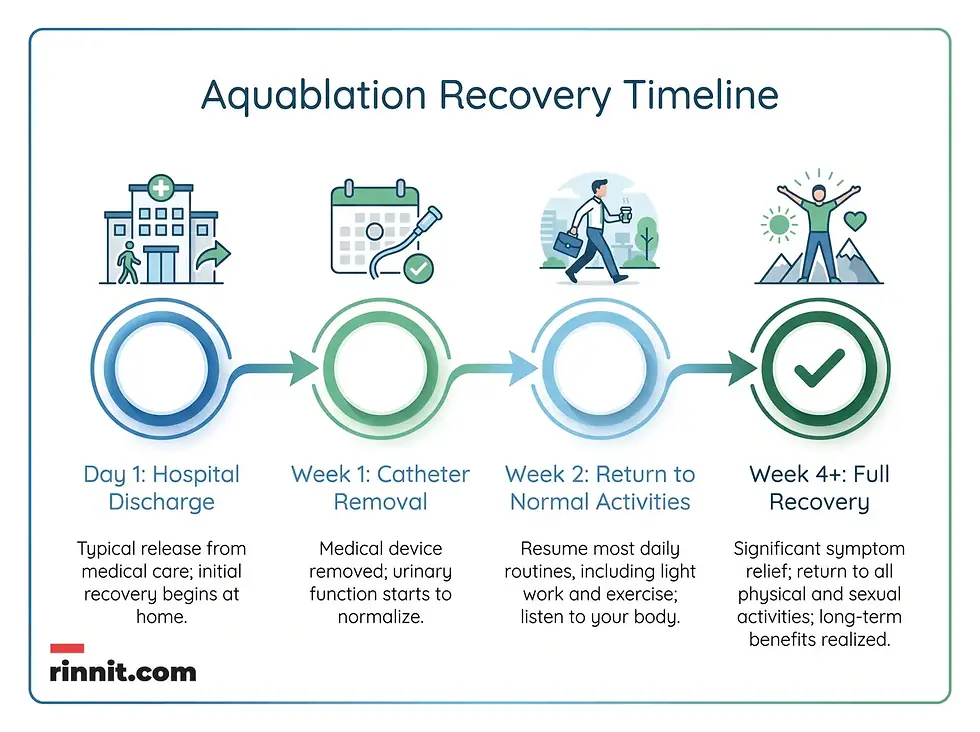
Figure 3: Stages of healing from hospital discharge to full activity resumption.
Patients should contact their healthcare provider immediately if they experience an inability to urinate, severe pain that worsens over time, or signs of infection such as fever and chills. [1] A follow-up appointment is typically scheduled within the first week to remove any remaining catheters and assess urinary flow. [1]
Conclusion
Aquablation offers a modern, precise, and heat-free solution for men suffering from the symptoms of an enlarged prostate. By combining robotic technology with high-pressure water jets, it provides effective tissue removal while minimizing the risks associated with traditional surgical methods. For those seeking long-term relief without the need for daily medication or invasive open surgery, Aquablation stands as a leading choice in minimally invasive urological care.
Frequently Asked Questions
1. What is Aquablation?
Aquablation is a minimally invasive, robot-assisted surgical treatment for an enlarged prostate (BPH) that uses a high-pressure water jet to remove tissue.
2. How does the water jet work?
The procedure uses a heat-free, high-velocity water jet to precisely resect excess prostate tissue without damaging surrounding nerves.
3. Is Aquablation robotic surgery?
Yes, it uses a robotic system that is programmed by the surgeon based on real-time ultrasound and cystoscopic imaging.
4. How long does the procedure take?
The Aquablation procedure typically takes about one hour to complete in a hospital setting.
5. Will I need to stay in the hospital?
Most patients require a one-night stay in the hospital following the procedure for monitoring and catheter management.
6. What are the success rates?
In the five-year WATER II trial of men with large prostates, 96.3% did not need another BPH procedure, so fewer than 4% needed further treatment.
7. Does Aquablation affect sexual function?
Because it is heat-free and precise, Aquablation is designed to help preserve sexual function, and in a randomized trial against TURP, ejaculatory dysfunction was less common (7% vs 25%). Problems with erections and semen traveling into the bladder during ejaculation are still possible risks.
8. How long is the recovery period?
Most patients can return to normal activities within one to two weeks, though strenuous exercise should be avoided for several weeks.
9. Is a catheter required after surgery?
Yes, a Foley catheter is placed to help the bladder drain and manage healing. It is usually removed between 24 hours and one week later.
10. Are there any age restrictions for Aquablation?
Aquablation is suitable for most men with BPH symptoms, and it is particularly effective for those with very large prostate glands. Your urologist will assess whether it is right for you.
Related Reading
Benign Prostatic Hyperplasia (BPH): Symptoms, Causes, and Treatment explains prostate enlargement, its urinary symptoms and treatment choices.
Transurethral Resection of the Prostate (TURP): Procedure, Risks, and Recovery describes the standard surgery that trims prostate tissue through the urethra.
Holmium Laser Enucleation of the Prostate (HoLEP): Procedure, Recovery, Risks and Results explains laser removal of prostate tissue for an enlarged prostate.
Prostatectomy: Types, Surgery, Risks and Recovery covers the types of prostate removal surgery and recovery.
References
Cleveland Clinic. Aquablation: Purpose, Procedure, Risks & Results. Cleveland Clinic. Mar. 12, 2026. https://my.clevelandclinic.org/health/treatments/aquablation
Gilling PJ, Barber N, Bidair M, et al. Five-year outcomes for Aquablation therapy compared to TURP: results from a double-blind, randomized trial in men with LUTS due to BPH. Can J Urol. 2022;29(1):10960-10968. PMID 35150215. https://pubmed.ncbi.nlm.nih.gov/35150215/
Bhojani N, Bidair M, Kramolowsky E, et al. Aquablation therapy in large prostates (80-150 mL) for lower urinary tract symptoms due to benign prostatic hyperplasia: final WATER II 5-year clinical trial results. J Urol. 2023;210(1):143-153. PMID 37115632. https://doi.org/10.1097/JU.0000000000003483
Plante M, Gilling P, Barber N, et al. Symptom relief and anejaculation after aquablation or transurethral resection of the prostate: subgroup analysis from a blinded randomized trial. BJU Int. 2019;123(4):651-660. PMID 29862630. https://doi.org/10.1111/bju.14426
Medical Disclaimer
This article is for informational purposes only and does not constitute medical advice. Always seek the advice of your physician or other qualified health provider with any questions you may have regarding a medical condition. Never disregard professional medical advice or delay in seeking it because of something you have read here.



Comments