Appetite Stimulants: Medical Options for Increasing Hunger

Updated: 3 days ago
Medically reviewed by Dr. Baraa Alnahhal, MD · Last reviewed: October 2026
Quick Answer
Appetite stimulants are prescription medications that trigger hunger and improve nutrition in people with chronic illnesses like cancer or HIV/AIDS. Known as orexigenics, they work by altering brain chemicals, reducing nausea or improving mood. [1] They work best with nutritional support and treatment of the cause of weight loss. Common side effects include dizziness, dry mouth and sleepiness. [1]
What the research says
Megestrol increased weight versus placebo but did not improve quality of life. A Cochrane-based systematic review found that, compared with placebo, megestrol acetate gave a mean weight gain of 2.25 kg (95% CI 1.19 to 3.3) with no quality-of-life gain (standardized mean difference 0.5; 95% CI −0.13 to 1.13) and more adverse events (relative risk 1.46; 95% CI 1.05 to 2.04), with no difference in deaths. The review could not identify an optimal dose (PubMed: Ruiz-García et al., J Cachexia Sarcopenia Muscle, 2018 [2]).
In advanced cancer, a newer meta-analysis found no clear weight benefit from megestrol and a clear clot risk. Of 23 clinical trials, eight provided weight data for pooling, and the mean weight change was 0.75 kg (95% CI −1.64 to 3.15). Patients on high doses (above 320 mg/day) tended to lose rather than gain weight, and there was a clear thromboembolic risk, especially at higher doses. The trials had moderate-to-high risk of bias (PubMed: Lim et al., J Clin Med, 2022 [3]).
In hospitalized adults, appetite stimulants had limited effect on appetite and meal intake. A review of four studies of dronabinol, megestrol and mirtazapine in hospitalized adults found limited efficacy on appetite and meal intake and no significant change in weight. The authors noted the data lacked standardization and that higher-quality evidence is needed (PubMed: Steiner et al., Nutr Clin Pract, 2023 [4]).
What are appetite stimulants?
Appetite stimulants, medically referred to as orexigenics, are specialized medications prescribed to individuals who have lost their desire to eat due to serious health conditions. These medications are crucial for patients who are losing weight unintentionally or struggling to maintain the nutrition their bodies require to function and recover. By targeting the physiological and psychological barriers to eating, appetite stimulants help improve energy levels and overall quality of life.
How They Work
Orexigenic medications do not all function in the same way. Their mechanisms of action are diverse, depending on the specific drug prescribed:
Brain Chemistry: Some medications directly affect the neurotransmitters in the brain that regulate hunger and satiety signals.
Symptom Management: Other drugs work indirectly by reducing nausea or improving a patient's mood, both of which can significantly impact the willingness to consume food.
Hormonal Regulation: Certain stimulants influence hormone levels to encourage the body to store more energy and seek out nutrients.
Medication Type | Common Examples | Primary Mechanism |
Progestin Hormones | Megestrol | Exact way it boosts appetite is not fully understood. |
Cannabinoids | Dronabinol | Mimics natural compounds to improve appetite and reduce nausea. |
Antidepressants | Mirtazapine | Increases brain chemicals that can trigger hunger (often used off-label). |
Antihistamines | Cyproheptadine | Blocks histamine to boost the body’s natural hunger signals. |
Corticosteroids | Prednisone, Dexamethasone | Reduces inflammation while naturally increasing the desire to eat. |

What are appetite stimulants used for, and what are their benefits?
Healthcare providers typically prescribe appetite stimulants for specific medical scenarios where malnutrition poses a significant risk. These medications are most frequently utilized in hospital settings, cancer centers, and long-term care facilities. [1]
Common conditions managed with orexigenics include:
Cancer-Related Cachexia: Severe weight loss and muscle wasting associated with advanced cancer.
HIV/AIDS: Managing weight loss and improving nutritional status in immunocompromised patients.
Age-Related Anorexia: Helping seniors who lose their appetite as a natural part of aging or due to chronic conditions.
Long-Term Illness: Supporting patients with chronic diseases that make the act of eating difficult or painful.
Expected Outcomes
The primary goal of these treatments is to improve the patient's nutritional status. Research shows mixed results: some people eat more, but the effect on appetite and weight is often modest and varies between individuals. The best results are usually achieved when the medication is one part of a comprehensive plan that includes meal planning and high-calorie nutritional supplements.
What are the risks and side effects of appetite stimulants?
Like all prescription treatments, appetite stimulants carry potential risks. The specific side effects depend heavily on the type of medication used and the patient's overall health status.
Potential Side Effect | Description |
Neurological | Dizziness, sleepiness, or confusion (higher risk in seniors). |
Physical | Dry mouth, nausea, or swelling in the extremities (edema). |
Serious Risks | Potential for blood clots or significant changes in mood and thinking. |
Special Populations
Seniors (Ages 65+): Healthcare providers exercise extra caution with older adults due to an increased risk of falls, confusion, and dizziness associated with these medications. [1]
Children: Pediatric use is strictly monitored and only recommended when the underlying cause of appetite loss is clearly identified and other nutritional interventions have failed.
How is treatment with appetite stimulants managed during recovery?
The process of starting an appetite stimulant begins with a thorough medical evaluation. Providers may use blood tests or imaging to ensure the underlying cause of appetite loss is understood before introducing medication. [1]
Patient Guidelines
To maximize the effectiveness of the treatment, patients are often encouraged to:
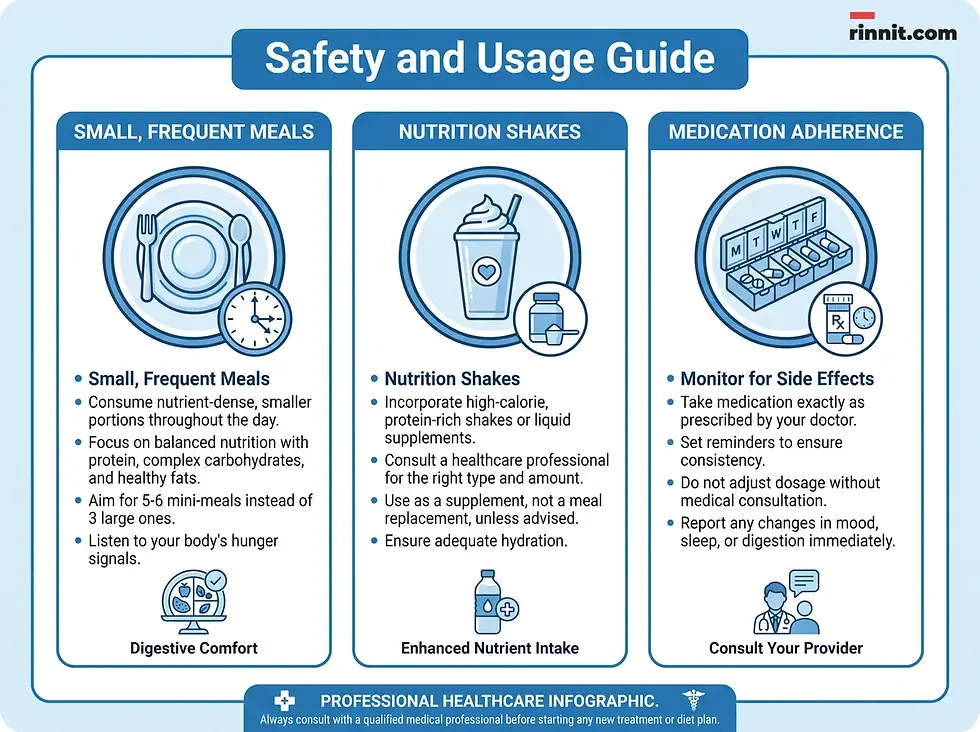
Eat Small, Frequent Meals: Consuming five to six small snacks throughout the day is often easier than three large meals.
Focus on Density: Prioritize foods that are high in both protein and calories. [1]
Stay Hydrated: Ensure adequate fluid intake, utilizing smoothies or shakes if solid foods are difficult to tolerate. [1]
Adherence: Take the medication exactly as prescribed, as some may take several days or even weeks to show full effect. [1]

Conclusion
Appetite stimulants serve as a vital tool in medical nutrition therapy, helping patients maintain strength and energy during difficult treatments or chronic illnesses. While they are not a universal solution for weight gain, they can significantly bridge the gap in nutritional needs when used correctly under medical supervision.
When to Contact a Provider
Patients should seek immediate medical advice if they experience continued weight loss despite treatment, an inability to eat or drink for more than 24 hours, or severe symptoms such as chest pain, trouble breathing, or extreme confusion. [1]
Frequently Asked Questions
1. What is an orexigenic?
An orexigenic is the medical term for an appetite stimulant, which is a medication specifically designed to increase a person's desire to eat.
2. How long does it take for an appetite stimulant to work?
Some patients notice an increase in hunger within a few days, while others may require several weeks of consistent use to see a significant change.
3. Can I get appetite stimulants over the counter?
Most effective appetite stimulants are prescription-only medications because they require medical supervision to manage potential side effects and monitor underlying conditions.
4. Are appetite stimulants the same as steroids?
Some corticosteroids can act as appetite stimulants, but many other types, such as cannabinoids or antidepressants, work through entirely different mechanisms.
5. Do appetite stimulants cause weight gain?
While they are effective at increasing hunger and food intake, their ability to produce significant weight gain varies and depends on the underlying medical condition.
6. Is mirtazapine an appetite stimulant?
Mirtazapine is primarily an antidepressant, but it is frequently used "off-label" by doctors because one of its common side effects is increased appetite.
7. What are the risks for seniors taking these drugs?
Seniors have a higher risk of experiencing dizziness, confusion, and falls, so these medications are prescribed with extra caution in patients over 65.
8. Can appetite stimulants help with cancer treatment?
Yes, they are frequently used to manage cancer-related weight loss (cachexia) and to help patients maintain the strength needed for chemotherapy or radiation.
9. What should I eat while taking an appetite stimulant?
Doctors recommend high-protein, high-calorie foods and small, frequent meals rather than large portions to make eating more manageable.
10. Are there liquid appetite stimulants?
Yes, some appetite stimulants are available in liquid form, which can be easier for patients who have difficulty swallowing pills.
Related Reading
Cancer Cachexia: Causes, Symptoms, Treatment, and Outlook explains cancer-related weight and muscle loss and how it is managed.
Cardiac Cachexia: Why Weight Loss Happens with Advanced Heart Failure and What Helps describes weight and muscle loss linked to heart failure.
Understanding Malnutrition: Types, Causes, and Management explains the types and causes of malnutrition and how it is treated.
Dysgeusia (Distorted Taste): Why Everything Suddenly Tastes Metallic or Bitter — the 15 Causes, 4 Symptoms, Diagnosis, 7 Self-Care Fixes and Outlook — What You Need to Know explains taste changes that can dull appetite and how to manage them.
References
Cleveland Clinic. Appetite Stimulant (Orexigenic): What It Is & Effects. Cleveland Clinic. Jul. 13, 2026. https://my.clevelandclinic.org/health/treatments/appetite-stimulants
Ruiz-García V, López-Briz E, Carbonell-Sanchis R, et al. Megestrol acetate for cachexia-anorexia syndrome. A systematic review. J Cachexia Sarcopenia Muscle. 2018;9(3):444-452. PMID 29542279. https://doi.org/10.1002/jcsm.12292
Lim YL, Teoh SE, Yaow CYL, et al. A systematic review and meta-analysis of the clinical use of megestrol acetate for cancer-related anorexia/cachexia. J Clin Med. 2022;11(13):3756. PMID 35807039. https://doi.org/10.3390/jcm11133756
Steiner L, Brunetti L, Roberts S, et al. A review of the efficacy of appetite-stimulating medications in hospitalized adults. Nutr Clin Pract. 2023;38(1):80-87. PMID 35076955. https://doi.org/10.1002/ncp.10839
Medical Disclaimer
This article is for informational purposes only and does not constitute medical advice. Always seek the advice of your physician or other qualified health provider with any questions you may have regarding a medical condition. Never disregard professional medical advice or delay in seeking it because of something you have read here.



Comments