Antibiotics for Tooth Infections: Essential Guide to Usage and Recovery

Updated: 2 days ago
Medically reviewed by Dr. Baraa Alnahhal, MD · Last reviewed: October 2026
Quick Answer: What are antibiotics for tooth infections?
Antibiotics for tooth infections are medicines that stop bacteria spreading beyond a tooth abscess to other parts of the mouth or body. They are typically prescribed for severe infections or weakened immune systems and include penicillins, cephalosporins and macrolides. [1] Because they cannot fully clear bacteria inside a dead tooth, they are almost always combined with a dental procedure. [1]
What the research says
Antibiotics added little when the tooth was treated properly. A Cochrane review of 3 randomized trials (134 adults) found that in one trial (72 participants) a single preoperative dose of clindamycin made little to no difference in pain or swelling when root canal treatment and painkillers were provided (median pain 3.0 in both groups at 24 hours; swelling risk ratio 0.50, 95% CI 0.10 to 2.56). Two trials (62 participants) of a seven-day penicillin VK course also showed no difference in pain or swelling, though the certainty of that evidence was very low. No trial tested antibiotics without a dental procedure (PubMed: Cope et al., Cochrane Database Syst Rev, 2024 [2]).
Guidelines reserve antibiotics for spreading or systemic infection. An American Dental Association expert panel reviewed the evidence and formulated 5 clinical recommendations and 2 good practice statements. Because antibiotics likely offer negligible benefit and potentially large harms, it recommended against them in most scenarios, but recommended them for patients with systemic involvement such as malaise or fever, or a high risk of progressing to it. The panel said immediate dental treatment should be prioritized in all cases (PubMed: Lockhart et al., J Am Dent Assoc, 2019 [3]).
How do antibiotics treat tooth infections?
A tooth infection, commonly known as a tooth abscess, is a pocket of pus caused by bacteria that have entered the tooth through cavities, cracks, or gum disease. [1] The human mouth is home to over 700 species of bacteria, and any injury to the protective layers of the tooth can allow these microbes to cause painful swelling and redness. [1]
Antibiotics are chemical agents designed to destroy these bacteria or inhibit their growth. However, they are rarely used as a standalone treatment for dental issues. Instead, they serve as a supportive measure to dental procedures such as draining the abscess, performing a root canal, or extracting the tooth. [1]

Common Antibiotics Prescribed in Dentistry
Dental providers select specific antibiotics based on the type of bacteria suspected and the patient's medical history. The following table outlines the primary classes of antibiotics used in dental care.
Antibiotic Class | Common Examples | Primary Use Case |
Penicillins | Amoxicillin, Penicillin V | First-line treatment for a wide range of bacteria. |
Cephalosporins | Cephalexin | Alternative for those who may not respond to penicillins. |
Nitroimidazoles | Metronidazole | Often used to target specific anaerobic bacteria. |
Macrolides | Azithromycin, Erythromycin | Common choice for patients with penicillin allergies. |
Lincosamides | Clindamycin | Reserved for stubborn infections that resist other drugs. |
Why are antibiotics alone not enough for a tooth infection?
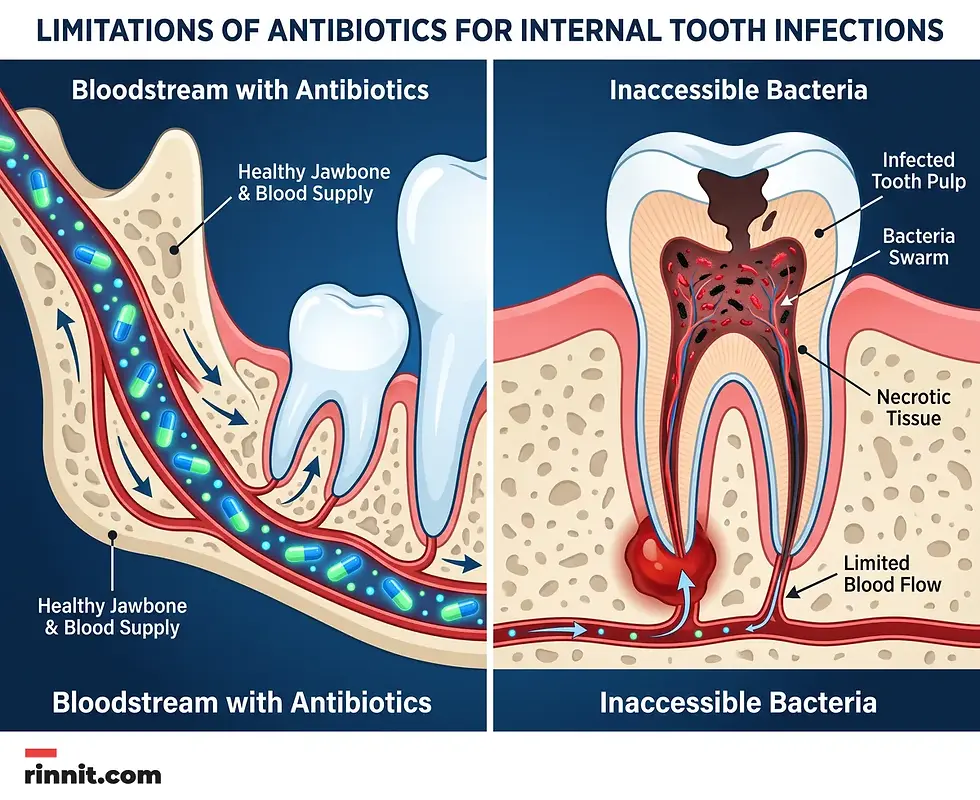
A critical concept in dental health is that antibiotics alone cannot "cure" an internal tooth infection. This is because antibiotics travel through the bloodstream to reach the site of an infection. When bacteria are trapped inside the pulp chamber of a tooth, they eventually destroy the blood vessels that would normally carry the medication to them. [1]
Antibiotics travel through your bloodstream. Once bacteria get trapped inside a tooth, they destroy the surrounding tissue, including the blood vessels that would otherwise provide the route antibiotics use to reach (and kill) bacteria.
Consequently, the physical removal of the infected tissue through a dental procedure is mandatory to resolve the infection permanently.
What are the risks and side effects of antibiotics for tooth infections?
Antibiotics for tooth infections can cause side effects such as dizziness, nausea, diarrhea and yeast infections, along with C. diff infection and allergic reactions. [1]
Common Side Effects: Many patients experience mild dizziness, nausea, diarrhea, or yeast infections during treatment.
Serious Complications: Prolonged or severe diarrhea can indicate a Clostridiodes difficile (C. diff) infection, which occurs when the balance of gut bacteria is severely disrupted.
Allergic Reactions: Symptoms can range from mild rashes and hives to life-threatening emergencies involving facial swelling and difficulty breathing.
How can you recover well from a tooth infection treated with antibiotics?
Patients often begin to feel better within 24 hours of starting antibiotics, but this improvement does not mean the infection is gone. Take the antibiotic exactly as your dentist prescribes. Dental guidelines suggest a course of about 3 to 7 days, with a check-in after about 3 days, and your dentist may tell you to stop 24 hours after your symptoms fully clear. [1]

Supporting Your Treatment at Home
While waiting for the medication and dental procedures to work, you can manage discomfort using several supportive methods:
Pain Management: Use over-the-counter pain relievers as directed by your provider. [1]
Temperature Control: Apply a cold compress to the jaw to reduce swelling and numb pain.
Dietary Adjustments: Avoid hard, crunchy, or extremely hot or cold foods that can irritate the infected area. [1]
Oral Hygiene: Use a soft-bristled toothbrush and rinse gently with warm saltwater to keep the area clean. [1]
Conclusion
Antibiotics for tooth infections are powerful tools for preventing the spread of dangerous bacteria, but they are only one part of a comprehensive dental treatment plan. If you suspect you have a tooth abscess, seek professional dental care immediately to address the root cause of the infection and receive the appropriate medication. Go to an emergency room right away if you have fever with facial swelling, swelling that spreads toward your eye or neck, or trouble swallowing or breathing.
Frequently Asked Questions
1. Can I get antibiotics for a tooth infection without seeing a dentist?
No. Antibiotics for tooth infections are only available by prescription and require a professional evaluation to determine the correct type and dosage.
2. Will a tooth infection go away on its own if I wait?
No. Untreated tooth abscesses will worsen and can spread to other parts of the mouth or even vital organs like the brain.
3. How long does it take for antibiotics to start working?
Many people notice an improvement in symptoms within the first day, but it typically takes a full week to finish the course and clear the infection.
4. Why do I have to finish the whole bottle if I feel better?
Follow your dentist’s instructions on how long to take it. Guidelines now favor short courses, often 3 to 7 days, and taking antibiotics longer than needed adds side effects and resistance risk.
5. Can I drink alcohol while taking dental antibiotics?
Interactions vary by medicine, so follow the instructions on your prescription label or consult your pharmacist.
6. What is the most common antibiotic for a tooth infection?
Penicillin-type antibiotics, such as amoxicillin, are usually the first-line choice for dental providers.
7. What happens if I am allergic to penicillin?
Your dental provider can prescribe alternative classes of antibiotics, such as macrolides (azithromycin) or lincosamides (clindamycin).
8. Are there natural antibiotics for a tooth infection?
No. While home remedies like saltwater rinses can help manage bacteria, they are not a substitute for prescription antibiotics.
9. Can a tooth infection spread to my brain?
Yes, in extreme cases, an untreated tooth infection can spread through the body to vital organs, including the brain.
10. What should I do if I get a rash from the antibiotics?
Inform your healthcare provider immediately. If you experience swelling of the face or trouble breathing, seek emergency medical care.
Related Reading
Tooth Abscess: Symptoms, Causes, Diagnosis, and Treatment explains tooth abscess signs and how it is treated.
Root Canal Treatment describes the procedure that removes infection inside a tooth.
Tooth Extraction: Procedure, Recovery Timeline, Aftercare and Warning Signs covers when a tooth is pulled and how to care for the site.
Penicillin Allergy: The Complete Guide explains penicillin allergy and safe antibiotic alternatives.
References
Cleveland Clinic. Antibiotics for Tooth Infections. Cleveland Clinic. Mar. 12, 2024. https://my.clevelandclinic.org/health/treatments/antibiotics-for-tooth-infections
Cope AL, Francis N, Wood F, et al. Systemic antibiotics for symptomatic apical periodontitis and acute apical abscess in adults. Cochrane Database Syst Rev. 2024;5(5):CD010136. PMID 38712714. https://doi.org/10.1002/14651858.CD010136.pub4
Lockhart PB, Tampi MP, Abt E, et al. Evidence-based clinical practice guideline on antibiotic use for the urgent management of pulpal- and periapical-related dental pain and intraoral swelling: a report from the American Dental Association. J Am Dent Assoc. 2019;150(11):906-921.e12. PMID 31668170. https://doi.org/10.1016/j.adaj.2019.08.020
Medical Disclaimer
This article is for informational purposes only and does not constitute medical advice. Always seek the advice of your physician or other qualified health provider with any questions you may have regarding a medical condition. Never disregard professional medical advice or delay in seeking it because of something you have read here.



Comments