What Is Rheumatic Fever? A Plain-Language Guide to the Strep-Related Inflammatory Disease

Updated: 3 days ago
Medically reviewed by Dr. Baraa Alnahhal, MD · Last reviewed: October 17, 2026
Quick Answer
Rheumatic fever is an inflammatory disease causing swelling in the joints and some organs, triggered when strep throat or scarlet fever is not properly treated. [1] It most often affects children ages 5 to 15, usually 2 to 4 weeks after a strep infection. [1] Its biggest risk is lasting heart damage. [1] Prompt, complete antibiotic treatment of strep prevents it. [1]
What the research says
Rheumatic heart disease still leads to about 250,000 deaths a year worldwide. A Lancet review reports that it causes most of the heart-related illness and death in young people in developing countries, and that guidelines emphasise antibiotic prophylaxis against recurrent episodes of acute rheumatic fever, which seems feasible and cost effective. (Marijon et al., Lancet, 2012) [6]
Penicillin remains the mainstay of treatment, and nothing else has been proven to change the course of the disease. A Nature Reviews Disease Primers review notes that penicillin has been the mainstay for decades and that no other treatment has been proven to alter the likelihood or severity of rheumatic heart disease after an episode of acute rheumatic fever. (Carapetis et al., Nat Rev Dis Primers, 2016) [7]
Updated diagnostic criteria are catching more cases in high-risk populations. A 2024 review reports that the revised Jones criteria show increased sensitivity and specificity for diagnosing rheumatic fever in high-risk populations, while revised World Heart Federation guidelines for echocardiographic diagnosis of rheumatic heart disease encourage task-shifting of screening to extend its reach in endemic regions. (Rwebembera & Beaton, Curr Opin Pediatr, 2024) [8]
What Is Rheumatic Fever, in Plain Language?
Rheumatic fever is a disease that causes swelling — called inflammation — in the joints and some organs. The condition can happen when strep throat or scarlet fever isn't properly treated. [1]
Strep throat and scarlet fever are caused by a bacterial infection with streptococcus (pronounced strep-toe-KOK-us) bacteria. In plain terms, rheumatic fever is the body's overreaction after one of these infections is left unchecked.
Rheumatic fever most often affects children ages 5 to 15. [1] [3] But younger children and adults can get it too. The condition is rare in the United States and other developed countries. [1]
The stakes are real. Rheumatic fever can cause long-lasting heart damage, including heart valve problems and heart failure. [1] Treatment includes medicines to kill the strep bacteria, and other medicines that treat pain and prevent complications. [2]
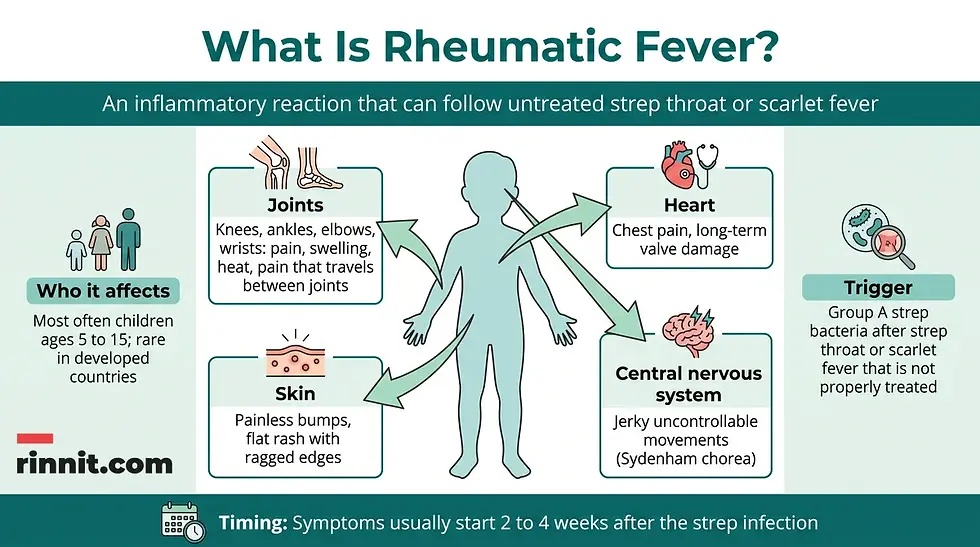
What Are the Signs and Symptoms?
Rheumatic fever symptoms usually start about 2 to 4 weeks after a strep throat infection. [1] The symptoms are due to swelling, called inflammation, in the heart, joints, skin, or central nervous system. [1] There may be few symptoms or many. Symptoms can come and go or change while a person is sick with rheumatic fever.
Symptom | What it looks like |
Fever | Elevated body temperature |
Joint pain or swelling | Most often the knees, ankles, elbows, and wrists; joints may feel hot or tender [1] |
Pain that travels | Pain in one joint that moves to another joint [1] |
Chest pain | Discomfort in the chest area |
Fatigue | Unusual tiredness |
Small bumps under the skin | Painless bumps beneath the skin [1] |
Rash | Flat or slightly raised, painless rash with a ragged edge [1] |
What Is Sydenham Chorea?
Some people with rheumatic fever get a condition called Sydenham chorea. It affects movement and behavior:
What Are the Symptoms of Strep Throat to Watch For?
Strep throat symptoms are worth watching for because proper treatment of strep throat or scarlet fever can prevent rheumatic fever. [1] Make an appointment with a healthcare professional if any of these symptoms of strep throat occur:
Strep throat symptom | Description |
Sudden sore throat | A sore throat that comes on suddenly |
Pain when swallowing | Discomfort with each swallow |
Fever | Elevated body temperature |
Headache | Head pain |
Stomach symptoms | Stomach pain, nausea, and vomiting |
When Should You See a Doctor?
Any sudden sore throat with fever in a child — especially with pain when swallowing or stomach symptoms — deserves a medical visit. A simple throat test can confirm strep, and a course of antibiotics can stop the infection before rheumatic fever ever gets a chance to develop.
What Causes Rheumatic Fever?
Rheumatic fever can happen after a throat infection from group A streptococcus bacteria, also called strep bacteria. The bacteria cause strep throat and scarlet fever. Improper treatment of strep throat or scarlet fever infections causes rheumatic fever. [1]
Here is the encouraging part: there is little chance of getting rheumatic fever when strep throat is treated right away with antibiotics. It is important to finish all of the medicine. [1]
One nuance worth knowing: group A strep infections of the skin or other parts of the body rarely cause rheumatic fever. It is the throat infection that matters most.
How a strep infection causes rheumatic fever isn't clear. It may be that the bacteria trick the body's immune system into attacking healthy tissue. [1] [6] This usually happens in the heart, joints, skin, and central nervous system. The incorrect immune system reaction causes swelling of joints and tissues — and this swelling is called inflammation.
What Raises the Risk?
A number of different things may raise a person's risk of developing rheumatic fever.
Risk factor | Details |
Genes | |
Specific type of strep bacteria | Some strains of strep bacteria are more likely than others to cause rheumatic fever. [1] |
Environmental factors |
What Complications Can Occur?
Joint and tissue swelling caused by rheumatic fever can last a few weeks to several months. For some people, the swelling causes long-term complications.
The most significant complication is long-lasting heart damage. This is called rheumatic heart disease. [1] Rheumatic heart disease usually occurs years to decades after the original illness. [1] But severe rheumatic fever can start to damage the heart valves while a child still has symptoms of the infection. The valve between the two left chambers of the heart is most commonly affected — this valve is called the mitral valve. [4] But other heart valves also may be affected.
Type of heart damage | What happens |
Valve stenosis (narrowing of a heart valve) | The valve flaps become thick or stiff, and they may connect together; this lessens blood flow through the valve. [1] |
Valve regurgitation (backward blood flow) | Occurs when the valve flaps don't close properly, allowing blood to flow backward across the valve. [1] |
Heart muscle damage | Tissue swelling from rheumatic fever can weaken the heart muscle; this may affect the heart's ability to pump. [1] |
Heart failure | Heart damage from rheumatic fever may cause heart failure later in life. [1] |
Irregular heartbeats | Damage to the heart valves or other areas of the heart can lead to an irregular and very fast heartbeat called atrial fibrillation, also known as AFib. [1] |

Can Rheumatic Fever Be Prevented?
Yes — and prevention is straightforward. The best way to prevent rheumatic fever is to treat strep throat infections or scarlet fever right away. [1] It is also important to finish all of the prescribed antibiotics as directed. [1]
How Is Rheumatic Fever Diagnosed?
Rheumatic fever has no single test, so diagnosis is based on medical history, a physical exam and certain test results. [2] [3] Diagnosis is based on medical history, a physical exam, and certain test results.
Test | What it does |
Blood tests | Check for signs of inflammation in the body — C-reactive protein (CRP) and the erythrocyte sedimentation rate (ESR, or the sed rate). Sometimes the actual strep bacteria can no longer be found in blood or throat tissues, so another blood test looks for proteins related to the strep bacteria — called antibodies. [2] |
Electrocardiogram (ECG or EKG) | Shows how the heart is beating; can help diagnose irregular heartbeats. Signal patterns are checked for signs of heart swelling. [2] |
Echocardiogram | Uses sound waves to create pictures of the heart in motion; shows the heart's structure and how blood flows through it. [2] |
How Is Rheumatic Fever Treated?
The goals of treatment for rheumatic fever are to treat the infection, ease symptoms, control swelling (inflammation), and prevent the condition from coming back. [2]
Medicines
Medication type | How it helps |
Antibiotics | Penicillin or another antibiotic usually is given to kill the strep bacteria. [2] [7] After the first antibiotic treatment is fully finished, another round of antibiotics may be given — this stops the rheumatic fever from coming back. [2] A child might need to keep taking antibiotics for five years or through age 21 to prevent recurrence, whichever is longer. [2] [4] People who had heart inflammation during rheumatic fever might need antibiotics for 10 years or longer. [2] [4] |
Anti-inflammatory medicines | |
Antiseizure medicines | Valproic acid or carbamazepine (Carbatrol, Tegretol, others) may be used to treat the severe uncontrollable movements caused by Sydenham chorea. [2] |
Lifestyle and Home Care
A healthcare professional might recommend bed rest for someone with rheumatic fever. There may be limits on activity until symptoms get better. [2] Ask your healthcare professional if bed rest is right for you.

Why Long-Term Follow-Up Matters
It is important to have regular health checkups after having rheumatic fever. Heart damage from rheumatic fever might not show up for many years — even decades. [2] Always tell your healthcare professional about any history of rheumatic fever. [2]
How Should You Prepare for Your Appointment?
Make an appointment for a health checkup if symptoms of rheumatic fever start. If there is heart damage, you may be sent to a cardiologist — a doctor who is trained in heart diseases.
When you make the appointment, ask if there is anything you need to do to get ready. For example, you may not be able to eat or drink for a while before some blood tests.
Make a list of the symptoms, including any that don't seem related to the reason for the appointment. Note important personal information, including major stresses, recent life changes, and family medical history. List all medicines, vitamins, or other supplements being taken, including the doses. And write down questions to ask the healthcare team.
Questions to Ask the Care Team
What are the possible causes of the symptoms?
What tests are needed?
What treatment is needed?
What are the main treatment options that you're suggesting? Are there other options?
My child or I have other health conditions. How can we best manage them together?
Are there activity or diet restrictions?
Should we see a specialist?
Are there brochures or other printed material that I can have? What websites do you recommend?
Questions Your Doctor Will Ask
Doctor's question | Why it matters |
When did the symptoms begin? | Helps date the illness. |
What, if anything, seems to make the symptoms better? | Points toward what helps. |
What, if anything, appears to make the symptoms worse? | Helps identify patterns. |
Do the symptoms happen all the time or do they come and go? | Reveals the illness pattern. |
Has anyone in your family been sick with a cold or flu lately? | Checks for infections in the household. |
Is there a history of strep throat or scarlet fever? | The key trigger for rheumatic fever. |
If so, were all antibiotics taken as prescribed? | Incomplete treatment is the classic pathway to rheumatic fever. |
What is the bottom line on rheumatic fever?
Rheumatic fever is a preventable disease — full stop. It starts with an untreated or improperly treated strep throat infection and can end with damage that takes years to appear, most dangerously in the heart. The symptoms — migrating joint pain, fever, chest pain, rashes, and jerky movements — typically arrive 2 to 4 weeks after the strep infection and can be easy to overlook. The prevention is simple and effective: when a child has a sudden sore throat with fever, get it tested; when antibiotics are prescribed, take every single dose. And for those who have had rheumatic fever, the story doesn't end at recovery — regular checkups matter for decades, because heart damage can be silent for years.
Take the Next Step
A sudden sore throat with fever — especially in a child? Don't wait it out. Get a throat test, take every dose of prescribed antibiotics, and if rheumatic fever symptoms appear 2 to 4 weeks later, see a healthcare professional promptly.
Frequently Asked Questions
What causes rheumatic fever?
Rheumatic fever can happen after a throat infection from group A streptococcus bacteria, which cause strep throat and scarlet fever. Improper treatment of these infections causes rheumatic fever. It may be that the bacteria trick the immune system into attacking healthy tissue in the heart, joints, skin, and central nervous system, causing inflammation.
Who is most at risk?
Children ages 5 to 15 are most often affected, though younger children and adults can get it too. Risk is also raised by certain genes, specific strains of strep bacteria, and environmental conditions like overcrowding and poor sanitation. It is rare in the United States and other developed countries.
When do symptoms start after a strep infection?
Symptoms usually start about 2 to 4 weeks after a strep throat infection. They come from inflammation in the heart, joints, skin, or central nervous system, and there may be few symptoms or many.
What are the main symptoms?
Fever; joint pain or swelling (most often knees, ankles, elbows, wrists) that can travel from one joint to another; chest pain; fatigue; small painless bumps under the skin; and a flat or slightly raised painless rash with a ragged edge. Some people also develop Sydenham chorea, with uncontrollable jerky movements and unexplained crying or laughing outbursts.
How is it treated?
With medicines. Antibiotics (usually penicillin) kill the strep bacteria, and a second round may prevent the fever from returning — sometimes for five years or through age 21, or 10 years or longer if the heart was inflamed. Anti-inflammatory medicines such as aspirin or naproxen reduce inflammation, fever, and pain; antiseizure medicines may treat Sydenham chorea movements.
Can rheumatic fever damage the heart?
Yes. It can cause long-lasting heart damage called rheumatic heart disease, including narrowed or leaky heart valves (stenosis and regurgitation), weakened heart muscle, heart failure, and irregular heartbeats such as atrial fibrillation. This damage usually occurs years to decades after the original illness, though severe cases can begin damaging valves during the illness itself.
How is it diagnosed?
There is no single test. Diagnosis is based on medical history, a physical exam, and tests — blood tests for inflammation (CRP and ESR) and strep antibodies, an electrocardiogram (ECG/EKG) to check the heartbeat and signs of heart swelling, and an echocardiogram to picture the heart's structure and blood flow.
Can rheumatic fever come back?
Rheumatic fever can, which is why a second round of antibiotics is often given after the first is finished. Ongoing antibiotics for years may be needed to prevent recurrence, and regular health checkups afterward are important because heart damage may not show up for decades.
Related Reading
Throat Culture: How It Tests for Strep, Rapid Test vs Culture and Results explains the throat swab test used to diagnose strep throat.
References
Mayo Clinic Staff. Rheumatic fever: Symptoms and causes. Mayo Clinic. Reviewed June 9, 2026. Accessed October 14, 2026. https://www.mayoclinic.org/diseases-conditions/rheumatic-fever/symptoms-causes/syc-20354588
Mayo Clinic Staff. Rheumatic fever: Diagnosis and treatment. Mayo Clinic. Reviewed June 9, 2026. Accessed October 14, 2026. https://www.mayoclinic.org/diseases-conditions/rheumatic-fever/diagnosis-treatment/drc-20354594
Centers for Disease Control and Prevention. Clinical guidance for acute rheumatic fever. CDC. Accessed October 14, 2026. https://www.cdc.gov/group-a-strep/hcp/clinical-guidance/acute-rheumatic-fever.html
Merck Manual Professional Version. Rheumatic fever. Merck Manuals. Accessed October 14, 2026. https://www.merckmanuals.com/professional/pediatrics/miscellaneous-bacterial-infections-in-infants-and-children/rheumatic-fever
Menzies School of Health Research. The Australian guideline for the prevention, diagnosis and management of acute rheumatic fever and rheumatic heart disease (3rd edition), 2025 update. RHD Menzies. Last updated September 29, 2026. Accessed October 14, 2026. https://www.rhdaustralia.org.au/arf-rhd-guidelines
Marijon E, Mirabel M, Celermajer DS, et al. Rheumatic heart disease. Lancet. 2012;379(9819):953-964. PMID: 22405798. https://doi.org/10.1016/S0140-6736(11)61171-9
Carapetis JR, Beaton A, Cunningham MW, et al. Acute rheumatic fever and rheumatic heart disease. Nat Rev Dis Primers. 2016;2:15084. PMID: 27188830. https://doi.org/10.1038/nrdp.2015.84
Rwebembera J, Beaton A. Acute rheumatic fever and rheumatic heart disease: updates in diagnosis and treatment. Curr Opin Pediatr. 2024;36(5):496-502. PMID: 39254753. https://doi.org/10.1097/MOP.0000000000001384
Disclaimer: This guide is for general information only and is not a substitute for professional medical advice, diagnosis, or treatment. Always seek the advice of a physician or other qualified health provider with any questions about a medical condition. Never disregard professional medical advice or delay seeking it because of something you have read here.



Comments