What Is Ocular Herpes? Symptoms, Causes, and Treatments

Updated: 2 days ago
Medically reviewed by Dr. Baraa Alnahhal, MD · Last reviewed: October 2026
Quick Answer: What is Ocular Herpes?
Ocular herpes is an inflammatory condition that occurs when common, highly contagious viruses—such as those responsible for cold sores, chickenpox, and shingles—infect the eye. It often manifests as eye redness, pain, or blisters on the surrounding skin. Because the virus remains dormant in the nervous system after the initial infection, flare-ups can occur during times of stress or illness. [1]
What the research says
Daily antiviral medicine can lower the chance of a repeat flare-up. In a randomized trial of 703 immunocompetent people with recent ocular HSV disease, 12 months of acyclovir (400 mg twice daily) cut recurrence of any ocular HSV disease from 32% to 19%. Among 337 people with a history of stromal keratitis, recurrence fell from 28% to 14%, with no rebound after stopping (Herpetic Eye Disease Study Group, N Engl J Med, 1998). [2]
Herpes keratitis is a major cause of vision loss worldwide. A review estimated about 1.5 million cases of HSV keratitis globally each year, including about 40,000 new cases of severe vision loss or blindness in one eye (Farooq & Shukla, Surv Ophthalmol, 2012). [3]
The shingles vaccine can protect the eyes. A meta-analysis of 18 studies found the recombinant zoster vaccine was about 95% effective against shingles in adults aged 50 and older in randomized trials, and it substantially reduced the risk of herpes zoster ophthalmicus (high-certainty evidence), with protection lasting at least 11 years (Heen et al., Rev Med Virol, 2026). [4]
Key Takeaways: Ocular Herpes at a Glance
Feature | Details |
Primary Causes | Herpes Simplex Virus (HSV-1, HSV-2) and Varicella Zoster Virus |
Common Symptoms | Eye pain, redness, light sensitivity, and fluid-filled blisters |
Major Risk | Permanent vision loss due to corneal scarring |
Prevalence | Approximately 500,000 people in the U.S. currently live with the condition |
Diagnosis | Slit lamp exams, eye pressure tests, and viral swabs |

What is ocular herpes?
Ocular herpes, frequently referred to as herpetic eye disease, is a serious condition that requires immediate clinical attention. The infection can affect various layers of the eye, from the surface cornea to the deeper retina and uvea. In the United States, roughly 58,000 new cases are diagnosed annually, highlighting the widespread nature of the underlying viruses. [1]
The condition is primarily driven by two types of viruses. The Herpes Simplex Virus (HSV), specifically HSV-1, is the most frequent culprit, often spreading from oral cold sores to the eye via the hands. The Varicella Zoster Virus, which causes chickenpox and shingles, can also reactivate later in life, traveling through the trigeminal nerve to affect the forehead and eyes. [1]
What are the symptoms of ocular herpes?
Symptoms of ocular herpes can vary depending on the specific virus involved. While it typically affects only one eye, bilateral infections can occur, particularly in individuals with weakened immune systems. [1]
Common Signs of Infection
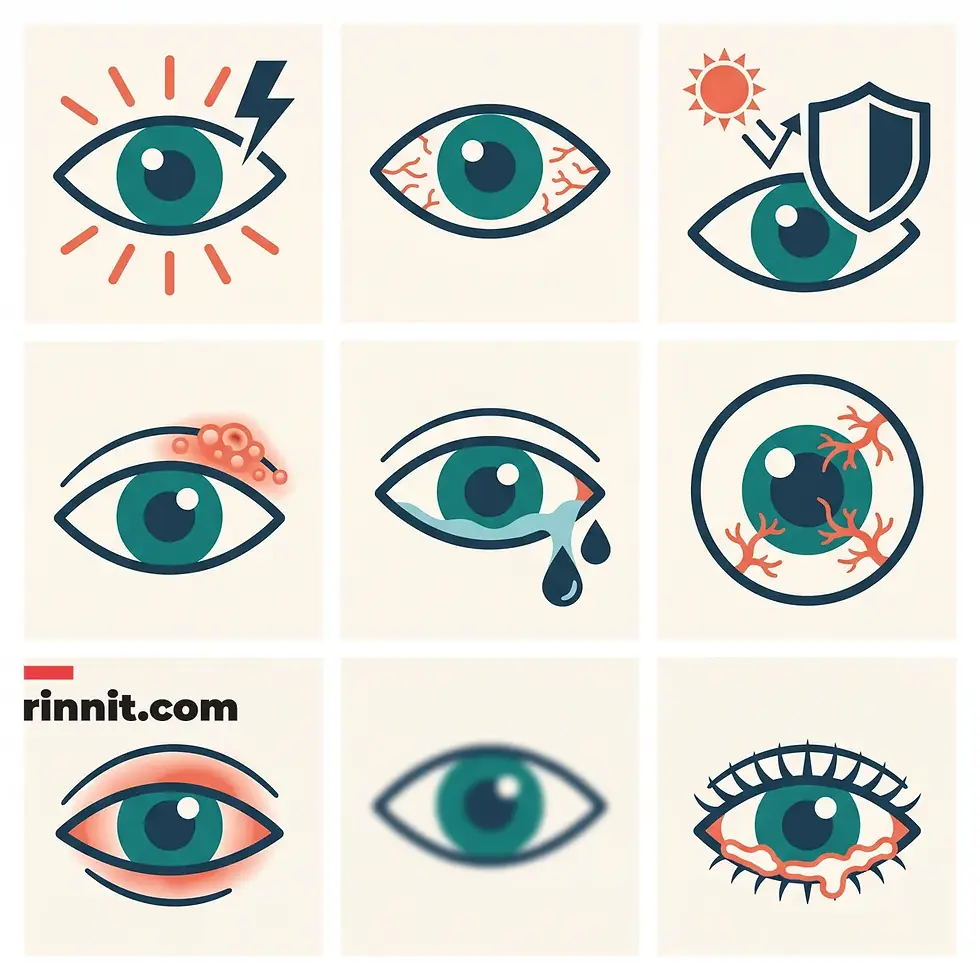
Eye Discomfort: Persistent pain, redness, and a sensation that a foreign object is trapped in the eye. [1]
Visual Changes: Increased sensitivity to light (photophobia) and watery discharge. [1]
Physical Bumps: The appearance of fluid-filled blisters (vesicles) or pus-filled bumps (pustules) on the eyelids or facial skin. [1]
Structural Issues: Inflammation of the eyelids (blepharitis) or the cornea (keratitis).
What causes ocular herpes, and how is it transmitted?
The viruses that lead to ocular herpes are highly contagious and spread through direct contact or shared personal items. [1]
Virus Type | Common Transmission Method | Associated Conditions |
HSV-1 | Person-to-person contact (kissing, shared utensils) | Oral cold sores |
HSV-2 | Sexual transmission or vertical transmission (mother to baby) | Genital herpes |
Varicella Zoster | Reactivation of dormant virus in the nervous system | Chickenpox and Shingles |
What are the risk factors for ocular herpes recurrence?
Because these viruses remain in the body permanently, certain triggers can cause the infection to reactivate. Understanding these factors is essential for long-term management.
Systemic Stress: High levels of physical or emotional stress can weaken the immune response. [1]
Environmental and Physical Triggers: Fever and ultraviolet laser eye treatments. [1]
Medical Factors: Use of certain topical eye medications (like corticosteroids) or underlying immune-suppressing conditions. [1]
Biological Cycles: Hormonal changes, such as those during menstruation, may also play a role. [1]
How is ocular herpes diagnosed, and what complications can it cause?
Early diagnosis is the most effective way to prevent the most severe complication: permanent blindness. Eye care specialists typically use a combination of physical examinations and specialized tests to confirm the presence of the virus.
A slit lamp exam allows doctors to inspect the cornea for characteristic dendritic ulcers, while tonometry checks for changes in eye pressure. In some cases, a fluorescein stain is applied to the eye surface to make viral damage more visible under specialized light.
How is ocular herpes treated and managed?
Ocular herpes cannot be cured, but antiviral eye drops, oral medications and sometimes surgery help control the infection and prevent scarring. Treatment plans often include antiviral eye drops, oral medications, and in severe cases, surgical procedures to repair damaged tissue. [1]

Conclusion
Ocular herpes is a manageable but serious condition that demands proactive care. By recognizing the early warning signs and understanding the triggers for recurrence, patients can work effectively with their healthcare providers to protect their vision.
For more resources on managing health information visually, explore our infographic templates.
Frequently Asked Questions
Is ocular herpes contagious?
Yes, the underlying viruses are highly contagious through direct contact.
Can eye herpes be cured?
No, the virus remains in the body, but symptoms can be managed.
What is the most common cause of eye herpes?
HSV-1, the virus that causes oral cold sores.
Can stress cause a flare-up?
Yes, stress is a significant risk factor for viral reactivation.
Does it always affect both eyes?
No, it usually affects one eye, but can affect both.
What is a dendritic ulcer?
A characteristic branch-like sore on the cornea caused by HSV.
Can I wear contact lenses during an outbreak?
Generally, it is advised to avoid contacts until the infection clears.
Is vision loss permanent?
It can be if significant corneal scarring occurs.
How is it different from pink eye?
While it causes redness, ocular herpes is caused by specific herpes viruses and carries higher risks.
Can shingles affect the eye?
Yes, this is known as herpes zoster ophthalmicus.
Are there vaccines for ocular herpes?
There is no specific vaccine for HSV, but the shingles vaccine can reduce risks from varicella zoster.
Can babies get eye herpes?
Yes, through vertical transmission during birth.
What is photophobia?
An extreme sensitivity to light.
What does a slit lamp do?
It provides a high-magnification, 3D view of the eye's structures.
Can topical steroids help?
They are sometimes used but must be carefully monitored as they can also trigger flare-ups.
How long does an outbreak last?
With treatment, symptoms often improve within a few weeks.
Can I get it from a swimming pool?
It is unlikely; the virus typically requires closer contact.
What is blepharitis?
Inflammation of the eyelids.
Can eye herpes cause a fever?
Sometimes, especially during the initial infection.
Is eye pain a common symptom?
Yes, it is one of the primary indicators.
What is the uvea?
The middle layer of the eye.
Can the virus spread from a cold sore?
Yes, if you touch the sore and then your eye.
Are blood tests necessary for diagnosis?
They can be used to check for antibodies or active infection.
What is epiphora?
Excessive tearing or watery eyes.
Can laser surgery trigger an outbreak?
Yes, ultraviolet (UV) laser eye treatments are a known risk factor.
What is iritis?
Inflammation of the iris.
Is it more common in older adults?
Varicella zoster-related cases are more common in those over 60.
Can I use over-the-counter drops?
You should only use medications prescribed by an eye specialist.
What is keratitis?
Inflammation of the cornea.
Does the rash always appear?
No, some cases only involve internal eye symptoms.
Can I go blind from one outbreak?
Severe, untreated cases can lead to rapid vision loss.
What is a fluorescein stain?
A non-toxic dye used to highlight surface damage on the eye.
Is it related to genital herpes?
HSV-2, which causes genital herpes, can occasionally cause eye infections.
Can I spread it to others?
Yes, through close contact or sharing personal items.
What is the trigeminal nerve?
A major nerve in the face where the virus often hides.
Does the virus ever leave the body?
No, it stays dormant in nerve cells.
Can a weak immune system make it worse?
Yes, it can lead to more frequent and severe outbreaks.
What are pustules?
Small, pus-filled bumps on the skin.
Is light sensitivity dangerous?
It is a symptom of inflammation that needs evaluation.
Can I get it from sharing makeup?
Yes, this is a possible route of transmission.
What is episcleritis?
Redness and swelling of the white part of the eye.
Can it cause a droopy eyelid?
Yes, this is known as ptosis.
Is it painful?
Yes, eye pain is a very common symptom.
How many people have HSV-1?
About 50% of U.S. adults ages 15-49.
What is malaise?
A general feeling of being unwell.
Can I prevent flare-ups?
Managing stress and following treatment plans can help.
What is tonometry?
A test to measure the pressure inside your eyes.
Are corneal ulcers serious?
Yes, they can lead to permanent scarring and vision loss.
Can children get eye herpes?
Yes, though it is less common than in adults.
Should I see a regular doctor or a specialist?
You should see an ophthalmologist or optometrist for eye-related symptoms.
Related Reading
Keratitis: Symptoms, Causes & Treatment Guide explains inflammation of the cornea, including infections caused by viruses.
Shingles in the Eye: A Comprehensive Guide to Symptoms and Care explains how the shingles virus can affect the eye.
Managing Herpes Simplex: A Comprehensive Guide to Outbreaks and Care explains how herpes simplex outbreaks happen and how they are treated.
Cornea Transplant: Types, Surgery, Risks and Recovery explains when corneal scarring may need a transplant.
References
Cleveland Clinic. Ocular Herpes (Eye Herpes). Cleveland Clinic. Last updated February 19, 2024. https://my.clevelandclinic.org/health/diseases/ocular-eye-herpes
Herpetic Eye Disease Study Group. Acyclovir for the prevention of recurrent herpes simplex virus eye disease. N Engl J Med. 1998;339(5):300-306. PMID 9696640. https://doi.org/10.1056/NEJM199807303390503
Farooq AV, Shukla D. Herpes simplex epithelial and stromal keratitis: an epidemiologic update. Surv Ophthalmol. 2012;57(5):448-462. PMID 22542912. https://doi.org/10.1016/j.survophthal.2012.01.005
Heen E, Øverbø J, Tveteraas IH, et al. Efficacy and effectiveness of the recombinant zoster vaccine against herpes zoster, herpes zoster ophthalmicus, postherpetic neuralgia and dementia: a systematic review and meta-analysis. Rev Med Virol. 2026;36(5):e70203. PMID 42748460. https://doi.org/10.1002/rmv.70203
Disclaimer
This article is for informational purposes only and does not constitute medical advice. Always seek the advice of a qualified health provider with any questions regarding a medical condition.



Comments