What Is Cerebellar Degeneration? Causes, Symptoms, and Treatment

Updated: 3 days ago
Medically reviewed by Dr. Baraa Alnahhal, MD · Last reviewed: October 2026
Quick Answer: What is cerebellar degeneration?
Cerebellar degeneration is the progressive loss of nerve cells in the cerebellum, the brain's coordination center, causing loss of control over balance, walking, eye movement and speech. [1] Causes include heavy alcohol use with vitamin B1 deficiency, neurodegenerative disorders and paraneoplastic syndromes. [1] [3] Treatment targets the cause, plus medications for tremors and dizziness and physical, occupational and speech therapy. [1]
Key takeaways
Cerebellar degeneration means nerve cells in the cerebellum — the brain's balance and coordination center — are damaged or dying. [1]
Three main causes: alcohol use disorder with thiamine (vitamin B1) deficiency, neurodegenerative disorders, and paraneoplastic syndromes linked to cancer. [1] [3]
Key symptoms include balance problems, an unsteady wide gait, tremors, involuntary eye movements, double vision, and slurred speech. [1]
There is no cure, but treating the underlying cause can slow or stop the degeneration. [1]
Physical, occupational, and speech therapy help people maintain independence and daily skills for as long as possible. [1]
What the research says
Alcohol-related cerebellar damage centers on the vermis and may involve the immune system. In 38 patients with ataxia and a history of alcohol misuse, gait (97%) and stance (89%) were the most affected, and MRI showed significant structural and volume deficits of the cerebellum, especially the vermis. Anti-gliadin antibodies were found in 34% of patients versus 12% of healthy controls, and anti-transglutaminase 6 antibodies in 39% versus 4%, which led the authors to suggest that immune-mediated mechanisms may add to alcohol's direct toxic effect (Shanmugarajah et al., Cerebellum Ataxias, 2016; https://doi.org/10.1186/s40673-016-0055-1). [4]
Therapeutic exercise helps ataxia scores and balance, though the evidence is low to moderate in quality. A systematic review of 26 studies (8 meta-analyzed) found that exercise reduced disease severity on the Scale for the Assessment and Rating of Ataxia (weighted mean difference −3.3, 95% CI −3.7 to −2.8) and improved balance on the Berg Balance Scale (2.6, 95% CI 1.1–4.2), but it did not significantly improve functional independence (1.6, 95% CI −1.5 to 4.6) (Winser et al., Physiother Theory Pract, 2023; https://doi.org/10.1080/09593985.2022.2037115). A later meta-analysis of 18 randomized trials (398 participants) in degenerative cerebellar ataxia found that physiotherapy lowered ataxia scores (mean difference −1.41, 95% CI −2.16 to −0.66), but with serious risk of bias and low certainty of evidence (Matsugi et al., Front Neurol, 2024; https://doi.org/10.3389/fneur.2024.1491142). [5] [6]
What Is Cerebellar Degeneration?
Cerebellar degeneration is the deterioration — meaning damage or death — of the nerve cells in the cerebellum. [1] The cerebellum sits at the back of the brain and controls many of the movements you rarely think about: coordination, balance, standing, walking, speech, and muscle movements. [1]

When its nerve cells die, the cerebellum gradually shrinks, and the signals that once kept movement smooth and steady begin to misfire. That is why people with this condition stumble, wobble, and speak more slowly.
Importantly, cerebellar degeneration is not a single disease. It is a pattern of damage that results from several different health conditions, including alcohol use disorder, nutritional deficiencies, neurodegenerative disorders, and paraneoplastic syndromes, in which the immune system reacts to cancerous tumors. [1]
Symptoms and Causes
What Causes Cerebellar Degeneration?
Three broad categories of conditions can destroy cerebellar nerve cells.
Alcohol use disorder and nutritional deficiency. Heavy alcohol use can lead to a thiamine (vitamin B1) deficiency. Thiamine is essential for brain function, and without enough of it, brain cells are damaged and die. The deficiency develops in two ways: people with alcohol use disorder may not get enough thiamine in their diets, or their bodies may simply not be able to absorb it. [1] [3]
Neurodegenerative disorders. Some diseases cause nerve degeneration throughout the spinal cord and brain, including the cerebellum. These include ataxia, multiple system atrophy, Creutzfeldt-Jakob disease, and multiple sclerosis (MS). [1] Neurodegenerative disorders may be inherited, passed down through abnormal genes from parents to children, or they may develop during a person's lifetime. [1]
Paraneoplastic syndromes. In some people, an autoimmune response to a tumor turns the immune system against healthy brain cells. These syndromes are more common in people with certain cancers, including breast cancer, ovarian cancer, uterine cancer, adult Hodgkin's lymphoma, and small cell lung cancer. [1] [3]
Cause Category | How It Damages the Cerebellum | Common Associated Conditions |
Alcohol use disorder and nutritional deficiency | Thiamine (vitamin B1) deficiency disrupts brain function and damages cells | Alcohol use disorder, poor thiamine absorption |
Neurodegenerative disorders | Progressive nerve degeneration spreads through the brain and spinal cord | Ataxia, multiple system atrophy, Creutzfeldt-Jakob disease, multiple sclerosis |
Paraneoplastic syndromes | Autoimmune attack on healthy brain cells in response to a tumor | Breast, ovarian, and uterine cancers; adult Hodgkin's lymphoma; small cell lung cancer |
Who Is at Risk?
Risk depends on the cause. Paraneoplastic cerebellar degeneration tends to be more common in women over 50. Overall, men tend to have more balance and coordination problems as they age. Alcohol- or nutrition-related cerebellar degeneration usually appears around middle age and is common in people with a history of alcohol use disorder. [1] [3] The condition can also occur in children who have certain inherited disorders. [1]
How Common Is It?
Less than 1% of people with cancer develop paraneoplastic cerebellar degeneration, making that form rare. [1] [3] Alcohol-related cerebellar degeneration is more common.
What Are the Symptoms?
Because the cerebellum coordinates movement, its symptoms are almost all movement-related.
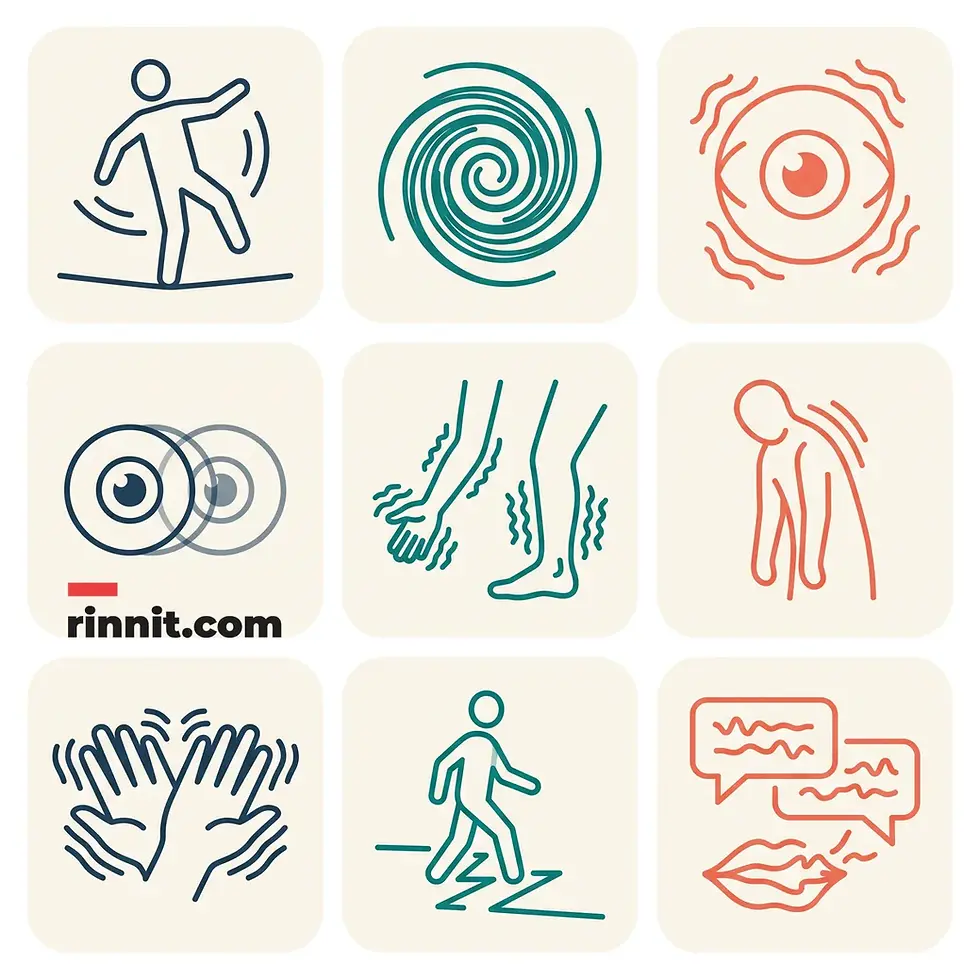
The core symptoms include balance problems, vertigo, and dizziness; decreased muscle tone (hypotonia); eye problems such as double vision and involuntary eye movements called nystagmus; poor muscle coordination in the arms or legs (ataxia); problems with motor skills such as holding the head up or using the limbs; tremors or shaking during muscle movements; and an unsteady, uncoordinated walk with a wide gait. [1]
People with paraneoplastic cerebellar degeneration may also develop dementia — problems with memory, reasoning, and thinking — along with slow, slurred speech called dysarthria. [1]
People with cerebellar degeneration may also have co-occurring conditions such as attention-deficit/hyperactivity disorder (ADHD), autism spectrum disorder, and schizophrenia. [1]
Diagnosis and Tests
How Is Cerebellar Degeneration Diagnosed?
Diagnosis starts with a careful evaluation. A healthcare provider reviews your symptoms, personal medical history, and family medical history, and asks you to explain how — and to what extent — your symptoms interfere with daily life.
To confirm the diagnosis, imaging exams are usually ordered:
Diagnostic Test | What It Shows |
MRI (magnetic resonance imaging) | Highly detailed pictures of the brain; can show the cerebellum has grown smaller or deteriorated; also detects brain tumors or evidence of stroke |
CT (computed tomography) scan | Detailed images of brain tissue; helps confirm cerebellar shrinkage and rule out other conditions |
Spinal tap (lumbar puncture) | A needle takes a sample of cerebrospinal fluid (the liquid around the brain and spinal cord); substances in the fluid may indicate an autoimmune disorder such as a paraneoplastic syndrome |
Blood test | Detects certain antibodies — proteins the immune system produces to fight illness; people with cancer and paraneoplastic syndromes may have high antibody levels |
Genetic testing | Ordered when hereditary cerebellar degeneration is suspected |
An imaging exam may show that the cerebellum has grown smaller or deteriorated, and these same tests can detect other brain conditions, such as a brain tumor or evidence of stroke. [1]
Management and Treatment
How Is Cerebellar Degeneration Treated?
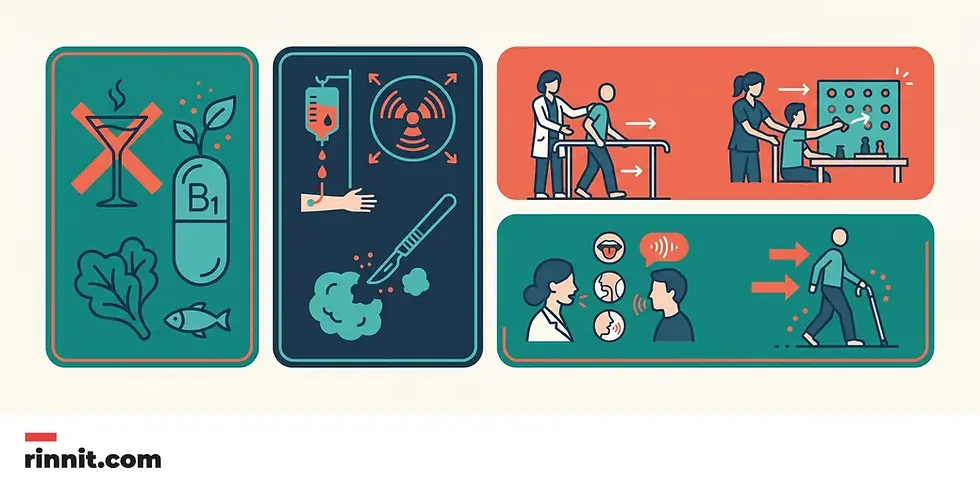
There is no cure for cerebellar degeneration. Treatment depends on the underlying cause of the brain dysfunction. Medications can sometimes help manage specific symptoms, including tremors or problems with walking and dizziness. [1]
Treatment for paraneoplastic cerebellar degeneration targets the cancer and the immune response: chemotherapy, radiation therapy, immunosuppressants, immunotherapy, and different combinations of chemotherapy, radiation therapy, and surgery to remove the tumor. [1]
Treatment for alcohol-related cerebellar degeneration focuses on removing the cause and rebuilding nutrition:
Treatment Step | What It Involves |
Stop drinking alcohol | Complete abstinence halts further alcohol-driven damage |
Dietary changes | Eat more whole grains, lean meat, and fish; choose foods fortified with thiamine and other B vitamins |
Thiamine supplements | Replace the missing vitamin B1 directly |
Therapy helps every form. People with any form of cerebellar degeneration may need physical, occupational, or speech therapy. These therapies improve motor skills so you can perform daily activities, rebuild muscle strength and coordination, and strengthen swallowing, speaking, and language skills. [1]
Outlook / Prognosis
The prognosis depends on the underlying cause. Cancer treatment, abstaining from alcohol, or adjusting your diet may slow or stop the degeneration. [1] But for other neurodegenerative conditions, the disease will likely worsen over time at various speeds. [1]
People with progressive forms may develop severe loss of coordination. They might need a wheelchair or an assistive device to move around and prevent falls, and some may lose the ability to live independently if they cannot perform daily tasks. Some people become bed-bound. [1] Children with cerebellar degeneration may have developmental delays. [1]
Prevention
Not drinking alcohol can greatly reduce your risk of alcohol-related cerebellar degeneration. There are no proven prevention strategies for the other forms of the disease. [1]
Living With Cerebellar Degeneration
When Should I Contact My Healthcare Provider?
If you notice any problems with your balance, speech, eyesight, or ability to perform everyday activities, contact your healthcare provider right away. Sometimes people assume these issues are simply part of the aging process — but they could be signs of a more serious issue.
Conclusion
Cerebellar degeneration is a serious but manageable pattern of brain damage. The most powerful levers are addressing the cause — quitting alcohol, treating the underlying cancer, or adding thiamine — and staying engaged with physical, occupational, and speech therapy to preserve independence. If your balance, speech, or coordination feels different, do not write it off as aging. See a healthcare provider for an evaluation.
If you find health information easier to understand visually, explore Rinnit's infographic templates — ready-made designs that turn complex medical topics into clear, shareable visuals.
Frequently Asked Questions
What is cerebellar degeneration?
Cerebellar degeneration is the deterioration, damage, or death of nerve cells in the cerebellum, the structure at the back of the brain that controls coordination, balance, standing, walking, speech, and muscle movements.
Where is the cerebellum located?
The cerebellum is in the back part of the brain, below and behind the larger brain structures.
What does the cerebellum do?
The cerebellum controls many important functions, including coordination in balance, standing, walking, speech, and muscle movements.
Is cerebellar degeneration a disease or a symptom?
Cerebellar degeneration is a pattern of damage rather than a single disease. It results from several different health conditions, including alcohol use disorder, neurodegenerative disorders, and paraneoplastic syndromes.
What are the main causes of cerebellar degeneration?
The three main causes are alcohol use disorder or nutritional deficiencies (especially thiamine/vitamin B1), neurodegenerative disorders, and paraneoplastic syndromes — immune responses to cancerous tumors.
How does alcohol cause cerebellar degeneration?
Alcohol use disorder can lead to a thiamine (vitamin B1) deficiency, which disrupts brain function and damages cells. People with alcohol use disorder may not get enough thiamine in their diets, or their bodies may not be able to absorb it.
Can a vitamin deficiency alone damage the brain?
Yes. A thiamine (vitamin B1) deficiency disrupts brain function and damages cells, even apart from alcohol use in some nutritional deficiency cases.
What are paraneoplastic syndromes?
Paraneoplastic syndromes are autoimmune disorders in which the body attacks healthy brain cells in response to a tumor.
Which cancers are linked to paraneoplastic cerebellar degeneration?
Breast cancer, ovarian cancer, uterine cancer, adult Hodgkin's lymphoma, and small cell lung cancer.
How common is paraneoplastic cerebellar degeneration?
Less than 1% of people with cancer develop it. It is considered rare.
Which form of cerebellar degeneration is most common?
Alcohol-related cerebellar degeneration is more common than the paraneoplastic form.
Who is at highest risk for paraneoplastic cerebellar degeneration?
Paraneoplastic cerebellar degeneration tends to be more common in women over 50.
Does cerebellar degeneration affect men or women more?
Risk depends on the cause. Paraneoplastic cerebellar degeneration tends to affect women over 50, while overall, men tend to have more balance and coordination problems as they get older.
At what age does alcohol-related cerebellar degeneration usually appear?
Alcohol-related cerebellar degeneration usually happens around middle age and is common in people with a history of alcohol use disorder.
Can children get cerebellar degeneration?
Yes. It can occur in children who have certain inherited disorders.
What are the main symptoms of cerebellar degeneration?
Balance problems, vertigo, dizziness, decreased muscle tone, eye problems (double vision and involuntary eye movements), poor coordination in the arms or legs, motor skill problems, tremors, and an unsteady, uncoordinated walk with a wide gait.
What is ataxia in this context?
Ataxia is poor muscle coordination in the arms or legs, and it is both a symptom of cerebellar degeneration and a name for a group of neurodegenerative diseases that can cause it.
What is nystagmus?
Nystagmus is involuntary eye movement — the eyes move on their own without the person controlling them.
What is hypotonia?
Hypotonia is decreased muscle tone, making muscles feel softer and weaker than normal.
What is dysarthria?
Dysarthria is slow and slurred speech, and it is more common in people with paraneoplastic cerebellar degeneration.
Does cerebellar degeneration cause memory problems?
Dementia — problems with memory, reasoning, and thinking — is more common in people with paraneoplastic cerebellar degeneration.
Can cerebellar degeneration cause vertigo?
Yes. Balance problems, vertigo, and dizziness are among the core symptoms.
Why does walking become wide and unsteady?
The cerebellum coordinates movement; as its cells die, the person develops an unsteady or uncoordinated walk with a wide gait.
Are there other conditions associated with cerebellar degeneration?
People with the condition may also have ADHD, autism spectrum disorder, or schizophrenia.
How is cerebellar degeneration diagnosed?
Through a careful evaluation of symptoms, a review of personal and family medical history, and imaging exams such as MRI or CT scans, sometimes plus spinal fluid tests, blood tests, and genetic testing.
What does an MRI show in cerebellar degeneration?
An MRI creates highly detailed pictures of the brain and may show that the cerebellum has grown smaller or deteriorated.
Can imaging rule out other problems?
Yes. These exams can also detect other brain conditions, such as a brain tumor or evidence of stroke.
What is a spinal tap used for in diagnosis?
A needle takes a sample of cerebrospinal fluid — the liquid around the brain and spinal cord. Substances in the fluid may indicate an autoimmune disorder such as paraneoplastic syndromes.
Why are blood tests ordered?
A blood test can detect certain antibodies — proteins the immune system produces to fight illness. People with cancer and paraneoplastic syndromes may have high antibody levels.
When is genetic testing used?
If a healthcare provider suspects hereditary cerebellar degeneration, they may order genetic testing.
Is there a cure for cerebellar degeneration?
No. There is no cure, and treatment depends on the underlying cause of the brain dysfunction.
What medications help with cerebellar degeneration?
Medications can sometimes manage certain symptoms, including tremors or problems with walking and dizziness.
How is paraneoplastic cerebellar degeneration treated?
Treatment may include chemotherapy, radiation therapy, immunosuppressants, immunotherapy, and different combinations of chemotherapy, radiation therapy, and surgery to remove the tumor.
How is alcohol-related cerebellar degeneration treated?
By not drinking alcohol, making dietary changes — eating more whole grains, lean meat, and fish, plus foods fortified with thiamine and other B vitamins — and taking thiamine supplements.
Can therapy help people with cerebellar degeneration?
Yes. People with any form may need physical, occupational, or speech therapy to improve motor skills for daily activities, muscle strength and coordination, and swallowing, speaking, and language skills.
What is the prognosis for cerebellar degeneration?
It depends on the underlying cause. Cancer treatment, abstaining from alcohol, or adjusting diet may slow or stop the degeneration. For other neurodegenerative conditions, the disease will likely worsen over time at various speeds.
Will people with progressive cerebellar degeneration need a wheelchair?
People with progressive forms may develop severe loss of coordination and might need a wheelchair or an assistive device to move around and prevent falls.
Can people with cerebellar degeneration live independently?
Some may lose the ability to live independently if they cannot perform daily tasks or activities, and some become bed-bound.
Can cerebellar degeneration be prevented?
Not drinking alcohol can greatly reduce the risk of alcohol-related cerebellar degeneration. There are no proven prevention strategies for the other forms.
When should I contact my healthcare provider?
If you notice any problems with your balance, speech, eyesight, or ability to perform everyday activities, contact your healthcare provider right away — do not assume these are just part of aging.
Related Reading
References
Cleveland Clinic. Cerebellar Degeneration. Cleveland Clinic Health Library. Last updated March 30, 2022. https://my.clevelandclinic.org/health/diseases/22636-cerebellar-degeneration
Mayo Clinic Staff. Ataxia: Symptoms and causes. Mayo Clinic. Accessed October 30, 2026. https://www.mayoclinic.org/diseases-conditions/ataxia/symptoms-causes/syc-20355652
National Organization for Rare Disorders. Subacute Cerebellar Degeneration. NORD Rare Disease Database. Last updated March 15, 2021. https://rarediseases.org/rare-diseases/cerebellar-degeneration-subacute/
Shanmugarajah PD, Hoggard N, Currie S, et al. Alcohol-related cerebellar degeneration: not all down to toxicity? Cerebellum Ataxias. 2016;3:17. PMID: 27729985. https://doi.org/10.1186/s40673-016-0055-1
Winser S, Chan HK, Chen WK, et al. Effects of therapeutic exercise on disease severity, balance, and functional independence among individuals with cerebellar ataxia: A systematic review with meta-analysis. Physiother Theory Pract. 2023;39(7):1355-1375. PMID: 35212247. https://doi.org/10.1080/09593985.2022.2037115
Matsugi A, Bando K, Kondo Y, et al. Effects of physiotherapy on degenerative cerebellar ataxia: a systematic review and meta-analysis. Front Neurol. 2024;15:1491142. PMID: 39866519. https://doi.org/10.3389/fneur.2024.1491142
Medical disclaimer
This article is for general informational purposes only and is not a substitute for professional medical advice, diagnosis, or treatment. Always seek the advice of a qualified healthcare provider with any questions about a medical condition.



Comments