What Is Catatonic Schizophrenia? Understanding the Obsolete Subtype and What Replaced It

Updated: 2 days ago
Medically reviewed by Dr. Baraa Alnahhal, MD · Last reviewed: October 2026
Quick Answer
Catatonic schizophrenia is an obsolete diagnosis; experts now diagnose schizophrenia with catatonia as an additional feature. [4] Catatonia is a syndrome in which the brain fails to manage muscle movement signals normally, causing mutism, stupor or posturing. [4] It affects roughly 10% to 25% of people with schizophrenia and is usually very treatable, though schizophrenia itself is lifelong. [4]
What the research says
ECT has consistent support across catatonia types and ages. A 2023 systematic review identified 13 systematic reviews and one meta-analysis on electroconvulsive therapy, which consistently described improvement in catatonia symptoms across catatonia types and patient age groups. The authors noted that more high-quality randomized trials are still needed (Xiao et al., Front Psychiatry, 2023) [1].
Antipsychotic results in catatonia are mixed. A systematic review of 79 articles covering 175 antipsychotic trials in 110 patients found antipsychotic use was considered beneficial in 60.0% of trials, neutral in 29.1%, and harmful in 10.9%, with outcomes varying widely between drugs (Redon et al., Eur Psychiatry, 2025) [2].
Benzodiazepines are first-line in practice, but trial evidence is limited. A Cochrane review found 22 possibly relevant studies of benzodiazepines for catatonia in schizophrenia and other serious mental illness, but only one (17 participants) could be included. It found no difference between lorazepam and oxazepam (RR 0.95, 95% CI 0.42 to 2.16), and the authors rated the evidence as very low quality (Zaman et al., Cochrane Database Syst Rev, 2019) [3].
Key takeaways
"Catatonic schizophrenia" is an obsolete term, removed from official diagnoses in DSM-5 (2013) and ICD-11 (2019). [4]
Catatonia is a syndrome of abnormal movement and behavior caused by disrupted brain signal management. [4]
It occurs in about 10% to 25% of people with schizophrenia. Bipolar disorder is now recognized as an even more common catatonia partner. [4]
There are three forms: excited (hyperkinetic), withdrawn (hypokinetic), and mixed. [4]
Two of schizophrenia's main symptoms plus three of the twelve catatonia signs are needed for diagnosis. [4]
Benzodiazepines are first-line treatment; antipsychotics are often avoided during acute catatonia because they can worsen it. [4]
ECT is safe, painless under anesthesia, and very effective, and it is sometimes the first choice for malignant catatonia. [1] [4]
The condition is lifelong but manageable, and faster treatment means better outcomes. [4]
What Is Catatonic Schizophrenia?

Catatonic schizophrenia was the name for a subtype of schizophrenia in which catatonia, a cluster of abnormal movement and behavior symptoms, was the dominant feature. Experts no longer recognize it as a standalone diagnosis. [4] Modern psychiatry treats schizophrenia as a specific disease and a spectrum of disorders, and attaches catatonia as an additional feature when it appears. [4]
The American Psychiatric Association removed catatonic schizophrenia from its list of official diagnoses when the fifth edition of the Diagnostic and Statistical Manual of Mental Disorders (DSM-5) was published in 2013. [4] The World Health Organization followed when it updated the International Classification of Diseases to the 11th edition (ICD-11) in 2019. [4]
What Is Catatonia?
Catatonia is a syndrome, a collection of signs and symptoms, in which the brain does not manage muscle movement signals the way it should, and a person behaves abnormally. [4] It occurs alongside many medical and mental health conditions, and schizophrenia is frequently one of them. [4]
It is a common misconception that catatonia belongs only to schizophrenia. That once seemed true, but it is now known that bipolar disorder is more commonly associated with catatonia than schizophrenia is. [4] There are three main forms of catatonia:
Form | What It Looks Like |
Excited (hyperkinetic) | Increased movement such as pacing, agitated behavior, unusual or exaggerated movements, repetitive movements or speaking, or mimicking someone's speech or movements |
Withdrawn (hypokinetic) | Very limited or no response to surroundings; muteness, no facial expressions, holding completely still, staring, or staying in an unusual position for an extended period |
Mixed | A combination of hyperkinetic and hypokinetic features |
The withdrawn form is often easier to recognize because the person appears almost statue-like, while the excited form can look like restless agitation. Many people actually fall somewhere between these extremes.
Catatonic vs. Paranoid Schizophrenia
Like catatonic schizophrenia, paranoid schizophrenia is also an obsolete term. It described schizophrenia where paranoia, delusions, and hallucinations were considered the key symptoms. [4] Catatonic schizophrenia described the version where catatonia was the most dominant feature. Neither subtype exists in modern diagnostic manuals. [4]
Who Does It Affect?
Schizophrenia tends to appear earlier in men, typically between ages 15 and 25, while in women it usually develops between ages 25 and 35. [4] It occurs at the same rates regardless of sex. [4] Children can develop schizophrenia in rare cases, and their cases are usually more severe than those appearing in adults. [4] Interestingly, catatonia in childhood is most commonly associated with schizophrenia, the opposite pattern seen in adults. [4]
How Common Is It?
Schizophrenia is widely known but not very common. About 85 people out of every 10,000 develop it during their lifetime, and healthcare providers worldwide diagnose roughly 2.77 million people per year with the condition. [4]
Catatonia occurs in a small but noteworthy share of people with schizophrenia. Researchers estimate it happens in 10% to 25% of people with the condition. [4]
How Does It Affect Your Body?
Schizophrenia disrupts how the brain works, especially processes tied to thinking and focus, memory, and the key senses. [4] When catatonia is involved, the condition often stands out because it produces extremely high levels of movement or no movement at all, though most people show subtler presentations between those two extremes.
Symptoms
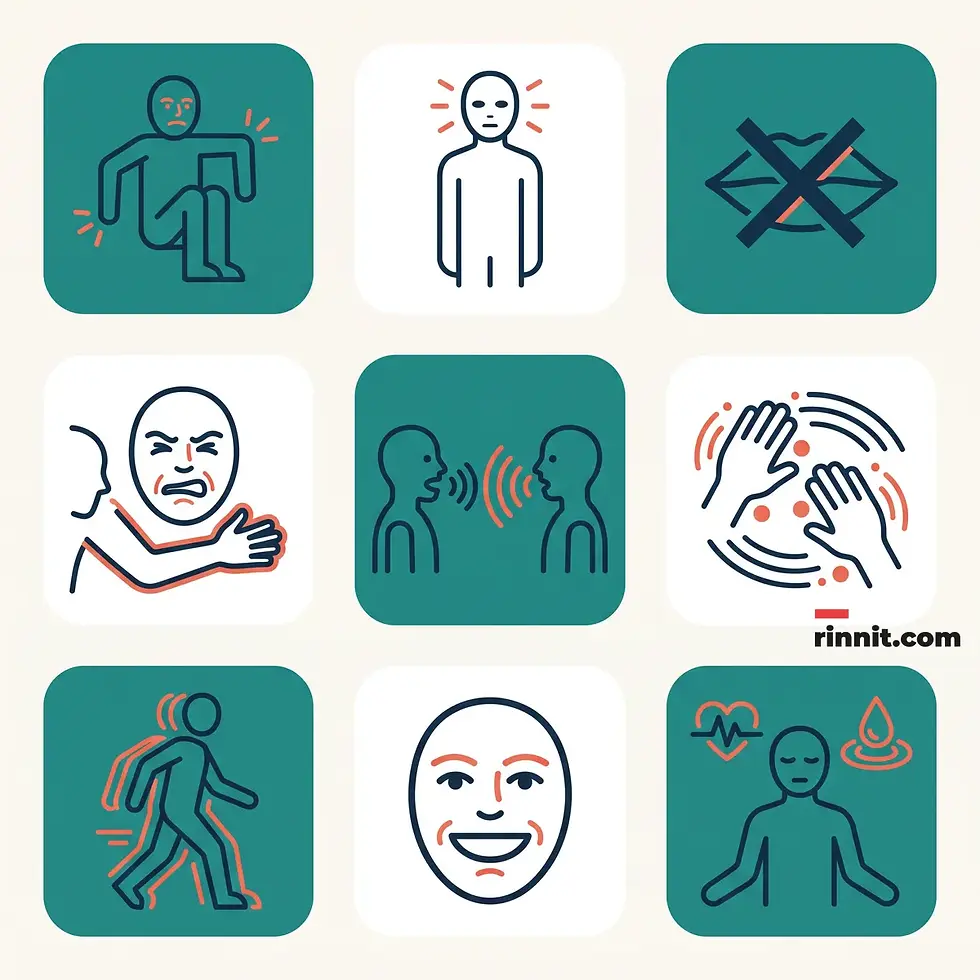
Schizophrenia typically unfolds in three stages, and its active stage is when symptoms are at their worst. [4] Five key symptoms define the condition, and they can appear whether or not catatonia is also present:
Key Symptom | Description |
Delusions | False beliefs held despite evidence to the contrary |
Hallucinations | Perceiving things that are not there, such as hearing voices |
Disorganized or incoherent speaking | Speech that jumps between unrelated topics or loses logical flow |
Disorganized or unusual movements | Behavior and movement that seems odd or purposeless |
Negative symptoms | Diminished or reduced emotional expression, motivation, or speech |
The Twelve Signs of Catatonia
Historically, experts recognized as many as 40 different symptoms that can occur with catatonia. [4] The DSM-5 narrowed that list to twelve:
Sign | What It Looks Like |
Agitation | Acting upset or irritable for no clear reason, not in response to surroundings |
Catalepsy | Holding a position someone else places you in, though you can still be repositioned |
Echolalia | Echoing sounds or words that someone else makes |
Echopraxia | Mimicking or mirroring someone else's movements or behaviors |
Grimacing | Holding the same facial expression, often with stiff or tense facial muscles |
Mannerism | Performing normal motions in an unusual, exaggerated way |
Mutism | Being very or totally quiet, without another condition explaining the silence |
Negativism | Not reacting to surroundings or actively resisting them for no rational reason |
Posturing | Holding a specific position, often uncomfortable for people without catatonia |
Stereotypy | Repetitive, purposeless movements such as finger-play or patting and rubbing the body |
Stupor | Being awake but unresponsive, sometimes not reacting even to painful stimuli like pinching |
Waxy flexibility | Slight resistance to a position change, then muscles release and limbs bend like a warm candle |
An important finding may be reassuring to families: people who show signs of catatonia may not react to their surroundings, but many of them are aware of what is happening. Research shows that people who experienced catatonia often remember what happened to and around them, even though they showed little or no visible reaction. [4]
Shifts in Activity Level
Catatonia can change how schizophrenia progresses. Most cases of schizophrenia with catatonia develop and worsen quickly. [4] Activity levels can also shift dramatically: a person may stay nonresponsive for a time and then swing into a much higher level of activity. In some cases, these shifts include behavior that is impulsive or even dangerous to the person or to those around them. [4]
Causes
Experts have not uncovered a confirmed cause of schizophrenia, but they suspect several contributing factors:
Suspected Factor | Description |
Chemical imbalances | Disrupted levels of the chemicals the brain uses for cell-to-cell communication |
Congenital brain problems | Problems that occur while the brain develops in the womb before birth |
Communication disruptions | Missed connections between networks of neurons that link brain areas so they can work together |
Several risk factors may raise the chances of developing schizophrenia, though none are confirmed causes [4]:
Risk Factor | Description |
Inherited mutations | Genetic mutations inherited from one or both parents |
Chemical exposure | Exposure to certain chemicals or substances |
Prenatal stress or complications | Stress or complications during development in the mother's uterus |
Recreational drug use | Use of recreational drugs |
Is It Contagious?
Schizophrenia is not contagious and does not spread from person to person. [4] Catatonia itself is also not contagious, although infectious diseases can sometimes cause it. [4]
Diagnosis and Tests
There is no single lab test, diagnostic test, or imaging scan that can diagnose any form of schizophrenia. Instead, providers combine methods (physical examination, neurological examination, lab tests, and imaging scans) to build a picture and to rule out other dangerous or life-threatening conditions. [4]
The diagnostic criteria are specific: a person must show at least two of schizophrenia's main symptoms, and at least three of the twelve catatonia signs, for catatonia to be diagnosed as part of their schizophrenia. [4]
Test | What It Looks For |
CT scan | Brain imaging to rule out other conditions |
MRI scan | Detailed brain imaging to exclude structural problems |
Blood, urine, and cerebrospinal fluid tests | Chemical changes, heavy metal poisoning, and infections |
Spinal tap (lumbar puncture) | Cerebrospinal fluid analysis |
EEG (electroencephalogram) | Electrical brain activity, used to rule out seizures or epilepsy |
Management and Treatment
Schizophrenia is usually treatable, though not curable. [4] Medications are the main form of treatment for schizophrenia in general, but when catatonia is present, a different approach is required. There are two main ways to treat schizophrenia that is currently causing catatonia:
Treatment | How It Works |
Medications (benzodiazepines) | A specific class of medication, usually the first-line treatment, that can also treat severe anxiety, panic, or seizures; often very effective at reversing the effects of catatonia |
Electroconvulsive therapy (ECT) | A mild electrical current sent through the skin and skull into part of the brain, causing a brief seizure and changes in brain activity; performed under anesthesia, so it is painless; safe and very effective, usually second-line except in very severe cases |
One caution stands out in treatment planning: antipsychotics, which are the mainstay of schizophrenia treatment, are typically avoided in people with acute catatonia because of their potential to make catatonia worse. [2] [4]
Complications and side effects of treatment depend on the specific medications taken, other health conditions, and individual factors. Your healthcare provider is the best person to explain what side effects are possible for your specific case.
Living With Catatonic Schizophrenia
Self-Care and Daily Management
You should never try to diagnose schizophrenia in yourself or a loved one. It takes training and experience to diagnose accurately, the symptoms can overlap with other conditions or substance use, and the necessary medications require a prescription. Your healthcare provider should be the one to diagnose the condition and recommend treatments. [4]

Daily management steps include:
Take your medications exactly as prescribed, and never stop them without talking to your healthcare provider first. [4]
Keep every scheduled appointment. These visits help adjust medication or treatment plans. [4]
Do not ignore or avoid your symptoms. [4]
Avoid alcohol and recreational drug use, which can worsen symptoms or cause other problems. [4]
Consider seeking support [4] and build relationships with trusted loved ones and your provider rather than isolating.
When to See Your Provider
Your provider will schedule regular appointments, and attending them matters. You should also seek care if you notice a change in your symptoms or in how well your medication is working. [4]
When to Go to the ER
People with schizophrenia, now or in the past, have an increased risk of self-harm and suicide. Go to the ER or call 911 (or your local emergency services number) if you have thoughts about harming yourself, including thoughts of suicide, or about harming others. [4] In the United States, you can also call or text 988 to reach the 988 Suicide & Crisis Lifeline, and most areas have local crisis lines as well.
Outlook and Prognosis
Schizophrenia is well known partly because of how it disrupts a person's ability to think and understand the world. Because it causes psychosis, a disconnection from reality, people with the condition struggle to tell what is real from what is not, and may not recognize that they have a condition at all. [4]
Is It Fatal?
Schizophrenia with catatonia is not usually fatal on its own. However, it carries an increased risk of death from conditions that arise from prolonged immobility, such as pulmonary embolism and pneumonia. [4] There is also one dangerous form: malignant catatonia, which can cause a very high fever and disrupt the autonomic nervous system, the system that runs body functions like breathing and blood pressure without conscious effort. [4] Because malignant catatonia is potentially deadly, ECT is usually a first-line treatment for it rather than medication. [4]
How Long Does It Last?
Schizophrenia is a permanent condition. Some cases can go into remission, meaning symptoms disappear and do not return, but because symptoms can return unpredictably, experts still consider it a lifelong condition. [4]
Overall Prognosis
In general, schizophrenia with catatonia responds well to treatment. Outcomes are usually fair to good, especially with faster diagnosis and treatment. [4] However, catatonic schizophrenia is often more difficult to treat than catatonia that occurs alongside other mental health conditions. [4]
Untreated schizophrenia can cause severe life disruptions, such as trouble holding a job and maintaining friendships and relationships, and many people try, consciously or unconsciously, to self-medicate, which can lead to alcohol and substance use disorders. [4] With treatment, the condition is often manageable, and many people who follow their treatment plan live happy, fulfilling lives.
Prevention
Schizophrenia happens unpredictably, which means it is impossible to prevent or to reduce your risk of developing it. [4]
Helping a Loved One
People with schizophrenia frequently cannot recognize their symptoms, so they often do not believe they need medical care. [4] That can be frustrating or frightening for both the person and those who care about them. If a loved one shows signs of schizophrenia, especially with catatonia, it is important to seek medical treatment promptly, because people with catatonia and schizophrenia can develop malignant catatonia, agitation, or dangerous behavior. [4]
How to Help | Why It Matters |
Ask how you can help | Listening and offering help keeps communication open and helps them feel connected |
Encourage professional care | Treatment, especially medication, can improve symptoms and help them recognize they have a medical condition needing care |
Do not judge or argue | Judging or debating hallucinations and delusions can break trust and fuel paranoia |
Stay calm | Anger and frustration damage the relationship; choose quiet, calming environments where they feel safe |
Get help in emergencies | Call emergency services immediately if someone talks about harming themselves or others, shows severe paranoia, agitation, or acts violently |
"Catatonic schizophrenia" is an obsolete term for a subtype of schizophrenia. While experts don't use this diagnosis any longer, catatonia is still a feature that happens commonly with schizophrenia. It's also a symptom that stands out because it affects a person's movements, behavior and ability to communicate. In some cases, catatonia can also turn into a deadly issue, so people with catatonia should receive medical care as quickly as possible. Fortunately, there are ways to treat catatonia and schizophrenia, and people who have schizophrenia can often manage their condition and live fulfilling, enjoyable lives. Cleveland Clinic, "A note from Cleveland Clinic"
Conclusion
The term "catatonic schizophrenia" belongs to an earlier era of psychiatry, but the experience it described is very real. Today, catatonia is recognized as a treatable feature that can accompany schizophrenia and several other conditions. It affects roughly 10% to 25% of people with schizophrenia, arrives in withdrawn, excited, or mixed forms, and responds well to benzodiazepines and, when needed, ECT. Because the condition cannot be prevented and can be dangerous when it turns malignant, early recognition and fast treatment make all the difference.
Understanding catatonia starts with reliable information. At Rinnit, we create visual tools that turn complex medical topics into clear, shareable content. Explore our infographic templates to communicate mental health and medical information more effectively.
FAQ
Is catatonic schizophrenia a real diagnosis today?
No. It was removed from official diagnostic manuals: the DSM-5 in 2013 and the ICD-11 in 2019. Today, providers diagnose schizophrenia and note catatonia as an additional feature when it is present. [4]
What is catatonia?
Catatonia is a syndrome (a collection of signs and symptoms) in which the brain does not manage muscle movement signals as it should, causing abnormal behavior ranging from complete stillness to agitated, repetitive movement. [4]
Why did the diagnosis change?
Experts now understand schizophrenia as a specific disease and a spectrum of disorders rather than a set of subtypes. Catatonia was recognized as something that occurs with many medical and mental health conditions, not just schizophrenia, so it was moved to an add-on feature. [4]
How common is catatonia in schizophrenia?
Researchers estimate catatonia occurs in about 10% to 25% of people with schizophrenia. [4]
How common is schizophrenia?
About 85 people out of every 10,000 develop schizophrenia during their lifetime. Worldwide, around 2.77 million people are diagnosed each year. [4]
At what age does schizophrenia usually start?
It tends to appear between ages 15 and 25 in men and between ages 25 and 35 in women, at similar rates regardless of sex. [4]
Can children get catatonia?
Yes. Children can develop schizophrenia in rare cases, and their cases are usually more severe. In contrast to adults, catatonia in childhood is most commonly associated with schizophrenia. [4]
What are the three forms of catatonia?
The forms are excited (hyperkinetic), withdrawn (hypokinetic), and mixed, which combines features of both. [4]
What does withdrawn catatonia look like?
A person may be mute, show no emotions or facial expressions, hold completely still, stare, or stay in an unusual position for an extended period, with very limited or no response to surroundings. [4]
What does excited catatonia look like?
A person shows increased movement such as pacing, agitated behavior, unusual or exaggerated movements, repetitive movements or speaking, or mimicking someone's speech or movements. [4]
What are the five key symptoms of schizophrenia?
Delusions, hallucinations, disorganized or incoherent speaking, disorganized or unusual movements, and negative symptoms, meaning diminished or reduced emotions, motivation, or speech. [4]
What is mutism in catatonia?
Mutism is when a person is very or totally quiet. It only counts as a catatonia sign if no other condition, such as aphasia, explains the silence. [4]
What is echolalia?
Echolalia is when a person echoes sounds or words that someone else makes. [4]
What is echopraxia?
Echopraxia is when a person mimics or mirrors someone else's movements or behaviors. [4]
What is waxy flexibility?
Waxy flexibility is when a person offers slight resistance to a change in position, then their muscles slowly release and their limbs bend like a warm candle. [4]
What is catalepsy?
Catalepsy is when a person holds a position in which someone places them, though they can still be moved into a new pose. [4]
What is posturing?
Posturing is when a person holds a specific position, often one that would be uncomfortable for someone without catatonia, on their own, without being placed there by another person. [4]
What is negativism?
Negativism means a person does not react to what happens around them or actively resists it for no rational reason. [4]
What is stereotypy?
Stereotypy refers to repetitive movements without apparent purpose, such as finger-play or patting and rubbing one's body. [4]
What is mannerism in catatonia?
Mannerism is when a person performs motions that are usually normal but does them in an unusual and exaggerated way. [4]
What is grimacing?
Grimacing is holding the same facial expression, usually with stiff or tense facial muscles. Sometimes it appears as smiling in inappropriate contexts. [4]
What is stupor?
Stupor is when a person is awake but does not respond to what is happening around them, sometimes not even responding to painful stimuli such as being pinched. [4]
What is agitation as a catatonia sign?
Agitation means acting upset or irritable for no clear reason. It only counts as catatonia if it is not a response to something in the person's surroundings. [4]
Are people with catatonia aware of what is happening?
Often, yes. Research shows that people who had catatonia symptoms frequently remember what happened to and around them, even though they showed little or no visible reaction. [4]
Does catatonia make schizophrenia worse?
Catatonia tends to change how schizophrenia progresses. Most cases develop and worsen quickly, and people can shift between nonresponsive periods and high-activity periods that may include impulsive or dangerous behavior. [4]
What causes schizophrenia?
No confirmed cause has been found. Suspected factors include chemical imbalances in the brain, congenital brain problems that occur in the womb, and communication disruptions between networks of brain cells. [4]
Is schizophrenia inherited?
No single cause is confirmed, but inherited mutations from one or both parents are among the suspected risk factors. [4]
What are the risk factors for schizophrenia?
Suspected risk factors include inherited mutations, exposure to certain chemicals or substances, stress or complications during development in the mother's uterus, and recreational drug use. None of these are confirmed causes. [4]
Can you catch schizophrenia from someone else?
No. Schizophrenia is not contagious. Catatonia is also not contagious, though infectious diseases can sometimes cause catatonia. [4]
Can catatonia be caused by other conditions?
Yes. Catatonia occurs with many medical and mental health conditions. Bipolar disorder is actually more commonly associated with catatonia than schizophrenia is. [4]
How is schizophrenia with catatonia diagnosed?
A diagnosis requires at least two of schizophrenia's main symptoms plus at least three of the twelve catatonia signs, supported by exams and tests that rule out other conditions. [4]
Can a lab test diagnose schizophrenia?
No. There is no single lab test, diagnostic test, or imaging scan that can diagnose schizophrenia. Tests help rule out other dangerous or life-threatening conditions. [4]
What tests might a provider order?
Tests can include CT and MRI imaging scans, blood, urine, and cerebrospinal fluid tests looking for chemical changes, heavy metal poisoning, and infections, and an EEG to rule out seizures or epilepsy. [4]
What is the first-line treatment for catatonia?
Benzodiazepines are usually first-line. This medication class, also used for severe anxiety, panic, or seizures, is often very effective at reversing the effects of catatonia. [4]
Why are antipsychotics avoided in acute catatonia?
Antipsychotics, which are the mainstay of schizophrenia treatment, are typically avoided during acute catatonia because they have the potential to worsen the catatonia. [4]
What is electroconvulsive therapy (ECT)?
ECT sends a mild electrical current through the skin and skull into part of the brain, causing a brief seizure and changes in brain activity. It is performed under anesthesia, so it is painless. [4]
Is ECT safe?
Yes. ECT is safe and very effective for treating catatonia symptoms. It is usually a second-line treatment except in very severe cases or with malignant catatonia, where it becomes first-line. [1] [4]
What is malignant catatonia?
Malignant catatonia is a severe, potentially deadly form that can cause a very high fever and disrupt the autonomic nervous system, which controls functions like breathing and blood pressure. [4]
Can schizophrenia be cured?
Schizophrenia is usually treatable but not curable. It is considered a lifelong, permanent condition, though some cases can go into remission. [4]
Can symptoms come back after remission?
Yes. Because symptoms can return unpredictably, experts still consider schizophrenia a lifelong condition even after periods of remission. [4]
Is schizophrenia with catatonia fatal?
It is not usually fatal on its own, but it raises the risk of death from immobility-related conditions such as pulmonary embolism and pneumonia, and malignant catatonia can be deadly. [4]
What happens if schizophrenia goes untreated?
Untreated schizophrenia can cause severe life disruptions, including trouble holding a job and maintaining friendships and relationships. Many people self-medicate, which can lead to alcohol and substance use disorders. [4]
Can people with schizophrenia live fulfilling lives?
Yes. With treatment, schizophrenia is often manageable, and many people who follow their treatment plan live happy, fulfilling lives. [4]
Can catatonic schizophrenia be prevented?
No. Schizophrenia happens unpredictably, making it impossible to prevent or reduce your risk of developing it. [4]
Should I try to diagnose a loved one myself?
No. Schizophrenia takes training and experience to diagnose accurately, symptoms can overlap with other conditions or substance use, and the necessary medications require a prescription. A healthcare provider should make the diagnosis. [4]
How do I help a loved one with schizophrenia?
Ask how you can help, encourage professional care, avoid judging or arguing about their experiences, stay calm in quiet environments, and get emergency help if they talk about harming themselves or others or act violently. [4]
When should I go to the ER?
Go to the ER or call 911 (or your local emergency number) if you have thoughts about harming yourself, including thoughts of suicide, or about harming others. [4] In the United States, you can also call or text 988 to reach the 988 Suicide & Crisis Lifeline.
What should I do if someone is in a catatonic stupor?
Seek medical care as quickly as possible. Catatonia can turn dangerous, including malignant catatonia, and early treatment leads to better outcomes. [4]
Is catatonia the same as psychosis?
No. Psychosis is a disconnection from reality involving delusions or hallucinations. Catatonia is a movement and behavior syndrome. They can occur together in the same person but are distinct phenomena.
Related Reading
References
Xiao H, Meng Y, Liu S, et al. Non-invasive brain stimulation for treating catatonia: a systematic review. Front Psychiatry. 2023;14:1135583. PMID: 37260758. https://doi.org/10.3389/fpsyt.2023.1135583
Redon M, Virolle J, Montastruc F, et al. The use of antipsychotics in the treatment of catatonia: a systematic review. Eur Psychiatry. 2025;68(1):e48. PMID: 40123412. https://doi.org/10.1192/j.eurpsy.2025.9
Zaman H, Gibson RC, Walcott G. Benzodiazepines for catatonia in people with schizophrenia or other serious mental illnesses. Cochrane Database Syst Rev. 2019;8:CD006570. PMID: 31425609. https://doi.org/10.1002/14651858.CD006570.pub3
Cleveland Clinic. Catatonic Schizophrenia. Cleveland Clinic Health Library. Last updated July 18, 2022. https://my.clevelandclinic.org/health/diseases/23499-catatonic-schizophrenia
Medical disclaimer
This article is for general informational purposes only and is not a substitute for professional medical advice, diagnosis, or treatment. Always seek the advice of a qualified healthcare provider with any questions you may have regarding a medical condition. Never disregard professional medical advice or delay seeking care because of something you have read here.



Comments