What Is Carotidynia? Symptoms, Causes, and Treatment

Updated: 2 days ago
Medically reviewed by Dr. Baraa Alnahhal, MD · Last reviewed: October 17, 2026
Quick Answer: What is carotidynia?
Carotidynia is a rare condition that causes pain on one side of the neck due to inflammation in the carotid artery, typically where it splits into two branches. [5] The artery walls thicken but blood flow is not affected. [5] It can affect teens and adults and is more common in females. [5] It is also called Fay syndrome or TIPIC syndrome. [5] [4]
Key takeaways
Carotidynia causes mild to severe one-sided neck pain from inflammation in the carotid artery, usually where it splits. [5]
The artery walls thicken but blood flow stays normal, so it does not block blood to the brain. [5]
It happens more often in females and can affect adults of all ages as well as teens. [5]
Treatment is pain medicine like NSAIDs or aspirin, and corticosteroids may help if pain persists. [5] [4]
The condition is benign and goes away in two weeks or less, and imaging weeks later shows the artery looking normal again. [5]
Some people (about 1 in 6 in one study) have it come back within months, [5] [4] so follow-up matters.
What the research says
Symptoms usually clear in about two weeks, but some people have a recurrence. In a multinational retrospective cohort of 72 people with TIPIC syndrome (carotidynia), 58.3% were women, the average age was 47.9 years, and symptoms were one-sided in 92%. About 81.4% needed pain medication. Symptoms disappeared after a median of 14 days, the thickened artery wall became thinner on follow-up imaging (median thickness from 5 mm to 2 mm), and 13 of the 72 patients had a recurrence after a median of 6 months (Micieli et al., Vasa, 2022) [1].
Imaging shows a recognizable pattern, and it fades with time. In a retrospective study of 47 patients from 10 centers who had acute neck pain and unclassified carotid findings, all had inflammation-type infiltration around the carotid artery on imaging. Pain resolved completely within a median of 13 days in every patient, and at 3 months imaging showed the abnormalities had disappeared in 8 patients and decreased markedly in all the others. Eight patients also had transient neurologic symptoms, which is why unusual symptoms still need prompt medical evaluation (Lecler et al., AJNR Am J Neuroradiol, 2017) [2].
What Is Carotidynia?
Your carotid arteries are the major blood vessels in your neck that carry blood up to your brain. Carotidynia is a rare condition that causes pain on one side of your neck. [5] The pain happens because of inflammation in the carotid artery, most often right where it splits into two branches. [5]
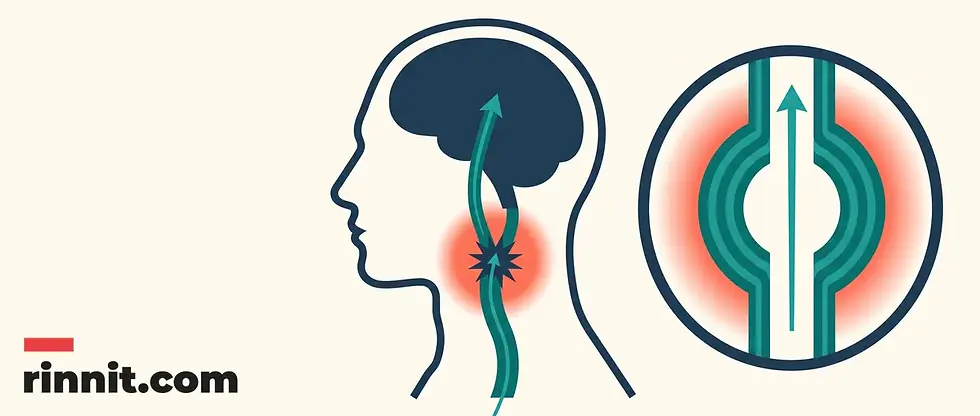
Here is the key detail that makes carotidynia reassuring rather than alarming: with this condition, the carotid artery walls thicken, but the inner cavity does not narrow. [5] A normal amount of blood can still travel through the artery. Carotidynia does not cause problems with blood flow, and it does not block blood supply to your brain. [5]
Adults of all ages can get carotidynia, and teens can develop it too. This short-term condition tends to happen more often in females. [5] You may also hear this condition called Fay syndrome or TIPIC syndrome, which stands for transient perivascular inflammation of the carotid artery. [5]
How Serious Is Carotidynia?
Carotidynia sounds scary because the carotid arteries are so important, but it is a harmless condition. The pain goes away in two weeks or less, [5] and imaging scans taken weeks later show the carotid artery looking normal again. [5]
That said, neck pain can come from many different causes, and some of those causes are dangerous and need prompt care. This is why you should see a healthcare provider when you have neck pain. Testing confirms carotidynia and rules out more serious conditions. [5]
Who Does Carotidynia Affect?
Adults of all ages can get carotidynia, and teens can develop it as well. [5] The condition tends to happen more often in females. [5] It is rare overall, and most people will never experience it.
Is Carotidynia Contagious?
No. Carotidynia is not contagious and cannot spread from person to person. An infection may initially trigger the inflammation in some cases, but the condition itself is a localized inflammatory response in the artery wall, not an infection you can catch or pass along.
Is Carotidynia Hereditary?
Experts do not know what causes carotidynia, [5] [4] and there is no evidence in the medical literature that it runs in families. The condition involves swelling or inflammation in the carotid artery that an infection may initially trigger, but no inherited pattern has been established.
Symptoms of Carotidynia
The main symptom of carotidynia is mild to severe pain and tenderness in your neck, and the pain is usually on one side. [5] Healthcare providers have also seen cases of bilateral carotidynia, which affects both sides of the neck, though one-sided pain is the typical pattern. [4]

Other carotidynia symptoms may include:
Because neck pain has many possible causes, a healthcare provider needs to rule out other vascular and nonvascular causes of the pain before settling on carotidynia as the explanation. [5]
Symptom | What It Feels Like |
One-sided neck pain | Mild to severe pain and tenderness, usually on one side of the neck |
Bilateral neck pain | Both sides of the neck hurt, in less common cases |
Pain worsened by touch | Pressing on the neck makes the pain stronger |
Pain worsened by movement | Chewing, coughing, yawning, or swallowing increases pain |
Throbbing headache | A pounding, throbbing pain in the head |
Face pain | Pain in the face that can travel toward the ear |
What Causes Carotidynia?
Experts do not know the exact cause of carotidynia. [5] [4] What is known is that the condition involves swelling or inflammation in the carotid artery, and an infection may initially trigger it. [5]
Because the cause is uncertain, doctors focus on what they can control: confirming the inflammation with imaging, ruling out other causes of neck pain, and treating the pain while the condition runs its course.
How Is Carotidynia Diagnosed?
A healthcare provider will start with a physical exam and questions about your medical history. [5] They may also use an ultrasound of your neck to rule out other diseases that cause neck pain. [5] Ultrasound is quick, painless, and shows blood flow through the carotid arteries in real time.
If an ultrasound does not provide enough information, other imaging may be needed:
Diagnostic Test | What It Shows |
Physical exam and medical history | First step to assess neck pain and rule out obvious causes |
Carotid ultrasound | Pictures of blood flow and artery structure to rule out other diseases |
MRI or CT scan | Thickening of the carotid artery wall, especially at the wide part where it splits |
PET scan | Another imaging option used in some cases |
Blood tests | Help rule out other causes of neck pain when combined with imaging |
MRI or CT images may show the hallmark sign of carotidynia: thickening in the carotid artery wall at the wide part of the artery where it splits into two branches. [5] A PET scan is another option in some cases. [5] [4] Blood tests, combined with these imaging studies, help rule out other causes of neck pain. [5]
Carotidynia vs. Other Neck Pain Conditions
Neck pain has many possible causes, and carotidynia must be distinguished from them. Your provider will check for these other possibilities before confirming the diagnosis.
Condition Type | How It Differs From Carotidynia |
Arterial dissection | A tear in the artery wall that can reduce blood flow to the brain and cause stroke; a medical emergency |
Carotid artery aneurysm | A bulging, weakened spot in the artery that can grow and rupture |
Plaque buildup (atherosclerosis) | Narrowing of the artery from fatty deposits that reduces blood flow |
Infection of the neck | Fever, redness, and swelling that an infection can cause |
Muscle or joint pain | Pain from strains, posture, or arthritis that worsens with movement but without artery inflammation |
How Is Carotidynia Treated?
While you wait for this condition to pass, you can treat the symptoms. Carotidynia treatment is usually pain medicine such as NSAIDs (nonsteroidal anti-inflammatory drugs) or aspirin. [5] [4] If the pain is not going away, corticosteroids may help calm the inflammation. [5] [4]

Beyond medication, the following self-care steps help during recovery:
Treatment | When It Is Used |
NSAIDs (ibuprofen and similar medicines) | First choice for pain and inflammation |
Aspirin | Pain relief alternative |
Corticosteroids | When pain is not going away with initial medicine |
Rest | Throughout recovery |
Stress management | Throughout recovery |
Limiting head movement | To keep pain from worsening |
How Long Does Carotidynia Last?
Carotidynia can last a week or two, and then it goes away. [5] [4] This is a benign (not dangerous) condition. [5] [1] When people get imaging scans weeks later, the carotid artery looks normal again, with the thickening resolved. [5]
One thing to be aware of: in some people (about 1 in 6 in one study), this condition comes back within months. [5] [4] A recurrence does not mean something worse is wrong, but it does mean you should stay in touch with your provider if symptoms return.
When Should I See a Healthcare Provider?
Contact your provider when you have pain in your neck. Pain in this part of your body can come from many things, and some other conditions that cause neck pain are dangerous and need prompt care. [5] A provider can order tests to check for a number of conditions. [5]
Seek care promptly if you experience neck pain along with neurological warning signs such as weakness or numbness on one side of the body, trouble speaking, vision changes, or confusion. These are not typical carotidynia symptoms and warrant immediate evaluation.
Questions to Ask Your Provider
Question | Why It Matters |
Is there something else I can take if NSAIDs bother my stomach? | Stomach irritation is a common NSAID side effect; alternatives exist |
Do I need a follow-up visit with you? | Recurrence within months happens in some people, so follow-up matters |
Do I need a CT or MRI? | Imaging confirms artery wall thickening and rules out other causes |
Can Carotidynia Be Prevented?
Because experts do not know what causes carotidynia, there is no proven way to prevent it. What you can do is respond quickly when neck pain appears: see a provider for proper testing, treat the pain promptly, and attend follow-up visits. General habits that support blood vessel health, such as not smoking and managing blood pressure, are sensible for everyone.
Conclusion
Carotidynia is one of those conditions that feels much scarier than it is. One-sided neck pain that worsens when you chew, cough, or swallow understandably makes people worry about something serious happening in the arteries that feed the brain. But carotidynia is a benign, self-limiting inflammation that leaves blood flow untouched and resolves within two weeks for nearly everyone. With simple pain medicine, rest, and follow-up imaging to confirm the artery returns to normal, most people recover fully. If the pain returns in the following months, a quick check-in with your provider keeps the recovery on track.
Want to explain health topics like this one visually? Infographics make complex concepts easy for readers of every age. Rinnit's infographic templates help you build clear, patient-friendly visuals for your own audience.
Frequently Asked Questions
What is carotidynia?
Carotidynia is a rare condition that causes pain on one side of the neck due to inflammation in the carotid artery, usually where it splits into two branches. [5]
Is carotidynia dangerous?
No. Carotidynia is a benign (not dangerous) condition. The artery walls thicken but blood flow stays normal, and the pain goes away in two weeks or less. [5]
Why does my neck hurt on one side?
One-sided neck pain is the main symptom of carotidynia. Less commonly, bilateral carotidynia affects both sides. [5] Because neck pain has many possible causes, see a provider to find out which one applies to you.
Does carotidynia block blood flow to the brain?
No. With carotidynia, the artery walls thicken but the inner cavity does not narrow, so a normal amount of blood still travels through. [5]
What is TIPIC syndrome?
TIPIC stands for transient perivascular inflammation of the carotid artery. It is another name for carotidynia. [5]
What is Fay syndrome?
Fay syndrome is another name for carotidynia, the inflammatory neck pain condition affecting the carotid artery. [5]
Is carotidynia the same as a carotid artery aneurysm?
No. An aneurysm is a bulging weak spot in the artery wall. Carotidynia is inflammation and wall thickening that does not block blood flow and resolves on its own.
Is carotidynia the same as a carotid artery dissection?
No. A dissection is a tear in the artery wall that can reduce brain blood flow and cause stroke. Carotidynia is inflammation with normal blood flow and a benign outcome.
Who gets carotidynia?
Adults of all ages and teens can get carotidynia, and it happens more often in females. [5]
Is carotidynia more common in women?
Is carotidynia contagious?
No. Carotidynia cannot spread from person to person.
Is carotidynia hereditary?
There is no evidence that carotidynia runs in families. Experts do not know the exact cause. [5] [4]
What causes carotidynia?
Experts do not know the exact cause. The condition involves swelling or inflammation in the carotid artery, which an infection may initially trigger. [5]
Can an infection cause carotidynia?
Possibly. An infection may initially trigger the inflammation, though experts are not certain. [5]
Does carotidynia cause blood clots?
Carotidynia does not narrow the artery's inner channel or restrict normal blood flow. Clots have been reported only rarely, and providers still rule out other conditions that can cause neck pain with clots or neurological symptoms.
What does carotidynia pain feel like?
Carotidynia pain ranges from mild to severe pain and tenderness in the neck, usually on one side. [5]
Does carotidynia pain hurt when touched?
Yes. Pain often worsens from touch [5] or from pressing on the neck.
Why does my neck hurt when I swallow?
Pain that worsens when swallowing is a typical carotidynia symptom, along with pain from chewing, coughing, and yawning. [5]
Why does my neck hurt when I chew?
Chewing involves head and jaw movement that can intensify the neck pain of carotidynia. [5]
Can coughing make carotidynia worse?
Yes. Coughing and yawning are movements that can make the pain stronger. [5]
Can carotidynia cause a headache?
Yes. A throbbing headache is one of the other symptoms that may occur. [5]
Can carotidynia cause face pain?
Yes. Pain in your face that can move toward your ear is a known symptom. [5]
Can carotidynia cause ear pain?
The face pain of carotidynia can move toward the ear, so pain near the ear can occur. [5]
How is carotidynia diagnosed?
A provider performs a physical exam and takes a medical history, then usually orders a neck ultrasound to rule out other causes. MRI or CT may show artery wall thickening, and a PET scan is an option in some cases. [5]
What does an ultrasound show in carotidynia?
An ultrasound helps rule out other diseases that cause neck pain. [5] Blood flow through the carotid artery is checked in real time.
What does an MRI show in carotidynia?
MRI (or CT) images may show thickening of the carotid artery wall at the wide part of the artery where it splits. [5]
What blood tests are done for carotidynia?
Blood tests are used along with imaging to help rule out other causes of neck pain. [5]
How is carotidynia treated?
Treatment is usually pain medicine like NSAIDs or aspirin. Corticosteroids may help if the pain is not going away. Rest, stress management, and limiting head movement also help. [5]
Does ibuprofen help carotidynia?
NSAIDs such as ibuprofen are the usual first treatment for carotidynia pain and inflammation. [5]
Can aspirin treat carotidynia?
Yes. Aspirin is one of the usual pain medicines for this condition. [5]
When are corticosteroids used for carotidynia?
Corticosteroids may help if the pain is not going away with NSAIDs or aspirin. [5]
What if NSAIDs bother my stomach?
Ask your provider about an alternative. This is one of the recommended questions to discuss at your visit. [5]
How long does carotidynia last?
Carotidynia can last a week or two and then goes away. The condition is benign. [5]
Will my artery look normal after carotidynia?
Yes. When people get imaging scans weeks later, the carotid artery looks normal again. [5]
Can carotidynia come back?
What should I do while recovering from carotidynia?
Rest, manage your stress level, and move your head as little as possible to keep the pain from getting worse. [5]
When should I see a doctor for neck pain?
Contact your provider whenever you have neck pain, because other causes can be dangerous and need prompt care. Tests can check for a number of conditions. [5]
What questions should I ask my doctor about carotidynia?
Ask whether an alternative medicine exists if NSAIDs bother your stomach, whether you need a follow-up visit, and whether you need a CT or MRI. [5]
Can I work with carotidynia?
Your provider can advise you on your specific situation. While symptoms last, resting, managing stress, and moving your head as little as possible are recommended. [5]
Does carotidynia go away without treatment?
The condition resolves on its own within two weeks or less, but medicine treats the pain while it runs its course. [5]
Related Reading
References
Micieli E, Voci D, Mumoli N, et al. Transient perivascular inflammation of the carotid artery (TIPIC) syndrome. Vasa. 2022;51(2):71-77. PMID: 35130715. https://doi.org/10.1024/0301-1526/a000989
Lecler A, Obadia M, Savatovsky J, et al. TIPIC syndrome: beyond the myth of carotidynia, a new distinct unclassified entity. AJNR Am J Neuroradiol. 2017;38(7):1391-1398. PMID: 28495942. https://doi.org/10.3174/ajnr.A5214
Policha A, Williams D, Adelman M, et al. Idiopathic carotidynia. Vasc Endovascular Surg. 2017;51(3):149-151. PMID: 28330435. https://doi.org/10.1177/1538574417697212
Winters R, Abbasi A, Vadakekut ES. Carotidynia. In: StatPearls [Internet]. Treasure Island (FL): StatPearls Publishing. Last updated April 6, 2025. PMID: 32809676. https://www.ncbi.nlm.nih.gov/books/NBK560841/
Cleveland Clinic. Carotidynia. Cleveland Clinic Health Library. Last updated January 5, 2026. https://my.clevelandclinic.org/health/diseases/carotidynia
Medical disclaimer
This article is for informational purposes only and is not a substitute for professional medical advice, diagnosis, or treatment. Always seek the advice of a qualified healthcare provider with any questions about a medical condition. Never disregard professional medical advice or delay seeking it because of something you have read here. Seek emergency care right away if neck pain comes with weakness or numbness on one side of the body, trouble speaking, vision changes, or confusion.



Comments