What Is a Cardiac Shunt? A Complete Guide to Irregular Blood Flow in the Heart

Updated: 3 days ago
Medically reviewed by Dr. Baraa Alnahhal, MD · Last reviewed: October 17, 2026
Quick Answer: Is a cardiac shunt serious?
A cardiac shunt is an abnormal passage of blood flow in the heart, and its seriousness depends on its type and size. Some shunts cause no symptoms and resolve without treatment. [3] Others, particularly right-to-left shunts, prevent blood from getting oxygen and can be life-threatening without surgery. [3] Severe shunts in babies are typically treated within the first months of life. [7]
What the research says
Congenital heart defects, the family shunts belong to, affect roughly 1 in 110 newborns worldwide. A systematic review and meta-analysis of 114 papers (24,091,867 live births, 164,396 with congenital heart disease) found a pooled birth prevalence of 9.1 per 1,000 live births (95% CI 9.0–9.2) after 1995, equal to about 1.35 million newborns a year, with the rate stable over the last 15 years (van der Linde et al., J Am Coll Cardiol, 2011) [5].
Gestational diabetes is linked to a higher risk of heart defects in the baby. A meta-analysis of 23 observational studies (46,953,078 mother-child pairs; 214,379 newborns with congenital heart disease) found an odds ratio of 1.32 (95% CI 1.21–1.45), and 1.40 (95% CI 1.30–1.51) after adjusting for maternal age and other confounders. Risks were higher for atrial septal defect, ventricular septal defect, and tetralogy of Fallot, all shunt-type defects (Liu et al., Horm Metab Res, 2024) [6].
Key takeaways
A cardiac shunt is an irregular pattern of blood flow through the heart, present at birth as a congenital heart defect. [3]
Left-to-right (acyanotic) shunts do not affect oxygenation; right-to-left (cyanotic) shunts reduce blood oxygen and may cause bluish skin. [3]
Cardiac shunts are the most common type of congenital heart defect, which affects about 1 in 100 babies. [1] [3]
Left-to-right shunts may show no symptoms until the teenage or adult years, while right-to-left shunts usually cause early symptoms in babies. [3]
Small shunts can resolve without treatment, but larger or more severe shunts often need surgery to redirect blood flow. [3]
What Is a Cardiac Shunt?

A cardiac shunt is an irregular pattern of blood flow in the heart. [3] The word "shunt" describes a passage through which blood moves from one area, such as a blood vessel or heart chamber, to another in a pattern that is not normal. A person may have a cardiac shunt alongside typical blood flow patterns, or the shunt may replace a normal pattern entirely. [7]
A cardiac shunt is a congenital heart defect, meaning it is present at birth. [3] The seriousness of the condition varies enormously from one person to the next. Some people have no signs of a cardiac shunt at all, while other shunts can be fatal. [3] When babies are born with a severe cardiac shunt, healthcare providers usually treat it in the first few months of life. [7]
How Blood Normally Flows Through the Heart
Understanding a shunt is easier when you know what normal flow looks like. Blood typically moves through the heart in a series of steps:
Step | What happens |
|---|---|
1 | Oxygen-poor blood enters the right side of the heart |
2 | The heart pumps blood into and through the lungs |
3 | The lungs fill the blood with oxygen and remove carbon dioxide |
4 | Oxygen-rich blood flows from the lungs to the left side of the heart |
5 | The heart pumps blood into the aorta, the large artery carrying oxygenated blood to the body |
With a cardiac shunt, blood does not follow these steps. Oxygenated blood may leak back into the lungs, or oxygen-poor blood may fail to reach the lungs at all. [7]
Types of Cardiac Shunts
The direction blood takes through the abnormal passage determines the shunt type and its impact on the body.
Type | Also called | Effect on oxygenation | Typical examples |
|---|---|---|---|
Left-to-right | Acyanotic | Does not affect lung oxygenation | Atrial septal defect (ASD), atrioventricular septal defect, patent ductus arteriosus (PDA), total/partial anomalous pulmonary venous return (TAPVR/PAPVR), ventricular septal defect (VSD) |
Right-to-left | Cyanotic | Interrupts lung blood flow and oxygenation; lowers blood oxygen saturation and may cause bluish skin | Double outlet right ventricle, Eisenmenger syndrome, hypoplastic left heart syndrome (HLHS), pulmonary arteriovenous malformation, pulmonary atresia, tetralogy of Fallot, transposition of the great arteries, truncus arteriosus |
Circular | Severe | Blood circulates through the heart without sending enough to the rest of the body | Most common in severe forms of Ebstein's anomaly |
Left-to-Right Shunts
In left-to-right shunts, blood that has already been oxygenated leaks backward toward the lungs. Because the oxygenation process in the lungs is not affected, these shunts are called acyanotic. [3] Common examples include the atrial septal defect (ASD) and the ventricular septal defect (VSD). [3]
Right-to-Left Shunts
In right-to-left shunts, oxygen-poor blood does not always reach the lungs. Instead, it may flow directly back out to the rest of the body. [3] These are cyanotic shunts, and the person may have lower oxygen saturation in the blood or a bluish tinge to the skin. [3]
Circular Shunts
Circular shunts are severe, life-threatening conditions. [4] Blood circulates through the heart without sending enough blood to the rest of the body. [7] Circular shunts most commonly appear in severe forms of Ebstein's anomaly. [4]
How Common Are Cardiac Shunts?
Cardiac shunts are the most common type of congenital heart defect. [3] About 1 in every 100 babies is born with a congenital heart defect. [1]
Causes of Cardiac Shunt
Sometimes cardiac shunts have a genetic component. [7] A shunt may result from a change, or mutation, in a specific gene. [7] For example, up to half of people born with Down syndrome also have a type of cardiac shunt. [1] [3]
Certain factors during pregnancy can also raise the chances of a baby being born with a cardiac shunt. [7] Risk increases if the mother experienced:
Pregnancy factor | Description |
|---|---|
Gestational diabetes | Diabetes that develops during pregnancy |
High exposure to ibuprofen or vitamin A | Elevated exposure to these specific substances |
Influenza (flu) | Flu illness during pregnancy |
Marijuana use | Cannabis use during pregnancy |
Rubella (German measles) | Rubella infection during pregnancy |
Symptoms of Cardiac Shunt
Cardiac shunt symptoms vary significantly depending on the type and direction of the shunt. [7]
Symptoms of Left-to-Right Shunts
Left-to-right shunts often cause no symptoms until the teenage or adult years. [3] When symptoms eventually develop, they may include shortness of breath (dyspnea) and quick fatigue or an inability to exercise. [3] Over time, left-to-right shunts may cause pulmonary hypertension, which is high blood pressure in the pulmonary arteries. [3]
Symptoms of Right-to-Left Shunts
In right-to-left shunts, babies usually show symptoms early. If a baby's lips or skin turn blue, or the baby struggles to breathe or feed, call 911 or get emergency care right away. [3] The most common symptom is a baby who looks blue, a condition called cyanosis. [7] Other symptoms include clubbed fingers or toenails, coughing up blood (hemoptysis), poor weight gain, shortness of breath, and repeat infections. [3]
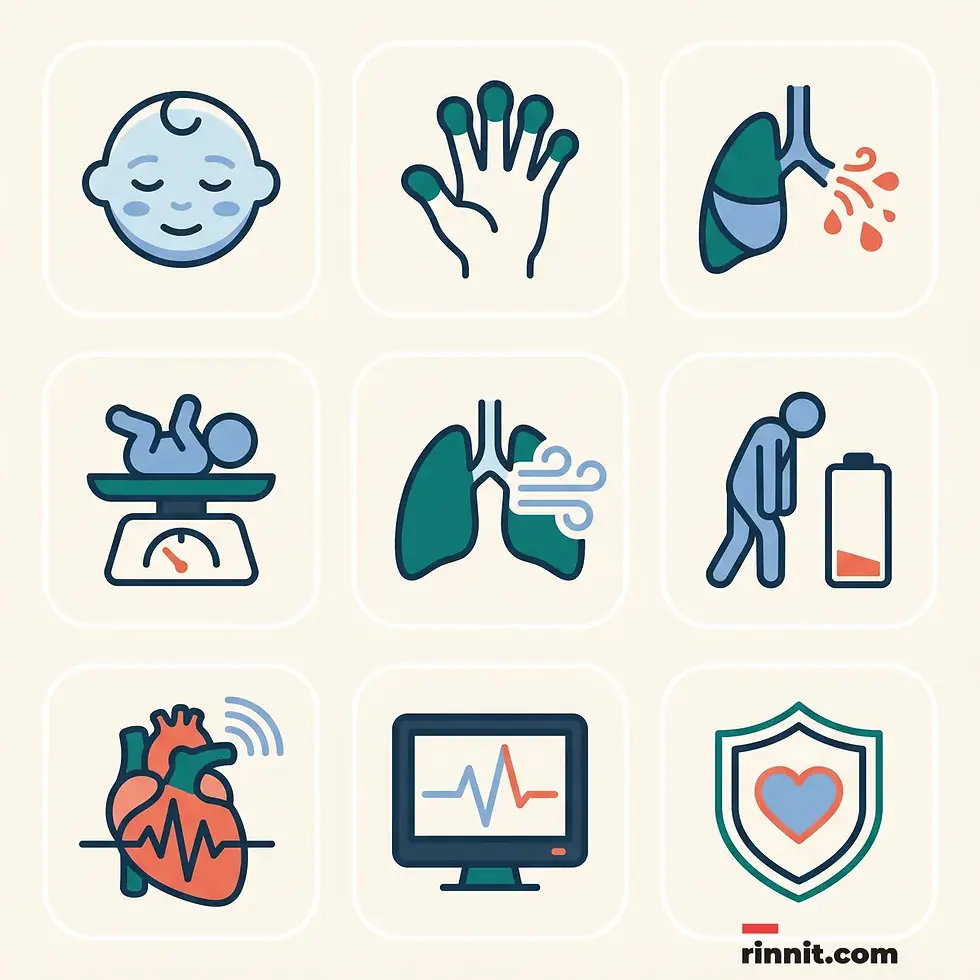
Symptom category | Possible signs |
|---|---|
Oxygen level changes | Bluish skin tint (cyanosis), lower blood oxygen saturation |
Breathing | Shortness of breath (dyspnea) |
Energy | Quick fatigue, inability to exercise |
Growth | Poor weight gain in babies |
Fingers and toes | Clubbed fingers or toenails |
Lungs | Coughing up blood (hemoptysis), repeat infections |
Long-term complication | Pulmonary hypertension (high blood pressure in the pulmonary arteries) |
How Is a Cardiac Shunt Diagnosed?
Healthcare providers use several tests to diagnose a cardiac shunt and assess its severity:
Test | What it reveals |
|---|---|
Blood test | Looks for changes in red blood cells |
Imaging tests (chest X-ray, CT scan) | Look for physical changes to the heart's shape |
Echocardiogram | Examines the heart's structure and function |
Electrocardiogram (EKG) | Looks for signs of pulmonary hypertension or other issues |
Cardiac catheterization | Assesses the pressure in each heart chamber; helps determine whether surgery is needed |
Cardiac catheterization may be required to decide whether surgery is appropriate, or when a provider has already recommended surgery to treat the shunt. [3]
Treatment for Cardiac Shunt
Treatment depends on symptoms and severity. Small shunts may clear up, or resolve, without any treatment. [3] For larger shunts, a provider may operate to redirect blood flow. [7]
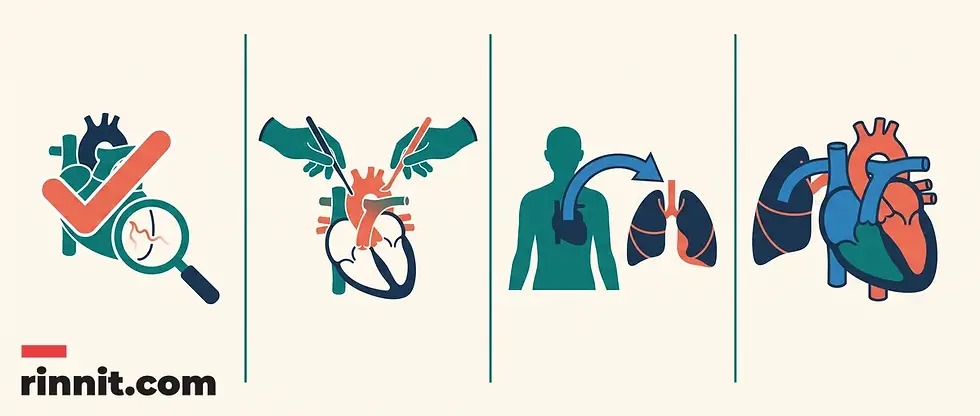
Common Heart Shunt Surgeries
Procedure | What happens |
|---|---|
[Norwood procedure](https://www.rinnit.com/post/understanding-the-norwood-procedure-for-hlhs) | An open-heart surgery typically performed on newborns. Surgeons create a larger aorta and redirect blood flow so the right ventricle can do all the work of pumping blood out to the body. |
[Glenn procedure](https://www.rinnit.com/post/glenn-procedure-congenital-heart-surgery-milestone) | The surgeon redirects blood flow so blood returning from the body goes directly to the lungs. |
[Fontan procedure](https://www.rinnit.com/post/fontan-procedure-stages-risks-long-term-outlook) | The surgeon redirects blood flow so oxygen-poor blood goes directly to the lungs, while oxygen-rich blood goes directly to one heart ventricle. This prevents oxygen-poor and oxygen-rich blood from mixing in the ventricles. |
A provider will discuss the available options and help choose the best plan for each patient's specific situation.
Outlook and Prognosis
Cardiac shunts vary widely, and so does the outlook. Larger or more severe shunts need treatment to avoid complications [3], and some types require surgical treatment within the first few weeks of birth. [7] Anyone who develops severe pulmonary hypertension is more likely to need heart shunt surgery or to experience complications. [7]
Many times, shunts that do not affect the blood oxygenation process cause no severe complications. They may produce no symptoms at all and require no treatment. [3]
Prevention
There is no guaranteed way to prevent a cardiac shunt. [7] Expectant parents can, however, increase their overall chances of having a healthy baby by practicing healthy habits during pregnancy:
Healthy habit | Details |
|---|---|
Avoid harmful substances | Stay away from alcohol, tobacco, illegal drugs, and excessive caffeine |
Eat a nutritious diet | Avoid rare meat, soft cheeses, and unpasteurized animal products that could raise infection risk |
Exercise regularly | Follow safe pregnancy exercise practices |
Stay up to date on vaccines | Schedule all recommended vaccines, including the flu shot |
Get enough sleep | Sleep seven to eight hours nightly, ideally on the left side to increase blood flow |
Take prenatal vitamins | Take prenatal vitamins and any other supplements as directed by a healthcare provider |
Questions to Ask Your Healthcare Provider
If you or your baby has been diagnosed with a cardiac shunt, consider asking the following questions:
Question | Why it matters |
|---|---|
What type of cardiac shunt do I have? | Determines the treatment path and outlook |
What tests do I or my baby need? | Establishes the diagnostic plan |
What are the treatment options? | Clarifies whether observation or surgery is likely |
What can I do to reduce complication risk? | Identifies practical prevention steps |
What are the chances my baby will have a cardiac shunt? | Addresses future pregnancy concerns |
What can I expect down the road? | Sets expectations for long-term care |
Cardiac shunts are irregular blood flow patterns in the heart. They are often genetic, though some are linked to pregnancy factors. [7] Symptoms vary widely: some shunts cause few or no symptoms, while others are severe and life-threatening without treatment. When a shunt is severe, a surgeon can create a new path for blood flow. [7]
Conclusion
A cardiac shunt is an abnormal pattern of blood flow in the heart, present from birth and ranging from entirely harmless to life-threatening. Left-to-right shunts do not interfere with oxygenation and frequently cause no symptoms until adulthood, sometimes resolving on their own. Right-to-left shunts allow oxygen-poor blood to bypass the lungs, producing early symptoms in babies such as a bluish skin tint, and usually require surgery. Because cardiac shunts are the most common type of congenital heart defect, affecting roughly 1 in 100 babies, early diagnosis through imaging, blood tests, EKG, and sometimes cardiac catheterization is essential. Small shunts may be managed with watchful waiting, while larger ones are treated with procedures such as the Norwood, Glenn, or Fontan surgeries that redirect blood flow safely.
If you or your child has been diagnosed with a cardiac shunt, work closely with a cardiologist to understand the specific type, the monitoring schedule, and the treatment plan. Knowing the warning signs and staying on top of follow-up appointments gives you the best possible footing.
If you would like to turn your own health content into clear, shareable visuals like the ones in this guide, explore Rinnit's infographic templates to build patient-friendly graphics in minutes.
Frequently Asked Questions
What is a cardiac shunt?
A cardiac shunt is an irregular pattern of blood flow in the heart. It is a passage by which blood moves from one area, such as a blood vessel or heart chamber, to another in an abnormal pattern. [7]
Is a cardiac shunt a congenital heart defect?
Yes. A cardiac shunt is a congenital heart defect, meaning it is present at birth. [7]
Is a cardiac shunt the same as normal blood flow?
No. With a cardiac shunt, blood does not flow through the normal steps of the heart-lung circulation. A person may have a shunt alongside normal flow patterns, or the shunt may replace a normal pattern. [7]
What happens to blood flow with a cardiac shunt?
Oxygenated blood may leak back into the lungs, or oxygen-poor blood may not reach the lungs at all, depending on the shunt type. [7]
What are the main types of cardiac shunts?
The main types are left-to-right (acyanotic) shunts, right-to-left (cyanotic) shunts, and circular shunts. [7]
What does acyanotic mean?
Acyanotic means the shunt does not cause a bluish skin tint because it does not interfere with blood oxygenation. [7]
What does cyanotic mean?
Cyanotic means the shunt interrupts oxygenation, which can lower blood oxygen levels and give the skin a bluish tinge. [3]
What is a left-to-right cardiac shunt?
In a left-to-right shunt, blood that is already oxygenated leaks backward toward the lungs without affecting the lungs' oxygenation process. [7]
What is a right-to-left cardiac shunt?
In a right-to-left shunt, oxygen-poor blood does not always go to the lungs and may instead flow directly back to the rest of the body. [3]
What is a circular shunt?
A circular shunt is a severe, life-threatening condition in which blood circulates through the heart without sending enough blood to the rest of the body. It most commonly appears in severe forms of Ebstein's anomaly. [4] [7]
What conditions cause left-to-right shunts?
Examples include atrial septal defect (ASD), atrioventricular septal defect, patent ductus arteriosus (PDA), total or partial anomalous pulmonary venous return (TAPVR/PAPVR), and ventricular septal defect (VSD). [7]
What conditions cause right-to-left shunts?
Examples include double outlet right ventricle, Eisenmenger syndrome, hypoplastic left heart syndrome (HLHS), pulmonary arteriovenous malformation, pulmonary atresia, tetralogy of Fallot, transposition of the great arteries, and truncus arteriosus. [7]
Is cardiac shunt common?
Cardiac shunts are the most common type of congenital heart defect, [3] and congenital heart defects affect about 1 in every 100 babies. [1]
What causes a cardiac shunt?
Sometimes shunts have a genetic component from a mutation in a specific gene. Some pregnancy factors, such as gestational diabetes, flu, rubella, marijuana use, or high exposure to ibuprofen or vitamin A, can also raise the risk. [7]
Is cardiac shunt genetic?
A cardiac shunt can be. Some shunts result from a gene mutation. For example, up to half of people born with Down syndrome also have a type of cardiac shunt. [7]
Does Down syndrome increase cardiac shunt risk?
Yes. Up to half of people born with Down syndrome also have a type of cardiac shunt. [7]
What pregnancy factors raise cardiac shunt risk?
Babies have a higher risk if the mother had gestational diabetes, high exposure to ibuprofen or vitamin A, influenza, marijuana use, or rubella during pregnancy. [7]
Do all cardiac shunts cause symptoms?
No. Symptoms vary widely. Some people have no signs of a cardiac shunt, while other shunts can be fatal. [7]
When do left-to-right shunts cause symptoms?
Left-to-right shunts often cause no symptoms until the teenage or adult years. When symptoms develop, they may include shortness of breath and quick fatigue or inability to exercise. [7]
What symptoms do right-to-left shunts cause in babies?
The most common symptom is a bluish tint to the baby's skin (cyanosis). Others include clubbed fingers or toenails, coughing up blood, poor weight gain, shortness of breath, and repeat infections. [7]
Why does a baby look blue with a right-to-left shunt?
Because oxygen-poor blood bypasses the lungs and circulates through the body, lowering oxygen levels in the blood and giving the skin a bluish tinge. [3]
What is cyanosis?
Cyanosis is a bluish tint to the skin caused by low oxygen levels in the blood.
What are clubbed fingers?
Clubbed fingers or toenails are fingers and toes with rounded, enlarged tips, and they can be a symptom of a right-to-left cardiac shunt.
Can a cardiac shunt cause coughing up blood?
Yes. Coughing up blood (hemoptysis) is one possible symptom of a right-to-left shunt. [7]
Can a cardiac shunt affect weight gain in babies?
Yes. Poor weight gain is a possible symptom of a right-to-left shunt in babies. [7]
Can a left-to-right shunt cause pulmonary hypertension?
Yes. Over time, left-to-right shunts may cause pulmonary hypertension, which is high blood pressure in the pulmonary arteries. [7]
How is a cardiac shunt diagnosed?
Providers may use blood tests, imaging tests such as chest X-rays or CT scans, echocardiograms, electrocardiograms (EKG), and cardiac catheterization. [7]
What does a blood test show for cardiac shunt?
Blood tests look for changes in red blood cells. [7]
What does cardiac catheterization measure?
Cardiac catheterization assesses the pressure in each heart chamber and may determine whether surgery is needed. [7]
Do all cardiac shunts need treatment?
No. Small shunts may resolve without treatment. Larger shunts may require surgery to redirect blood flow. [7]
What is the Norwood procedure?
The Norwood procedure is an open-heart surgery typically done on newborns. Surgeons create a larger aorta and redirect blood flow so the right ventricle can do all the work of pumping blood to the body. [7]
What is the Glenn procedure?
In the Glenn procedure, the surgeon redirects blood flow so blood returning from the body goes directly to the lungs. [7]
What is the Fontan procedure?
In the Fontan procedure, the surgeon redirects blood flow so oxygen-poor blood goes directly to the lungs and oxygen-rich blood goes directly to one ventricle, preventing the two from mixing. [7]
When is cardiac shunt surgery needed?
Surgery is typically needed for larger or more severe shunts, and some types require treatment within the first few weeks of birth. [7]
What is the outlook for someone with a cardiac shunt?
The outlook varies widely. Small shunts that do not affect oxygenation may never cause symptoms or need treatment, while severe shunts need treatment to avoid complications. [7]
Can I prevent a cardiac shunt?
There is no guaranteed way to prevent a cardiac shunt, but healthy pregnancy habits can improve the overall chances of having a healthy baby. [7]
What healthy habits reduce pregnancy risk?
Avoiding alcohol, tobacco, illegal drugs, and excessive caffeine, eating a nutritious diet, exercising regularly, keeping vaccines up to date, sleeping seven to eight hours nightly, and taking prenatal vitamins as directed. [7]
Can a cardiac shunt be fatal?
Some cardiac shunts can be fatal, [7] particularly severe right-to-left and circular shunts that go untreated.
What should I ask my doctor about a cardiac shunt?
Useful questions include the shunt type, needed tests, treatment options, ways to reduce complication risk, recurrence chances in future pregnancies, and long-term expectations. [7]
Related Reading
Congenital Heart Disease (CHD): Types, Symptoms, Treatment & Survival — Complete Guide
Pulmonary Hypertension: Complete Guide to Symptoms, Causes, Diagnosis, and Treatment
Atrial Septal Defect (ASD): Symptoms, Types, Causes, Diagnosis & Treatment — Complete Guide
Ventricular Septal Defect (VSD): Complete Guide to Symptoms, Causes, Diagnosis & Treatment
References
March of Dimes. Congenital heart defects and critical CHDs. March of Dimes. Last reviewed December 2024. https://www.marchofdimes.org/find-support/topics/planning-baby/congenital-heart-defects-and-critical-chds
Kang O, Knipe H. Cardiovascular shunts. Radiopaedia.org. Last revised August 2, 2026. https://radiopaedia.org/articles/cardiovascular-shunts
Shahjehan RD, Abraham J. Intracardiac Shunts. In: StatPearls [Internet]. Treasure Island (FL): StatPearls Publishing; 2023 Jan-. Updated January 2, 2023. PMID 32644395. https://www.ncbi.nlm.nih.gov/books/NBK558969/
Torigoe T, Mawad W, Seed M, et al. Treatment of fetal circular shunt with non-steroidal anti-inflammatory drugs. Ultrasound Obstet Gynecol. 2019;53(6):841-846. PMID 30381862. https://doi.org/10.1002/uog.20169
van der Linde D, Konings EEM, Slager MA, et al. Birth prevalence of congenital heart disease worldwide: a systematic review and meta-analysis. J Am Coll Cardiol. 2011;58(21):2241-2247. PMID 22078432. https://doi.org/10.1016/j.jacc.2011.08.025
Liu Y, Yue L, Chang L. Maternal gestational diabetes mellitus and congenital heart disease in offspring: a meta-analysis. Horm Metab Res. 2024;56(8):574-584. PMID 38307090. https://doi.org/10.1055/a-2238-1710
Cleveland Clinic. Cardiac Shunt. Cleveland Clinic. Last updated May 16, 2022. https://my.clevelandclinic.org/health/diseases/23057-cardiac-shunt
Medical disclaimer
This article is for general informational purposes only and is not a substitute for professional medical advice, diagnosis, or treatment. Always seek the advice of a qualified healthcare provider with any questions about a medical condition. Never disregard professional medical advice or delay seeking it because of something you have read here.



Comments