What Is Canavan Disease? Causes, Symptoms, and Treatment Explained

Updated: 2 days ago
Medically reviewed by Dr. Baraa Alnahhal, MD · Last reviewed: October 2026
Quick Answer: What is Canavan disease?
Canavan disease is a rare inherited disorder in which a faulty ASPA gene lets the chemical NAA build up in the brain, destroying white matter. [3] The common infantile form begins at 3–6 months with weak or stiff muscles, an enlarged head and developmental delays, and most children survive to about age 10. [3] There is no cure. [3]
Key takeaways
Canavan disease is a rare neurodegenerative genetic disorder that damages the brain's white matter and worsens over time. [3]
It belongs to a group of conditions called leukodystrophies. [1] [3]
A gene mutation that disables the ASPA enzyme causes NAA to build up in brain tissue. [2] [3]
The buildup damages myelin and turns the brain into spongy tissue filled with tiny fluid-filled spaces. [3]
Infantile Canavan disease is the most common and most severe type; symptoms start at 3–6 months of age. [3]
Juvenile Canavan disease is rarer and milder, and does not appear to shorten a person's life. [3]
The disease is more common in Ashkenazi Jewish families with eastern European ancestry (1 in 6,400–13,500 babies). [3]
There is no cure; treatment manages symptoms with feeding tubes, seizure medications, and physical therapy. [3]
What the research says
Symptoms start early, and the disease is not limited to Ashkenazi Jewish families. A study of 23 patients with Canavan disease, pooled with three earlier large series for a combined analysis of 82 patients, found that symptoms began between 0 and 6 months of age and that macrocephaly (an enlarged head) became apparent between 4 and 18 months. Seizures were rare in the first year but increased in frequency over time, peaking toward the end of the first decade, and the disease occurred more often outside Ashkenazi Jewish communities than previously reported (Bley et al., Orphanet J Rare Dis, 2021) [1].
Canavan disease has been reported across the Arab world. A review notes that the autosomal recessive disorder occurs with high frequency in patients of Jewish ancestry and low frequency in non-Jewish patients, and that it has been reported in Saudi Arabia, Egypt, Jordan, Yemen, Kuwait, and Tunisia, with the highest-risk population in Saudi Arabia because of the prevalence of consanguineous marriage; the authors support promoting carrier screening where consanguinity is common (Zayed, Gene, 2015) [2].
What Is Canavan Disease?
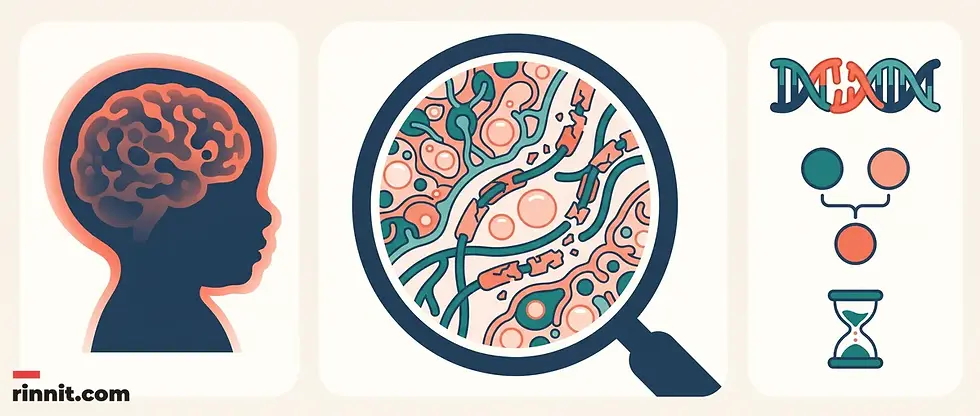
Canavan disease is a rare genetic disorder that affects the brain. It is a neurodegenerative condition, meaning the brain abnormality worsens over time rather than staying stable. [3]
The defining feature of the disease is a missing or insufficient brain chemical regulator. Without it, the brain gradually becomes spongy — deteriorated tissue filled with tiny fluid-filled spaces — and it stops functioning correctly. Nerves can no longer send and receive signals the way they should. [3]
Canavan disease belongs to a group of diseases called leukodystrophies. These are rare, genetic disorders that affect the brain, spinal cord, and nerves, and their symptoms worsen over time. [3]
The two types
Type | Frequency | Severity | Life expectancy |
Infantile Canavan disease | Most common | More severe; life-threatening problems develop | Usually about 10 years old; some survive into their teens or 20s |
Juvenile Canavan disease | Less common | Milder; minor developmental delays | Does not appear to shorten a person's life |
Who is at risk?
Canavan disease can affect anyone. However, it occurs more often in Ashkenazi Jews whose ancestors came from eastern Poland, Lithuania, and Western Russia. [3] In that population, it affects 1 of every 6,400 to 13,500 babies. [3]
Causes: Why the Brain Turns Spongy
Canavan disease is inherited, meaning it is passed down from parents to children. Scientists call this pattern autosomal recessive inheritance: both parents have to carry the mutation for their baby to get the disease. [2] [3]
The ASPA gene and NAA buildup
Here is the chain of events that causes the disease:
Step | What happens |
1. Gene mutation | A mutation occurs in the gene that makes an enzyme called aspartoacylase (ASPA) |
2. Missing enzyme | People with Canavan disease don't have enough ASPA |
3. Chemical buildup | NAA (N-acetyl-aspartate), a brain chemical, can't be broken down, so it builds up in brain tissue |
4. Myelin damage | The buildup damages myelin (white matter) — the fatty substance that protects and nourishes nerves in the brain and spine |
5. Spongy brain | Over time, the brain deteriorates into spongy tissue with lots of tiny fluid-filled spaces, losing its ability to send and receive nerve signals properly |
In short: the missing ASPA enzyme is the engine failure, the NAA buildup is the flood, and the destroyed myelin is what makes Canavan disease a leukodystrophy.
Symptoms: What Canavan Disease Looks Like
Signs of infantile Canavan disease usually begin appearing at three to six months of age. [3] Early symptoms include:
Early symptom (3–6 months) | What you may see |
Abnormal muscle tone | Muscles that are unusually weak or stiff |
Enlarged head (macrocephaly) | An abnormally large head that is hard to control |
Developmental delays | Not being able to roll, sit, crawl, walk, or talk |
Feeding difficulties | Difficulty eating or swallowing |
Poor motor control | Lack of motor skills to control muscle movement, sometimes described as "floppiness" |
Unresponsive behavior | Quiet or unresponsive behavior, showing little interest or emotion |
Most children get worse quickly. By around 10 years old, life-threatening problems typically develop: [3]
Later symptom | What you may see |
Hearing loss | Declining or lost hearing |
Intellectual disability | Impaired cognitive function |
Muscle spasms | Painful, involuntary muscle contractions |
Trouble swallowing | Difficulty swallowing food and fluids safely |
Vision loss | Declining or lost vision |

The juvenile form
People with juvenile Canavan disease may experience only mild developmental delays. They might have trouble speaking or keeping up at school. [3] But the symptoms are far less severe than the infantile form. [3]
Diagnosis and Testing
If a healthcare provider suspects Canavan disease, several tests can confirm it:
Test | What it measures |
Blood or urine test | Levels of NAA or ASPA, or the presence of the genetic mutation |
Cultured fibroblast lab test | A sample of specific skin cells is tested for a lack of ASPA |
Prenatal testing
Canavan disease may be diagnosed before a baby is born. Two prenatal options exist for families at higher risk:
Prenatal test | Timing | What it uses |
Amniocentesis | Usually 15 to 20 weeks pregnant | A sample of the fluid that surrounds the fetus, used to measure NAA levels |
Chorionic villus sampling (CVS) | 10 to 12 weeks pregnant | A tissue sample from the placenta, used to test for the genetic mutation |
CVS is available for parents with a high risk of Canavan disease or a known genetic mutation. [3]
Treatment and Management
There is no cure for Canavan disease. Treatment aims to manage symptoms and keep the person comfortable for as long as possible. [3] Options may include:
Treatment option | Purpose |
Feeding tubes | Deliver nutrition and fluids when swallowing becomes difficult |
Anticonvulsant medications | Control seizures |
Physical therapy | Improve posture and communication |
Genetic testing and genetic counseling can help the entire family understand the risk of Canavan disease in future children. [3]

Research: Possible Future Treatments
Scientists have identified the gene that causes Canavan disease and are testing possible treatments. [3] Strategies under investigation include:
Research strategy | How it works |
Gene therapy | Attempting to fix or replace the faulty gene |
Man-made ASPA | A synthetic version of the enzyme that can be injected into the bloodstream |
Stem cell therapy | Using stem cells to potentially repair damaged brain tissue |
These remain experimental — none are established cures yet.
Outlook: What to Expect
The outlook for people with Canavan disease depends on the type:
Type | Outlook |
Infantile | Children usually survive until about 10 years old; some may survive into their teens or 20s |
Juvenile (mild) | Life expectancy is usually normal |
A note worth remembering: Although Canavan disease is often severe and life-threatening, scientists have identified the responsible gene and are actively testing possible treatments — including gene therapy, enzyme replacement, and stem cell therapy. [3]
Prevention
You cannot prevent Canavan disease. But families can have DNA tests to see if they carry the genetic mutation. [3] Because both parents have to have the mutation for their baby to get the disease, testing can help parents make informed decisions about having children. [3]
Living With Canavan Disease
For families managing a diagnosis, the healthcare team can help answer the right questions. Consider asking:
Question for the provider | Why it matters |
What disabilities can I expect to see, and when? | Helps the family prepare for each stage |
What's my child's life expectancy? | Clarifies the expected course |
How can I make my child more comfortable and safer? | Focuses on daily quality of life |
What specialists does my child need? | Coordinates care across neurology, nutrition, and therapy |
How often should we see them? | Sets a realistic follow-up schedule |
Should our family get genetic testing? | Informs future family planning |
Coping as a family
Living with Canavan disease is emotionally demanding. Consider these supports:
Support option | What it offers |
Counseling (talk therapy) | A professional space to process grief, fear, and caregiver stress |
Patient and research organizations | Connection to communities supporting patients and funding research |
Support groups | Shared experiences with other families facing the same diagnosis |
Conclusion
Canavan disease is a rare but deeply serious genetic disorder. A single faulty gene — the one that makes the ASPA enzyme — sets off a chain reaction that lets NAA build up in the brain, destroying the white matter that nerves depend on. The infantile form, which begins between three and six months of age, is severe and life-limiting; the juvenile form is milder and does not shorten life. While there is no cure today, symptom management through feeding tubes, seizure control, and physical therapy can keep children comfortable, and gene therapy, enzyme replacement, and stem cell research offer genuine hope for the future. Families with eastern European Ashkenazi Jewish ancestry can use DNA testing to understand their risk. If you're raising a child with a rare disease, you're not alone — support groups, counseling, and research organizations stand ready to walk alongside your family.
Looking for clearer ways to explain complex medical topics to your audience? Rinnit's infographic templates make it easy to turn difficult diagnoses into visuals people actually understand.
Frequently Asked Questions
What is Canavan disease?
Canavan disease is a rare genetic disorder that affects the brain's white matter. It is neurodegenerative, meaning the brain abnormality worsens over time, and the brain gradually becomes spongy and unable to function correctly. [3]
What type of disorder is Canavan disease?
Canavan disease is a leukodystrophy — a group of rare, genetic disorders that affect the brain, spinal cord, and nerves, with symptoms that worsen over time. [3]
What causes Canavan disease?
A mutation in the gene that makes the enzyme aspartoacylase (ASPA). Without enough ASPA, the brain chemical N-acetyl-aspartate (NAA) builds up in brain tissue, damaging myelin (white matter) and turning the brain into spongy tissue. [3]
What does NAA stand for?
N-acetyl-aspartate, a chemical in the brain. ASPA's job is to break it down; when ASPA is missing, NAA accumulates and damages the brain. [3]
What is myelin?
A fatty substance called white matter that protects and nourishes nerves in the brain and spine. [3] Canavan disease damages this protective coating.
How is Canavan disease inherited?
Canavan disease is autosomal recessive: both parents must carry the gene mutation for their baby to get the disease. [3]
Who is at highest risk for Canavan disease?
Anyone can be affected, but it occurs more often in Ashkenazi Jews with ancestors from eastern Poland, Lithuania, and Western Russia — affecting 1 in every 6,400 to 13,500 babies in that population. [3]
Is Canavan disease common?
No. It is a rare disorder. [3] It occurs more often in families with eastern European Ashkenazi Jewish ancestry. [3]
What are the types of Canavan disease?
The infantile type (most common, more severe) and the juvenile type (less common, milder, and does not appear to shorten life). [3]
When do symptoms of infantile Canavan disease begin?
Usually at three to six months of age. [3]
What is the first sign of infantile Canavan disease?
Common early signs include abnormal muscle tone (weak or stiff muscles), an abnormally large head (macrocephaly), developmental delays, feeding difficulties, and "floppiness" or lack of motor control. [3]
What is macrocephaly?
An abnormally large head. In Canavan disease, the enlarged head is hard to control as the condition progresses. [3]
What does "floppiness" mean in Canavan disease?
A lack of motor skills to control muscle movement, so the infant's body appears unusually limp. [3]
What happens as infantile Canavan disease progresses?
Most children develop life-threatening problems by around 10 years old, including hearing loss, intellectual disability, muscle spasms, trouble swallowing, and vision loss. [3]
How is juvenile Canavan disease different?
Juvenile Canavan disease causes only mild developmental delays, such as trouble speaking or keeping up at school, and does not appear to shorten a person's life. [3]
How is Canavan disease diagnosed?
Through blood or urine tests measuring NAA or ASPA levels or the genetic mutation, and lab tests of cultured skin cells (fibroblasts) looking for a lack of ASPA. [3]
Can Canavan disease be detected before birth?
Yes. Amniocentesis (15–20 weeks of pregnancy) measures NAA in the fluid around the fetus, and chorionic villus sampling (10–12 weeks) tests placental tissue for the genetic mutation. [3]
What is amniocentesis?
A prenatal test using a sample of the fluid that surrounds the fetus to measure NAA levels, usually performed at 15 to 20 weeks of pregnancy. [3]
What is chorionic villus sampling (CVS)?
A prenatal test using a tissue sample from the placenta to test for the Canavan gene mutation, performed at 10 to 12 weeks of pregnancy, offered to parents at high risk or with a known mutation. [3]
Is there a cure for Canavan disease?
No. There is no cure yet. Treatment focuses on managing symptoms and keeping the person comfortable as long as possible. [3]
How is Canavan disease treated?
With feeding tubes to deliver nutrition and fluids, anticonvulsant medications to control seizures, and physical therapy to improve posture and communication. [3]
What research treatments are being tested?
Gene therapy, man-made (synthetic) ASPA injected into the bloodstream, and stem cell therapy. [3]
What is the life expectancy for infantile Canavan disease?
Children usually survive until about 10 years old [3], and some may survive into their teens or 20s.
What is the life expectancy for juvenile Canavan disease?
Life expectancy is usually normal. [3]
Can Canavan disease be prevented?
Not directly. Families can have DNA tests to see if they carry the mutation, and since both parents must carry it for a baby to get the disease, testing helps parents make informed family-planning decisions. [3]
Should my family get genetic testing for Canavan disease?
Genetic testing and counseling can help the whole family understand the risk of Canavan disease in future children [3] — especially if there is eastern European Ashkenazi Jewish ancestry.
What questions should I ask my child's provider?
Ask what disabilities to expect and when, the life expectancy, how to keep your child comfortable and safer, which specialists are needed, visit frequency, and whether your family should get genetic testing. [3]
How can families cope with a Canavan disease diagnosis?
Counseling (talk therapy), involvement with organizations that support patients and research, and support groups with other affected families. [3]
Why does the brain become spongy in Canavan disease?
NAA buildup damages myelin, and over time the brain deteriorates into tissue with lots of tiny fluid-filled spaces — giving it a spongy appearance. [3]
Does Canavan disease affect anything besides the brain?
Canavan disease is a leukodystrophy, so it affects the brain, spinal cord, and nerves [3] — the whole network that depends on healthy white matter to carry signals.
Related Reading
References
Bley A, Denecke J, Kohlschütter A, et al. The natural history of Canavan disease: 23 new cases and comparison with patients from literature. Orphanet J Rare Dis. 2021;16(1):227. PMID: 34011350. https://doi.org/10.1186/s13023-020-01659-3
Zayed H. Canavan disease: an Arab scenario. Gene. 2015;560(1):9-14. PMID: 25668701. https://doi.org/10.1016/j.gene.2015.02.009
Cleveland Clinic. Canavan Disease. Cleveland Clinic. Last updated April 22, 2022. https://my.clevelandclinic.org/health/diseases/6013-canavan-disease
Medical disclaimer
This article is for general informational purposes only and does not constitute medical advice. Always consult a qualified healthcare provider for diagnosis, treatment, and decisions about your health.



Comments