What Are Calcium Deposits? Types, Causes, and How They Are Treated

Updated: 2 days ago
Medically reviewed by Dr. Baraa Alnahhal, MD · Last reviewed: October 17, 2026
Quick Answer: What are calcium deposits?
Calcium deposits, or calcification, are hardened buildups of excess calcium in tissues, organs or blood vessels, such as the skin, breasts, shoulders, kidneys or arteries. [1] They are most often harmless, symptom-free and found by accident on imaging. [1] They result from inflammation, calcium metabolism disorders, infections or aging, not from eating too much calcium. [1] Treatment depends on location and cause. [1]
What the research says
A calcium score of zero is a strong "rule-out" signal for blocked heart arteries. A meta-analysis of 19 studies (79,903 patients with stable chest pain) and 13 studies (12,376 patients with acute chest pain) found that having no coronary calcium (CAC = 0) had a negative predictive value of 97% (95% CI 96–98%) and 98% (95% CI 96–99%), respectively, for ruling out obstructive coronary artery disease. Among people with stable chest pain and a zero score, the annual rate of major adverse cardiac events was 0.5% (Agha et al., JACC Cardiovasc Imaging, 2022) [7].
For calcium deposits in the shoulder, needling plus a steroid injection came out ahead in one analysis. A network meta-analysis of 7 randomized trials of rotator cuff calcific tendinitis found that ultrasound-guided needling (lavage) combined with a subacromial corticosteroid injection reduced shoulder pain, improved Constant-Murley shoulder scores, and shrank the calcium deposit compared with shock wave therapy, injection alone, or lavage plus shock wave. The authors concluded that ultrasound-guided lavage was the treatment of choice among non-surgical options (Arirachakaran et al., Eur J Orthop Surg Traumatol, 2017) [8].
Shock wave therapy offers only small benefits. A Cochrane review of 32 trials (2,281 participants with rotator cuff disease, with or without calcium deposits) found that, compared with placebo at 3 months, shock wave therapy improved mean pain by 0.78 points on a 0–10 scale (95% CI 0.17–1.4; a clinically important change is 1.5 points) and function by 7.9 points on a 0–100 scale (95% CI 1.6–14; clinically important difference 10 points), with low- to moderate-certainty evidence. Pain and function results did not differ between people with and without calcific deposits (Surace et al., Cochrane Database Syst Rev, 2020) [9].
Key takeaways
Calcification is a buildup of excess calcium that hardens in tissues, organs, or blood vessels — your bones and teeth already hold about 99% of your body's calcium. [1]
Some calcification is normal; it is simply your body responding to an injury or inflammation. [1]
Deposits form in seven main areas: skin, teeth, breasts, shoulders, brain, kidneys, and arteries. [1]
A diet high in calcium does NOT cause calcification — causes include inflammation, calcium metabolism disorders, autoimmune disorders, infections, aging, and past surgeries or cancer treatments. [1]
Most calcium deposits cause no symptoms and are discovered incidentally during imaging for unrelated conditions. [1]
Artery calcification is an early sign of atherosclerosis; deposits are found in 90% of men and 67% of women older than 70. [1] [5]
Most people with coronary artery disease have calcium in their arteries, but some plaque contains no calcium. [1]
Treatment depends on location — from creams and medications to rest, steroid injections, kidney stone treatment, and symptom control. [1]
Brain deposits cannot be removed, but medications can control seizures and movement disorders. [1]
Prevention includes regular health monitoring, calcium blood tests after age 65, medication reviews, and quitting smoking. [1]
What Are Calcium Deposits?

Calcium deposits, or calcification, occur when calcium builds up in your body. This buildup can harden in your tissues, organs, or blood vessels, and when it does, your body's normal processes may not run correctly. [1]
It helps to understand where calcium normally lives. Your bones and teeth use almost all the calcium in your body — about 99%. [1] The remaining calcium dissolves in your blood and travels to different parts of your body through your bloodstream. [1] [4]
Some calcification is normal. Your body may simply be responding to an injury or inflammation. But certain conditions can cause calcium deposits to occur in places they should not be — such as your brain, kidneys, and blood vessels — and this can cause problems with how your organs and blood vessels function. [1]
The Seven Types of Calcification by Location
Calcium deposits can occur in many different places in your body. Here is a guide to the seven types described by healthcare experts:
Type | Where it forms | What it looks/feels like |
Skin (calcinosis cutis) | Most common on fingertips; also eyelids, face, elbows, knees | Firm white or yellow bumps, sometimes in clusters; redness or itching may come first |
Teeth | Around the tooth roots and in the dental pulp (the middle of the tooth) | Often found on dental exams; may follow dental injuries or signal kidney stones |
Breasts | Breast tissue | Too small to feel; appear as small bright white spots on a mammogram |
Shoulders (calcific tendonitis) | Tendons or muscles, most often the rotator cuff | Pain and discomfort with movement; decreased range of motion; sometimes no symptoms |
Brain (primary familial brain calcification) | Blood vessels in the brain, usually the basal ganglia | Movement disorders (dystonia, tremors, unsteady walk); concentration and memory problems |
Kidneys (nephrocalcinosis) | Inner part of the kidney (renal medulla), usually both kidneys | Extreme pain, blood in urine, fever — or no symptoms at all |
Arteries | Blood vessel walls | Stiffened arteries; raises cardiovascular risk; an early sign of atherosclerosis |

Skin Calcium Deposits (Calcinosis Cutis)
Calcium deposits on your skin are called calcinosis cutis. They can occur anywhere on your body, but deposits on your fingertips are the most common. They may also appear on your face — including your eyelids — and on your joints, such as your elbows and knees. [1]
Under the skin, these deposits look like firm white or yellow bumps [3]. The bumps come in different sizes and sometimes show up in clusters. At first, you may notice redness or itching on your skin — but most people have no symptoms before the deposits appear. [1]
Calcium Deposits on Teeth
Your teeth need calcium to make healthy enamel, which protects them. But excess calcium deposits can occur on your teeth, building up around the roots and inside your dental pulp — the tissue in the middle of your tooth.
Tooth calcification may follow accidents or dental injuries. It may also be a sign of a health issue such as kidney stones. [1] A rare genetic disorder called familial hyperphosphatemic tumoral calcinosis can also cause this calcification [1] — it causes high levels of phosphate and calcification in your body. [1]
Breast Calcifications
Calcium deposits in your breasts usually cause no symptoms — they are too small to feel. A healthcare provider typically discovers them during a routine mammogram, where they look like small, bright white spots. [1] [2]
These deposits are usually harmless, but they can be a sign that you are at risk for developing breast cancer. If abnormal calcification shows up on a mammogram, your radiologist may recommend more testing. [1]
Shoulder Calcification and Calcific Tendonitis
Calcium deposits in your shoulders can cause pain and discomfort when you move, and you may notice a decreased range of motion. But sometimes shoulder calcification causes no symptoms and is found during imaging for an unrelated condition. [1]
A condition called calcific tendonitis develops when calcium deposits build up in your tendons or muscles. It can occur anywhere in your body, but it most often affects your rotator cuff — the group of muscles and tendons that surround the ball of your shoulder joint and keep it in its socket. [1]
Brain Calcification (Primary Familial Brain Calcification)
Primary familial brain calcification causes calcification in the blood vessels of your brain. The deposits usually occur in structures called the basal ganglia, which control movement in your body. [1]
Symptoms of this type of calcification include movement disorders — such as dystonia, tremors, and an unsteady walk (gait problems). You may also experience psychiatric or behavioral problems, including difficulty concentrating, personality changes, memory loss, and dementia. [1] [6]
Kidney Calcification (Nephrocalcinosis)
A condition called nephrocalcinosis occurs when too much calcium builds up in your kidneys. This calcification usually forms in the inner part of the kidney, the renal medulla, and most often affects both kidneys. [1]
If you have nephrocalcinosis, you may also have high levels of calcium in your blood or urine. The condition is related to kidney stones. You may experience extreme pain, see blood when you urinate, and run a fever — or you may have no symptoms at all. [1]
Artery Calcification
Calcium deposits in your arteries (blood vessels) can cause them to stiffen, which increases your risk for cardiovascular problems. Coronary artery calcification increases with age — deposits are found in 90% of men and 67% of women older than age 70. [1] [5]
Studies have shown that artery calcification is an early sign of atherosclerosis (arterial disease). [1] [5] In addition, most people with coronary artery disease have calcification in their arteries, although early plaque can be calcium-free. [1] Coronary artery disease develops when blood vessels to your heart become blocked or narrowed.
What Causes Calcium Deposits?
Here is an important fact to remember: a diet high in calcium does not cause calcification. A variety of causes and risk factors contribute instead, including infections, aging, and past surgeries or cancer treatments. [1]
Cause | How it works |
Inflammation | Tissue damage causes your body to release proteins that bind calcium in clumps |
Calcium metabolism disorders | Disorders that can lead to hypercalcemia — too much calcium in your blood |
Autoimmune disorders | Autoimmune diseases affecting your skeletal system or connective tissues |
Infections | Can trigger calcification as the body heals |
Aging | Artery calcification increases naturally with age |
Past surgeries or cancer treatments | Medical history raises the likelihood of deposits |
How Are Calcium Deposits Diagnosed?
Diagnosis depends on the type of calcification. Your healthcare provider can usually diagnose skin calcium deposits with a physical examination. For other types, imaging tests are often needed. [1]
Diagnostic method | What it does |
Physical exam | Often enough to diagnose skin calcifications by sight and touch |
X-rays | Reveal deposits in deeper tissues, bones, and organs |
CT scans | Provide detailed images to locate deposits |
Calcium blood test | Measures the level of calcium in your blood |
Biopsy | Collects a tissue sample for a pathologist to examine — confirming or ruling out cancer |
How Are Calcium Deposits Removed or Treated?
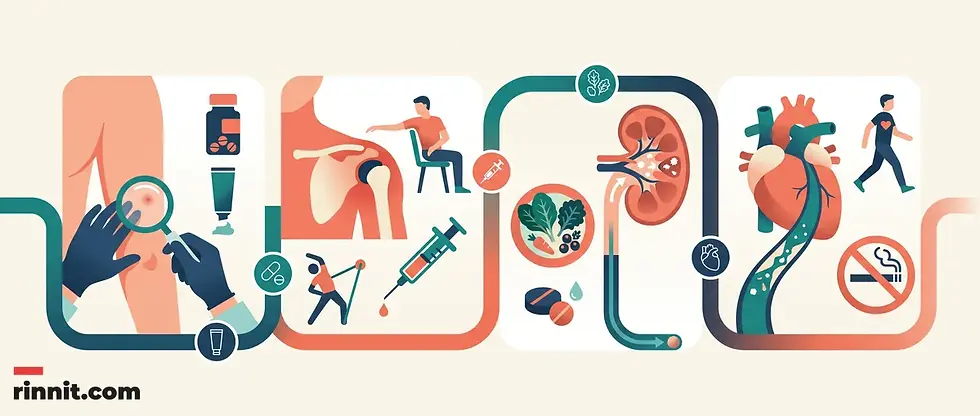
Treatment for calcification depends on the location and cause of the deposits. There is no single fix — each body area is handled differently:
Location | Treatment approach |
Skin | No treatment if deposits are painless; medications such as calcium channel blockers or corticosteroids for certain types |
Teeth | No treatment if the tooth is healthy; bleaching for discoloration; root canal for infected teeth; otherwise treat the underlying condition |
Breasts | Usually no treatment; radiologist compares future mammograms with previous ones; referral to an oncologist if deposits may be cancerous |
Shoulders | Rest and physical therapy; NSAIDs (nonsteroidal anti-inflammatory drugs); steroid injections or irrigation with anesthetic/saline if needed |
Brain | Deposits cannot be removed; medications to control seizures, dystonia, and other symptoms |
Kidneys | Diet changes; medicines and supplements to reduce abnormal calcium in blood and urine; kidney stone treatments; diuretics to prevent future calcification |
Arteries | Diet changes to lower the risk of complications such as high blood pressure, diabetes, and kidney disease |
What Is the Outlook for Calcium Deposits?
You will normally not know you have a calcium deposit, because most deposits do not cause symptoms. People often find out about a calcification when having imaging tests done for other conditions. [1]
The outlook (prognosis) depends on the location and underlying cause. Some calcifications are completely harmless. But hardened deposits on your brain or heart can have serious complications. [1]
Can You Prevent Calcium Deposits?
You may be able to prevent calcium deposits by monitoring your health and seeing your healthcare provider regularly. If you are 65 or older, your provider may recommend blood tests to track your calcium levels. If you are under 65 and have a heart defect or kidney issues, deposits occur more frequently — your provider may recommend calcification tests such as a calcium score screening heart scan. [1]
Be aware that certain medications can affect the calcium levels in your body, including:
Medication type | Example |
Blood pressure medicines | Used to manage hypertension |
Cholesterol-lowering drugs | Used to manage cholesterol |
Hormone replacement therapy | Used in hormone therapy |
Calcium carbonate supplements | Over-the-counter calcium supplement |
Talk to your healthcare provider to understand the effects these medications can have on your calcium levels.
Also, quitting smoking may help prevent calcium deposits — smoking causes an increase in calcifications in your heart and arteries. [1]
When Should I See My Healthcare Provider?
Because most calcium deposits cause no symptoms, the best "symptom" to act on is simply finding them. If a routine mammogram, dental exam, or imaging test for another condition reveals calcification, follow up with the recommended testing rather than ignoring it. If you notice firm white or yellow bumps on your skin, new joint pain with limited movement, or blood in your urine, see a healthcare provider for an evaluation.
A note worth remembering: most calcium deposits cause no symptoms and are harmless. But deposits that harden on your brain or heart can lead to serious complications — so follow up on any calcification found during imaging rather than assuming it can be ignored.
Conclusion
Calcium deposits sound alarming, but they are often a quiet, harmless side effect of your body's normal calcium handling. Because your bones and teeth hold 99% of your calcium, the small amount left in your bloodstream occasionally hardens in soft tissues, organs, and arteries — sometimes in response to injury or inflammation, sometimes as part of aging. The key is location and cause: skin bumps and breast spots are usually harmless, but artery stiffening is an early atherosclerosis warning, and brain or kidney calcification deserves active management. A diet high in calcium is not the culprit, which means prevention comes down to regular check-ups, calcium blood tests after age 65, medication reviews, and not smoking.
Want to turn health facts like these into shareable infographics for your audience? Rinnit's ready-to-edit infographic templates can help you bring your health content to life in minutes.
Frequently Asked Questions
What are calcium deposits?
Calcium deposits, also called calcification, occur when excess calcium builds up and hardens in your tissues, organs, or blood vessels, potentially interfering with your body's normal processes.
What percentage of the body's calcium is stored in bones and teeth?
Bones and teeth hold about 99% of the calcium in your body. The rest dissolves in your blood and travels through your bloodstream.
Is calcification ever normal?
Yes. Some calcification is a normal response to injury or inflammation — it is only a problem when deposits form where they should not be, such as in your brain, kidneys, or blood vessels.
Can a diet high in calcium cause calcification?
No. A diet high in calcium does not cause calcification. Other factors — inflammation, calcium metabolism disorders, autoimmune disorders, infections, aging, and past surgeries or cancer treatments — are the real contributors.
Where do calcium deposits commonly form?
Calcium deposits form in seven main areas: skin, teeth, breasts, shoulders, brain, kidneys, and arteries.
What is calcinosis cutis?
Calcinosis cutis is the name for calcium deposits on the skin. They look like firm white or yellow bumps, often appear on the fingertips, and may cluster on the face, eyelids, elbows, or knees.
Do skin calcium deposits cause symptoms?
Most people have no symptoms before the deposits appear, though some notice redness or itching at first.
Can calcium deposits form on teeth?
Yes. Excess calcium can build up around the tooth roots and in the dental pulp, sometimes after dental injuries or as a sign of an underlying issue such as kidney stones.
What is familial hyperphosphatemic tumoral calcinosis?
A rare genetic disorder that causes high levels of phosphate and calcification in your body, including the teeth.
How are breast calcifications found?
Breast calcium deposits are usually too small to feel and cause no symptoms; they are typically discovered on a routine mammogram as small, bright white spots.
Are breast calcifications dangerous?
Breast calcifications are usually harmless, but abnormal calcification can signal an increased risk of breast cancer, which is why radiologists may recommend further testing.
What is calcific tendonitis?
Calcific tendonitis develops when calcium deposits build up in your tendons or muscles, most often affecting the rotator cuff of the shoulder.
Does shoulder calcification always hurt?
No. It can cause pain and decreased range of motion when you move, but sometimes it causes no symptoms and is found incidentally during imaging.
What is primary familial brain calcification?
A condition that causes calcification in the blood vessels of the brain, usually in the basal ganglia — the structures that control movement.
What are the symptoms of brain calcification?
Movement disorders such as dystonia, tremors, and unsteady gait, plus psychiatric or behavioral problems including difficulty concentrating, personality changes, memory loss, and dementia.
What is nephrocalcinosis?
A condition in which too much calcium builds up in the kidneys, usually in the inner part (renal medulla), most often affecting both kidneys.
Can nephrocalcinosis cause kidney stones?
Nephrocalcinosis is related to kidney stones, and people with it may also have high calcium levels in their blood or urine.
What symptoms do kidney calcium deposits cause?
You may have extreme pain, blood in your urine, and a fever — or no symptoms at all.
What happens when calcium deposits form in arteries?
Deposits cause arteries to stiffen, increasing the risk of cardiovascular problems. Artery calcification is an early sign of atherosclerosis.
How common is coronary artery calcification in older adults?
Deposits are found in 90% of men and 67% of women older than age 70.
Does everyone with coronary artery disease have calcification?
Not always. Most do, but some plaque contains no calcium, so a zero calcium score lowers but does not rule out coronary artery disease.
What are the main causes of calcium deposits?
Inflammation, calcium metabolism disorders (which can lead to hypercalcemia), autoimmune disorders affecting the skeletal system or connective tissues, infections, aging, and past surgeries or cancer treatments.
What is hypercalcemia?
Hypercalcemia occurs when you have too much calcium in your blood; it can result from calcium metabolism disorders.
How do healthcare providers diagnose calcium deposits?
Diagnosis depends on the type — skin deposits are often identified by physical exam, while other types require X-rays, CT scans, calcium blood tests, or a biopsy examined by a pathologist.
What does a biopsy of a calcium deposit show?
A pathologist examines the tissue sample in a laboratory to confirm or rule out a cancer diagnosis.
Are calcium deposits in the skin always treated?
No. If they cause no pain or discomfort, you may not need treatment. For certain types, providers may prescribe calcium channel blockers or corticosteroids.
How are calcium deposits in the shoulders treated?
Rest and physical therapy are first-line options; NSAIDs may help. If those do not work, steroid injections or irrigation with an anesthetic or saline solution may be recommended.
Can brain calcium deposits be removed?
No. Providers cannot remove deposits in the brain, but they can prescribe medications to control symptoms such as seizures or dystonia.
How are kidney calcium deposits treated?
Treatment may include diet changes, medicines and supplements to reduce abnormal calcium in blood and urine, kidney stone treatments, and a diuretic to prevent future calcification.
How can I prevent calcium deposits?
Monitor your health with regular provider visits; get calcium blood tests if you are 65 or older; ask about calcification tests if you are under 65 with a heart defect or kidney issues; review medications that affect calcium levels; and quit smoking, which increases heart and artery calcifications.
Which medications can affect my calcium levels?
Blood pressure medicines, cholesterol-lowering drugs, hormone replacement therapy, and calcium carbonate supplements can all affect calcium levels in your body.
Does smoking affect calcium deposits?
Yes. Smoking causes an increase in calcifications in your heart and arteries, so quitting may help prevent them.
What is the prognosis for someone with a calcium deposit?
It depends on the location and underlying cause. Most deposits are harmless and symptom-free, but hardened deposits on the brain or heart can have serious complications.
Should I worry if a calcium deposit is found incidentally?
Not necessarily — most are harmless. But always follow up with the recommended testing or monitoring your provider suggests, especially for breast, brain, kidney, or artery calcifications.
Related Reading
References
Cleveland Clinic. Calcium Deposits. Cleveland Clinic. Last updated May 26, 2022. https://my.clevelandclinic.org/health/diseases/23117-calcium-deposits
Breastcancer.org. Understanding Breast Calcifications. Breastcancer.org. Updated May 18, 2026. https://www.breastcancer.org/screening-testing/mammograms/calcifications
Le C, Sathe NC. Calcinosis Cutis. In: StatPearls [Internet]. Treasure Island (FL): StatPearls Publishing; 2026 Jan-. Updated September 8, 2026. PMID 28846311. https://www.ncbi.nlm.nih.gov/books/NBK448127/
MedlinePlus. Calcification. National Library of Medicine. Review date July 23, 2024. https://medlineplus.gov/ency/article/002321.htm
Mohan J, Shams P, Bhatti K, et al. Coronary Artery Calcification. In: StatPearls [Internet]. Treasure Island (FL): StatPearls Publishing; 2024 Jan-. Updated November 8, 2024. PMID 30085579. https://www.ncbi.nlm.nih.gov/books/NBK519037/
National Organization for Rare Disorders (NORD). Primary Familial Brain Calcification. NORD Rare Disease Database. Last updated August 16, 2023. https://rarediseases.org/rare-diseases/primary-familial-brain-calcification/
Agha AM, Pacor J, Grandhi GR, et al. The prognostic value of CAC zero among individuals presenting with chest pain: a meta-analysis. JACC Cardiovasc Imaging. 2022;15(10):1745-1757. PMID 36202453. https://doi.org/10.1016/j.jcmg.2022.03.031
Arirachakaran A, Boonard M, Yamaphai S, et al. Extracorporeal shock wave therapy, ultrasound-guided percutaneous lavage, corticosteroid injection and combined treatment for the treatment of rotator cuff calcific tendinopathy: a network meta-analysis of RCTs. Eur J Orthop Surg Traumatol. 2017;27(3):381-390. PMID 27554465. https://doi.org/10.1007/s00590-016-1839-y
Surace SJ, Deitch J, Johnston RV, et al. Shock wave therapy for rotator cuff disease with or without calcification. Cochrane Database Syst Rev. 2020;3(3):CD008962. PMID 32128761. https://doi.org/10.1002/14651858.CD008962.pub2
Medical disclaimer
This article is for general informational purposes only and does not constitute medical advice. Always consult a qualified healthcare provider for diagnosis and treatment decisions related to your individual health.



Comments