What Is Bubonic Plague? Symptoms, Causes, and Treatment Options

Updated: 2 days ago
Medically reviewed by Dr. Baraa Alnahhal, MD · Last reviewed: October 2026
Quick Answer: What is bubonic plague?
Bubonic plague is a flea-borne bacterial infection caused by Yersinia pestis, marked by large, painful, swollen lymph nodes called buboes, plus sudden high fever and chills. [4] It still causes about seven cases a year in the U.S. [4] It is cured with antibiotics, and the outlook is very good if treatment starts within 24 hours, but untreated plague can be fatal. [4]
Key takeaways
Bubonic plague is caused by the Yersinia pestis bacterium, spread mainly by fleas on rodents — a zoonotic disease. [4]
It is named for the swollen lymph nodes (buboes) it causes, which can grow as large as eggs and ooze pus. [4]
It is the same disease as the Black Death, which killed more than 25 million Europeans in the 14th century — more than one third of the continent's population. [3]
It still occurs worldwide and in the U.S., with about seven cases per year, half involving people aged 12 to 45. [4]
Symptoms usually appear two to six days after exposure, and best recovery happens when treated within 24 hours. [4]
Bubonic plague is treatable and curable with antibiotics; untreated, it can be fatal and progress to septicemic or pneumonic plague. [4]
What the research says
Gentamicin and doxycycline both worked well in a randomized trial. In Tanzania, 65 adults and children with symptoms of bubonic, septicemic, or pneumonic plague lasting 3 days or less were randomized to gentamicin (35 patients) or doxycycline (30 patients) for 7 days. Favorable response rates were 94% with gentamicin (95% CI 81.1–99.0%) and 97% with doxycycline (95% CI 83.4–99.8%); the 3 deaths occurred on the first or second day of treatment and were attributed to advanced disease at the start of therapy (Mwengee et al., Clin Infect Dis, 2006) [1].
In the U.S., plague is now rare, sporadic, and mostly rural. A summary of 1,006 human plague cases over 113 years, beginning with the first documented case in 1900, found that outbreaks were once common in populous port cities, but from 1965 to 2012 sporadic cases occurred annually, primarily in the rural Southwest (Kugeler et al., Emerg Infect Dis, 2015) [2].
The Black Death was one of history's deadliest pandemics. A history-of-medicine review reports that during the fourteenth century the Black Death killed more than one third of Europe, or 25 million people, and that plague remains endemic in Madagascar, Congo, and Peru, with transmission by fleas carried on rats (Glatter & Finkelman, Am J Med, 2021) [3].
What Is Bubonic Plague?

Bubonic plague is an infectious disease caused by a specific type of bacterium called Yersinia pestis (Y. pestis). Y. pestis can affect humans and animals and is spread mainly by fleas. Bubonic plague is one type of plague. It gets its name from the swollen lymph nodes (buboes) caused by the disease. The nodes in the armpit, groin, and neck can become as large as eggs and can ooze pus. [4]
There are three main types of plague:
Plague type | What happens |
Bubonic plague | Lymph nodes swell into painful buboes |
Septicemic plague | The infection spreads all through the body |
Pneumonic plague | The lungs become infected |
Is This the Same Plague From Medieval Times?
Yes. Bubonic plague deaths exceeded 25 million people during the fourteenth century — more than one third of the population in Europe at the time. [3] Rats traveled on ships and brought fleas and plague with them. Because most people who got the plague died, and many had blackened tissue due to gangrene, bubonic plague was called the Black Death. A cure was not available then. [4]
Does Bubonic Plague Still Exist?
There have been other plague episodes in world history apart from the Black Death years (1346–1353). Bubonic plague still occurs throughout the world and in the U.S., with cases in Africa, Asia, South America, and the western areas of North America. [4] About seven cases of plague happen in the U.S. every year on average. Half of the U.S. cases involve people aged 12 to 45 years. [4]
In the U.S., most plague cases happen in two areas:
U.S. region | States involved |
Four Corners area | Northern New Mexico, northern Arizona, and southern Colorado |
Pacific West | California, southern Oregon, and western Nevada |
Bubonic Plague Symptoms
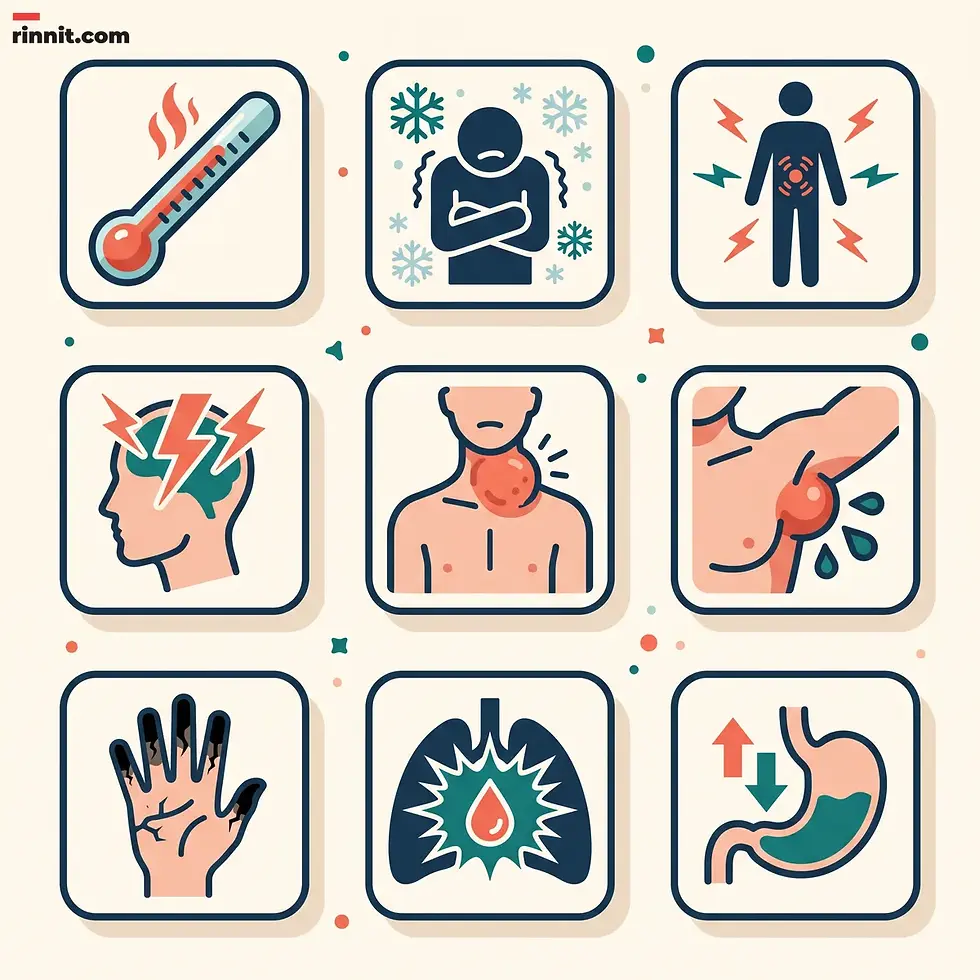
Bubonic plague symptoms include:
Sudden high fever and chills.
Pains in the areas of the abdomen, arms, and legs.
Headaches.
Large, swollen lumps in the lymph nodes (buboes) that develop and leak pus. [4]
How Do Other Plague Types Differ in Symptoms?
Symptoms of septicemic plague may include blackened tissue from gangrene, often involving the fingers or toes, or unusual bleeding. People with pneumonic plague may have additional trouble breathing and may cough up blood. Sometimes symptoms like nausea or vomiting occur. [4]
Symptom | Bubonic plague | Septicemic plague | Pneumonic plague |
High fever and chills | Yes | Yes | Yes |
Swollen lymph nodes (buboes) | Yes — signature sign | — | — |
Abdomen, arm, and leg pain | Yes | Yes | Yes |
Headaches | Yes | Yes | Yes |
Blackened tissue (gangrene) | — | Yes, often fingers or toes | — |
Unusual bleeding | — | Yes | — |
Trouble breathing | — | — | Yes |
Coughing up blood | — | — | Yes |
Nausea or vomiting | Sometimes | Sometimes | Sometimes |
What Causes Bubonic Plague?
Bubonic plague is an infection caused by the Yersinia pestis (Y. pestis) bacterium, which is spread mostly by fleas on rodents and other animals. Humans who are bitten by infected fleas can come down with plague. It is an example of a disease that can spread between animals and people — a zoonotic disease. [4]
Cats in particular are vulnerable to plague and can be infected by eating sick rodents. These cats can pass droplets infected with plague to their owners or to the veterinarians that treat them. [4]
Person-to-person spread is unlikely, except in rare cases of someone with pneumonic plague (infected lungs) spreading plague through droplets sprayed into the air. In other rare cases, people have been infected with pneumonic plague by their dogs or cats. [4]
How Is Bubonic Plague Diagnosed?
To diagnose bubonic plague, the healthcare provider will order blood or tissue sample tests. The samples are sent to the lab for testing to see if Y. pestis is present. [4]
How Is Bubonic Plague Treated?
The bubonic plague can be treated and cured with antibiotics. If diagnosed with bubonic plague, the patient will be hospitalized and given antibiotics. In some cases, the patient may be placed in an isolation unit. [4]
Antibiotics that treat bubonic plague include:
Antibiotic | Type |
Ciprofloxacin | Fluoroquinolone |
Levofloxacin | Fluoroquinolone |
Moxifloxacin | Fluoroquinolone |
Gentamicin | Aminoglycoside |
Doxycycline | Tetracycline |
What Happens If Bubonic Plague Isn't Treated?
Bubonic plague can be fatal if it is not treated. It can create infection throughout the body (septicemic plague) and/or infect the lungs (pneumonic plague). Without treatment, septicemic plague and pneumonic plague are both fatal. [4]

What Is the Outlook With Bubonic Plague?
If someone has had bubonic plague and been treated for it, the outlook is very good. Symptoms usually develop two to six days after exposure. The best recovery happens if treatment starts within 24 hours of developing symptoms. The patient will probably feel better after one to two weeks [4]. However, untreated bubonic plague can be fatal.
Can You Prevent Bubonic Plague?
You can take the following steps to prevent bubonic plague:
Prevention step | Details |
Rodent-proof your home and yard | Make your home inhospitable to mice, rats, squirrels, and other wild animals — remove hiding places and food sources, clean up clutter and brush, and be careful when feeding animals |
Use flea control on pets | Especially for pets allowed to roam freely; take sick pets to the veterinarian immediately |
Keep roaming pets out of bed | Don't let freely roaming pets sleep in your bed |
Wear protective clothing | Especially gloves if you handle dead animals |
Use insect repellent | In wooded locations or other places with flea exposure; look for repellents with DEET or permethrin |
Living With Bubonic Plague
When to contact a provider: If you develop symptoms of plague — high fever, pain, and swollen lymph nodes — contact your healthcare provider. This is especially important if you have been exposed to flea bites, or in the rare case that you have been exposed to someone with bubonic plague.
A note on modern plague: Bubonic plague may seem like a part of the past, but it still exists today in the world and in rural areas of the U.S. The best way to prevent getting plague is to avoid the fleas that live on rodents such as rats, mice, and squirrels. Fleas can also live on chipmunks and rabbits. Take care to protect your pets and yourself from fleas and the possible infections they can carry.
Conclusion
Bubonic plague is a disease with a fearsome history but a manageable present. The same Yersinia pestis bacterium that blackened medieval Europe still circulates today — riding on the fleas of rats, mice, squirrels, chipmunks, and rabbits — and causes about seven U.S. cases each year, mostly in rural Western states. Its signature is unmistakable: sudden fever, chills, body pain, and egg-sized swollen lymph nodes that can ooze pus.
The critical difference between the Black Death era and today is antibiotics. With prompt treatment — ideally within 24 hours of symptoms — bubonic plague is curable, most people feel better within one to two weeks, and the outlook is very good. Prevention is equally straightforward: control fleas on pets, keep rodents out of homes and yards, wear gloves when handling dead animals, and use DEET or permethrin repellent in flea-prone areas. For anyone creating health education materials, visual guides to infection pathways and treatment timelines make intimidating infectious diseases far easier to grasp. [Explore Rinnit's infographic templates](https://www.rinnit.com/category/medical-infographics) to build educational visuals for topics like this one.
Frequently Asked Questions
What is bubonic plague?
Bubonic plague is an infectious disease caused by the Yersinia pestis bacterium. It is spread mainly by fleas that live on rodents and other animals, and it is named after the swollen lymph nodes (buboes) it causes.
What causes bubonic plague?
The Yersinia pestis bacterium causes bubonic plague. It is spread mostly by fleas on rodents and other animals. Humans who are bitten by infected fleas can develop plague. It is a zoonotic disease, meaning it can spread between animals and people.
Is bubonic plague the Black Death?
Yes. Bubonic plague is the disease that caused the Black Death, which killed more than 25 million people during the fourteenth century — more than one third of Europe's population at the time. It was called the Black Death because many victims had blackened tissue from gangrene.
Does bubonic plague still exist?
Yes. Bubonic plague still occurs throughout the world and in the U.S., with cases in Africa, Asia, South America, and western North America.
How many cases occur in the U.S. each year?
About seven cases of plague happen in the U.S. every year on average. Half of the U.S. cases involve people aged 12 to 45 years.
Where does plague occur in the U.S.?
Most U.S. cases happen in two areas: northern New Mexico, northern Arizona, and southern Colorado, and another area involving California, southern Oregon, and western Nevada.
What are the symptoms of bubonic plague?
Symptoms include sudden high fever and chills, pains in the abdomen, arms, and legs, headaches, and large swollen lymph node lumps (buboes) that develop and leak pus.
What is a bubo?
A bubo is a large, swollen lump in a lymph node caused by the disease. The lymph nodes in the armpit, groin, and neck can become as large as eggs and can ooze pus.
Where do buboes appear?
Buboes develop in the lymph nodes of the armpit, groin, and neck.
What are the symptoms of septicemic plague?
Symptoms of septicemic plague may include blackened tissue from gangrene, often involving the fingers or toes, or unusual bleeding.
What are the symptoms of pneumonic plague?
People with pneumonic plague may have additional trouble breathing and may cough up blood. Nausea or vomiting can also occur.
What is the difference between bubonic, septicemic, and pneumonic plague?
Bubonic plague is the lymph node form; septicemic plague happens when the infection spreads through the body; and pneumonic plague happens when the lungs are infected.
How is bubonic plague spread?
Bubonic plague is spread mostly by fleas that live on rodents and other animals. Humans bitten by infected fleas can come down with plague.
Can plague spread from person to person?
Person-to-person spread is unlikely, except in rare cases of pneumonic plague, which can spread through droplets sprayed into the air from someone with infected lungs.
Can pets give me the plague?
Cats are particularly vulnerable to plague and can be infected by eating sick rodents. Infected cats can pass plague droplets to their owners or to veterinarians. In rare cases, people have been infected with pneumonic plague by their dogs or cats.
What animals carry plague fleas?
Fleas that carry plague live on rodents such as rats, mice, and squirrels. They can also live on chipmunks and rabbits.
How is bubonic plague diagnosed?
The provider orders blood or tissue sample tests, which are sent to a lab to check whether Y. pestis is present.
How is bubonic plague treated?
Bubonic plague can be treated and cured with antibiotics. If diagnosed, the patient is hospitalized and given antibiotics. In some cases, the patient may be placed in an isolation unit.
What antibiotics treat bubonic plague?
Antibiotics that treat bubonic plague include ciprofloxacin, levofloxacin, moxifloxacin, gentamicin, and doxycycline.
Can bubonic plague be cured?
Yes. Bubonic plague can be treated and cured with antibiotics, and the outlook after treatment is very good.
What happens if bubonic plague is not treated?
Untreated bubonic plague can be fatal. It can create infection throughout the body (septicemic plague) and/or infect the lungs (pneumonic plague), and both are fatal without treatment.
When do symptoms appear after exposure?
Symptoms usually develop two to six days after exposure.
When should treatment start?
The best recovery happens if treatment starts within 24 hours of developing symptoms.
How long does recovery take?
Most people will probably feel better after one to two weeks of treatment.
How can I prevent bubonic plague?
Make your home and yard inhospitable to rodents by removing hiding places and food sources, use flea control products on pets, keep roaming pets out of your bed, wear gloves when handling dead animals, and use insect repellent containing DEET or permethrin in wooded or flea-prone areas.
Should I take sick pets to the veterinarian?
Yes. Take sick pets to the veterinarian immediately, and use flea control products especially for pets who roam freely.
Should I let my pet sleep in my bed?
If your pet roams freely, no — do not let freely roaming pets sleep in your bed.
What should I do if I handle dead animals?
Wear protective clothing, especially gloves, if you handle dead animals.
What insect repellent works against plague fleas?
Use repellents in wooded locations or other flea-exposed places, and look for products that use DEET or permethrin.
When should I contact a healthcare provider?
Contact your provider if you develop plague symptoms — high fever, pain, and swollen lymph nodes — especially if you have been exposed to flea bites or, in rare cases, to someone with bubonic plague.
Who is most affected in the U.S.?
Half of U.S. plague cases involve people aged 12 to 45 years.
What was the historical cause of plague spread in Europe?
Rats traveled on ships and brought fleas and plague with them, spreading the disease across Europe in the fourteenth century.
Related Reading
References
Mwengee W, Butler T, Mgema S, et al. Treatment of plague with gentamicin or doxycycline in a randomized clinical trial in Tanzania. Clin Infect Dis. 2006;42(5):614-621. PMID: 16447105. https://doi.org/10.1086/500137
Kugeler KJ, Staples JE, Hinckley AF, et al. Epidemiology of human plague in the United States, 1900-2012. Emerg Infect Dis. 2015;21(1):16-22. PMID: 25529546. https://doi.org/10.3201/eid2101.140564
Glatter KA, Finkelman P. History of the Plague: An Ancient Pandemic for the Age of COVID-19. Am J Med. 2021;134(2):176-181. PMID: 32979306. https://doi.org/10.1016/j.amjmed.2020.08.019
Cleveland Clinic. Bubonic Plague (Black Death): What Is It, Symptoms, Treatment. Cleveland Clinic. Last updated June 17, 2021. https://my.clevelandclinic.org/health/diseases/21590-bubonic-plague
Medical disclaimer
This article is for general informational purposes only and is not a substitute for professional medical advice, diagnosis, or treatment. Always seek the advice of a qualified healthcare provider with any questions about a medical condition. Sudden high fever, severe pain, and swollen lymph nodes — especially after possible flea exposure — require prompt medical attention.



Comments