What Is Atopy? Symptoms, Causes, and Treatment

Updated: 2 days ago
Medically reviewed by Dr. Baraa Alnahhal, MD · Last reviewed: October 2026
Quick Answer: What is atopy and is it serious?
Atopy is an inherited tendency to develop several allergic conditions together, such as asthma, allergic rhinitis, food allergies and eczema, driven by IgE antibodies reacting to harmless substances. [1] [2] It is usually not dangerous day to day, but severe reactions with throat swelling or dizziness are emergencies requiring epinephrine and immediate care. [2] Most people manage it with trigger avoidance and medication.
Key Takeaways
Atopy is the tendency to develop allergic conditions like asthma, allergies, and eczema — often together. [1]
It is driven by IgE antibodies that overreact to harmless substances like pollen, foods, and dust mites. [2]
The biggest risk factor is family history: a parent or sibling with atopic conditions. [6]
Common triggers include pollen, cold dry air, dust mites, foods, pet dander, mold, cockroaches, fragrances, and stress. [3]
The root cause can't be cured, but symptoms are treatable with antihistamines, inhalers, corticosteroids, allergy shots, and immunotherapy. [2] [3]
Carry an epinephrine auto-injector if you have allergies that can cause anaphylaxis, and seek emergency care for throat swelling or dizziness. [2]
What the research says
According to PubMed:
Atopic conditions share a common biology, so treating one can affect the others. A review of atopy describes it as a collection of comorbidities that share pathogenic features and a type 2 pathogenesis, shaped by environmental influences and multigenetic predispositions, and notes that the treatment of one condition influences the others (Diaz-Cabrera et al., J Allergy Clin Immunol Pract, 2021) [1].
Under-the-tongue immunotherapy appears safe, with mostly mild side effects. A Cochrane review of 66 studies (7,944 participants) found that sublingual immunotherapy likely does not increase serious adverse events, with no more than 1 in 100 people affected (29 studies, 4,810 participants), while adverse events of any kind were more common (OR 1.99, 95% CI 1.49 to 2.67) but usually transient and mild; evidence on asthma exacerbations and quality of life was too limited for firm conclusions (Fortescue et al., Cochrane Database Syst Rev, 2020) [4].
House dust mite immunotherapy works for allergic rhinitis and asthma. A review of 15 randomized, double-blind, placebo-controlled trials published since 2013 — 12 of them testing the two house dust mite sublingual tablets — established the efficacy and safety of the tablets in allergic rhinitis and asthma, and supported treating for 3 to 5 years, after which disease modification can be anticipated (Nelson, Allergy Asthma Proc, 2018) [5].
Study details are from PubMed abstracts.
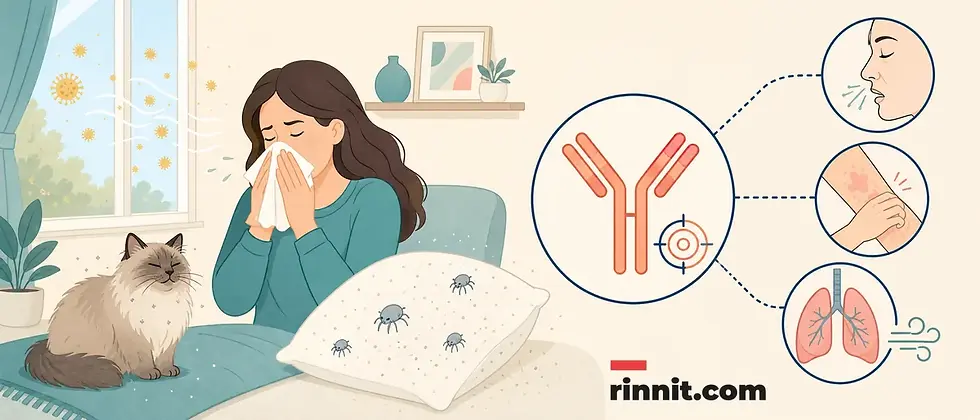
What Is Atopy?
Atopy is a tendency to develop various types of allergic conditions. The word itself means "out of place" — atopic conditions are your body's overreaction to something it shouldn't react to. [6] This overreaction causes the immune system to respond to environmental triggers like pollen or dust mites with asthma, skin rashes, and allergies. [2]
People with atopy often have more than one atopic condition at the same time. [1] Think of it this way: if it is cold outside, you are more likely to wear gloves — and if you're wearing gloves, you're also likely to wear a hat and a coat. The same underlying condition (cold weather) increases the chances that you'll wear more than one type of warm accessory. Similarly, one underlying tendency makes several allergic conditions more likely to appear together.
What Are Atopic Diseases?
Atopic condition | What it affects |
Allergic asthma (and some other forms of asthma) | Airways and breathing |
Allergic rhinitis (hay fever) | Nose and sinuses |
Food allergies | Digestive and immune response to foods |
Eczema / atopic dermatitis | Skin |
Some forms of hives (urticaria) | Skin |
Allergic conjunctivitis | Eyes |
Eosinophilic esophagitis | Esophagus (food pipe) |
What's the Difference Between Atopy and Allergies?
Atopy is like having allergic reactions that affect different parts of your body. Allergic rhinitis — what people often think of as "allergies" — is one type of atopic reaction, but it's not the only one.
The same environmental overreactions that cause typical allergies can trigger other atopic conditions. Importantly, atopic reactions can also be set off by nonallergic causes, like cold air and stress. [2] [3]
What Are the Symptoms of Atopy?
Symptom | Medical term (when applicable) |
Stuffy or runny nose | Allergic rhinitis symptoms |
Itchy or watery eyes | Allergic conjunctivitis symptoms |
Skin rashes or hives | Urticaria / eczema symptoms |
Itchy skin | Pruritus |
Shortness of breath | Dyspnea |
Chronic cough | Chronic cough |
Nausea and vomiting | Food allergy / GI symptoms |
Mouth, throat, tongue, or facial swelling | Angioedema (possible anaphylaxis sign) |
What Causes Atopy?
Immunoglobulin E (IgE) causes the allergic conditions associated with atopy. IgE is a type of antibody that is supposed to help protect your body from harmful pathogens (germs). But IgE antibodies sometimes mistake non-harmful allergens — or other substances — for harmful ones. That mistake can cause airway swelling, rashes, a runny nose, and other symptoms. [2]
What Are the Risk Factors?
The biggest risk factor for atopy is having close family members — a biological parent or sibling — with atopic conditions. [6] Experts believe the tendency to have allergic conditions is inherited through genes. [1] [2]
Risk factor | Detail |
Family history | A parent or sibling with atopic conditions is the strongest predictor |
Inheritance | The tendency is thought to be passed down through genes |
How Is Atopy Diagnosed?
A healthcare provider may not directly diagnose atopy itself, but they can diagnose its related conditions. Depending on your symptoms, they might perform or order the following tests.
Test | What it checks |
Pulmonary function tests | Lung function and airflow (for asthma) |
Allergy skin tests | Skin reactions to specific allergens |
Allergy blood tests | IgE antibodies to specific allergens in the blood |
How Is Atopy Treated?
You can't cure the root cause of atopy. [6] But treatments for atopic conditions — allergies, asthma, and eczema — are effective.
Treatment | How it works |
Antihistamines | Block the allergic reaction's chemical messenger |
Inhalers | Open airways for asthma (maintenance or rescue) |
Corticosteroids (oral, inhaled, or topical) | Reduce inflammation in airways or on skin |
Leukotriene modifiers | Block inflammatory chemicals that worsen asthma and allergies |
Allergy shots | Gradually desensitize the immune system to allergens |
Sublingual immunotherapy | Under-the-tongue desensitization for certain allergens |
Oral immunotherapy (food allergies) | Gradual exposure therapy for food allergens |
Biologics | Targeted therapy for severe asthma and eczema |
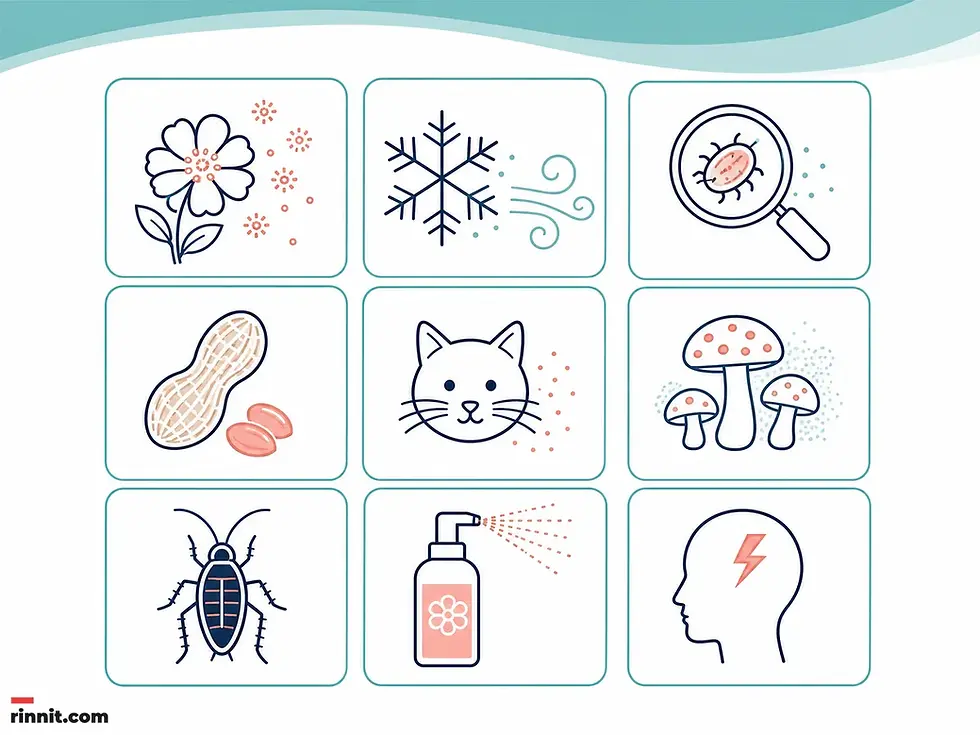
What Are the Triggers?
Atopy itself can't be prevented, but you can try to avoid the triggers that cause atopic conditions. If you can't avoid a trigger — like being around a friend's pet or high pollen during allergy season — taking an antihistamine beforehand can help. [6]
Trigger | Examples |
Pollen | Trees, grasses, and weeds (spring, summer, fall) |
Cold, dry air | Winter weather exposure |
Dust mites | Bedding, mattresses, upholstered furniture |
Specific foods | Peanuts, tree nuts, eggs |
Pet dander | Cats, dogs, and other animals |
Molds | Damp indoor and outdoor environments |
Cockroaches | Indoor pest exposure |
Fragrances | Soaps, laundry detergents, perfumes |
Stress | Emotional and physical stress |
Living With Atopy
How Do I Take Care of Myself?
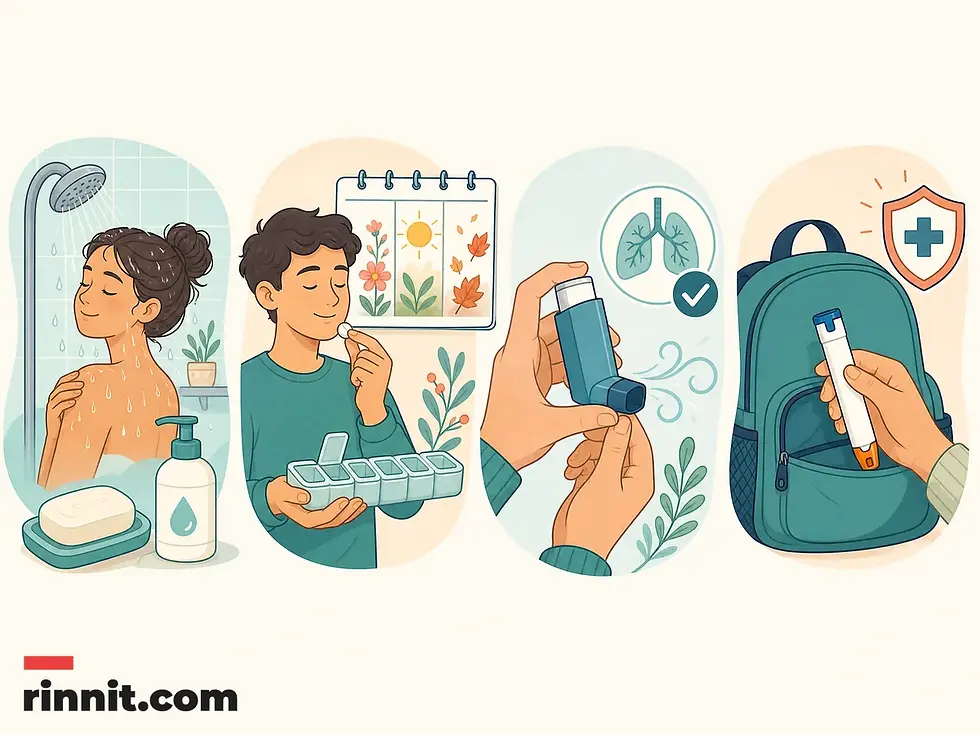
Most people with atopy can manage their conditions by avoiding triggers, taking preventive measures, and treating reactions as soon as they start.
Daily habit | Why it helps |
Short showers or baths nightly | Prevents skin dryness that worsens eczema |
Unscented bar soap | Fragrances can trigger skin reactions |
Moisturize after bathing | Lotion or cream for sensitive skin protects the skin barrier |
Daily allergy medication in pollen season | Keeps symptoms ahead of spring, summer, and fall allergens |
Maintenance medication as directed | Inhalers and other controllers work only when used consistently |
Carry an epinephrine auto-injector | Lifesaving first response for food or anaphylaxis-causing allergies |
When Should I See My Healthcare Provider?
Talk to a healthcare provider if you have symptoms of atopic conditions — allergies, asthma, or frequent skin rashes. They can help sort out what is causing your symptoms and determine the best treatment. You may need a referral to an allergist for the best care.
When Should I Go to the ER?
Emergency sign | Why it's urgent |
Swelling of the face, mouth, tongue, or throat | Airway can close rapidly (anaphylaxis) |
Severe vomiting | Sign of a systemic severe reaction |
Weakness, dizziness, light-headedness, or passing out | Can signal dangerous low blood pressure |
Go to an emergency room or call 911 if you experience any of these symptoms of a severe allergic reaction. Trouble breathing, wheezing or a tight throat are also emergency signs; use your epinephrine auto-injector right away if you have one. [2]
Conclusion
Atopy is not a single disease but a family pattern — an inherited tendency for your immune system to overreact to everyday substances like pollen, pet dander, dust mites, and certain foods. [1] [2] That is why asthma, hay fever, food allergies, and eczema so often show up together in the same person or the same family. [1] The good news is that while the root tendency can't be cured, every individual condition it produces can be managed: modern treatments range from simple antihistamines and trigger avoidance to allergy shots, inhalers, biologics, and immunotherapy. [2] [3] If you find yourself juggling multiple allergic conditions, a provider — often an allergist — can map your triggers, confirm which IgE reactions are driving your symptoms, and build a plan that turns overwhelming management into a simple routine.
Take the next step in understanding your health. For families managing allergies and asthma, visual guides help everyone remember daily routines, trigger lists, and emergency first-aid steps. Explore Rinnit's library of health infographic templates to create simple, shareable visuals for your family's allergy management plan.
Frequently Asked Questions
What does atopy mean?
Atopy is the tendency to develop a group of allergic conditions — most commonly asthma, allergies, and eczema — often at the same time. [1] The word literally means "out of place," reflecting the body's overreaction to substances that shouldn't cause a reaction. [6]
What causes atopy?
IgE antibodies. These antibodies normally protect the body from germs, but in atopy they mistake harmless substances — pollen, foods, dust mites — for threats, triggering allergy symptoms, rashes, or airway swelling. [2] The tendency is inherited through genes. [1] [2]
Is atopy the same as allergies?
Not exactly. Allergies are one type of atopic reaction. Atopy is the broader tendency to have allergic reactions that affect different parts of the body — and atopic reactions can even be triggered by nonallergic causes like cold air and stress. [2] [3]
Who is most at risk for atopy?
People with a biological parent or sibling who has atopic conditions. Family history is the strongest risk factor because the tendency is passed down through genes. [6]
What conditions are considered atopic?
Allergic asthma, allergic rhinitis, food allergies, eczema (atopic dermatitis), some forms of hives, allergic conjunctivitis, and eosinophilic esophagitis. [1] [2]
What are the most common triggers?
Pollen, cold dry air, dust mites, specific foods (peanuts, tree nuts, eggs), pet dander, mold, cockroaches, fragrances in soaps and detergents, and stress. [6]
Can atopy be cured or prevented?
No. The root cause can't be cured and the tendency can't be prevented. But its conditions are treatable, and reactions can often be prevented by avoiding triggers or taking an antihistamine before exposure. [6]
What treatments are available?
Antihistamines, inhalers, corticosteroids (oral, inhaled, or topical), leukotriene modifiers, allergy shots, sublingual immunotherapy, oral immunotherapy for food allergies, and biologics. [6]
When is atopy an emergency?
Swelling of the face, mouth, tongue, or throat; severe vomiting; or weakness, dizziness, light-headedness, or fainting — signs of anaphylaxis and low blood pressure. [2] Use an epinephrine auto-injector if available and call 911. [2]
How can I take care of myself daily?
Take short nightly showers with unscented soap and moisturize afterward, take allergy medication daily during high-pollen seasons, use maintenance inhalers as directed, and carry an epinephrine auto-injector if your allergies can cause anaphylaxis.
References
Diaz-Cabrera NM, Sánchez-Borges MA, Ledford DK. Atopy: a collection of comorbid conditions. J Allergy Clin Immunol Pract. 2021;9(11):3862-3866. PMID 34509674. https://doi.org/10.1016/j.jaip.2021.09.002
Abbas M, Goldin J. Type I Hypersensitivity Reaction. StatPearls [Internet]. Treasure Island (FL): StatPearls Publishing. 2025. https://www.ncbi.nlm.nih.gov/books/NBK560561/
Brodkey FD. Asthma. MedlinePlus Medical Encyclopedia. U.S. National Library of Medicine. 2025. https://medlineplus.gov/ency/article/000141.htm
Fortescue R, Kew KM, Leung MST. Sublingual immunotherapy for asthma. Cochrane Database Syst Rev. 2020;9(9):CD011293. PMID 32926419. https://doi.org/10.1002/14651858.CD011293.pub3
Nelson HS. Immunotherapy for house-dust mite allergy. Allergy Asthma Proc. 2018;39(4):264-272. PMID 30095391. https://doi.org/10.2500/aap.2018.39.4145
Cleveland Clinic. Atopy: Disease, Causes, Triggers, Conditions & Treatment. Cleveland Clinic Health Library. Last reviewed October 3, 2024. https://my.clevelandclinic.org/health/diseases/atopy
Related Reading
Allergic Rhinitis (Hay Fever): Symptoms, Triggers, and Treatment That Actually Works
Atopic Dermatitis (Eczema): Symptoms, Causes & Treatment — Complete Guide
Allergic Asthma: The Breathing Condition Triggered by the Air Around You
Anaphylaxis: Symptoms, Triggers, and Why Epinephrine Is the Only Emergency Treatment
Hives and Angioedema: Symptoms, Causes, Treatment & Complete Guide
PubMed — Atopy: A Collection of Comorbid Conditions (Diaz-Cabrera et al., 2021)
Disclaimer: This article is for general educational purposes only and does not constitute medical advice. Always consult a qualified healthcare provider — such as an allergist — for diagnosis and treatment of allergic conditions. If you experience throat swelling, severe vomiting, dizziness, or fainting, use your epinephrine auto-injector if prescribed and seek emergency medical care immediately.



Comments