What Is Asthma During Pregnancy? Symptoms, Risks, and Safe Treatment

Updated: 2 days ago
Medically reviewed by Dr. Baraa Alnahhal, MD · Last reviewed: October 2026
Quick Answer: Is asthma dangerous during pregnancy?
Asthma during pregnancy is not automatically dangerous, but poorly controlled asthma reduces oxygen to the baby and raises the risk of preeclampsia, premature birth and low birth weight. Stopping medication creates more risk than the medicines do. With prescribed inhalers, trigger avoidance and monitoring, most people with asthma have a healthy pregnancy and deliver a healthy baby. [1]
Key Takeaways
Asthma affects 3% to 8% of pregnant people in the U.S. — it is the most common lung condition treated in pregnancy. [1]
About 40% see symptoms worsen (mostly those with severe asthma beforehand); 60% stay the same or improve. [1]
Worsening usually happens between weeks 29 and 36; changes typically return to normal within three months postpartum. [1]
Unmanaged asthma — not prescribed medication — is what raises the risk of preeclampsia, premature birth, and low birth weight. [1]
Most usual asthma medicines, including albuterol, are considered safe in all trimesters, during labor, and while breastfeeding. [1]
Flu shots are recommended in every trimester because respiratory illness is a common asthma trigger. [1]
What the research says
Asthma raises the odds of several pregnancy complications — and active management brings the preterm risk down. A meta-analysis of 40 cohort publications covering 1,637,180 people found that maternal asthma was associated with higher risks of preeclampsia (relative risk 1.54, 95% CI 1.32 to 1.81), preterm delivery (1.41, 1.22 to 1.61), low birth weight (1.46, 1.22 to 1.75), and small-for-gestational-age babies (1.22, 1.14 to 1.31). When asthma was actively managed, the relative risk of preterm delivery fell to a non-significant 1.07 (95% CI 0.91 to 1.26). (Murphy et al., BJOG, 2011) [5]
Flare-ups in pregnancy are common, and their main triggers are preventable. A systematic review found that asthma exacerbations needing medical intervention occur in about 20% of pregnant women with asthma, with about 6% admitted to hospital. They occur mainly in the late second trimester, and the major triggers were viral infection and not taking inhaled corticosteroid medication, which may reduce the risk of exacerbations. (Murphy et al., Thorax, 2006) [6]
Many people with asthma cut back on their inhalers during pregnancy. A systematic review and meta-analysis of 52 articles found that 41% of pregnant women with asthma used inhaled corticosteroids (95% CI 36% to 45%), prescription rates dipped in the first trimester compared with before pregnancy, and pooled non-adherence was 40% (95% CI 36% to 44%) in two comparable studies. (Robijn et al., Clin Exp Allergy, 2019) [7]

What Is Asthma During Pregnancy?
Asthma is a chronic (long-lasting) disease that causes your airways to tighten and narrow, making breathing harder. Shortness of breath is a common pregnancy symptom, even among people without asthma. The struggle to take easy breaths may feel even more intense if you are living with asthma, which adds symptoms like wheezing, coughing episodes, and chest tightness. [1]
In addition to feeling concerned about your own health, you may worry that the fetus is not getting enough oxygen. If you have asthma and become pregnant, it is important to continue treatments to prevent asthma attacks, or flare-ups. Unmanaged asthma can pose major health risks to both you and the fetus. [1]
On the other hand, if you follow your treatment plan and take all medicines as prescribed, there is no reason you cannot have a healthy pregnancy and a healthy baby. [1]
Does Pregnancy Make Asthma Worse?
It can, but it depends on your unique case. Recent research suggests that about 40% of people have worsening asthma during pregnancy. Most people whose symptoms get worse have severe (not mild or moderate) asthma before they are pregnant. The other 60% either do not notice changes, or their asthma symptoms actually improve. [1]
What Happens to Asthma in Pregnancy | What Research Shows |
Symptoms worsen | About 40% of people; most had severe asthma before pregnancy |
Symptoms stay the same or improve | The remaining 60% |
When worsening happens | Typically between weeks 29 and 36 |
When improvement happens | Usually gradually over the pregnancy |
During labor and delivery | Symptoms usually do not get worse |
After birth | Changes usually return to normal within the first three months |
Future pregnancies | People who had changes in one pregnancy tend to have similar changes in the next |
Previous research suggested changes followed a "rule of thirds" — one-third improve, one-third worsen, one-third stay the same. More recent research suggests the number of people with worsening symptoms is closer to 40%. [1]
Does Asthma Affect the Fetus?
Asthma can pose health risks to the fetus — but only if it is unmanaged. That last part is essential. Unmanaged asthma can decrease the amount of oxygen available in your blood for a developing fetus, and it can increase your risk of pregnancy complications. [1]
Most pregnant people with asthma who experience complications do so because they are unsure how to manage their asthma during pregnancy. For example, they may worry that their asthma medicine may harm the fetus, so they stop taking it. But not managing your asthma poses significantly more risk to the fetus than any treatment. Taking the right steps — such as taking all medicines as prescribed — increases your chances of having a normal pregnancy and delivering a healthy baby. [1]
About 3% to 8% of pregnant people in the United States have asthma. It is the most common lung condition treated during pregnancy. [1]
What Are the Symptoms of Asthma During Pregnancy?
Asthma symptoms during pregnancy are the same as asthma symptoms in general. You may have persistent symptoms that you keep at bay, or occasional asthma attacks where you go from feeling fine to having trouble breathing.
Symptom | What It Feels Like |
Shortness of breath | Difficulty catching a full breath, even at rest |
Coughing | Especially at night |
Chest tightness, pain, or pressure | A heavy, constricted feeling across the chest |
Wheezing | A shrill or coarse rattling sound when the airway is partially blocked |

What Causes Breathing Changes During Pregnancy?
Pregnancy does not cause asthma. But pregnancy-related changes in your body can cause you to experience the condition differently:
Body Change | How It Affects Breathing |
Growing uterus | Repositions the diaphragm, which may not move as freely for full breaths |
Hormone spikes | Can dry and inflame the sinuses, causing a "stuffy" nose; progesterone spikes stimulate faster breathing |
Increased heart rate | The heart works harder to supply blood to you and the fetus, which can leave you short of breath |
If you have not been diagnosed with asthma and suddenly have trouble breathing, you may be experiencing shortness of breath because of these normal changes — not asthma. Or you may have had mild, undiagnosed asthma that became noticeable because pregnancy worsened it. See a provider to be sure.
Can Asthma Cause Complications?
Unmanaged asthma can increase your risk of certain pregnancy complications. People diagnosed with severe asthma are more likely to experience complications than those with mild or moderate asthma. [1]
Complication | What It Means |
Preeclampsia | A serious blood pressure condition that can stress your organs and pose serious risks to the fetus |
Premature birth | Delivery before 37 weeks; early-born babies may face developmental health problems |
Small gestational age / low birth weight | Smaller-than-normal babies may have underdeveloped systems causing health problems |
Whether your asthma is mild, moderate, or severe, having a treatment plan to prevent and manage attacks reduces your risk of issues affecting you or the fetus. Certain factors may increase your risk of asthma worsening during pregnancy: smoking; not taking your asthma medications or following your treatment plan as prescribed; and having overweight (BMI 25–29) or obesity (BMI 30 or higher). [1]
How Is Asthma Diagnosed During Pregnancy?
It is common to be diagnosed before pregnancy. The diagnostic process is similar whether you are pregnant or not — your provider will only perform tests that are safe for you and the fetus.
Diagnosis may include a medical history (a description of your symptoms and when they tend to arise or worsen), a physical exam, and spirometry — a test that measures airflow throughout your lungs. You may also need blood tests and imaging procedures to rule out other conditions that affect breathing. [1]
How Is Asthma Treated During Pregnancy?
You should continue to follow your asthma management plan during pregnancy, including taking asthma medicines as prescribed. Your healthcare provider will ensure the medicines are safe for you and the fetus. Good asthma control means minimal or no daytime symptoms, sleeping through the night without asthma symptoms, performing everyday activities, rarely needing your rescue inhaler, and normal or near-normal lung function. [1]
Why Inhalers Are Generally Safe
Safe and effective asthma medications come in multiple forms, including inhalers and oral medications (pills and liquids). When prescribing during pregnancy, providers consider which medicines have the longest track record of safe use, which are most effective at controlling your asthma based on severity, and which are safest and most effective in each trimester. Most people can continue taking their usual asthma medications during pregnancy, labor, and while breastfeeding. [1]
Medication Topic | What the Evidence Says |
Albuterol | Considered one of the safest asthma medications in pregnancy, with a long track record of healthy deliveries |
Choosing the "safest" drug | The safest medication is the one that best controls your asthma, so it does not put you at risk of complications |
Allergy shots | Providers do not start them during pregnancy, but may continue them if you are already receiving them |
Flu shot | Recommended in all trimesters — it protects you from the flu, a common asthma trigger |
Your Management Plan
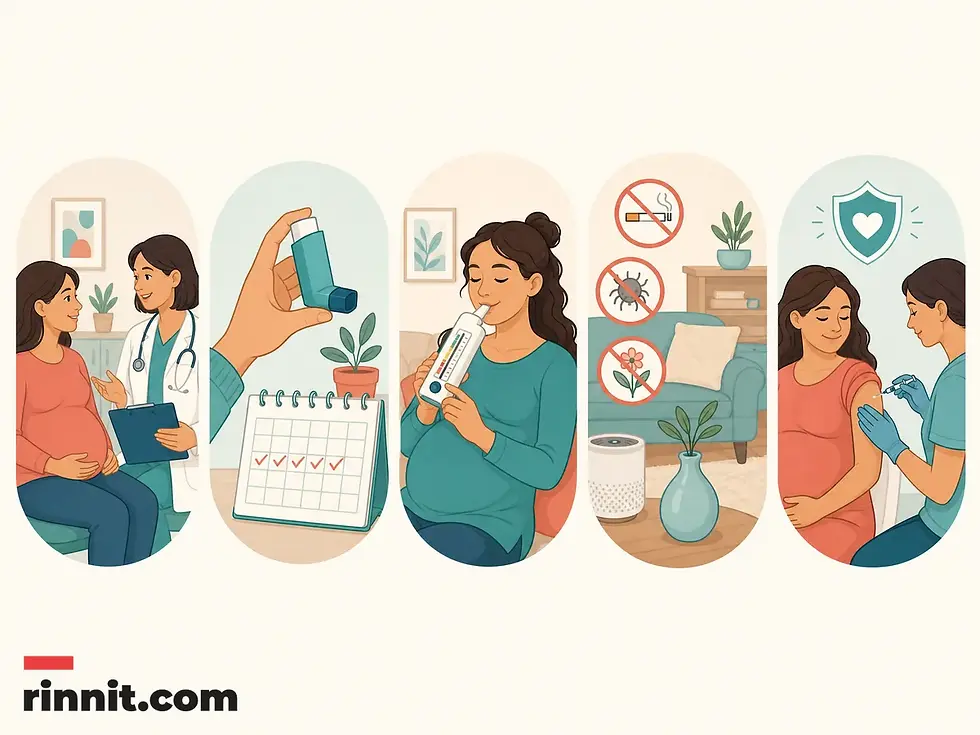
Many providers recommend a preconception appointment before you start trying to get pregnant, so you can build a game plan for treating conditions like asthma during pregnancy. Monitoring your condition includes two parts:
Monitoring Area | What It Involves |
Your lungs and breathing | Regular breathing tests, spirometry in a clinic, and daily airflow checks at home with a peak flow meter |
The fetus's growth and organ function | Regular pregnancy ultrasounds; if you have moderate-to-severe or poorly managed asthma, an ultrasound or nonstress test after week 32 to check the fetal heart rate |
Avoiding triggers is the third pillar. Be mindful of substances that can cause an asthma attack:
Common Trigger | Category |
Tobacco smoke | Environmental |
Pest droppings (cockroaches, mice) | Environmental |
House dust mites, mold, pet dander | Allergens |
Pollen | Allergens |
Strong chemical smells (cleaning products) | Chemical |
Powerful aromas (perfume, cologne) | Chemical |
Getting sick (colds, flu) | Infection |
Stress | Emotional |
What Is the Outlook?
People with asthma have a slightly increased risk of pregnancy complications compared to people without asthma. The risk is much higher if you do not manage your asthma — which is why following your treatment plan throughout pregnancy is so important. Do not stop taking medications unless your healthcare provider tells you to. [1]
The best way to reduce your risk of asthma-related complications is to follow your treatment plan, which includes avoiding triggers and taking medications regularly. Many people stop taking their asthma medications during pregnancy because they worry about how it may affect the fetus. Poor asthma management poses a greater risk to the fetus than most common treatment side effects, and your provider will monitor your medications to ensure you are receiving the safest treatment possible. [1]
What Questions Should I Ask My Provider?
Helpful questions to bring to your appointments include: Which doctors (allergist, immunologist, and others) will be involved in helping me manage my asthma? Will we need to adjust my medications? How often will I need appointments to monitor my asthma? How will I monitor my asthma at home? And which symptoms should prompt me to schedule an appointment — or go to the ER? [1]
Conclusion: Two Lungs, One Baby, One Simple Rule — Manage, Don't Stop
Asthma during pregnancy raises understandable worries — will my symptoms get worse, and could my medicines harm my baby? The evidence points to a clear answer: unmanaged asthma is the danger, not the treatment. About 40% of people see symptoms worsen (usually between weeks 29 and 36), but the majority stay the same or improve, and changes typically resolve within three months after birth.
The path to a healthy pregnancy is a managed one. Take your medications exactly as prescribed, work with your provider to build a plan before or early in pregnancy, avoid known triggers, track your breathing with a peak flow meter, and get the flu shot in every trimester. If you have been quietly stopping your inhaler out of fear, start that conversation with your provider this week — the safest medication is the one that keeps your breathing under control.
If you are pregnant with asthma, talk to your healthcare provider about a management plan if you have not yet — and never stop prescribed medications without their guidance. For more clear, verified health information, explore the rest of Rinnit.com — start with our guides on asthma and asthma triggers.
Want to share this information visually? Rinnit.com's health infographic templates make it easy to turn articles like this one into shareable visuals for your website, newsletter, or social channels.
Frequently Asked Questions
Is asthma dangerous during pregnancy?
Asthma itself is not automatically dangerous during pregnancy. Unmanaged asthma is the real concern, because it can reduce the oxygen available to the developing baby and raise the risk of complications like preeclampsia, premature birth, and low birth weight. Well-managed asthma is compatible with a healthy pregnancy and a healthy baby. [1]
How common is asthma in pregnancy?
About 3% to 8% of pregnant people in the United States have asthma, making it the most common lung condition treated during pregnancy. [1]
Will my asthma get worse while I'm pregnant?
For about 40% of people, symptoms worsen — most of whom had severe asthma before pregnancy. The other 60% either see no change or improve. When worsening occurs, it typically happens between weeks 29 and 36. [1]
What is the "rule of thirds" for pregnancy asthma?
Older research suggested asthma in pregnancy split into thirds: one-third improve, one-third worsen, and one-third stay the same. More recent research suggests closer to 40% experience worsening symptoms. [1]
When do symptoms go back to normal after birth?
Asthma symptoms that change during pregnancy usually return to your baseline within the first three months after the baby is born. People who experienced changes in one pregnancy tend to experience similar changes in future pregnancies. [1]
Are inhalers safe during pregnancy?
Yes — treatments like inhalers are generally safe to use during pregnancy. Most people can continue their usual asthma medications during pregnancy, labor, and while breastfeeding, with their provider ensuring the medicines are safe for both mother and baby. [1]
Is albuterol safe in pregnancy?
Albuterol is considered one of the safest asthma medications during pregnancy, with a long track record of healthy deliveries. Still, the safest medication overall is the one that best controls your asthma, which your provider will help you choose.
What happens if I stop my asthma medication during pregnancy?
Many people stop their medications out of worry about the fetus — but poor asthma management poses a greater risk to the baby than most common treatment side effects. Do not stop taking medications unless your healthcare provider tells you to. [1]
What triggers should I avoid during pregnancy?
Common triggers include tobacco smoke, pest droppings, house dust mites, mold, pet dander, pollen, strong chemical smells, powerful perfumes, respiratory illness (colds and flu), and stress. [1]
Should I get the flu shot if I have asthma?
Yes — the flu shot is recommended in all trimesters of pregnancy. Getting sick is a common trigger for asthma attacks, so the vaccine protects both you and your pregnancy. [1]
Can I still get allergy shots while pregnant?
Healthcare providers do not start allergy shots during pregnancy. If you are already receiving them, your provider may continue your current course. [1]
How will my doctor monitor me during pregnancy?
Monitoring covers both you and the baby: lung function tests (spirometry in clinic, daily peak flow readings at home) and fetal growth checks (regular ultrasounds, plus an ultrasound or nonstress test after week 32 if your asthma is moderate to severe or poorly managed). [1]
Does pregnancy cause asthma?
No. Pregnancy does not cause asthma, though it does not cause it to disappear either. Pregnancy-related changes — a growing uterus that repositions the diaphragm, hormone spikes, and a faster heart rate — can change how asthma feels. Sudden breathing trouble in someone without a diagnosis should be evaluated by a provider. [1]
Which symptoms should send me to the ER?
Ask your provider which symptoms should prompt an appointment versus an emergency visit. In general, an asthma attack that does not respond to your rescue inhaler, severe shortness of breath, or inability to speak in full sentences warrants immediate emergency care.
Related Reading
Asthma: Symptoms, Causes, Triggers, Diagnosis & Treatment — Complete Guide
Asthma Attack: Symptoms, Triggers, Warning Signs & Emergency Treatment — Complete Guide
Peak Flow Meter: Monitoring Asthma and Lung Function at Home
Preeclampsia: Symptoms, Causes & What Helps — A Complete Guide
Asthma and Allergy Foundation of America — Pregnancy and Asthma
References
Cleveland Clinic. Asthma & pregnancy. Cleveland Clinic. Last updated September 5, 2023. https://my.clevelandclinic.org/health/diseases/9568-pregnancy-asthma
Bravo-Solarte DC, Garcia-Guaqueta DP, Chiarella SE. Asthma in pregnancy. Allergy Asthma Proc. 2023;44(1):24-34. PMID 36719688. https://doi.org/10.2500/aap.2023.44.220077
Shebl E, Chakraborty RK. Asthma in pregnancy. In: StatPearls [Internet]. Treasure Island (FL): StatPearls Publishing; 2023 Jun 26. PMID 30335316. https://www.ncbi.nlm.nih.gov/books/NBK532283/
Wang H, Li N, Huang H. Asthma in pregnancy: pathophysiology, diagnosis, whole-course management, and medication safety. Can Respir J. 2020;2020:9046842. PMID 32184907. https://doi.org/10.1155/2020/9046842
Murphy VE, Namazy JA, Powell H, et al. A meta-analysis of adverse perinatal outcomes in women with asthma. BJOG. 2011;118(11):1314-1323. PMID 21749633. https://doi.org/10.1111/j.1471-0528.2011.03055.x
Murphy VE, Clifton VL, Gibson PG. Asthma exacerbations during pregnancy: incidence and association with adverse pregnancy outcomes. Thorax. 2006;61(2):169-176. PMID 16443708. https://doi.org/10.1136/thx.2005.049718
Robijn AL, Jensen ME, McLaughlin K, et al. Inhaled corticosteroid use during pregnancy among women with asthma: a systematic review and meta-analysis. Clin Exp Allergy. 2019;49(11):1403-1417. PMID 31357230. https://doi.org/10.1111/cea.13474
Medical disclaimer
This article is for informational purposes only and is not medical advice. Always consult a qualified healthcare provider for diagnosis and treatment decisions, especially during pregnancy.



Comments