What Is Arsenic Poisoning? A Plain-Language Guide to Exposure, Symptoms, Treatment, and Prevention

Updated: 2 days ago
Medically reviewed by Dr. Baraa Alnahhal, MD · Last reviewed: October 2026
Quick Answer
Arsenic poisoning is poisoning from taking in high levels of arsenic, a natural element [1] [4], most often through contaminated drinking water, affecting at least 140 million people worldwide. [1] [2] Acute symptoms can start within 30 minutes and include vomiting, diarrhea and abnormal heart rhythm. [1] Long-term exposure causes skin changes and raises cancer risk. [1] [2] Treatment includes decontamination and chelation therapy. [1] [5]
What the research says
Arsenic in drinking water raises lung cancer risk in a dose-dependent way. A systematic review of 51 studies, with 15 pooled in a meta-analysis, estimated a lung cancer incidence relative risk of 1.67 (95% CI 1.27–2.17) at 50 µg/L and 2.21 (95% CI 1.61–3.02) at 150 µg/L. The estimate at 10 µg/L (RR 1.11, 95% CI 0.86–1.43) was uncertain (Issanov et al., Toxicol Appl Pharmacol, 2024) [7].
Higher arsenic exposure is linked to more heart disease. A meta-analysis of 37 studies with 348,259 participants found that people in the top third of arsenic exposure had a pooled relative risk of 1.30 (95% CI 1.04–1.63) for cardiovascular disease and 1.23 (95% CI 1.04–1.45) for coronary heart disease compared with the bottom third, with a linear dose-response relationship for cardiovascular outcomes (Chowdhury et al., BMJ, 2018) [8].
Evidence on brain effects from low-level exposure is less settled. A systematic review that retained 106 articles (22 with drinking-water risk estimates) found two high-quality adult studies in highly exposed populations broadly consistent in linking arsenic to cognitive decline, but no evidence of an association below 75 µg/L. The authors concluded that evidence for a causal link is lacking and more prospective studies are needed (Boffetta et al., Crit Rev Toxicol, 2024) [9].
What Is Arsenic?
Arsenic is a naturally occurring element in the environment. [1] [4] Rock, soil, water, air, plants, and animals all contain some level of arsenic. [1] [3] Arsenic combines with inorganic and organic substances to form many different compounds. [1]
Inorganic compounds form when arsenic combines with oxygen, chlorine, and sulfur. [1] They may occur naturally in soil and rock, but they also occur because of agriculture and industrial processes such as mining, smelting, and manufacturing. [1] Arsenic enters the air and land from wind-blown dust [1], and it can get into groundwater from runoff and leaching. Inorganic arsenic compounds are highly toxic and have been linked to cancer. [1] [3]
Organic compounds form when arsenic in plants and animals combines with carbon and hydrogen. Seafood such as fish and shellfish contain organic compounds. [1] [3] Most of the arsenic in organic compounds is in a form that's much less toxic than inorganic compounds [1] [3], and organic compounds aren't linked to cancer. [1]
What Is Arsenic Poisoning?
Arsenic poisoning occurs when you ingest or consume high levels of arsenic. [1] It shares features of other heavy metal poisonings, including mercury and lead. [1]
You can experience arsenic poisoning quickly, but long-term exposure to the element is more common. [1] This may be through contaminated groundwater, air, soil, or food. [1] Arsenic poisoning occurs most often in major areas of agriculture and industrialization. [1] Arsenic poisoning can cause serious complications and even death if not treated immediately. [1]
Who Does Arsenic Poisoning Affect?
Arsenic poisoning affects at least 140 million people worldwide [1] [2], due to contaminated drinking water. People in 50 countries are exposed to water that contains potentially dangerous levels of arsenic, including Bangladesh, India, China, Thailand, Chile, Mexico, and the United States. [1]

What Are the Symptoms of Arsenic Poisoning?
You can show signs of arsenic poisoning within 30 minutes of high levels of exposure. [1] Immediate symptoms may include abdominal pain, nausea and vomiting, diarrhea, cough, chest pain, shortness of breath (dyspnea — trouble breathing), sore throat (pharyngitis — an inflamed throat), abnormal heart rhythm (arrhythmia — when the heart beats irregularly), low blood pressure (hypotension), a "pins and needles" feeling in your fingers and toes, red swollen skin, and a garlic odor in your breath and body tissues. [1]
Long-term exposure to arsenic may take years to develop and can cause more severe symptoms. These include skin pigmentation changes (darkening of your skin), warts and lesions, hard patches on the palms of your hands and soles of your feet (hyperkeratosis — thickened, hardened skin) [1] [2], white lines on your nails (Mees' lines), persistent sore throat, and constant digestive issues. [1]
Timing | Symptom | What it is |
Immediate (within 30 minutes) | Pain in your belly | |
Nausea and vomiting [1] | Feeling sick and throwing up | |
Loose, watery stools | ||
Cough, chest pain, shortness of breath [1] | Breathing problems; dyspnea means trouble breathing | |
Sore throat [1] | Inflamed throat (pharyngitis) | |
Abnormal heart rhythm [1] | Irregular heartbeat (arrhythmia) | |
Low blood pressure [1] | Hypotension | |
"Pins and needles" | ||
Red, swollen skin [1] | Inflamed skin | |
Garlic odor | On your breath and body tissues [1] | |
Long-term (years) | Pigmentation changes | |
Warts and lesions [1] | Growths and sores on the skin | |
Hard patches | ||
White lines on nails | Mees' lines [1] | |
Persistent sore throat; constant digestive issues [1] | Ongoing throat and gut problems |

What Causes Arsenic Poisoning?
Drinking contaminated water causes most cases of arsenic poisoning. [1] [2] In some areas of the world — including the United States — high levels of arsenic occur in drinking water. [2] This is because arsenic that's naturally present in the ground can leach into the water supply. Runoff from industrial plants can also contaminate groundwater. [1]
You may also get arsenic poisoning when using contaminated water while preparing food. [1] [2] Many crops are irrigated with contaminated water. [1] [2] Eating contaminated food can also cause poisoning. Certain foods, including chicken, rice, fruit juice, and some fish, may contain arsenic due to its presence in the soil or water. [1]
If you work in an industry that uses arsenic, you could get arsenic poisoning through repeated inhalation of arsenic particles in the air. [1] Those industries include pesticides and herbicides, smelting and mining, glass manufacturing, semiconductor manufacturing, and woodworking and carpentry. [1] Other causes include smoking tobacco, breathing in smoke or dust from wood treated with arsenic, and contact with contaminated soil, dust, or wood preserved with arsenic. [1]
Exposure route | How it happens |
Contaminated drinking water | |
Food preparation and crops | Contaminated water used to prepare food; crops irrigated with contaminated water. Chicken, rice, fruit juice, and some fish may contain arsenic. [1] |
Occupational inhalation | Breathing arsenic particles at work in pesticides and herbicides, smelting and mining, glass manufacturing, semiconductor manufacturing, woodworking and carpentry. [1] |
Tobacco and treated wood | Smoking tobacco; breathing smoke or dust from arsenic-treated wood; contact with contaminated soil, dust, or arsenic-preserved wood. [1] |
How Is Arsenic Poisoning Diagnosed?
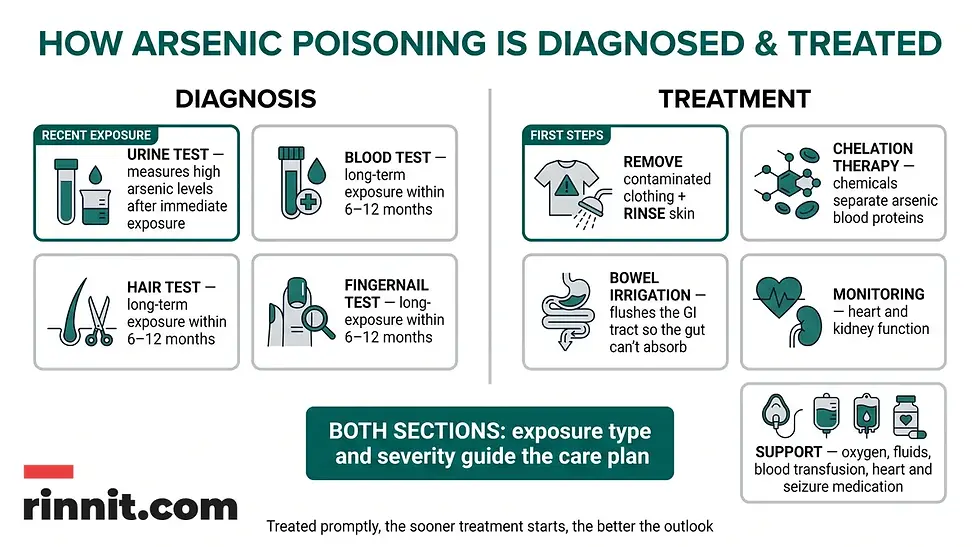
Your healthcare provider may order a heavy metal test to diagnose arsenic poisoning. [1] Using your urine, this test can measure high levels of arsenic in your body after immediate exposure. [1] Blood tests, as well as tests on your hair and fingernails, can measure long-term exposure to high levels of arsenic within six and 12 months. [1] These tests are commonly used in areas where the risk of arsenic poisoning is higher. [1]
Test | What it measures | Best for |
Urine (heavy metal test) | High levels of arsenic in your body | Immediate (recent) exposure [1] |
Blood test | Long-term exposure levels | Exposure within the past six to 12 months [1] |
Hair test | Long-term exposure levels | Exposure within the past six to 12 months [1] |
Fingernail test | Long-term exposure levels | Exposure within the past six to 12 months [1] |
How Is Arsenic Poisoning Treated?
Treating arsenic poisoning depends on the type of exposure and the severity of your condition. For immediate exposure, the first treatment includes removing contaminated clothing. [1] You'll also want to rinse the arsenic off your skin. [1]
Your healthcare provider may give you chelation therapy. This treatment uses certain chemicals to separate the arsenic from your blood proteins. [1] [5] You may also receive bowel irrigation. With this treatment, a special solution flushes out the contents of your gastrointestinal tract. It removes the arsenic and prevents your gut from absorbing it. [1]
Your provider will monitor your heart and kidney function. [1] In addition, you may need oxygen, fluids, a blood transfusion, heart medication, or medication to control seizures. [1]
What Is the Outlook?
The prognosis for arsenic poisoning depends on the cause of exposure, including the type, the amount, and the duration of the exposure. [1] Long-term exposure can lead to many different illnesses and complications, including liver disease, heart disease, diabetes, digestive system issues, nervous system complications, and neurotoxicity (nerve damage caused by toxins). [1] [6]
Arsenic is a known carcinogen (cancer-causing substance). [1] [3] The most common types of arsenic-related cancers include bladder cancer, blood cancer, cancers of the digestive system, liver cancer, lung cancer, lymphoma, kidney cancer, prostate cancer, and skin cancer. [1]
If you're pregnant, arsenic poisoning can lead to complications during fetal development. [1] [2] Your baby may also have birth defects. [1] Developmental delays can occur in children who are frequently exposed to arsenic. [1]
Consumed in large amounts, arsenic can cause death very quickly. Lethal doses resulting in death typically occur within one to four days of ingestion. [1] Exposure in smaller amounts over a period of time can still cause serious complications.
A word about rat poison: rodenticide historically contained heavy metals such as arsenic. [1] Since the mid- to late-20th century, most rodenticides use anticoagulants (blood-clotting blockers) instead, and while newer forms don't contain arsenic, those anticoagulants can be just as toxic and life-threatening. [1]
How Can I Prevent Arsenic Poisoning?
The best way to prevent arsenic poisoning is to ensure you're drinking clean water. [1] [2] Also confirm that all the food you eat is prepared with clean water. [1] You may want to consider only drinking and using bottled water while traveling. [1]
If you work in an industry that uses arsenic, wear a face mask to lessen your chances of accidentally inhaling arsenic particles. [1] Be sure to shower and change your clothes before going home, since you could unintentionally carry the toxin home on your skin, hair, or clothing. [1]
When working with arsenic-treated wood, make sure to wear protective clothing, gloves, and a dust mask. [1] This can help reduce your exposure to sawdust. [1]
Prevention step | What to do |
Drink clean water | Ensure your drinking water is clean; confirm food is prepared with clean water; consider bottled water while traveling. [1] |
Protect yourself at work | Wear a face mask to avoid inhaling arsenic particles; shower and change clothes before going home so you don't carry the toxin home on skin, hair, or clothing. [1] |
Handle treated wood safely | Wear protective clothing, gloves, and a dust mask when working with arsenic-treated wood to reduce sawdust exposure. [1] |
The Bottom Line
Arsenic is a natural element in rock, soil, water, air, plants, and animals, and its inorganic forms — released by wind-blown dust, groundwater leaching, and industrial runoff from mining, smelting, and manufacturing — are highly toxic and cancer-linked, while the organic forms in seafood are far less harmful. Poisoning affects at least 140 million people worldwide through contaminated drinking water, with the United States among 50 affected countries, and it can also come from contaminated food (chicken, rice, fruit juice, some fish), occupational inhalation, tobacco, and arsenic-treated wood. Signs can appear within 30 minutes of high exposure — stomach pain, vomiting, diarrhea, breathing trouble, irregular heartbeat, low blood pressure, tingling, red skin, and a garlic odor on the breath — while years of exposure bring darker skin, warts, hard palm and sole patches, and white nail lines, plus higher risk of liver disease, heart disease, diabetes, nerve damage, and at least nine cancers. In large doses it can be fatal within one to four days. Diagnosis uses urine tests for recent exposure and blood, hair, or fingernail tests for the long term; treatment starts with removing contaminated clothing and rinsing the skin, then may include chelation therapy, bowel irrigation, and support for the heart and kidneys. The best defense is clean drinking water and workplace protection — and if you suspect exposure, getting treated sooner leads to a better outcome.
Take the Next Step
If you live in an area with a known risk of arsenic in the water supply, work in smelting, mining, glass or semiconductor manufacturing, or woodworking, or have been around contaminated soil, dust, or arsenic-treated wood, take preventive steps now: confirm your drinking water is clean, consider bottled water while traveling, and use masks, gloves, and protective clothing when exposure is possible. If you notice signs of exposure — stomach pain, vomiting, diarrhea, breathing trouble, an irregular heartbeat, tingling, skin changes, or a garlic odor on your breath — seek medical care right away. Your provider can run a urine, blood, hair, or fingernail test and start treatment, which may include chelation therapy and bowel irrigation. The sooner you receive treatment, the better your outlook.
Frequently Asked Questions
What is arsenic?
Arsenic is a naturally occurring element in the environment. Rock, soil, water, air, plants, and animals all contain some level of arsenic, which combines with inorganic and organic substances to form many different compounds.
What is arsenic poisoning?
It occurs when you ingest or consume high levels of arsenic. It shares features of other heavy metal poisonings, including mercury and lead. It can happen quickly, but long-term exposure is more common, and it can cause serious complications and even death if not treated immediately.
Who does arsenic poisoning affect?
At least 140 million people worldwide, due to contaminated drinking water. People in 50 countries are exposed to water with potentially dangerous arsenic levels, including Bangladesh, India, China, Thailand, Chile, Mexico, and the United States.
What is the difference between inorganic and organic arsenic?
Inorganic compounds (arsenic plus oxygen, chlorine, sulfur) occur in soil, rock, and industrial processes, are highly toxic, and are linked to cancer. Organic compounds (arsenic plus carbon and hydrogen) are found in seafood and are much less toxic; they aren't linked to cancer.
How fast do symptoms appear?
You can show signs within 30 minutes of high levels of exposure. Immediate symptoms include abdominal pain, nausea and vomiting, diarrhea, cough, chest pain, shortness of breath, sore throat, abnormal heart rhythm, low blood pressure, "pins and needles" in fingers and toes, red swollen skin, and a garlic odor in the breath and body tissues.
What does long-term exposure look like?
It may take years to develop and causes skin pigmentation changes (darkening), warts and lesions, hard patches on the palms and soles (hyperkeratosis), white lines on the nails (Mees' lines), persistent sore throat, and constant digestive issues.
What causes most cases?
Drinking contaminated water causes most cases of arsenic poisoning. Arsenic naturally present in the ground can leach into the water supply, and industrial runoff can also contaminate groundwater.
Can food cause arsenic poisoning?
Yes. Contaminated water used in food preparation, crops irrigated with contaminated water, and certain foods including chicken, rice, fruit juice, and some fish may contain arsenic due to its presence in the soil or water.
What jobs raise the risk?
Industries that use arsenic include pesticides and herbicides, smelting and mining, glass manufacturing, semiconductor manufacturing, and woodworking and carpentry, where repeated inhalation of arsenic particles can occur. Smoking tobacco and working with arsenic-treated wood also raise risk.
How is it diagnosed?
A heavy metal test using your urine can measure high arsenic levels after immediate exposure. Blood, hair, and fingernail tests can measure long-term exposure within six and 12 months. These tests are commonly used in higher-risk areas.
How is it treated?
First steps include removing contaminated clothing and rinsing arsenic off your skin. Medical treatment may include chelation therapy (chemicals that separate arsenic from blood proteins), bowel irrigation (a solution that flushes out the gastrointestinal tract), oxygen, fluids, blood transfusion, heart medication, and seizure medication, with heart and kidney function monitored.
Can it cause cancer?
Yes. Arsenic is a known carcinogen. The most common arsenic-related cancers are bladder, blood, digestive system, liver, lung, lymphoma, kidney, prostate, and skin cancers.
Is it dangerous during pregnancy?
Arsenic poisoning can lead to complications during fetal development. The baby may also have birth defects, and developmental delays can occur in children who are frequently exposed.
How fast can you die from it?
Consumed in large amounts, arsenic can cause death very quickly. Lethal doses resulting in death typically occur within one to four days of ingestion. Smaller amounts over time still cause serious complications.
Is arsenic in rat poison?
Rodenticide historically contained arsenic. Since the mid- to late-20th century, most rodenticides use anticoagulants instead. Newer forms don't contain arsenic, but those anticoagulants can be just as toxic and life-threatening.
How can I prevent it?
Ensure you're drinking clean water, confirm your food is prepared with clean water, and consider bottled water while traveling. If you work with arsenic, wear a face mask, shower and change clothes before going home, and wear protective clothing, gloves, and a dust mask when working with arsenic-treated wood.
Disclaimer
This guide is for general information only and is not a substitute for professional medical advice, diagnosis, or treatment. If you suspect arsenic exposure — or have symptoms such as vomiting, breathing trouble, an irregular heartbeat, or skin changes — seek medical care immediately. Always seek the advice of a physician or other qualified health provider with any questions about a medical condition. Never disregard professional medical advice or delay seeking it because of something you have read here.
Related Reading
Heavy Metal Test: Lead, Mercury and Arsenic Testing Explained explains the blood and urine tests for lead, mercury, arsenic and other metals.
References
Cleveland Clinic. Arsenic Poisoning. Cleveland Clinic. Last updated February 10, 2023. https://my.clevelandclinic.org/health/diseases/24727-arsenic-poisoning
World Health Organization. Arsenic. World Health Organization. December 7, 2022. https://www.who.int/news-room/fact-sheets/detail/arsenic
American Cancer Society. Arsenic and Cancer Risk. American Cancer Society. Accessed October 14, 2026. https://www.cancer.org/cancer/risk-prevention/chemicals/arsenic.html
National Institute of Environmental Health Sciences. Arsenic. National Institute of Environmental Health Sciences. Accessed October 14, 2026. https://www.niehs.nih.gov/health/topics/agents/arsenic
Bjørklund G, et al. Arsenic intoxication: general aspects and chelating agents. Arch Toxicol. 2020;94(6):1879-1897. PMID 32388818. https://doi.org/10.1007/s00204-020-02739-w
Mochizuki H. Arsenic Neurotoxicity in Humans. Int J Mol Sci. 2019;20(14). PMID 31336801. https://doi.org/10.3390/ijms20143418
Issanov A, et al. Arsenic in drinking water and lung cancer: A systematic review of 35 years of evidence. Toxicol Appl Pharmacol. 2024;483:116808. PMID 38218206. https://doi.org/10.1016/j.taap.2024.116808
Chowdhury R, et al. Environmental toxic metal contaminants and risk of cardiovascular disease: systematic review and meta-analysis. BMJ. 2018;362:k3310. PMID 30158148. https://doi.org/10.1136/bmj.k3310
Boffetta P, et al. Systematic review of studies on exposure to arsenic in drinking water and cognitive and neurobehavioral effects. Crit Rev Toxicol. 2024;54(3):174-193. PMID 38533692. https://doi.org/10.1080/10408444.2023.2297751



Comments