What Is a Unicornuate Uterus? Causes, Symptoms, and Treatment

Updated: 2 days ago
Medically reviewed by Dr. Baraa Alnahhal, MD · Last reviewed: October 2026
Quick Answer: What Is a Unicornuate Uterus?
A unicornuate uterus is a condition in which one of the two ducts that form the uterus fails to develop before birth, leaving a uterus about half the normal size, shaped like a single horn and connected to one fallopian tube. Most people still have two working ovaries, but the smaller cavity can raise miscarriage risk.
What the research says
Live birth rates after IVF are lower with a unicornuate uterus. In a nested case-control study of 342 women with a unicornuate uterus (without a functional rudimentary cavity) and 1,026 matched controls, the cumulative live birth rate after one complete IVF-ICSI cycle was 42.4% versus 54.6%, and the cumulative pregnancy rate was 53.1% versus 65.7%. Outcomes were better when embryos were cultured to the blastocyst stage (Chen et al., Reprod Biol Endocrinol, 2018). [2]
Twin pregnancies carry added risk. A systematic review of 55 studies on assisted reproduction in women with congenital uterine anomalies found that most studies reported a negative impact of a unicornuate uterus on both miscarriage and live birth rates, with a particularly poor prognosis in twin pregnancy. The authors advise elective single embryo transfer when baseline obstetric risk is increased (Fedele et al., Arch Gynecol Obstet, 2024). [3]
Laparoscopic removal of a rudimentary horn is considered feasible. A systematic review of 35 studies (all case reports; all rudimentary horns were noncommunicating) identified pelvic pain, hematometra, and endometriosis as the most common consequences, and concluded that laparoscopic removal can be a feasible option after careful preoperative evaluation (Abboud et al., Gynecol Obstet Invest, 2023). [4]
Key Takeaways: Unicornuate Uterus at a Glance
Feature | Details |
Medical Type | Congenital Uterine Anomaly |
Shape | Banana-shaped or “Single-Horned” |
Anatomy | Half a uterus, one fallopian tube, usually two ovaries |
Discovery | Often during infertility or miscarriage investigations |
Primary Risk | Preterm birth, miscarriage, and breech position |
Associated Issue | Renal agenesis (missing one kidney) |
Surgery Need | Only if a rudimentary horn causes pain or risk |
Outlook | Pregnancy is possible but higher-risk and needs close monitoring |
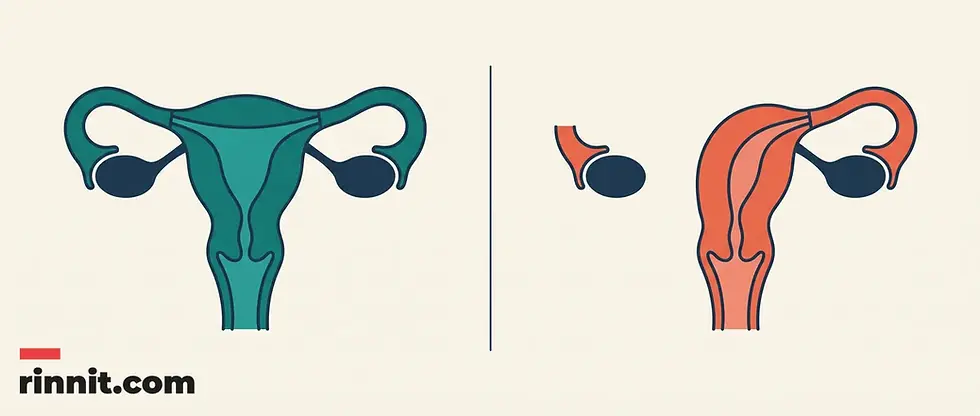
Understanding Unicornuate Uterus
A typical uterus develops from two structures called Müllerian ducts, which fuse together during fetal growth to create a single, large cavity with two fallopian tubes. A unicornuate uterus occurs when this fusion process is interrupted. One duct develops into a smaller uterine cavity, while the other is either reabsorbed by the body or forms a small, non-functional piece of tissue known as a rudimentary horn. [1]
Because the resulting uterus is significantly smaller than a standard one, it is often described as “single-horned.” Most individuals are born with this condition and may not realize they have it until they reach puberty or attempt to become pregnant.
Symptoms and Potential Pain
For many, a unicornuate uterus does not cause any noticeable symptoms. However, if a rudimentary horn is present and contains functional endometrial lining that is not connected to the main uterine cavity, menstrual blood can become trapped. This often leads to significant physical discomfort. [1]
Common Symptoms
Severe Menstrual Pain: Cramping that is significantly more intense than a typical period.
Chronic Pelvic Pain: Frequent discomfort in the lower abdominal area.
Irregular Cycles: Periods that may not follow a standard monthly pattern.
Trapped Blood: Sharp pain caused by the buildup of menstrual tissue in an isolated rudimentary horn.
Causes and Related Health Links
The exact reason why Müllerian ducts fail to fuse correctly is not yet understood by medical researchers. It is a developmental event that happens entirely before birth. Interestingly, there is a strong documented link between uterine anomalies and kidney development. [1]
Many individuals with a unicornuate uterus also have renal agenesis, a condition where they are born with only one kidney. This typically occurs on the same side as the undeveloped portion of the uterus. Additionally, a blocked rudimentary horn can increase the likelihood of developing endometriosis, as trapped menstrual tissue may be forced back into the pelvic cavity.
Diagnosis and Imaging
Because a unicornuate uterus is an internal structural variation, it cannot be diagnosed through a standard external exam alone. It is usually identified when a patient seeks help for recurrent miscarriages, difficulty conceiving, or unexplained pelvic pain. [1]
Healthcare providers use several specialized imaging techniques to confirm a diagnosis:
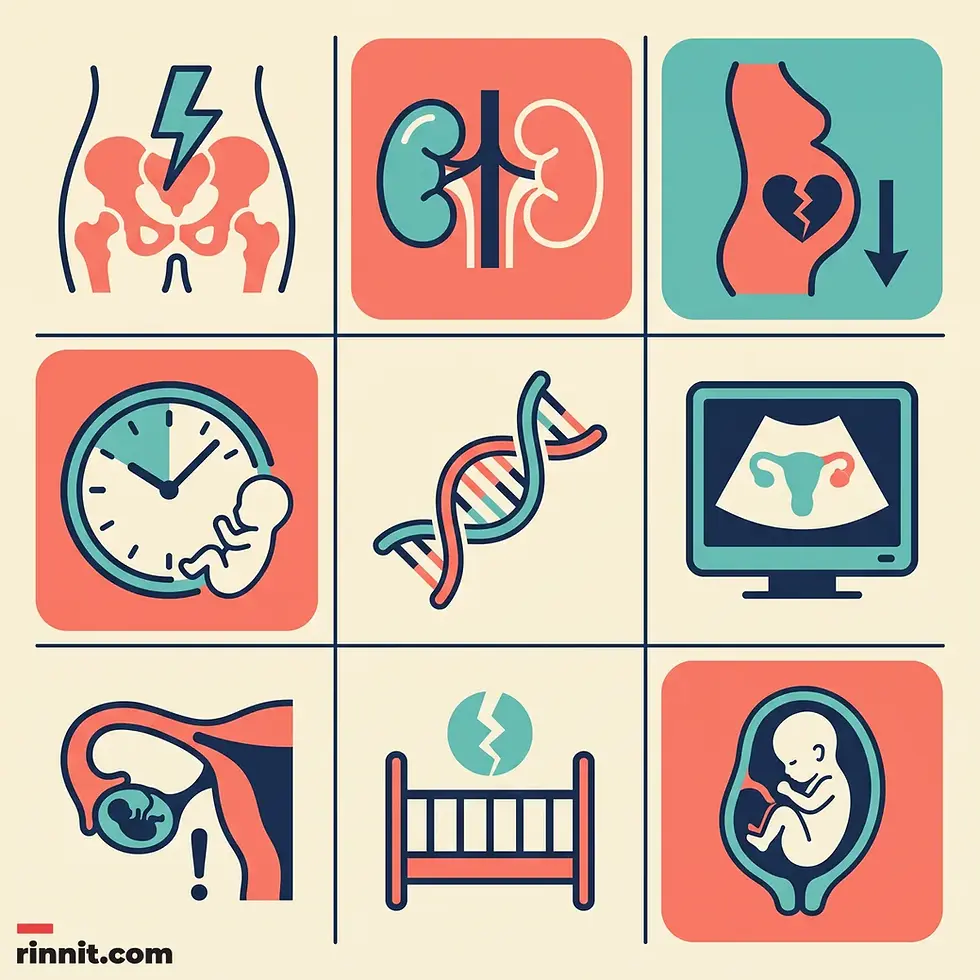
Pregnancy and Delivery Considerations
It is entirely possible to have a healthy baby with a unicornuate uterus, but the pregnancy is classified as high-risk. The smaller uterine cavity provides less space for a growing fetus, which can lead to several complications that require careful management by a maternal-fetal medicine specialist.
Pregnancy Risks
Preterm Labor: The uterus may reach its capacity sooner, leading to early birth. [1]
Breech Position: The fetus may not have enough room to turn head-down, increasing the need for a C-section. [1]
Miscarriage and Stillbirth: Higher rates compared to a standard uterine shape. [1]
Ectopic Pregnancy: A life-threatening situation if a pregnancy occurs within a rudimentary horn.
Management and Surgical Options
In most cases, the uterus itself does not require any medical treatment or surgical correction. However, if a rudimentary horn is causing severe pain or poses a risk for an ectopic pregnancy, a surgeon may recommend its removal. This procedure is typically performed laparoscopically (using small incisions) and does not affect the functional half of the uterus.
For those planning a pregnancy, close monitoring with frequent ultrasounds is the standard of care to ensure both the parent and the baby remain healthy. [1]

Frequently Asked Questions
Can I get pregnant with only half a uterus?
Yes, pregnancy is possible, but it requires closer medical supervision due to the smaller space available for the fetus.
Is a unicornuate uterus the same as a “tilted” uterus?
No. A tilted uterus refers to the position of the organ, while a unicornuate uterus refers to its actual shape and structure.
Does this condition cause infertility?
It does not always cause infertility, but it can make it more difficult to conceive or carry a pregnancy to full term.
What is a rudimentary horn?
It is a small, undeveloped piece of uterine tissue that forms when one of the Müllerian ducts fails to develop completely.
Why do I only have one kidney?
Uterine and kidney development are closely linked in the embryo; many people with uterine anomalies are also born with one kidney (renal agenesis).
Will I need a C-section?
You are more likely to need a C-section because the baby is more likely to be in a breech (feet-first) position.
Is the condition genetic?
While it happens during fetal development, it is not always clear if there is a direct genetic cause that can be passed down.
Can a unicornuate uterus be fixed with surgery?
The shape of the uterus itself cannot be “fixed,” but rudimentary horns can be removed if they cause pain.
Does it affect my ovaries?
Most people with a unicornuate uterus still have two functioning ovaries, even if they only have one fallopian tube.
How rare is this condition?
It is estimated to affect about 0.1% of the general population.
Can it be seen on a regular ultrasound?
A standard 2D ultrasound might miss it; a 3D ultrasound or MRI is usually needed for a clear diagnosis.
What is the biggest risk during pregnancy?
Preterm birth is the most common complication due to the limited space in the uterine cavity.
Does it cause painful periods?
It can cause severe pain if you have a rudimentary horn that traps menstrual blood.
Can I have a natural birth?
It is possible, but many doctors recommend a C-section if the baby is breech or if there are other complications.
What is Müllerian duct fusion?
It is the process during fetal development where two tubes join to form the uterus and fallopian tubes.
Does it increase the risk of miscarriage?
Yes, the risk of miscarriage is higher due to the abnormal shape and smaller size of the uterus.
Can I use an IUD for birth control?
Placement of an IUD can be more difficult and may not be recommended depending on the specific shape of your uterine cavity.
Does it affect my hormones?
No, the condition is structural and typically does not impact your hormone production.
Can a unicornuate uterus cause endometriosis?
Yes, if menstrual blood is trapped in a rudimentary horn, it can lead to endometriosis.
What is an ectopic pregnancy in a rudimentary horn?
This is when a fertilized egg implants in the undeveloped horn, which can lead to a life-threatening rupture.
How often will I need ultrasounds during pregnancy?
You will likely have more frequent ultrasounds than a standard pregnancy to monitor the baby's growth and position.
Can I have twins with a unicornuate uterus?
A twin pregnancy is extremely high-risk in a unicornuate uterus and requires very specialized care.
Does the condition affect my sex life?
No, a unicornuate uterus does not typically affect sexual function or comfort.
What is an HSG test?
A hysterosalpingogram is an X-ray that uses dye to show the shape of the uterus and whether the fallopian tube is open.
Can the condition be prevented?
No, it is a congenital condition that happens during early fetal development.
Is it the same as a bicornuate uterus?
No. A bicornuate uterus is heart-shaped with two “horns,” while a unicornuate uterus has only one.
Does it affect the baby's health?
If the pregnancy reaches full term, the baby is usually perfectly healthy, though they may be born smaller (IUGR).
What is IUGR?
Intrauterine Growth Restriction, which can happen if the baby doesn't have enough space or blood flow to grow at a normal rate.
Can I still donate eggs?
Yes, egg donation is usually possible since the ovaries are typically unaffected.
Does it cause early menopause?
No, the condition does not impact the timing of menopause.
What are the signs of a ruptured rudimentary horn?
Sudden, severe abdominal pain and heavy internal bleeding; this is a medical emergency.
Can I have a healthy second pregnancy?
Yes, many people have multiple successful pregnancies with a unicornuate uterus.
Does it affect the cervix?
In some cases, people with uterine anomalies may also have a “weak” or short cervix (cervical insufficiency).
What is a cerclage?
A surgical stitch placed in the cervix to help prevent preterm birth, which is sometimes used in these cases.
Can I exercise while pregnant?
You should follow your doctor's specific advice, as they may recommend limiting strenuous activity to prevent preterm labor.
Does the condition affect bladder function?
It typically does not, though related kidney issues should be monitored.
Is there a support group for this?
Yes, many organizations for uterine anomalies and infertility provide resources and support.
Can I have a unicornuate uterus and two kidneys?
Yes, while the link to kidney issues is strong, some people have a normal urinary system.
What if my periods are normal?
Many people with a unicornuate uterus have normal periods and only discover the condition later in life.
Does it cause heavy bleeding?
It typically doesn't cause heavier-than-normal bleeding unless there are other issues like fibroids.
Can fibroids grow in a unicornuate uterus?
Yes, fibroids can develop and may need to be managed more carefully due to the limited space.
Is it considered a disability?
No, it is a medical condition but not typically classified as a disability.
Does it affect the length of my torso?
No, the condition is internal and does not affect your outward physical appearance.
Can a unicornuate uterus be detected at birth?
It is rarely detected at birth unless there are other visible anomalies or symptoms.
What is the “Class II” classification?
It is a medical category used by the American Society for Reproductive Medicine to describe this type of anomaly.
Can I use a menstrual cup?
Yes, but you may need to find a specific size or shape that works for your anatomy.
Does it affect my lifespan?
No, a unicornuate uterus does not impact your overall life expectancy.
Can I have a normal period after removing a rudimentary horn?
Yes, your periods should continue normally from the functional half of your uterus.
How do I explain this to my partner?
Focus on the fact that it is a structural variation and that while pregnancy requires more care, it is very possible.
What is the most important thing to remember?
With early diagnosis and the right medical team, most people with a unicornuate uterus live healthy lives and can have children.
Related Reading
Bicornuate Uterus: The Heart-Shaped Womb You're Born With — and Why Many People Still Have Healthy Pregnancies explains a heart-shaped uterus, another Mullerian duct anomaly.
Double Uterus (Uterus Didelphys): Symptoms, Causes & Treatment — Complete Guide covers uterus didelphys, when two separate uteruses form.
Ectopic Pregnancy: Symptoms, Causes, and Treatment explains pregnancies outside the main uterine cavity and their warning signs.
Understanding the Mullerian Duct: Foundations of Reproductive Anatomy explains how the Mullerian ducts form the uterus before birth.
References
Cleveland Clinic. Unicornuate Uterus. Cleveland Clinic. Last updated July 2, 2026. https://my.clevelandclinic.org/health/diseases/23302-unicornuate-uterus
Chen Y, Nisenblat V, Yang P, et al. Reproductive outcomes in women with unicornuate uterus undergoing in vitro fertilization: a nested case-control retrospective study. Reprod Biol Endocrinol. 2018;16:64. PMID 29980195. https://doi.org/10.1186/s12958-018-0382-6
Fedele F, Bulfoni A, Parazzini F, et al. Assisted reproductive technology outcomes in women with congenital uterine anomalies: a systematic review. Arch Gynecol Obstet. 2024;310(5):2315-2332. PMID 39227392. https://doi.org/10.1007/s00404-024-07666-0
Abboud K, Giannini A, D'Oria O, et al. Laparoscopic management of rudimentary uterine horns in patients with unicornuate uterus: a systematic review. Gynecol Obstet Invest. 2023;88(1):1-10. PMID 36470217. https://doi.org/10.1159/000528508
Disclaimer
This article is for informational purposes only and does not constitute medical advice. Always consult with a qualified healthcare professional for diagnosis and treatment.



Comments