What Is a Muscle Cramp? A Plain-Language Guide to the Sudden Tightening, What Causes It, and How to Stop It

Updated: 2 days ago
Medically reviewed by Dr. Baraa Alnahhal, MD · Last reviewed: October 17, 2026
Quick Answer
A muscle cramp is a sudden, unexpected tightening of one or more muscles, painful but usually harmless, most often in the calf. Common triggers include overworking a muscle, fluid loss through sweat and holding one position too long. Stretching, massage, heat or cold and fluids help. See a doctor for severe or frequent cramps, leg swelling, redness or muscle weakness.
What the research says
Vitamin K2 for night cramps: According to PubMed, a 2024 randomized, double-blind, placebo-controlled trial in China (199 adults aged 65 and older with nocturnal leg cramps) found that 180 μg of vitamin K2 daily for 8 weeks reduced weekly cramp frequency to 0.96, versus 3.63 with placebo, with no related adverse events identified. This was a single trial in older adults, so it doesn't replace advice from your own provider. [6]
Magnesium and other minerals: A 2026 systematic review and meta-analysis of 13 trials found that magnesium reduced cramp frequency in pregnancy-associated cramps, but showed no significant effect in nocturnal or persistent leg cramps in adults; calcium and potassium lacked supportive evidence. [7]
What Is a Muscle Cramp?
A muscle cramp is a sudden, unexpected tightening of one or more muscles. Sometimes it's called a charley horse. It can be very painful. [1]
Exercising or working hard, especially in heat, can lead to muscle cramps. Some medicines and illnesses also might cause them.
The good news: muscle cramps aren't usually harmful. Self-care measures can treat most of them.

During a cramp, muscle fibers suddenly and involuntarily tighten — that's the "charley horse" feeling.
What Are the Symptoms of a Muscle Cramp?
Muscle cramps occur mostly in leg muscles, and most often in the calf. Cramps usually last for seconds to minutes. [1]
After the cramp eases, the area might be sore for hours or days.
What Causes Muscle Cramps?
A muscle cramp can happen after working a muscle too hard or straining it, losing body fluids through sweat, or simply holding a position for a long time. Often, however, the cause isn't known. [1]
Most muscle cramps are harmless. But some might be related to an underlying medical concern:
Possible Underlying Cause | What Happens | Key Clue |
Not enough blood flow | A narrowing of the arteries that bring blood to the legs causes a cramping pain in the legs and feet during exercise | Cramps usually go away soon after exercise stops |
Nerve compression | Pressure on the nerves in the spine causes cramping pain in the legs | Pain usually gets worse with walking; walking bent slightly forward, such as when pushing a shopping cart, might ease the cramping |
Not enough minerals | Too little potassium, calcium or magnesium in the diet can cause leg cramps | Medicines often prescribed for high blood pressure can cause increased urination, which may drain the body of these minerals |

The usual suspects behind a cramp — and the three medical causes worth checking with a doctor.
Who Is at Higher Risk?
Several factors can increase the risk of muscle cramps: [1]
Risk Factor | Why It Raises the Risk |
Age | Older people lose muscle mass. Then the muscles can't work as hard and can get stressed more easily. |
Poor conditioning | Not being in shape for an activity causes muscles to tire more easily. |
Extreme sweating | Athletes who get tired and sweat a lot while playing sports in warm weather often get cramps. |
Pregnancy | Muscle cramps are common during pregnancy. |
Medical issues | Diabetes or illnesses that involve nerves, liver or thyroid can increase the risk. |
Weight | Being overweight can increase the risk. |
Can Muscle Cramps Be Prevented?
Two habits can help prevent cramps:
Drink plenty of liquids every day. Muscles need fluids to work well. During activity, drink liquids regularly. Keep drinking water or other liquids without caffeine or alcohol after the activity.
Stretch your muscles. Stretch gently before and after using any muscle for a time. To avoid getting leg cramps at night, stretch before bedtime. Light exercise, such as riding a stationary bicycle for a few minutes before bedtime, also may help prevent cramps while you sleep. [1] [3]
How Do I Stop a Cramp Right Now?
If you have a cramp, these actions might help: [2]
Step | What to Do |
Stretch and massage | Stretch the cramped muscle and gently rub it. For a calf cramp, keep the leg straight while pulling the top of your foot on the cramped side toward your face. Also try standing with your weight on your cramped leg and pressing down firmly — this helps ease a cramp in the back of the thigh too. For a front thigh cramp, pull the foot on that leg up toward your buttock; hold on to a chair to steady yourself. |
Apply heat or cold | Use a warm towel or heating pad on tense or tight muscles. Taking a warm bath or directing the stream of a hot shower onto the cramped muscle also can help. Rubbing the sore muscle with ice also might relieve pain. |
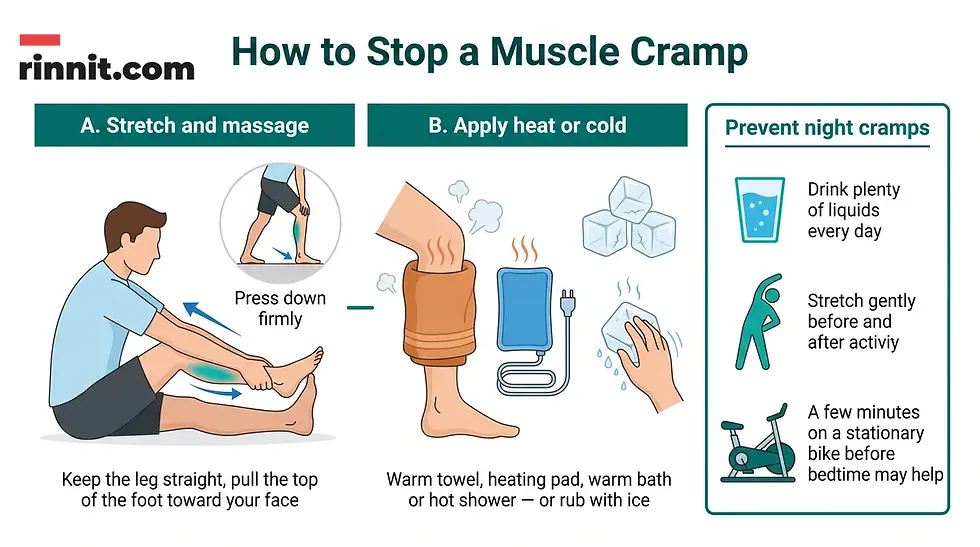
What to do in the moment — and what to do before bedtime to keep cramps away.
How Are Muscle Cramps Treated?
Self-care measures usually can treat muscle cramps. A healthcare provider can show you stretching exercises that can reduce the chances of getting them, and drinking plenty of fluids can also help prevent them. [2]
If you keep getting cramps that wake you from sleep, a care provider might prescribe medicine to relax muscles or help you sleep.
Taking vitamin B complex and other vitamins might help manage leg cramps. Talk to your healthcare provider about what to take.
When Should I See a Doctor?
Muscle cramps usually go away on their own and don't usually need medical care. However, see a healthcare provider for cramps that: [1]
Warning Sign | What to Watch For |
Severe discomfort | Cramps that cause severe discomfort |
Skin changes | Leg swelling, redness or skin changes |
Weakness | Cramps that come with muscle weakness |
Frequent cramps | Cramps that happen often |
No improvement | Cramps that don't get better with self-care |
Preparing for Your Appointment
See a healthcare provider if you have muscle cramps often that are severe and not getting better with self-care. Here's some information to help you get ready.
What you can do. Make a list of your symptoms — including any that seem unrelated to the reason for your appointment — and when they began; key personal information, including major stresses, recent life changes and family medical history; all medicines, vitamins and supplements you take, including doses; and questions to ask your provider.
For muscle cramps, questions to ask your provider might include: What's likely causing my cramps? Are there other possible causes? What tests do I need? What can I do about the cramping?
What to expect from your doctor. Your provider is likely to ask questions, including: How often do you get cramps and how bad are they? What, if anything, do you do before you get a cramp — do cramps usually happen after exercise? Do you get cramps while resting? Does stretching help your cramps? Do you have other symptoms, such as muscle weakness or numbness? Have you noticed changes in your urine after exercise?
Conclusion
A muscle cramp is a sudden, unexpected tightening of one or more muscles — painful, sometimes called a charley horse, but usually harmless. Cramps strike mostly in the calf, last seconds to minutes, and can leave soreness behind for hours or days. The usual triggers are working a muscle too hard, sweating out fluids, or holding one position too long, though often the cause simply isn't known. Self-care handles most cramps: stretch and massage the muscle, add heat or cold, stay hydrated, and stretch before bedtime to keep night cramps at bay. But cramps that are severe, frequent, come with swelling or weakness, or won't respond to self-care deserve a doctor's attention — they can point to blood-flow, nerve, or mineral problems that are fixable once found.
Learn more. If cramps keep interrupting your workouts, your workday, or your sleep, don't just keep toughing them out. Start today with the simple basics — steady fluids, a gentle calf stretch before bed, and a few minutes on a stationary bike in the evening. Then bring it up at your next appointment: tell your provider how often the cramps strike, what you were doing before each one, whether stretching helps, and whether you've noticed weakness, numbness, or changes in your urine after exercise. A provider can show you the right stretches, check for an underlying cause such as narrowed leg arteries or a mineral shortage, and prescribe medicine if cramps keep waking you from sleep. For more plain-language health guides, visit Rinnit.com.
Frequently Asked Questions
What is a muscle cramp?
A muscle cramp is a sudden, unexpected tightening of one or more muscles. Sometimes called a charley horse, it can be very painful but is usually not harmful.
Where do muscle cramps most often happen?
Cramps occur mostly in the leg muscles, most often in the calf. They usually last seconds to minutes, and the area might be sore for hours or days afterward.
What causes muscle cramps?
Cramps can follow working a muscle too hard or straining it, losing body fluids through sweat, or holding a position for a long time. Often the cause isn't known. Some cramps are related to narrowed leg arteries, nerve compression in the spine, or too little potassium, calcium or magnesium.
How do I stop a calf cramp?
Keep the leg straight while pulling the top of your foot on the cramped side toward your face. Or stand with your weight on the cramped leg and press down firmly — that also helps back-of-thigh cramps. Gently rub the muscle, and apply heat (warm towel, heating pad, warm bath, hot shower) or cold (rubbing with ice).
How can I prevent muscle cramps?
Drink plenty of liquids every day and keep drinking after activity. Stretch gently before and after using any muscle. Stretch before bedtime to avoid night cramps; a few minutes on a stationary bike before bed may also help.
Do muscle cramps usually need medical care?
No — muscle cramps usually go away on their own. See a provider for cramps that cause severe discomfort, come with leg swelling, redness, skin changes or muscle weakness, happen often, or don't improve with self-care.
What might a doctor prescribe for cramps?
If you keep getting cramps that wake you from sleep, a provider might prescribe medicine to relax muscles or help you sleep. Vitamin B complex and other vitamins might help too — ask your provider what to take.
What questions will my doctor ask about my cramps?
Likely questions include: How often and how bad are they? What do you do before a cramp? Do they happen after exercise or while resting? Does stretching help? Do you have muscle weakness or numbness? Have you noticed changes in your urine after exercise?
Why do I get leg cramps at night?
Night leg cramps are common, especially in older adults and during pregnancy. The cause is often unknown, but tired muscles, long periods of sitting, low fluids and some medicines may play a role. Gentle stretching before bed may help.
Do magnesium supplements help muscle cramps?
For most people, magnesium has not been shown to prevent cramps, though it may help some cramps during pregnancy. Talk to your provider before starting a supplement, especially if you have kidney disease or are pregnant.
Related Reading
If you found this guide helpful, explore these related Rinnit.com articles:
References
Mayo Clinic Staff. Muscle cramp - Symptoms & causes. Mayo Clinic. March 7, 2023. https://www.mayoclinic.org/diseases-conditions/muscle-cramp/symptoms-causes/syc-20350820
Mayo Clinic Staff. Muscle cramp - Diagnosis & treatment. Mayo Clinic. March 7, 2023. https://www.mayoclinic.org/diseases-conditions/muscle-cramp/diagnosis-treatment/drc-20350825
Alaia MJ, Wilkerson R. Muscle Cramps. OrthoInfo. Accessed October 15, 2026. https://www.orthoinfo.org/diseases--conditions/muscle-cramps/
Winkelman JW. Nocturnal muscle cramps. UpToDate. Accessed October 15, 2026. https://www.uptodate.com/contents/nocturnal-muscle-cramps
Maughan RJ, et al. Muscle Cramping During Exercise: Causes, Solutions, and Questions Remaining. Sports Med. 2019;49(Suppl 2):115-124. PMID 31696455. https://doi.org/10.1007/s40279-019-01162-1
Tan J, et al. Vitamin K2 in Managing Nocturnal Leg Cramps: A Randomized Clinical Trial. JAMA Intern Med. 2024;184(12):1443-1447. PMID 39466236. https://doi.org/10.1001/jamainternmed.2024.5726
Patil S, et al. The Role of Electrolytes in Muscle Pain Syndromes: A Systematic Review and Meta-Analysis With Implications for Temporomandibular Disorder. Int Dent J. 2026;76(3):109488. PMID 41812583. https://doi.org/10.1016/j.identj.2026.109488
Medical disclaimer
This article is for general informational purposes only and does not constitute medical advice. Always consult a qualified healthcare professional for diagnosis and treatment decisions.



Comments