What Is a Concha Bullosa? Symptoms, Causes, Diagnosis & Treatment Explained

Updated: 2 days ago
Medically reviewed by Dr. Baraa Alnahhal, MD · Last reviewed: October 2026
Quick Answer: What is a concha bullosa?
A concha bullosa is an air pocket inside a turbinate bone of the nose. Most people never know they have one and never need treatment. If it grows large enough to block breathing or sinus drainage, it can cause stuffiness, facial pain, headache and sinus pressure, which medicines or minimally invasive surgery can resolve with an excellent outlook [4].
Key takeaways
A concha bullosa is an air-filled space inside one of the turbinate bones in the nose (pronounced con-KUH bull-OH-suh).
It is usually harmless — a normal variation in healthy noses.
Many people have one, and most never notice it.
It can form in any turbinate, but is most common in the middle turbinate.
It can occur on one side (unilateral) or both sides (bilateral) [1].
Key symptoms, when present, are a blocked or stuffy nose, facial pain, headache and sinus pressure.
The cause is unknown; it likely forms during childhood growth starting around age 7.
It is more likely with a deviated (off-center) septum [2].
Diagnosis uses a CT scan or nasal endoscopy.
Treatment is needed only with symptoms: nasal decongestants, corticosteroids, or surgery (crushing, FESS, turbinate reduction, septoplasty).
The outlook is excellent — most people experience symptom relief after treatment [4].
What the research says
A concha bullosa is very common on sinus CT scans. In a review of sinus CT scans from 3,133 people seen in an ear, nose and throat clinic, middle concha bullosa was found in 1,402 (44.74%). More than half of those (54.99%) had it on both sides, and the most common shape was the lamellar type (41.01%). The scans came from people who already had ENT symptoms, so the figures may not apply to everyone (Kar and Altıntaş, Eur Arch Otorhinolaryngol, 2023) [1].
Children can have one too, and it often travels with a deviated septum. In CT head scans of 384 children without sinus disease or facial fractures, concha bullosa was present in 153 (39.8%) and was significantly more common in children over 4 years old. A deviated septum occurred in 39.2% of children with concha bullosa and was more often on the opposite side. It was a retrospective review from one center (Jiang et al., Int J Pediatr Otorhinolaryngol, 2024) [2].
It is one of the most common sinonasal variations, which matters for surgery. A systematic review of 50 studies covering 18,118 patients named agger nasi cells, nasal septum deviation and concha bullosa as the most common anatomical variations of the sinonasal area, and stressed that sinus surgeons need to know these variations to avoid pitfalls (Papadopoulou et al., Cureus, 2021) [3].
What Is a Concha Bullosa?

A concha bullosa (con-KUH bull-OH-suh) is an air-filled space inside the middle of one of the bones in your nose. These nose bones are called turbinates. You have three turbinates on each side of your nose, and they resemble small, curved shelves. Their job is to warm and moisten the air as you breathe through your nose.
A concha bullosa is usually harmless and doesn't cause any problems. Many people have one [1], and providers typically consider it a normal difference in healthy noses.
But if the air pocket is large, it can block airflow or sinus drainage, making it harder to breathe through your nose. There is another important practical consideration: if you need sinus surgery, your provider needs to know about the concha bullosa in advance, because that knowledge helps them plan the surgery and avoid complications [2] [3].
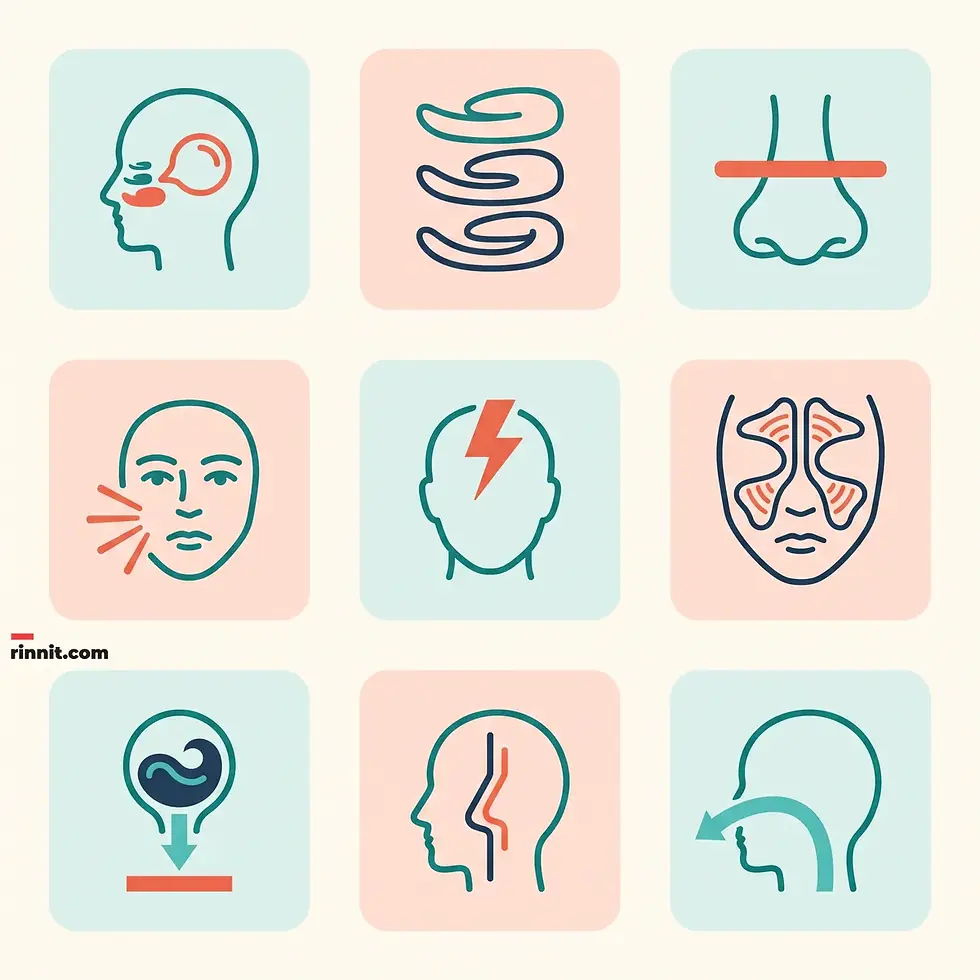
Concha Bullosa Symptoms
A concha bullosa doesn't usually cause symptoms. But if it's big, it can make it harder to breathe and harder for mucus to drain from your sinuses.
Symptom | What it involves |
Nasal obstruction — the most direct effect of a large air pocket | |
Facial pain | Pain felt in the face around the affected nasal passage |
Pain in the head that can accompany nasal blockage | |
Sinus pressure | A feeling of pressure in the sinuses |
An important detail explains why some people develop sinus-like symptoms: the soft tissue lining your turbinates is the same as the tissue that lines your nasal cavities. Like this tissue, it can become inflamed. If the turbinate with a concha bullosa gets inflamed, you may have symptoms of sinusitis.
When symptoms typically occur: only when the air pocket is large enough to interfere with airflow or sinus drainage. Small concha bullosas stay silent.
What Causes a Concha Bullosa?
Doctors don't know what causes a concha bullosa. Some believe it forms while children are still growing — likely starting around age 7 and continuing to form past adolescence.
What doctors do know is that you're more likely to have a concha bullosa if you have a deviated (off-center) septum [2]. Your septum separates your left and right nasal cavities. However, it's unclear what the relationship is, and not everyone with a concha bullosa has a deviated septum.
Fact about causes | What we know |
Known cause | None identified yet — the exact cause is unknown |
Formation timing | Likely begins around age 7 and continues past adolescence |
Septum link | More likely with a deviated septum [2], but the relationship is unclear |
Septum not required | Not everyone with a concha bullosa has a deviated septum |
How Is a Concha Bullosa Diagnosed?
A CT scan can show if you have a concha bullosa [1]. It allows healthcare providers to see the air pocket inside the bone. An air pocket can form in any turbinate, but it's most common in the middle one. You may have a concha bullosa in just one nasal cavity (unilateral) or in both (bilateral) [1].
Your provider may also find it during a nasal endoscopy — a procedure that uses a small telescope with a light and camera at the end to see inside your nose. This may be done before a procedure on your sinuses. It's important for providers to look for a concha bullosa when planning surgery, because it helps them know where to make incisions.
Diagnostic method | What it shows |
CT scan | The air pocket inside the turbinate bone; can show one side (unilateral) or both sides (bilateral) |
Nasal endoscopy | A small telescope with light and camera visualizes the inside of the nose; often done before sinus procedures |
Surgical planning | Identifying the concha bullosa tells the surgeon where to make incisions to avoid complications |
Concha Bullosa Treatment Options
You won't need treatment unless you're having symptoms. If you are, medicines like nasal decongestants and corticosteroids can provide relief. Decongestant nose sprays should not be used for more than 3 days in a row, because longer use can make congestion worse.
But you may need surgery to get rid of a concha bullosa. It's usually a quick, minimally invasive procedure. Options include:
Crushing. This approach squeezes the turbinate to release the air inside the pocket.
Functional endoscopic sinus surgery (FESS). This procedure uses an endoscope and tiny surgical tools to remove tissue blocking your airway.
Turbinate reduction. This technique removes part of the turbinate containing the air pocket, so air can flow through your nasal passages more easily.
You may get a septoplasty if a deviated septum is also causing issues. A septoplasty straightens an off-center septum — the wall that divides your right and left nasal passages.
Treatment | How it works | When it's used |
Nasal decongestants | Medicines that relieve congestion | First-line relief for symptomatic cases |
Corticosteroids | Anti-inflammatory medicines | Reduces inflammation in the nasal lining |
Crushing | Squeezes the turbinate to release the air inside the pocket | Quick, minimally invasive surgical option |
Functional endoscopic sinus surgery (FESS) | Endoscope and tiny surgical tools remove tissue blocking the airway | When tissue removal is needed |
Turbinate reduction | Removes part of the turbinate containing the air pocket | Restores easy airflow through the nasal passages |
Septoplasty | Straightens an off-center septum | When a deviated septum is also causing issues |
What is the best treatment for concha bullosa?
The best treatment is the one that manages symptoms. If you don't have symptoms, you likely won't need treatment. If you do have symptoms and medicines help, you likely won't need surgery. But if medicines aren't doing the trick, you may need surgery. The important thing to know is that treatments are available to help you get relief.

Outlook and What Happens If It's Left Untreated
What can you expect?
Surgery for a concha bullosa that's causing issues has an excellent outlook [4]. Most people experience symptom relief afterwards.
What happens if a concha bullosa is left untreated?
Not all concha bullosas require treatment. Studies show that a concha bullosa doesn't increase your risk of sinus infections. It isn't something to be concerned about unless you're experiencing bothersome symptoms.
When should you see your healthcare provider?
Your provider will let you know when follow-ups after surgery are needed, and you should reach out with any questions about recovery. Let them know if you're having trouble managing symptoms after treatment. For example, if you have allergies, you may need long-term solutions to calm inflammation inside your nose — you may need medicine in addition to surgery.
Conclusion
A concha bullosa is an air-filled space inside one of the turbinate bones in your nose — those small, curved shelves that warm and moisten the air you breathe. Despite its technical-sounding name, it is usually a harmless variation of normal nasal anatomy that many people carry without ever knowing.
It becomes worth attention only when the air pocket grows large enough to block airflow or sinus drainage. At that point, symptoms such as a blocked or stuffy nose, facial pain, headache and sinus pressure can develop, and inflamed tissue around the affected turbinate may even mimic sinusitis. The exact cause remains unknown, though formation likely begins in childhood around age 7 and continues past adolescence, and the condition appears more often in people with a deviated septum [2].
Diagnosis is straightforward — a CT scan or nasal endoscopy reveals the air pocket. Treatment follows a simple ladder: nothing if there are no symptoms, nasal decongestants or corticosteroids when medicines help, and quick minimally invasive surgery (crushing, FESS, or turbinate reduction, sometimes with septoplasty) when medicines fall short. Research is reassuring here — an untreated concha bullosa doesn't increase the risk of sinus infections, and surgery for symptomatic cases has an excellent outlook, with most people experiencing symptom relief [4].
If you find visual explanations helpful for understanding or teaching others about complex health topics, explore Rinnit's infographic templates — designed to turn dense medical information into clear, shareable visuals.
Frequently Asked Questions
What is a concha bullosa?
A concha bullosa is an air-filled space inside the middle of one of the bones in your nose, called a turbinate.
How do you pronounce concha bullosa?
It's pronounced con-KUH bull-OH-suh.
Is a concha bullosa dangerous?
No — it's usually harmless and doesn't cause any problems. Many people have one, and providers consider it a normal difference in healthy noses.
What is a turbinate?
A turbinate is one of the small, curved, shelf-like bones inside the nose. You have three turbinates on each side.
What do the turbinates do?
They warm and moisten the air as you breathe through your nose.
How many turbinates does each person have?
Three on each side of the nose — six in total.
Is it normal to have a concha bullosa?
Yes — many people have one, and providers typically consider it a normal variation of nasal anatomy.
When does a concha bullosa become a problem?
When the air pocket is large enough to block airflow or sinus drainage, making it harder to breathe through the nose.
Does a concha bullosa cause symptoms in everyone?
No — most concha bullosas don't cause symptoms at all.
What are the symptoms of a concha bullosa?
When present, symptoms include a blocked or stuffy nose, facial pain, headache and sinus pressure.
Can a concha bullosa cause a stuffy nose?
Yes — a large air pocket can block airflow and cause a blocked or stuffy nose.
Can a concha bullosa cause facial pain?
Yes — facial pain is one of the possible symptoms when the air pocket is large.
Can a concha bullosa cause headaches?
Yes — headache is one of the possible symptoms.
Can a concha bullosa cause sinus pressure?
Yes — sinus pressure is one of the possible symptoms.
Can a concha bullosa affect mucus drainage?
Yes — a large air pocket can make it harder for mucus to drain from your sinuses.
Can a concha bullosa cause sinusitis symptoms?
It can — the soft tissue lining the turbinate is the same tissue that lines the nasal cavities and can become inflamed. If the turbinate with a concha bullosa gets inflamed, you may experience sinusitis symptoms.
What causes a concha bullosa?
Doctors don't know exactly what causes it.
When does a concha bullosa form?
Some believe it forms while children are still growing — likely starting around age 7 and continuing past adolescence.
Is a concha bullosa linked to a deviated septum?
Yes — you're more likely to have a concha bullosa if you have a deviated (off-center) septum, though the exact relationship is unclear.
What is a deviated septum?
An off-center septum — the wall that separates your left and right nasal cavities.
Does everyone with a concha bullosa have a deviated septum?
No — not everyone with a concha bullosa has a deviated septum.
Does a concha bullosa increase the risk of sinus infections?
No — studies show it doesn't increase your risk of sinus infections.
Where in the nose does a concha bullosa form?
An air pocket can form in any turbinate, but it's most common in the middle turbinate.
Can a concha bullosa occur on both sides of the nose?
Yes — you may have one in just one nasal cavity (unilateral) or in both (bilateral).
What does unilateral mean?
A concha bullosa in just one nasal cavity.
What does bilateral mean?
A concha bullosa in both nasal cavities.
How is a concha bullosa diagnosed?
A CT scan can show the air pocket in the bone, and it may also be found during a nasal endoscopy.
What is a CT scan?
An imaging test that allows healthcare providers to see the air pocket inside the turbinate bone.
What is a nasal endoscopy?
A procedure that uses a small telescope with a light and camera at the end to see inside your nose.
Why is a concha bullosa important before sinus surgery?
If you need sinus surgery, your provider needs to know about it so they can plan the operation and avoid complications.
How does knowing about a concha bullosa help the surgeon?
It helps them know where to make incisions during surgery.
Do I need treatment for a concha bullosa?
Only if you're having symptoms — you won't need treatment otherwise.
What medicines treat a concha bullosa?
Nasal decongestants and corticosteroids can provide relief for symptomatic cases.
What is crushing for a concha bullosa?
A surgical approach that squeezes the turbinate to release the air inside the pocket.
What is functional endoscopic sinus surgery (FESS)?
A procedure that uses an endoscope and tiny surgical tools to remove tissue blocking your airway.
What is turbinate reduction?
A technique that removes part of the turbinate containing the air pocket so air can flow through the nasal passages more easily.
What is a septoplasty?
A surgery that straightens an off-center septum — the wall dividing the right and left nasal passages.
When would I need a septoplasty with a concha bullosa?
If a deviated septum is also causing issues, you may get a septoplasty alongside concha bullosa treatment.
Is concha bullosa surgery invasive?
It's usually a quick, minimally invasive procedure.
What is the best treatment for concha bullosa?
The best treatment is the one that manages your symptoms. No symptoms means likely no treatment; if medicines help, surgery likely isn't needed.
What if medicines don't work for a concha bullosa?
If medicines aren't doing the trick, you may need surgery — treatments are available to help you get relief.
What is the outlook after concha bullosa surgery?
Excellent — most people experience symptom relief afterwards.
What happens if a concha bullosa is left untreated?
Nothing, in most cases. It doesn't increase the risk of sinus infections and isn't a concern unless you're experiencing bothersome symptoms.
Can allergies affect concha bullosa symptoms?
Yes — if you have allergies, you may need long-term solutions to calm inflammation inside your nose, possibly medicine in addition to surgery.
Should I ask about recovery after concha bullosa surgery?
Yes — your provider will let you know when follow-ups are needed, and you should reach out with questions about recovery.
When should I contact my provider after treatment?
If you're having trouble managing symptoms after treatment, let your provider know.
Does a concha bullosa go away on its own?
It doesn't usually need to — most are harmless variations. Symptomatic ones respond well to medicine or surgery.
Can children have a concha bullosa?
Yes. It likely begins forming around age 7 and continues past adolescence, and prevalence studies have examined it in pediatric populations.
Why is it called concha bullosa?
"Concha" refers to the shell-like turbinate bones, and "bullosa" refers to the bubble-like air pocket within the bone.
Related Reading
Acute Sinusitis (Sinus Infection): Symptoms, Causes & Treatment
Nasal Congestion: Causes, Symptoms, and Effective Relief Strategies
Sinus Headache Guide: Symptoms, Causes, Diagnosis, and Treatment
Functional Endoscopic Sinus Surgery (FESS): A Guide to Restoring Sinus Health
Allergies: What Happens in Your Immune System, What the Symptoms Mean, and How to Take Control
References
Kar M, Altıntaş M. The incidence of concha bullosa: a retrospective radiologic study. Eur Arch Otorhinolaryngol. 2023;280(2):731-735. PMID: 35870004. https://doi.org/10.1007/s00405-022-07552-y
Jiang JG, Gitomer SA, Tong S, et al. Prevalence of concha bullosa in a pediatric population. Int J Pediatr Otorhinolaryngol. 2024;186:112108. PMID: 39284241. https://doi.org/10.1016/j.ijporl.2024.112108
Papadopoulou AM, Chrysikos D, Samolis A, et al. Anatomical variations of the nasal cavities and paranasal sinuses: a systematic review. Cureus. 2021;13(1):e12727. PMID: 33614330. https://doi.org/10.7759/cureus.12727
Alnatheer AM, Alkholaiwi F. Concha bullosa of the inferior turbinate. Cureus. 2021;13(10):e19089. PMID: 34868747. https://doi.org/10.7759/cureus.19089
Medical disclaimer
This article is for informational purposes only and is not a substitute for professional medical advice, diagnosis, or treatment. Always consult a qualified healthcare provider with questions about a medical condition or before starting or changing any treatment plan.



Comments