What Are Body Lice? Symptoms, Causes, and How to Get Rid of Them

Updated: 20 hours ago
Medically reviewed by Dr. Baraa Alnahhal, MD · Last reviewed: October 2026
Quick Answer: What are body lice?
Body lice are small, flat insects that feed on human blood and spread through close contact or shared clothing, bedding and towels. They cause itchy, irritated skin and small bites along clothing seams. Most people clear them by bathing daily and washing clothing and bedding in hot water, with medications such as ivermectin or permethrin for severe infestations. [1]
Key takeaways
Body lice live and reproduce in the seams of your clothing, not on your body. [1] [2] [4]
They bite where seams touch skin — the waist, groin, armpits, shoulders, and neck — and their eggs (nits) are most often found in clothing seams. [1]
A female louse can lay more than 300 nits in her roughly 20-day lifespan. [1]
Most people recover without medication through daily bathing and weekly hot washing of clothing, bedding, and towels.
Body lice can spread bacterial diseases like typhus, trench fever, and louse-borne relapsing fever [1] [2], so persistent or severe symptoms deserve a visit to a healthcare provider.
What the research says
Body lice are common where hygiene access is limited, and they can carry disease-causing bacteria. In a San Francisco survey of 203 homeless people who reported itching, 60 (30%) had body lice, and Bartonella quintana — the bacterium behind trench fever — was detected in 10 of 63 body louse pools (15.9%) (Bonilla et al., Emerging Infectious Diseases, 2014).
Access to hygiene services is the key lever. After eight people with louse-borne B. quintana infections were identified in Denver in 2020, interviews with 153 people found that 35% reported recent body lice exposure and 75% reported reduced access to hygiene services during COVID-19 stay-at-home orders (Marshall et al., American Journal of Tropical Medicine and Hygiene, 2022). [7]
Body lice, not head lice, carried the bacteria in a French survey. B. quintana DNA was detected in 16.7% of body lice collected from homeless individuals but in none of the head lice collected from 47 families (Candy et al., Vector-Borne and Zoonotic Diseases, 2018). [8]
Oral ivermectin sharply reduced body-lice numbers in a shelter population. In a cohort of homeless men in Marseille, France, three oral doses of ivermectin (12 mg each, given 7 days apart) cut the total count of body lice from 1,898 at baseline to 6 over 14 days, and the share of infested people fell from 84.9% to 18.5%. The effect was not sustained at day 45 (Foucault et al., J Infect Dis, 2006). [9]
Body lice are the main vector for several life-threatening infections. A review identifies epidemic typhus, relapsing fever, and trench fever (caused by Rickettsia prowazekii, Borrelia recurrentis, and Bartonella quintana) as louse-borne diseases that remain a public-health concern where hygiene is poor. It notes outbreaks in jails and refugee camps, high seroprevalence in homeless populations of developed countries, and calls for surveillance and efficient delousing strategies (Badiaga and Brouqui, Clin Microbiol Infect, 2012). [10]
What Are Body Lice?
Body lice are small, oblong insects that feed on human blood. They belong to one of the three types of lice that affect humans: body lice, head lice, and pubic lice (crabs). [1]
Body lice are small, flat insects. [1] [2] They are parasites, which means they live around your body and feed on your blood. They have a long abdomen, six legs, strong claws on the bottoms of their legs that allow them to hold onto a host, and sharp mouthparts that can pierce your skin to feed on blood. They cannot fly or jump, so they travel by crawling. [1]
The Body Louse Life Cycle
Body lice pass through three distinct stages, summarized below.
Stage | Description |
Nit | Oval-shaped, yellow-white lice eggs; very small; most often found in the seams of clothing; hatch within one to two weeks [1] |
Nymph | An adolescent louse that hatches from a nit; smaller than adults; matures into an adult after feeding on blood for nine to twelve days [1] |
Adult | Yellow-gray or brown-red in color; about the size of a sesame seed (3 millimeters); females are typically bigger than males and can lay over 300 nits in their lifespan [1] |
Adult body lice live for about 20 days. Importantly, if an adult louse cannot feed on blood, it dies within one to two days. [1]
Where Body Lice Live
Unlike head lice and pubic lice, body lice do not live on your body. They live and reproduce in your clothing. [1]
Who Do Body Lice Affect?
Anyone can have body lice — they affect people of all ages and races around the world. [1]
Body lice occur most often among people living in crowded conditions without regular access to clean clothes, bedding, and personal hygiene products. [1] This may include people without housing, refugees, victims of natural disasters, and victims of war. [1] [3]
How Body Lice Affect Your Body
Body lice infestations — a condition called pediculosis — usually cause itchy skin and a skin rash at the site of louse bites. Some people do not have any symptoms at all, and most people recover from body lice infestations without using medication. [1]
Body lice typically affect the areas of your body where the seams of your clothing touch your skin: your waist, groin, armpits, shoulders, and neck. [1]
Symptoms of Body Lice Bites
The symptoms of body lice bites vary. If the body lice carry disease or an allergic reaction occurs, your symptoms may be more severe. [1]
Symptom Type | What You May Notice |
Tickling feeling | A tickling sensation on your skin [1] |
Itch and irritation | Itchy and irritated skin [1] |
Bite marks | Groups of small, discolored (red, purple, brown) dots or bites; they may grow bigger and develop a lighter discolored ring around the outside [1] |
Severe symptoms | |
Long-term changes |

Causes of Body Lice
How Do Body Lice Spread?
Body lice spread through direct, person-to-person contact. [1] [3] [4] You can also get body lice by sharing clothing, bedding, towels, or other linens with someone who has body lice. [1]
Diseases Body Lice Can Spread
Yes, body lice can spread diseases. The three bacterial diseases they can transmit are summarized below. [1] [2]
Disease | Symptoms |
Typhus | A bacterial infection causing a skin rash, fever, and headaches [1] |
Trench fever | A bacterial infection causing fever, weakness, dizziness, headaches, and pain in the legs and back [1] |
Louse-borne relapsing fever | A bacterial infection causing recurring fever, nausea, vomiting, and muscle pains [1] |
Diagnosis and Tests
How Are Body Lice Diagnosed?
A healthcare provider can diagnose body lice by examining your body. They will note any severe itching or rashes and may be able to see lice feeding on your skin. [1]
Your provider may also examine your clothing, using a magnifying glass to look in the seams of your clothing for body lice or nits. [1] [3]
Treatment and Management
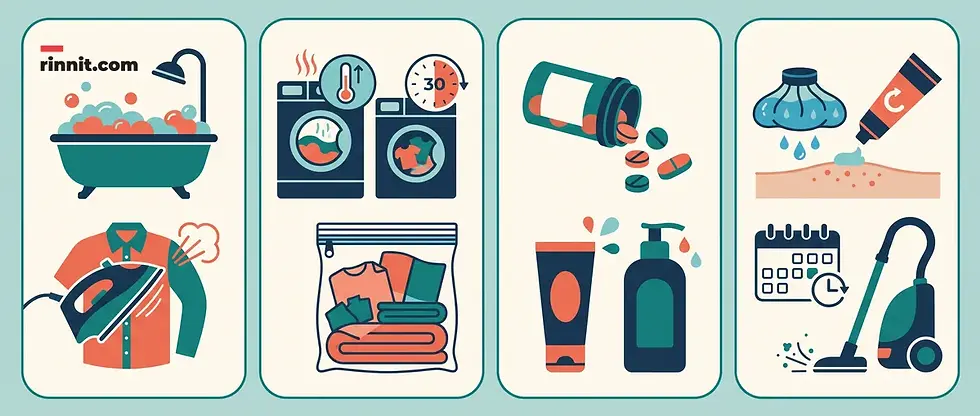
Most people successfully get rid of body lice infestations by regularly bathing with soap and warm water and washing their clothes. [1]
Step-by-Step Elimination
Step | How to Do It |
Bathe daily | Bathe daily with soap and warm water until you no longer see body lice or nits on your body, clothes, bedding, or other fabric items like towels [1] |
Wash fabrics in hot water | Wash clothing, bedding, and other fabrics that contacted the lice in hot water (at least 129°F / 54°C); you may need to adjust your water heater [1] |
Dry on high heat | After washing, put clothes in a dryer on the hottest setting for at least 30 minutes [1] |
Iron the seams | Turn clothing and bedding inside out and carefully iron the seams to help kill nits and lice [1] |
Seal unwashable items | If you cannot wash certain items, put them in a tightly sealed plastic bag for at least two weeks, ideally stored in a warm place [1] |
Vacuum your space | Regularly vacuum carpets, mattresses, and furniture; immediately empty the vacuum into an outdoor trashcan [1] |
To prevent body lice from coming back, try to bathe and wash your clothing, bedding, and other fabric items at least once a week. [1]
Medications for Severe Infestations
Many people recover without medication by keeping their bodies, clothing, and bedding clean and free of lice. But if you cannot regularly bathe or wash your clothes, your healthcare provider may suggest medications. [1]
Your healthcare provider should discuss how to use these treatments and any possible side effects. [1]
Managing Bite Symptoms
Try not to scratch your body lice bites — you risk breaking your skin and exposing yourself to infection. If you accidentally break your skin, keep the area clean by washing it with soap and water and covering the bites with a bandage. Talk to your healthcare provider if you have infected bites. [1]
Several over-the-counter (OTC) products can stop bites from itching or hurting. [1]
Home remedies can also help, though it is wise to check with your healthcare provider first, as you may be at risk of an allergic reaction. [1]
Home Remedy | How It Helps | How to Use |
Aloe vera gel | Contains salicylic acid, which relieves itching and pain [1] | Apply the gel to your rash and bites [1] |
Ice | Slows blood flow to the area, reducing inflammation, pain, swelling, and itchiness [1] | Apply an ice pack covered in a light towel for at least 10 minutes, three to four times a day [1] |
Oatmeal paste | Gluten in oatmeal soothes bites; colloidal oatmeal is available OTC [1] | Mix oatmeal powder with warm water into a thick paste, apply to bites, and wipe off after at least 10 minutes [1] |
One popular remedy to avoid: vinegar does not kill lice according to studies, and healthcare providers do not recommend it. [1]
Outlook and Prognosis
What Can You Expect?
Most people with body lice recover without medication. It may take up to two weeks for an infestation to fully go away. Nits hatch in one to two weeks and can be killed through proper hot-water washing of clothing or bedding. Adult lice and nymphs die within one to two days if they cannot feed on your blood. [1]
Prevention
You can prevent body lice infestations by bathing and washing your clothing, bedding, and other personal items at least once a week. [1]
Body Lice vs. Head Lice vs. Scabies vs. Bed Bugs
Because bites and itching look similar across several conditions, it helps to know how body lice differ from look-alikes.
Body Lice vs. Head Lice
Body lice and head lice look similar because they are both from the same species, with only slight physical differences. Body lice do not affect your head, and head lice do not affect your body. Body lice live and lay their nits in the seams of your clothing, bedding, and other fabrics in frequent contact with your body, while head lice live and lay their nits in your hair. Head lice are more common than body lice and spread by direct head-to-head contact and sharing items such as combs, brushes, scarves, and hats. [1]
Body Lice vs. Scabies
Scabies is a skin condition caused by tiny arachnids (bugs with two-segment bodies and eight legs) called mites. Scabies symptoms look similar to body lice symptoms, including itching and a discolored skin rash. [1]
Mites are smaller than body lice and live in the folds and narrow cracks of your skin — between your fingers and toes, at the waist, under your fingernails, in genital folds, and in thigh folds. Mites burrow into the upper levels of your skin to lay their eggs. Body lice do not burrow; they only bite your skin to feed on blood and lay their nits in your clothing seams. [1]
Body Lice vs. Bed Bugs
Body lice bites and bed bug bites look similar — slightly swollen, discolored marks that itch. Bed bug bites typically appear on exposed skin while you sleep, such as the arms, hands, back, face, and neck. [1]
The easiest way to tell whether your bites are from body lice or bed bugs is to identify the bugs physically. Bed bugs are usually bigger — about the size of an apple seed — with flat, round, brown or reddish-brown bodies. Body lice have an oblong, yellow-gray shape that may look brownish-red after feeding. [1]
You can also distinguish them by habitat: body lice live and lay nits in clothing seams, while bed bugs hide in and around the bed — along mattress seams, in the box spring, bed frame, and headboard. [1]
When to See a Healthcare Provider
See your healthcare provider if you see adult body lice or nits on your skin, clothing, or bedding. It is also a good idea to see a provider if you develop an itchy rash on your skin, particularly near clothing seams — they can help determine whether you have body lice. [1]
Also contact your provider if you experience an allergic reaction to body lice medications or develop symptoms of a disease carried by body lice. [1]
Useful questions to ask your provider include:
How can you tell that I have body lice?
How did I get body lice?
What over-the-counter medications do you recommend?
Do I have symptoms of a disease carried by body lice?
Conclusion
Body lice are itchy and annoying — but in most cases they are fairly harmless and do not require medicines for treatment. The combination of daily bathing and properly washing clothing and bedding in hot water kills both body lice and their nits, and most infestations clear within two weeks. The single most important habit is restraint: resisting the urge to scratch protects your skin from sores and infection.
If symptoms persist despite diligent hygiene, medications such as oral ivermectin or topical permethrin can help, and over-the-counter antihistamines and hydrocortisone can ease the itching in the meantime. Because body lice can occasionally spread bacterial diseases such as typhus, trench fever, and louse-borne relapsing fever, persistent itching, rash, or signs of illness should always be checked by a healthcare provider.
Frequently Asked Questions
What are body lice?
Body lice are small, flat, oblong insects that feed on human blood. They are parasites that live around your body and have six legs, strong claws for gripping a host, and sharp mouthparts that pierce the skin. They cannot fly or jump and travel by crawling. [1]
Where do body lice live?
Unlike head lice and pubic lice, body lice do not live on your body. They live and reproduce in your clothing, especially in the seams. [1] [4]
What are the three stages of body lice?
The three stages are the nit (egg), the nymph (adolescent louse), and the adult. Nits hatch within one to two weeks, nymphs mature after nine to twelve days of feeding, and adults live about 20 days. [1]
How many eggs can a body louse lay?
A female adult louse can lay over 300 nits during her lifespan. [1]
How long do body lice live?
Adult body lice live for about 20 days. If an adult louse cannot feed on blood, it dies within one to two days. [1]
How do you get body lice?
Body lice spread through direct, person-to-person contact or by sharing clothing, bedding, towels, or other linens with someone who has body lice. [1]
Who is most at risk of body lice?
Anyone can get body lice, but infestations occur most often among people living in crowded conditions without regular access to clean clothes, bedding, and hygiene products — including people without housing, refugees, and victims of natural disasters or war. [1]
Where do body lice bites usually appear?
Bites typically appear where clothing seams touch the skin: the waist, groin, armpits, shoulders, and neck. [1]
What do body lice bites look like?
Bites appear as groups of small, discolored dots — red, purple, or brown — that may grow bigger and develop a lighter discolored ring around the outside. [1]
Can body lice spread disease?
Yes. Body lice can transmit bacterial diseases including typhus, trench fever, and louse-borne relapsing fever. [1] [2]
How are body lice diagnosed?
A healthcare provider examines your body for itching, rashes, and visible lice, and may use a magnifying glass to look for lice or nits in the seams of your clothing. [1]
How do you get rid of body lice?
Bathe daily with soap and warm water, and wash clothing, bedding, and towels in hot water (at least 129°F / 54°C), then dry on the hottest dryer setting for at least 30 minutes. Continue until no lice or nits are seen. [1]
Can you kill body lice by ironing?
Yes. Turning clothing and bedding inside out and carefully ironing the seams helps kill nits and body lice. [1]
What if I don't have access to a washer and dryer?
Sealing the items in a tightly closed plastic bag for at least two weeks, stored in a warm place if possible, can also be effective. [1]
What medications treat body lice?
For severe infestations, providers may suggest oral antiparasite medication such as ivermectin tablets, or topical antiparasite products such as permethrin powder, lotion, cream, or shampoo. [1]
How do you stop body lice bites from itching?
Over-the-counter antihistamines (pills or creams) and hydrocortisone cream or ointment relieve itching and swelling. Home remedies such as aloe vera gel, ice packs, and oatmeal paste may also help.
Does vinegar kill body lice?
No. Studies show vinegar does not kill lice, and healthcare providers do not recommend it. [1]
How long does it take to get rid of body lice?
It may take up to two weeks for an infestation to go away completely. [1]
What is the difference between body lice and head lice?
Both come from the same species, but body lice live and lay nits in clothing seams while head lice live and lay nits in hair. Head lice are more common and spread through head-to-head contact. [1]
What is the difference between body lice and scabies?
Scabies is caused by tiny eight-legged mites that burrow into the upper layers of your skin, particularly in folds between fingers, toes, and at the waist. Body lice do not burrow; they bite your skin to feed and lay nits in clothing seams. [1]
What is the difference between body lice bites and bed bug bites?
The bites look similar, but bed bugs are bigger (apple-seed sized) with flat, round, brown bodies and hide around the bed. Body lice are smaller, oblong, and yellow-gray, and live in clothing seams. The easiest way to tell them apart is to identify the bugs physically. [1]
When should I see a healthcare provider?
See a provider if you see adult lice or nits on your skin, clothing, or bedding; if you develop an itchy rash near clothing seams; if you have an allergic reaction to lice medications; or if you develop symptoms of a disease carried by body lice. [1]
Related Reading
Head Lice: What They Are, How They Spread, and How to Get Rid of Them for Good
Pubic Lice (Crabs) Guide: Symptoms, Causes, Diagnosis, and Treatment
Scabies: Complete Guide to Symptoms, Treatment, and Preventing It From Coming Back
Itchy Skin (Pruritus): What Causes It, When to See a Doctor, and How to Get Relief
References
Cleveland Clinic. Body Lice. Cleveland Clinic Health Library. Medically reviewed; last updated March 4, 2022. Accessed October 15, 2026. https://my.clevelandclinic.org/health/diseases/17919-body-lice
American Osteopathic College of Dermatology. Body Lice. AOCD. Accessed October 15, 2026. https://www.aocd.org/page/BodyLice
Centers for Disease Control and Prevention. About Body Lice. CDC. June 24, 2024. Accessed October 15, 2026. https://www.cdc.gov/lice/about/body-lice.html
DermNet. Body lice (pediculosis). DermNet. Updated February 1, 2014. Accessed October 15, 2026. https://dermnetnz.org/topics/body-lice
World Health Organization. Vector-borne diseases. WHO fact sheet. September 26, 2024. Accessed October 15, 2026. https://www.who.int/news-room/fact-sheets/detail/vector-borne-diseases
Bonilla DL, Cole-Porse C, Kjemtrup A, et al. Risk factors for human lice and bartonellosis among the homeless, San Francisco, California, USA. Emerg Infect Dis. 2014;20(10):1645-1651. PMID 25280380. https://doi.org/10.3201/eid2010.131655
Marshall KE, Martinez HE, Woodall T, et al. Body lice among people experiencing homelessness and access to hygiene services during the COVID-19 pandemic — preventing trench fever in Denver, Colorado, 2020. Am J Trop Med Hyg. 2022;107(2):427-432. PMID 35895412. https://doi.org/10.4269/ajtmh.22-0118
Candy K, Amanzougaghene N, Izri A, et al. Molecular survey of head and body lice, Pediculus humanus, in France. Vector Borne Zoonotic Dis. 2018;18(5):243-251. PMID 29652646. https://doi.org/10.1089/vbz.2017.2206
Foucault C, et al. Oral ivermectin in the treatment of body lice. J Infect Dis. 2006;193(3):474-6. PMID 16388498. https://doi.org/10.1086/499279
Badiaga S, et al. Human louse-transmitted infectious diseases. Clin Microbiol Infect. 2012;18(4):332-7. PMID 22360386. https://doi.org/10.1111/j.1469-0691.2012.03778.x
Medical disclaimer
This article is for general informational purposes only and does not constitute medical advice. It is based on published health information and should not replace consultation with a qualified healthcare professional. Always seek personalized medical guidance for persistent infestations, skin infections, or signs of disease.



Comments