Vasodilation: Symptoms, Causes, and Health Impact

Updated: 2 days ago
Medically reviewed by Dr. Baraa Alnahhal, MD · Last reviewed: October 2026
Editorial note: This article is provided for educational purposes only. It is not medical advice. Always consult a qualified healthcare professional about your individual health situation.
Quick Answer: What is vasodilation?
Vasodilation is the widening of your blood vessels that occurs when the muscles in the vessel walls relax, allowing more blood to flow. It naturally lowers blood pressure and helps regulate body temperature and nutrient delivery. [1] It is usually beneficial and automatic, but severe or sudden vasodilation can signal serious conditions such as septic shock or severe allergic reactions. [1]
What the research says
Beetroot juice modestly lowered blood pressure. In a meta-analysis of 22 randomized trials, beetroot juice lowered systolic blood pressure by 3.55 mm Hg and diastolic by 1.32 mm Hg compared with control groups. Longer use (14 days or more) and the highest dose (500 mL/day) gave larger systolic drops (−5.11 and −4.78 mm Hg). (Bahadoran et al., Adv Nutr, 2017) [2]
More alcohol went with higher hypertension risk. In a dose-response meta-analysis of 23 cohort studies, the risk of developing hypertension was 11% higher at 24 g of alcohol per day (risk ratio 1.11) and 33% higher at 48 g per day (1.33) than at 12 g per day. (Cecchini et al., Hypertension, 2024) [3]
Blood pressure rose steadily with daily alcohol. In 7 studies of 19,548 adults followed for a median of 5.3 years, systolic blood pressure was 1.25 mm Hg higher at 12 g of alcohol per day and 4.90 mm Hg higher at 48 g per day than with no drinking. (Di Federico et al., Hypertension, 2023) [4]
When to Call Your Care Team
Emergency notice: If you or someone else has signs of shock, call 911 or your local emergency services immediately. These can be signs of life-threatening vasodilation related to anaphylaxis or septic shock: [1]
Understanding Vasodilation
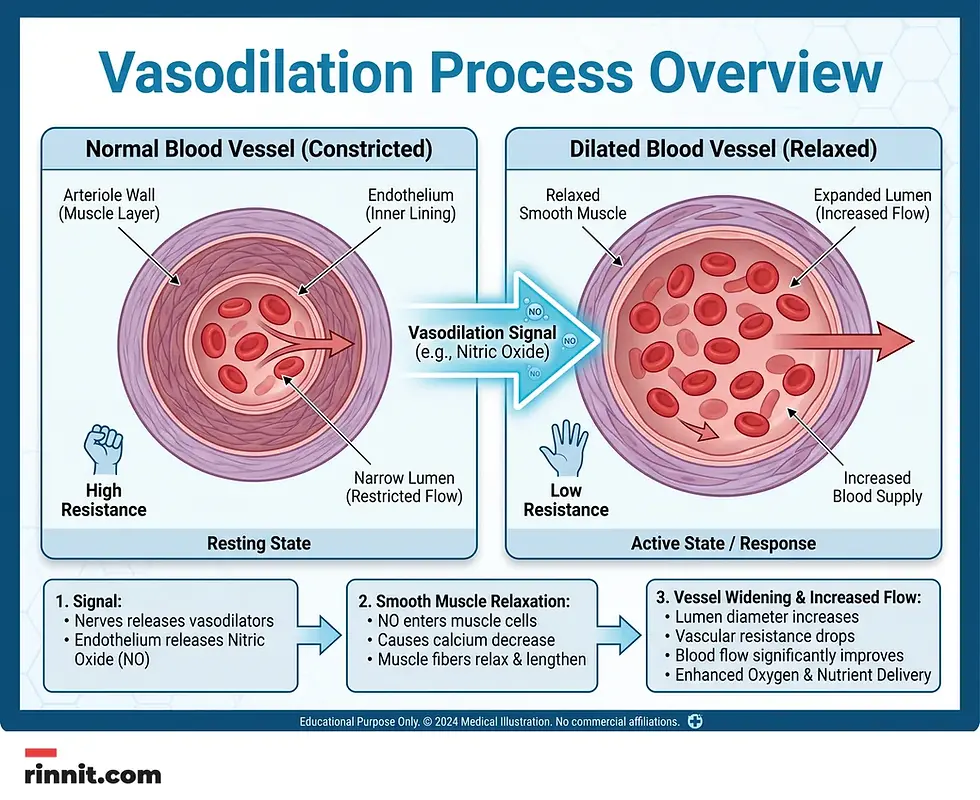
Vasodilation is a fundamental process in the human body where blood vessels expand. [1] Unlike static tubes, your blood vessels contain muscle tissue that actively controls their diameter. [1] When these muscles relax, the vessels widen, which is known as vasodilation. The opposite process, where vessels constrict and narrow, is called vasoconstriction. [1]
The primary role of vasodilation is to regulate blood flow and blood pressure. [1] By widening the path for blood, the body can deliver more oxygen and nutrients to specific areas while simultaneously reducing the pressure against the vessel walls. [1]
Natural Causes of Vasodilation
Your body automatically triggers vasodilation in response to various internal and external stimuli. [1] This process often happens without you realizing it, serving as a critical mechanism for maintaining homeostasis.
Exercise: During physical activity, your muscles require a rapid delivery of oxygen and nutrients. The body dilates blood vessels to meet this increased demand. [1]
Temperature regulation: When you enter a hot environment, such as a hot tub, your body dilates capillaries near the skin’s surface. [1] This helps your body heat up more slowly and release excess heat.
Emotional responses: Blushing or turning red due to embarrassment is a form of vasodilation. The capillaries right under the skin of your face widen, increasing visible blood flow. [1]
Immune response: When the body detects an infection, it increases blood flow to the affected area through vasodilation. [1] This allows immune cells to reach the site of the infection more efficiently to begin repairs.
External Triggers: Diet and Medication
Beyond natural physiological responses, certain external factors can induce vasodilation. This can be intentional, as in the case of medical treatments, or a side effect of consumption.
Dietary Factors
Certain foods and drinks contain compounds that signal the blood vessels to relax.
Nitrate-rich foods: Leafy greens (spinach, lettuce), radishes, and bok choy are high in nitrates. The body converts these into nitric oxide, a potent vasodilator. [1]
Alcohol: Consumption of alcohol causes immediate, though temporary, vasodilation. [1] However, excessive drinking can eventually lead to higher blood pressure. [1] [3] [4]
Medications
Healthcare providers often use medications to intentionally trigger vasodilation to treat various conditions.
Blood pressure medications: Many antihypertensives work by inducing vasodilation to lower overall blood pressure. [1]
Heart and chest pain treatments: Nitroglycerin is commonly used to treat chest pain and heart attacks by rapidly widening vessels. [1]
Erectile dysfunction medications: Drugs like sildenafil (Viagra®) rely on localized vasodilation to function. They must never be taken with nitroglycerin or other nitrate medicines, because the combination can cause a dangerous drop in blood pressure. [1]
Category | Common Triggers | Purpose/Effect |
Natural | Exercise, heat, blushing, infection | Temperature control, nutrient delivery, healing [1] |
Dietary | Nitrates (spinach, radishes), alcohol | Lowering blood pressure (temporary or sustained) [1] |
Medical | Antihypertensives, nitroglycerin, sildenafil | Treating hypertension, heart attack, or ED [1] |
When Vasodilation Becomes Dangerous
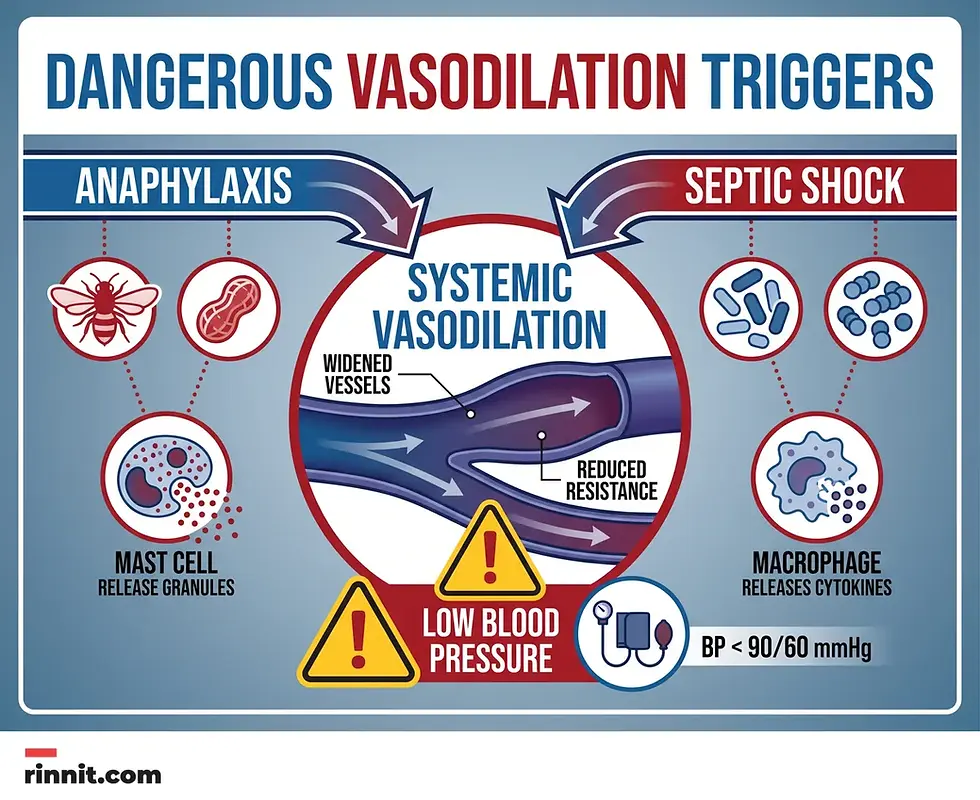
While usually beneficial, extreme or uncontrolled vasodilation can lead to life-threatening drops in blood pressure. [1] This state is often associated with medical shock.
Life-Threatening Conditions
Anaphylaxis: A severe allergic reaction where the immune system overreacts, causing widespread vasodilation, a dangerous drop in blood pressure, and constricted airways. [1]
Septic shock: The most severe stage of sepsis, where an infection causes the body to react so strongly that blood pressure plummets due to systemic vasodilation. [1]
Recognizing and Responding to Shock
If vasodilation causes a critical drop in blood pressure, the body may enter a state of shock. Recognizing these symptoms early is vital for survival.
Symptoms of Shock
First Aid for Shock
If you suspect someone is in shock due to severe vasodilation:
Call 911 immediately. [1] Do not wait for symptoms to worsen.
Check airway and breathing: Ensure the person can breathe; loosen tight clothing. If a severe allergic reaction is suspected and the person has an epinephrine auto-injector, use it right away. [1]
Check pulse: If no pulse is found, begin CPR immediately. [1]
The shock position: If there are no suspected head, neck, or spine injuries, elevate the person’s feet at least 12 inches off the ground. [1]
Maintain temperature: Keep the person warm but do not give them anything to eat or drink. [1]
Conclusion
Vasodilation is a vital, mostly automatic process that keeps your body functioning correctly by managing blood flow and pressure. However, understanding the difference between a healthy blush and the signs of medical shock can be life-saving.
Are you experiencing persistent dizziness or unexplained fainting? Consult with a healthcare professional for a cardiovascular evaluation to ensure your circulatory system is functioning optimally.
Frequently Asked Questions
1. Is vasodilation good or bad?
For most people, it is a healthy and necessary process for delivering nutrients and managing body temperature. It only becomes “bad” when it is extreme or uncontrolled, leading to dangerously low blood pressure.
2. Does vasodilation lower blood pressure?
Yes. By widening the blood vessels, the body reduces the resistance against which the heart must pump, naturally lowering blood pressure.
3. Can food cause vasodilation?
Yes, foods rich in nitrates like spinach, lettuce, and radishes are known to promote vasodilation.
4. What is the difference between vasodilation and vasoconstriction?
Vasodilation is the widening of blood vessels, while vasoconstriction is the narrowing or tightening of blood vessels.
5. Why does exercise cause vasodilation?
Your muscles need more oxygen and energy when you move. Widening the vessels allows a higher volume of blood to reach these active tissues quickly.
6. Can alcohol cause permanent vasodilation?
No, the vasodilatory effect of alcohol is temporary. Long-term excessive drinking actually tends to increase blood pressure.
7. What is nitric oxide’s role in vasodilation?
Nitric oxide is a compound the body produces (often from dietary nitrates) that signals the muscles in blood vessel walls to relax and widen.
8. Is blushing a type of vasodilation?
Yes. Blushing occurs when the small blood vessels (capillaries) just beneath the skin of the face dilate, increasing blood flow.
9. Can heat be dangerous because of vasodilation?
Yes. Spending too much time in a hot tub or sauna can cause excessive vasodilation, leading to a drop in blood pressure that might cause fainting.
10. How do doctors treat dangerous vasodilation?
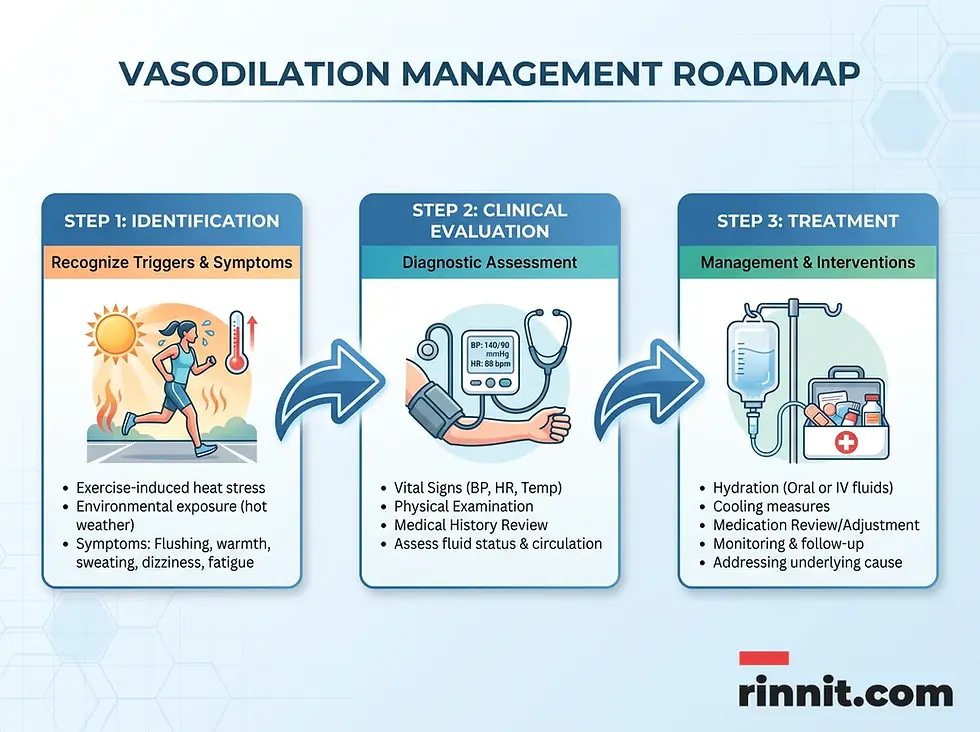
Treatments include fluid resuscitation (IV fluids) and medications like vasoconstrictors or vasopressors to raise blood pressure.
11. What is anaphylactic shock?
Anaphylactic shock is a life-threatening allergic reaction where systemic vasodilation causes blood pressure to drop dangerously low.
12. Can an infection cause vasodilation?
Yes. The body increases blood flow to infected areas to help immune cells reach the site and repair damage.
13. What should I do if I feel faint after a hot bath?
Sit or lie down slowly to prevent a fall. This feeling is likely due to a temporary drop in blood pressure from vasodilation.
14. Are there medications that intentionally cause vasodilation?
Yes, including many blood pressure medications, nitroglycerin for heart conditions, and certain medications for erectile dysfunction.
15. Can vasodilation be a symptom of a disease?
Yes, it can be a component of systemic conditions like sepsis or severe allergic reactions.
Related Reading
References
Cleveland Clinic. Vasodilation. Cleveland Clinic. June 23, 2022. https://my.clevelandclinic.org/health/diseases/23352-vasodilation
Bahadoran Z, Mirmiran P, Kabir A, et al. The nitrate-independent blood pressure-lowering effect of beetroot juice: a systematic review and meta-analysis. Adv Nutr. 2017;8(6):830-838. PMID 29141968. https://doi.org/10.3945/an.117.016717
Cecchini M, Filippini T, Whelton PK, et al. Alcohol intake and risk of hypertension: a systematic review and dose-response meta-analysis of nonexperimental cohort studies. Hypertension. 2024;81(8):1701-1715. PMID 38864208. https://doi.org/10.1161/HYPERTENSIONAHA.124.22703
Di Federico S, Filippini T, Whelton PK, et al. Alcohol intake and blood pressure levels: a dose-response meta-analysis of nonexperimental cohort studies. Hypertension. 2023;80(10):1961-1969. PMID 37522179. https://doi.org/10.1161/HYPERTENSIONAHA.123.21224



Comments