Understanding Vaginal Seeding: A Patient Guide to Microbial Transfer

Updated: 2 days ago
Medically reviewed by Dr. Baraa Alnahhal, MD · Last reviewed: October 2026
Editorial note: This article is provided for educational purposes only. It is not medical advice. Always consult a qualified healthcare professional about your individual health situation.
Quick Answer: What is vaginal seeding?
Vaginal seeding is a practice of collecting maternal vaginal fluids on sterile gauze before a C-section and swabbing them onto the newborn's mouth, eyes and skin after birth to transfer beneficial bacteria. [1] However, it can also spread dangerous pathogens such as Chlamydia or Group B Strep. [1] Because safety data are limited, professionals recommend breastfeeding and skin-to-skin contact instead. [1]
What the research says
A blinded trial showed seeding changed which microbes C-section babies carried. In a double-blind, placebo-controlled trial of 20 babies born by elective C-section, vaginal seeding increased the transfer of maternal microbes to the baby and lowered the diversity of skin and stool bacteria compared with placebo seeding. The authors called for larger randomized studies to learn what this means for health. (Mueller et al., mBio, 2023) [2]
A larger randomized trial found no health benefit in the first two years. Among 120 women scheduled for cesarean delivery in China (117 infants analyzed), seeding did not significantly change gut microbiota, growth or allergy risk over the first 2 years of life; the median allergy risk score was 1.5 with seeding versus 2.0 without (P = .48). (Liu et al., Am J Obstet Gynecol MFM, 2023) [3]
Early observational data show partial microbe restoration, not proof of disease prevention. In 177 babies followed for a year (98 vaginal births and 79 C-section births, 30 of whom were swabbed), the microbial trajectories of swabbed C-section babies aligned more closely with those of vaginally born babies. The study tracked microbe patterns rather than disease outcomes, and the authors called for randomized trials. (Song et al., Med (N Y), 2021) [4]
When to Call Your Care Team
Overview and Mechanism
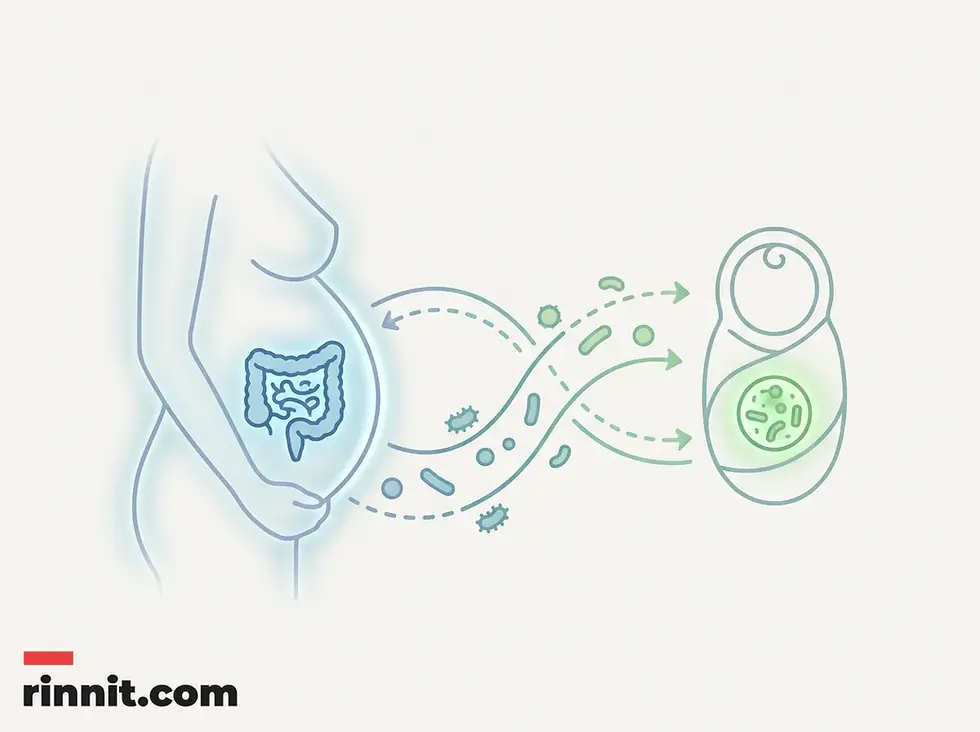
Vaginal seeding, also known as microbial seeding, is a practice designed to bridge the gap between different delivery methods. During a traditional vaginal birth, a baby naturally picks up beneficial microbes while passing through the birth canal. [1] These organisms are essential for developing the infant’s gut health and immune system. [1] In contrast, babies born via Cesarean section (C-section) do not receive this initial exposure, which some researchers believe may contribute to a higher risk of certain chronic conditions. [1] [2]
The procedure itself is straightforward but requires careful timing. About an hour before the surgical delivery, a piece of sterile gauze is placed in the vagina to collect fluids. [1] This gauze is then stored in a sterile container until the baby is born. [1] Once delivered, the parents or healthcare providers use the gauze to wipe the baby’s face, eyes, and entire body, effectively transferring the mother’s vaginal microbiome to the newborn. [1]
Clinical Indications and Rationale
The primary motivation for vaginal seeding is the belief that early microbial exposure provides a “jumpstart” for the immune system. Proponents suggest that this transfer may reduce the likelihood of the child developing immune-related disorders later in life. [1] While the theory is rooted in sound biological principles, the long-term effectiveness remains a subject of ongoing clinical research. [1]
Condition Potentially Reduced | Description of the Rationale |
Asthma and Allergies [1] | Early exposure to diverse bacteria may train the immune system to respond correctly to environmental triggers. |
Celiac Disease [1] | A healthy gut microbiome is thought to play a role in preventing autoimmune responses to gluten. |
Eczema [1] | Establishing skin bacteria early may help maintain the skin barrier and prevent inflammatory conditions. |
IBD [1] | Proper gut colonization is essential for long-term digestive health and preventing chronic inflammation. |
Risks and Professional Recommendations
Despite the potential benefits, vaginal seeding is not without significant danger. The most critical concern is the accidental transfer of harmful pathogens that can live in the vaginal tract without causing symptoms in the mother. A newborn’s immune system is extremely fragile and cannot easily fight off serious infections. [1] Potential risks include the transfer of Chlamydia, Gonorrhea, Genital Herpes (HSV-2), and Group B Streptococcus. [1]
Because of these risks and the lack of robust, long-term safety data, major medical groups like the American College of Obstetricians and Gynecologists (ACOG) do not recommend the practice. [1] They emphasize that the benefits are still theoretical, while the risks of neonatal infection are well-documented and potentially life-threatening.
Risk Factor | Potential Impact on the Newborn |
Pathogen Transfer | Accidental exposure to Chlamydia or Gonorrhea can cause severe eye infections or pneumonia. |
Immune Fragility | Newborns lack the developed defenses needed to manage even common bacterial exposures. |
Lack of Data | Current studies are often small and do not track participants long enough to confirm safety. [1] |
Clinical Trial Status | The procedure is currently considered experimental and should only occur in research settings. [1] |

Safer Alternatives for Microbiome Health
For parents delivering via C-section who are concerned about their baby’s microbiome, there are several evidence-based and safer ways to support healthy bacterial colonization. These methods carry none of the infection risks associated with swabbing vaginal fluids and are universally recommended by pediatricians and obstetricians.
Breastfeeding is one of the most effective ways to seed a baby’s microbiome. Breast milk contains a unique blend of healthy bacteria and prebiotics that nourish the infant’s gut. Additionally, skin-to-skin contact (often called kangaroo care) allows the baby to pick up beneficial microbes from the parent’s skin, which helps build their initial defenses in a safe, natural way. [1]
Conclusion
Vaginal seeding remains a controversial topic in modern obstetrics. While the desire to provide a C-section baby with the best possible start is understandable, the clinical risks currently outweigh the proven benefits. Parents are encouraged to focus on established, safe practices like immediate skin-to-skin contact and breastfeeding to support their newborn’s developing immune system.
Next Steps
If you are considering vaginal seeding, the most important step is to have an open discussion with your obstetrician or midwife well before your delivery date. They can provide the most current safety information and help you weigh the options. If you choose to perform the procedure independently, it is vital to inform your pediatrician so they can monitor the baby closely for any signs of infection.

Frequently Asked Questions
1. What is vaginal seeding?
Vaginal seeding is the practice of swabbing a C-section newborn with maternal vaginal fluids to transfer beneficial bacteria.
2. Why do people consider it?
To mimic the natural bacterial exposure of a vaginal birth and potentially boost the baby’s immunity.
3. Is it recommended by doctors?
No, most major medical organizations advise against it due to the risk of spreading infections.
4. What are the main risks?
The transfer of harmful bacteria or viruses like Group B Strep, Chlamydia, or herpes.
5. Can it prevent asthma?
Some believe it might, but there is currently no long-term clinical evidence to prove this.
6. How is the fluid collected?
Sterile gauze is placed in the mother’s vagina before surgery to absorb the fluids.
7. When is the baby swabbed?
Immediately after birth, the gauze is wiped over the baby’s mouth, eyes, and skin.
8. Are there safer alternatives?
Yes, breastfeeding and skin-to-skin contact are effective and safe ways to build a baby’s microbiome.
9. What is the “microbiome”?
The microbiome is the community of bacteria and other microbes that live in and on our bodies to keep us healthy.
10. Do C-section babies have different microbiomes?
Yes, studies show they initially have different bacterial profiles than babies born vaginally.
11. Should I tell my doctor if I do it?
Yes, it is crucial that your healthcare team knows so they can monitor for signs of infection.
12. What signs of infection should I watch for?
Fever, poor feeding, rapid breathing, or unusual sluggishness in the newborn.
13. Is it done during the surgery?
No, the fluid is collected before surgery and applied after the baby is delivered.
14. Are there ongoing studies?
Yes, researchers are currently conducting clinical trials to better understand the long-term effects.
15. Can I use breast milk instead?
Breastfeeding is a highly recommended way to provide healthy bacteria to your baby safely.
Related Reading
References
Cleveland Clinic. Vaginal seeding. Cleveland Clinic. September 29, 2025. https://my.clevelandclinic.org/health/treatments/22096-vaginal-seeding
Mueller NT, Differding MK, Sun H, et al. Maternal bacterial engraftment in multiple body sites of cesarean section born neonates after vaginal seeding—a randomized controlled trial. mBio. 2023;14(3):e0049123. PMID 37074174. https://doi.org/10.1128/mbio.00491-23
Liu Y, Li HT, Zhou SJ, et al. Effects of vaginal seeding on gut microbiota, body mass index, and allergy risks in infants born through cesarean delivery: a randomized clinical trial. Am J Obstet Gynecol MFM. 2023;5(1):100793. PMID 36334724. https://doi.org/10.1016/j.ajogmf.2022.100793
Song SJ, Wang J, Martino C, et al. Naturalization of the microbiota developmental trajectory of Cesarean-born neonates after vaginal seeding. Med (N Y). 2021;2(8):951-964.e5. PMID 35590169. https://doi.org/10.1016/j.medj.2021.05.003



Comments