Understanding the Urothelium

Updated: 3 days ago
Medically reviewed by Dr. Baraa Alnahhal, MD · Last reviewed: October 2026
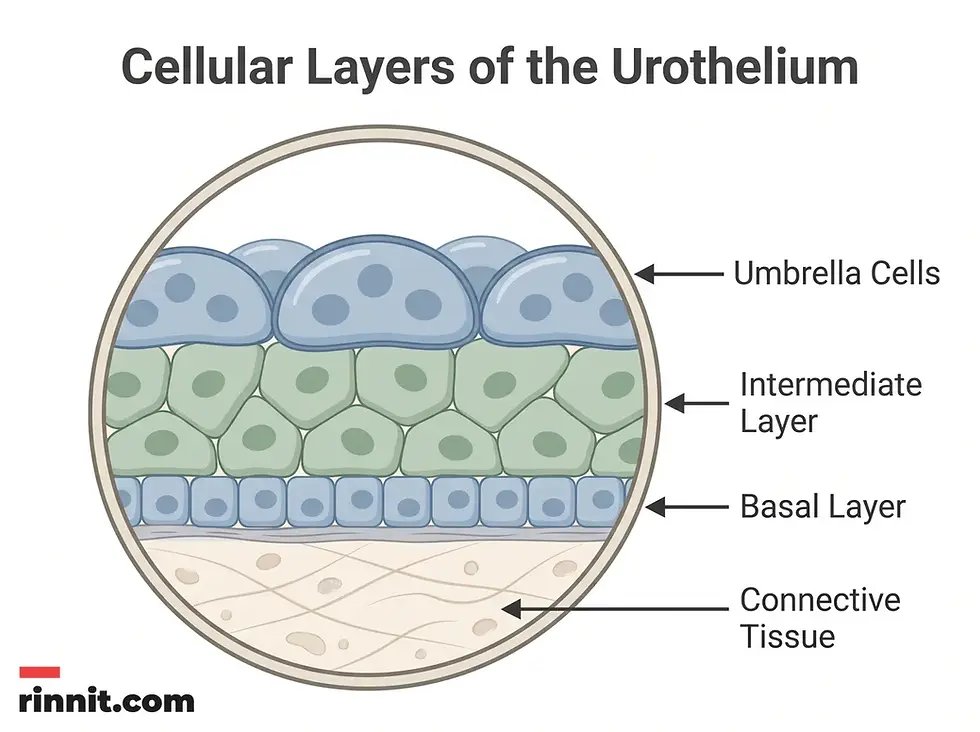
The urothelium is a specialized protective tissue lining the urinary tract, including the renal pelvis, ureters, bladder, and urethra. [1] It serves as a critical barrier, shielding the body's internal tissues and blood from acidic urine and pathogens. [1] Composed of three distinct cell layers—umbrella, intermediate, and basal—this unique epithelium can stretch and contract to accommodate varying urine volumes while maintaining its integrity and sensory signaling functions. [1]
Quick Answer: What is the urothelium?
The urothelium is a unique type of epithelial tissue that lines the inside of the urinary system. [1] It acts as a barrier that keeps urine and germs from entering the bloodstream or surrounding muscles. [1] Unlike other body linings, it stretches and contracts as the bladder fills and empties, and it helps signal the nervous system when the bladder is full. [1]
What the research says
Umbrella cells are central to the bladder barrier. A review of urothelial structure and function describes three cell types (basal, intermediate and umbrella) and highlights the role of umbrella cells in forming and maintaining a barrier that lets the bladder hold large volumes of urine without urine components diffusing across it (Jafari and Rohn, Mucosal Immunology, 2022) [2].
A defective barrier is linked to interstitial cystitis. A review of interstitial cystitis/bladder pain syndrome (IC/BPS) reports that inflamed bladders show defective mature apical (umbrella) cells, impaired barrier function and increased urothelial permeability, and that in the author's preliminary studies multiple intravesical platelet-rich plasma injections improved symptoms in 70% of IC/BPS patients (Kuo, Lower Urinary Tract Symptoms, 2023) [3].
Treatment side effects may track with outcomes in advanced urothelial carcinoma. In a systematic review of 13 eligible retrospective studies (12 included in the meta-analysis) of advanced urothelial carcinoma, enfortumab vedotin-related cutaneous toxicity was associated with improved overall survival, progression-free survival, objective response and disease control, although the authors call the findings hypothesis-generating because of the retrospective designs and heterogeneity (Sanagawa et al., Clinical Genitourinary Cancer, 2026) [4].
Anatomy and Cellular Structure
The urothelium is characterized by its multi-layered organization, which provides both flexibility and a robust defense against harsh fluids. The thickness of these layers changes depending on whether the urinary organs are full or empty. [1]
Layer | Cell Type | Primary Function |
Superficial (Apical) | Umbrella Cells | Large, dome-shaped cells that flatten to provide a tight, protective seal. [1] |
Intermediate | Intermediate Cells | Multiple layers that aid in tissue repair and replace superficial cells. [1] |
Basal | Basal Cells | Smallest cells responsible for the ongoing regeneration of the urothelium. [1] |
The umbrella cells are particularly noteworthy for their ability to cover multiple intermediate cells, creating a "shingle" effect that enhances the barrier's strength. [1] They also contain specialized receptors that can alert the immune system to the presence of invading bacteria. [1]
Functions in the Urinary System
The urothelium is not merely a passive lining; it performs several active roles essential for urinary health and bodily homeostasis.
Barrier Defense: It prevents acidic urine from damaging underlying blood vessels and muscular tissues. [1]
Pathogen Prevention: The lining acts as a first line of defense against bacteria that cause urinary tract infections (UTIs). [1]
Sensory Signaling: It transmits information to the nervous system, such as the sensation of bladder fullness. [1]
Regulatory Action: The tissue helps manage the levels of water, salts, and other substances within the urine. [1]
Dynamic Flexibility: Its structure allows for significant expansion and contraction to hold varying amounts of fluid. [1]

Conditions and Clinical Significance
Several health conditions can compromise the integrity or function of the urothelium. Damage to this layer is often linked to chronic pain and signaling errors within the urinary tract.
Urothelial Carcinoma: The most common form of bladder cancer, which can also occur in the lining of the kidneys, ureters, or urethra. [1]
Interstitial Cystitis: A chronic condition characterized by bladder pain and pressure, often thought to be caused by urothelial damage. [1] [3]
Dysplasia: The development of abnormal-looking cells that may indicate an increased risk of future malignancy. [1]
Overactive Bladder: Changes in the urothelium can lead to incorrect signals being sent to the brain, resulting in urgency or incontinence.
Common symptoms of urothelial issues include blood in the urine (hematuria), cloudy urine, and frequent or painful urination. [1] Diagnostic tools often include urinalysis, imaging tests (like CT or MRI), and biopsies to examine cell morphology. [1]

Conclusion
The urothelium is a remarkable and specialized tissue that provides an essential barrier between the body and the waste products it excretes. Its unique ability to stretch while maintaining a tight seal is fundamental to the function of the urinary system. Recognizing the symptoms of urothelial distress and seeking timely medical evaluation can help manage conditions ranging from common infections to more serious cellular abnormalities.
Frequently Asked Questions
What is the urothelium?
The urothelium is the protective tissue lining the inside of the urinary tract, including the renal pelvis, ureters, bladder, and urethra.
What are umbrella cells?
Umbrella cells are the large, dome-shaped cells in the top layer of the urothelium that provide a tight seal to protect the body from urine.
How does the urothelium help with bladder function?
The urothelium stretches and contracts to allow the bladder to fill and empty, and it signals the nervous system when the bladder is full.
Can urothelial cells be found in urine?
Yes, it is normal for some urothelial cells to shed into the urine due to infection, stones, or recent medical procedures.
What is urothelial carcinoma?
Urothelial carcinoma is a type of cancer that begins in the lining of the urinary tract, most commonly in the bladder.
What is the role of the basal layer?
The basal layer is the bottom-most layer of the urothelium, responsible for repairing and regenerating new cells.
What causes damage to the urothelium?
Damage can be caused by infections, trauma (like passing a kidney stone), or chronic conditions like interstitial cystitis.
What is dysplasia of the urothelium?
Dysplasia refers to cells that appear abnormal under a microscope, which may increase the risk of developing cancer.
How do doctors test for urothelial issues?
Tests include urinalysis to look for blood, imaging tests like ultrasounds or CT scans, and tissue biopsies.
Why is the urothelium different from other body linings?
Unlike the lining of the lungs or gut, the urothelium is designed to be a complete barrier that does not let nutrients or oxygen pass through.
Related Reading
Transitional Cell Cancer: A Comprehensive Guide to Urothelial Carcinoma explains cancer that starts in the urinary tract lining and its treatment.
Interstitial Cystitis: Understanding Bladder Pain Syndrome covers long-term bladder pain linked to a damaged bladder lining.
Cystitis: Symptoms, Causes, and Treatment explains bladder inflammation causes, symptoms and treatment.
Blood in Urine (Hematuria): Symptoms, Causes, and Treatment explains causes of blood in urine and why it needs checking.
References
Cleveland Clinic. Urothelium. Cleveland Clinic. Last updated October 28, 2024. https://my.clevelandclinic.org/health/body/22205-urothelium
Jafari NV, Rohn JL. The urothelium: a multi-faceted barrier against a harsh environment. Mucosal Immunology. 2022;15(6):1127-1142. PMID 36180582. https://doi.org/10.1038/s41385-022-00565-0
Kuo HC. Intravesical injections of autologous platelet-rich plasma for the treatment of refractory interstitial cystitis. Lower Urinary Tract Symptoms. 2023;15(6):210-215. PMID 37702275. https://doi.org/10.1111/luts.12504
Sanagawa A, Kato H, Inoue T, et al. Association Between Enfortumab Vedotin-Related Adverse Events and Clinical Outcomes in Advanced Urothelial Carcinoma: A Systematic Review and Meta-Analysis. Clinical Genitourinary Cancer. 2026;24(7):102617. PMID 42509098. https://doi.org/10.1016/j.clgc.2026.102617
Medical disclaimer
The information provided in this article is for educational purposes only and should not be used as a substitute for professional medical advice, diagnosis, or treatment. Always seek the advice of your physician or other qualified health provider with any questions you may have regarding a medical condition.



Comments