Understanding Seminal Vesicles: Anatomy, Function, and Reproductive Health

Updated: 3 days ago
Medically reviewed by Dr. Baraa Alnahhal, MD · Last reviewed: October 2026
Quick Answer: What are the seminal vesicles?
Seminal vesicles, also known as seminal glands, are two coiled sacs about two inches long located behind the bladder. They produce a nutrient-rich fluid that makes up 50% to 80% of semen volume. This fluid contains fructose for sperm energy, alkaline substances to neutralize vaginal acidity and prostaglandins that protect sperm, helping them survive on the way to fertilization. [1]
What the research says
Blood in the semen is usually harmless. Hematospermia typically occurs in men younger than 40 and is usually benign and self-limiting. Its causes are grouped into inflammatory, infectious, stone-related, cystic, obstructive, tumor-related, vascular, traumatic, iatrogenic, and systemic origins, and a history, examination, and laboratory tests help find the cause (Suh et al., Transl Androl Urol, 2017). [2]
Imaging is reserved for persistent cases. In the American College of Radiology guideline, imaging has no role in young men with transient episodes. For persistent or refractory blood in the semen, transrectal ultrasound is the first-line test, with MRI used when ultrasound is inconclusive or negative, and older men (over 40) should be screened for prostate cancer (ACR Appropriateness Criteria, J Am Coll Radiol, 2017). [3]
MRI can find what ultrasound misses. Among 23 men with intractable blood in the semen who were later shown to have seminal vesicle hematocele or stones, MRI gave a positive result in 95.7% (22 of 23) compared with 39.1% (9 of 23) for transrectal ultrasound (Han et al., Andrologia, 2021). [4]
What role do the seminal vesicles play in semen production?
The seminal vesicles are far more than simple storage sacs; they are active glandular organs. Their primary contribution is the secretion of a specialized fluid that is essential for the viability and motility of sperm cells. [1]
Fluid Component | Function in Reproduction |
|---|---|
Fructose | Serves as the primary energy source for sperm movement. |
Alkaline Fluid | Neutralizes the acidic environment of the vagina to keep sperm alive. |
Prostaglandins | Suppresses the female immune response to prevent sperm rejection. |
Clotting Factors | Helps keep sperm alive longer and improves fertilization chances. |
The muscular tissue within the vesicles works in tandem with the glandular tissue. During ejaculation, these muscles contract to push the accumulated seminal fluid into the urethra, where it mixes with sperm from the vas deferens to be expelled from the body. [1]
What is the anatomy and structure of the seminal vesicles?
Located in the pelvic region, the seminal vesicles sit directly behind the urinary bladder and in front of the rectum. Despite being only about two inches long in their coiled state, they would be twice that length if stretched out. [1]
Connection to the Reproductive System
The vesicles are strategically positioned to work with other reproductive organs. They connect to the prostate gland and the vas deferens. While they sit just above the prostate, they are distinct and separate glands. Their activity is heavily influenced by sex hormones, particularly androgens, which cause them to grow and become functional during puberty. [1]
Recovery and Refilling
The reproductive system requires time to replenish its resources. After ejaculation, it typically takes about three days for the seminal vesicles to completely refill their fluid reserves. [1]

What conditions affect the seminal vesicles and what are their signs?
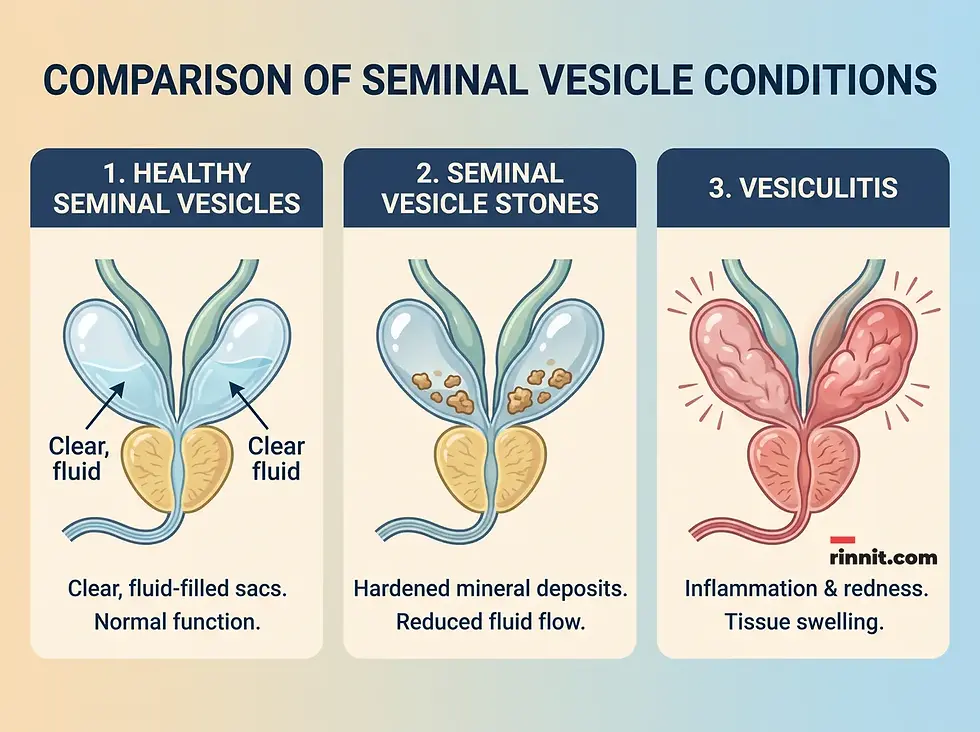
Seminal vesicle conditions range from harmless cysts to stones, infections such as vesiculitis, congenital problems and, rarely, secondary tumors spreading from nearby organs. Recognizing the signs early is essential for maintaining reproductive health. [1]
Potential Disorders
Seminal vesicle stones: hardened mineral deposits that can cause significant pain during ejaculation. [1]
Infections (vesiculitis): inflammation of the glands, often resulting in discomfort or blood in the semen. [1]
Cysts: fluid-filled lumps that are usually harmless but can cause abdominal pain or urinary urgency if they grow large. [1]
Congenital conditions: issues present at birth, such as agenesis (missing glands) or hypoplasia (underdeveloped glands). [1]
Secondary tumors: while rare, tumors can spread to the vesicles from nearby organs like the prostate or colon. [1]
How can you protect your seminal vesicles and reproductive health?
Seminal vesicle injury and infection risk can be reduced by wearing protective gear in contact sports, practicing safe sex and watching for symptoms like blood in the semen. [1]
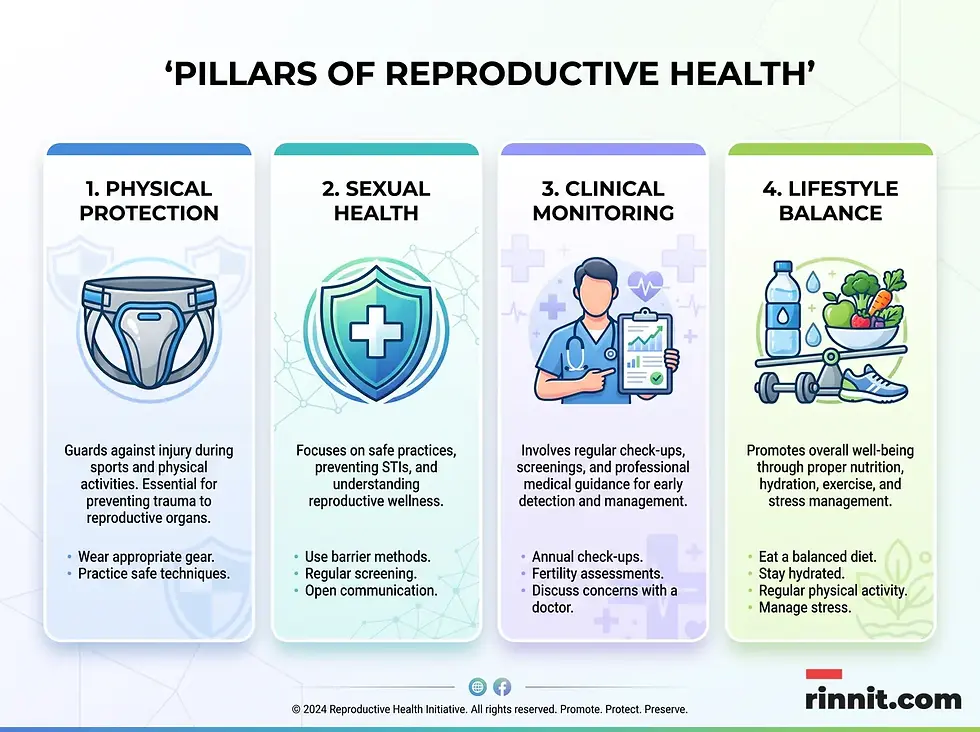
Maintenance and Prevention Strategies
Protective gear: always wear an athletic cup and jock strap when participating in contact sports to prevent physical trauma to the pelvic region. [1]
Safe practices: practicing safe sexual intercourse helps prevent infections that can lead to vesiculitis or spermatocystitis. [1]
Monitoring symptoms: pay close attention to changes in reproductive function, such as blood in the semen or unusual pelvic pain.
Care Pillar | Actionable Step |
|---|---|
Physical Protection | Use a jock strap and athletic cup during high-impact activities. |
Sexual Health | Use protection to avoid inflammatory infections. |
Clinical Monitoring | Report any groin pain or urinary hesitancy to a provider promptly. |
Lifestyle Balance | Support overall health with a balanced diet, good hydration, and regular activity. |
Conclusion
The seminal vesicles are unsung heroes of the male reproductive system, providing the necessary environment and energy for sperm to succeed. By understanding their anatomy and the vital role they play in fertility, men can take proactive steps to protect these glands. From wearing proper gear during sports to seeking medical advice for unusual symptoms, maintaining seminal vesicle health is a key component of overall wellness.
What are the next steps for seminal vesicle health?
If you experience persistent groin pain, difficulty urinating, or notice blood in your semen, consult a urologist or healthcare provider. Early detection of issues like stones or infections can prevent complications such as infertility. [1]
Trusted resources: Urology Care Foundation.
Related reading on Rinnit: Chronic Pelvic Pain: Symptoms, Causes & Treatment — A Clear Guide
Frequently Asked Questions
What is the main function of the seminal vesicles?
The seminal vesicles produce and secrete the majority of the fluid found in semen, which nourishes and protects sperm. [1]
Where are the seminal vesicles located?
The seminal vesicles are found in the pelvis, behind the bladder and in front of the rectum. [1]
How long are the seminal vesicles?
The seminal vesicles are about two inches long, though they are tightly coiled. [1]
What is fructose’s role in seminal fluid?
Fructose provides the primary energy source that sperm need to move and travel. [1]
How long does it take for the vesicles to refill after ejaculation?
It typically takes about three days to fully replenish the fluid volume. [1]
Are seminal vesicles part of the prostate?
No, they are separate glands that sit just above the prostate. [1]
Can seminal vesicles get stones?
Yes, hardened mineral clumps can form inside them, causing pain during ejaculation. [1]
What hormones control these glands?
Androgens (male sex hormones) trigger their growth and activation during puberty. [1]
What is vesiculitis?
Vesiculitis is the inflammation of the seminal vesicles, often caused by an infection. [1]
Do seminal vesicles affect fertility?
Yes, since they provide 50% to 80% of semen volume and essential nutrients, their health is critical for fertility. [1]
Can you be born without seminal vesicles?
Yes, a condition called agenesis occurs when one or both glands are missing at birth. [1]
What is the purpose of alkaline fluid in semen?
Alkaline fluid neutralizes the acidity of the vagina, allowing sperm to survive longer. [1]
What happens if the vesicles get “full”?
The seminal vesicles may slightly increase in size if ejaculation hasn’t occurred in a few days, but this is harmless. [1]
References
Cleveland Clinic. Seminal vesicle. Cleveland Clinic. June 9, 2025. https://my.clevelandclinic.org/health/body/22433-seminal-vesicle
Suh Y, Gandhi J, Joshi G, et al. Etiologic classification, evaluation, and management of hematospermia. Transl Androl Urol. 2017;6(5):959-972. PMID 29184797. https://doi.org/10.21037/tau.2017.06.01
Expert Panel on Urologic Imaging: Hosseinzadeh K, Oto A, Allen BC, et al. ACR Appropriateness Criteria: hematospermia. J Am Coll Radiol. 2017;14(5S):S154-S159. PMID 28473071. https://doi.org/10.1016/j.jacr.2017.02.023
Han H, Lei HE, Zhang XD, et al. Magnetic resonance imaging compared to ultrasound as the preferred method for diagnosing intractable haematospermia. Andrologia. 2021;53(6):e14054. PMID 33955038. https://doi.org/10.1111/and.14054
Medical Disclaimer
This article is for informational purposes only and does not constitute medical advice. Always seek the guidance of a qualified healthcare professional regarding any medical condition or treatment.



Comments