Understanding Neurapraxia: Causes, Symptoms, and Recovery

Updated: 2 days ago
Medically reviewed by Dr. Baraa Alnahhal, MD · Last reviewed: October 2026
Quick Answer: Essential Facts About Neurapraxia
Neurapraxia is a mild injury to a peripheral nerve in which the nerve stays intact but signals are blocked, often called a stinger or burner in sports. [1] It results from myelin damage caused by stretching or squeezing a nerve, causing burning, numbness and weakness. [1] Treatment is rest, ice, compression and elevation, and most people recover within two to three months. [1] [3]
Feature | Details |
Definition | A low-grade, mild injury to a peripheral nerve where the nerve stays intact but signals are blocked. [1] |
Common names | "Stinger" or "burner" (often used in sports). [1] |
Primary cause | Damage to the myelin sheath from mild stretching or squeezing of a nerve. [1] |
Key symptoms | Burning, stinging, numbness, pins-and-needles, pain, and muscle weakness. [1] |
Recovery time | |
Primary treatment | Rest, ice, compression, and elevation (the RICE method), plus pain medicine if needed. [1] |
What the research says
Stingers are common in football but often clear up quickly. A six-season surveillance study of NCAA football reported 229 stingers (2.04 per 10,000 athlete-exposures). About 64% (63.8%) led to less than 24 hours of lost time, and 18.8% were recurrent. The authors noted that stingers are probably under-reported because the pain is brief. (Green et al., Res Sports Med, 2017 [4])
In a small adolescent case series, spinal cord neurapraxia resolved fully. All 6 adolescent athletes with spinal cord neurapraxia had full symptom resolution (under 1 day in 3, 2 to 3 days in 2, and 1 to 2 months in 1). All returned to their previous sport at an average of 5.7 months, with no recurrence at an average follow-up of 16.6 months. The authors called for larger follow-up studies. (Jo et al., Neurosurgery, 2024 [5])
Cervical cord neurapraxia can come back. In 110 athletes with cervical cord neurapraxia, none had permanent neurological injury. But 35 of the athletes who returned to contact activities (56%) had a recurrent episode, and the risk was higher when the spinal canal was narrower. (Torg et al., J Neurosurg, 1997 [6])
What Is Neurapraxia?
Neurapraxia is the mildest type of peripheral nerve injury. [1] [3] In this condition, the physical structure of the nerve stays intact, but the transmission of electrical signals is blocked at the site of the injury. [3] Peripheral nerves carry electrical signals (impulses) from your brain and spinal cord to the rest of your body, including your arms and legs. [1]

Anyone can get neurapraxia. [1] It often happens after a fall or a sports injury. [1] Athletes call these injuries "stingers" or "burners" because of the sensations they cause. Although it is uncomfortable, the outlook is generally excellent: most people recover fully, and the nerve usually restores its function without permanent damage.
What are the symptoms of neurapraxia and which areas are affected?
Neurapraxia symptoms are usually felt near the site of the nerve injury. [1] People often describe a sharp burning or stinging feeling, sometimes with extreme sensitivity to touch. [1] Other common signs include pain, muscle weakness, numbness, and a pins-and-needles sensation known as paresthesia. [1]

Frequently Affected Nerves
Depending on where the injury happens, symptoms can show up in different parts of the body:
Brachial plexus: Symptoms are felt in one arm. [1] "Stingers" and "burners" in sports are usually neurapraxia cases. [1]
Radial nerve: Symptoms are felt in the hand, especially the thumb, index, and middle fingers, or the back of the hand. [1]
Ulnar nerve: Symptoms are felt in the hand, especially the ring and pinky fingers. [1]
Sural nerve: Symptoms are felt in the ankle and foot. [1]
What causes neurapraxia nerve injuries?
Neurapraxia is caused by damage to the myelin sheath, the protective cover that wraps around nerve cells. [1] When the sheath is damaged, the nerve can no longer pass electrical signals along efficiently. This usually results from the nerve being mildly stretched or squeezed. [1] [3] A lack of blood flow to the nerve and inflammation can also cause it. [1] [3]
Common Triggers
Several kinds of injuries and situations can lead to neurapraxia:
High-impact collisions: A forceful hit to the body, such as in a car accident or contact sports. [1]
Orthopedic injuries: Bone fractures, joint dislocations, and tears or injuries to ligaments and tendons. [1]
Medical procedures and events: Surgery, dental work, or giving birth. [1]
Secondary factors: Inflammation or a temporary lack of blood flow to the nerve. [1]
Wearing protective equipment during contact sports and activities like cycling can help lower your risk. [1]
How is neurapraxia diagnosed and how does recovery work?
If you suspect a nerve injury, a healthcare provider will ask about your symptoms and medical history, including any recent injuries, and do a physical exam to check for nerve damage. [1] Many conditions cause symptoms like neurapraxia, so your provider may start with blood tests (such as a complete blood count and kidney, liver, and thyroid function). [1] They may also order imaging scans such as an MRI, CT scan, ultrasound, or X-ray. [1] Nerve and muscle function tests, including an electromyogram (EMG), help show how severe the injury is. [1] [3]
The Road to Healing
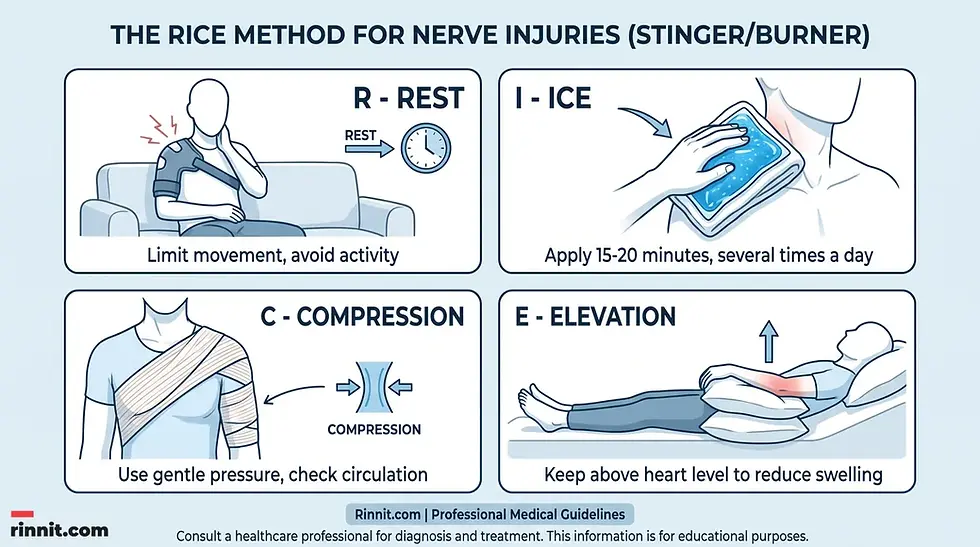
Neurapraxia usually heals on its own, so the main treatment is patience and supportive care. [1] Your provider may recommend the RICE method (Rest, Ice, Compression, and Elevation). [1] Braces, casts, or splints may also help. [1] For pain, medicines such as nonsteroidal anti-inflammatory drugs (NSAIDs) may be recommended. [1] [3]
Recovery times vary. Neurapraxia can last for a few days or a few months, depending on the extent of the injury. [1] Most people recover completely within two to three months [1] [3], though some people, especially older adults, may take longer. [1] Surgery is rarely needed. It may be considered if a fracture or a collection of blood (hematoma) is squeezing the nerve, or if scar tissue forms around the injury. [1]
What is cervical cord neurapraxia?
It is important to tell peripheral neurapraxia apart from cervical cord neurapraxia. The second is a spinal cord injury in the neck that can cause a temporary loss of movement or sensation in both the arms and legs. [1] It most often happens in contact sports, when the neck moves in a way that squeezes or stretches the spinal cord. [1] Symptoms can last from 15 minutes to 48 hours. [1] Because it affects the spinal cord rather than peripheral nerves, it is an emergency: keep the person still, do not move their head or neck, and call 911.
What is the bottom line on neurapraxia?
Neurapraxia is the mildest kind of peripheral nerve injury. The nerve stays intact, the signals are only blocked, and most people recover fully with rest and time. If your symptoms last for several weeks, keep getting worse, or include weakness, check in with a healthcare professional.
Need help with a nerve injury? If you have burning, numbness, or weakness that does not improve, talk with a healthcare professional. They can find the cause, rule out more serious conditions, and guide your recovery safely.
Frequently Asked Questions
Is neurapraxia permanent?
No. Neurapraxia is the mildest form of nerve injury, and most people recover fully with rest and time. In rare cases, problems such as long-term nerve pain or scar tissue can develop.
How long does it take for a "stinger" to go away?
Most sports-related stingers settle within a few days. More significant nerve injuries can take a few months, and most people recover fully within two to three months.
What is the myelin sheath?
It is the protective cover that wraps around nerve cells. It insulates the nerve fibers and helps electrical signals travel quickly and efficiently.
Can I play sports with neurapraxia?
You should rest the affected area until your symptoms have fully gone away and a healthcare professional has cleared you to return. This helps you avoid further injury.
Does neurapraxia require surgery?
Rarely. Surgery is only considered if a bone fracture or a collection of blood (hematoma) is squeezing the nerve, or if scar tissue forms and keeps the nerve from healing.
What is the difference between neurapraxia and a pinched nerve?
"Pinched nerve" is a general term for a squeezed nerve. Neurapraxia is a specific, mild grade of nerve injury in which the nerve stays intact but its signals are blocked.
Can a car accident cause neurapraxia?
Yes. A forceful hit to the body, as in a car accident or contact sports, is a common cause of this type of nerve injury.
Why do my fingers feel like "pins and needles"?
This feeling is called paresthesia. It happens when the electrical signals from your nerves are blocked or disturbed by an injury or pressure.
Are stingers and burners the same thing?
Yes. "Stinger" and "burner" are common sports terms for the sharp, stinging or burning feeling of a mild nerve injury, and these injuries are usually neurapraxia.
Can dental work cause nerve numbness?
In some cases, yes. Dental work is one of the situations that can lead to neurapraxia, and it may cause temporary numbness in the area.
Is muscle weakness a sign of a serious injury?
Muscle weakness is a common symptom of neurapraxia. Still, it should always be checked by a doctor to rule out more serious nerve damage.
How does ice help a nerve injury?
Ice is part of the RICE method (rest, ice, compression, and elevation) that healthcare providers may recommend. It is commonly used to ease swelling and pain around the injury.
What is an EMG test?
An electromyogram (EMG) is a nerve and muscle function test. It measures the electrical activity of muscles and nerves to help doctors judge how severe a nerve injury is.
Can giving birth cause neurapraxia?
Yes. Giving birth is one of the situations that can stretch or squeeze nerves and lead to neurapraxia, which is usually temporary.
What should I do if my symptoms don't improve?
If you still have numbness, pain, or weakness after several weeks, follow up with a healthcare professional or a neurologist for further testing.
Related Reading
Peripheral Nerve Injuries: Symptoms, Causes & Treatment — Why Numbness Needs Early Care explains the full range of nerve injuries, from mild to severe.
Brachial Plexus Injury: Symptoms, Causes, and Treatment covers shoulder nerve injuries, including the mild stinger type.
Nerve Conduction Study: What It Is, Procedure and Results explains the test that checks how well injured nerves send signals.
Peroneal Nerve Injury: Understanding Foot Drop and Nerve Damage explains a common leg nerve injury that can cause foot drop.
References
Cleveland Clinic. Neurapraxia: What It Is, Causes, Symptoms & Treatment. Cleveland Clinic. Last updated February 27, 2026. https://my.clevelandclinic.org/health/diseases/22608-neurapraxia
Biso GMNR, Munakomi S. Neuroanatomy, Neurapraxia. In: StatPearls [Internet]. Treasure Island (FL): StatPearls Publishing; 2026 Jan-. PMID 32491678. https://www.ncbi.nlm.nih.gov/books/NBK557746/
Carballo Cuello CM, De Jesus O. Neurapraxia. In: StatPearls [Internet]. Treasure Island (FL): StatPearls Publishing; 2026 Jan-. PMID 32809336. https://www.ncbi.nlm.nih.gov/books/NBK560501/
Green J, Zuckerman SL, Dalton SL, Djoko A, Folger D, Kerr ZY. A 6-year surveillance study of "Stingers" in NCAA American Football. Res Sports Med. 2017;25(1):26-36. PMID 27873542. https://doi.org/10.1080/15438627.2016.1258642
Jo J, Anesi TJ, Vance EH, Sills AK, Zuckerman SL, Bonfield CM. Retrospective Case Series of Spinal Cord Neurapraxia in Male Adolescent Athletes: Can These Athletes Return-to-Play? Neurosurgery. 2024;95(2):339-346. PMID 38358270. https://doi.org/10.1227/neu.0000000000002884
Torg JS, Corcoran TA, Thibault LE, Pavlov H, Sennett BJ, Naranja RJ, Priano S. Cervical cord neurapraxia: classification, pathomechanics, morbidity, and management guidelines. J Neurosurg. 1997;87(6):843-50. PMID 9384393. https://doi.org/10.3171/jns.1997.87.6.0843
Medical disclaimer
This article is for general informational purposes only and does not constitute medical advice. Always consult a qualified healthcare professional if you have persistent pain, numbness, or weakness.



Comments