Trabeculectomy: Glaucoma Surgery for Intraocular Pressure Control

Updated: 2 days ago
Medically reviewed by Dr. Baraa Alnahhal, MD · Last reviewed: October 17, 2026
Trabeculectomy is a specialized eye surgery used to treat glaucoma by creating a new drainage path for aqueous humor fluid [1]. By lowering intraocular pressure, the procedure prevents further damage to the optic nerve. While it cannot reverse existing vision loss [1], it is highly effective at stabilizing sight when medications or lasers fail. Full recovery typically takes four to six weeks [1], requiring strict adherence to medicated drops and follow-up care to ensure long-term success.
Quick Answer
Trabeculectomy is an outpatient glaucoma surgery that creates a small drainage flap in the eye wall to relieve pressure. Fluid drains to a small reservoir, or bleb, under the upper eyelid, where it is reabsorbed [1], helping prevent optic nerve damage and blindness. With a success rate of 60% to 80% over five years [1], it is a key fallback option.
What the research says
Trabeculectomy lowers eye pressure more than the XEN gel stent. A systematic review and meta-analysis of 11 studies (1,260 eyes) found that trabeculectomy achieved greater intraocular pressure reduction (mean difference −2.16 mmHg, 95% CI −2.88 to −1.44) and higher complete surgical success (OR 1.72, 95% CI 1.16 to 2.56), while the XEN stent had lower risks of bleb leakage and endophthalmitis but needed bleb needling more often (Bhatti et al., Ther Adv Ophthalmol, 2026) [2].
Serious eye infection after trabeculectomy is uncommon. In a retrospective cohort of 9,006 trabeculectomy patients, the cumulative incidence of endophthalmitis was 0.47% at 1 year, 0.78% at 3 years and 0.96% at 5 years, with no significant difference in risk compared with glaucoma drainage device surgery (Elhusseiny et al., Eye, 2026) [3].
What is the trabeculectomy procedure?
Trabeculectomy is a fallback surgical intervention for glaucoma, typically recommended when medications and laser treatments fail to sufficiently lower intraocular pressure [1]. The primary objective is to prevent permanent damage to the optic nerve, which can lead to total blindness if pressure remains uncontrolled. While the surgery is highly effective at stabilizing vision, it is important to note that it cannot undo vision loss that has already occurred [1].
The procedure involves creating a new drainage route for the aqueous humor, the fluid that helps the eye maintain its shape [1]. During the surgery, an ophthalmologist creates a small flap on the eye's surface and a tiny opening underneath it. This allows fluid to bypass blocked natural drainage channels and flow into a small, invisible bump called a "bleb" under the upper eyelid. The body then naturally reabsorbs the fluid from this reservoir, effectively lowering the internal pressure.

Preparation and Surgical Steps
Trabeculectomy is generally performed as an outpatient procedure and takes approximately one hour [1]. Patients may receive local anesthesia with a nerve block to numb the eye while remaining awake, or general anesthesia if required [1]. The surgeon may also inject anti-scarring medications to ensure the new drainage path remains open during the healing process [1].
Stage | Key Activities |
Preparation | Eye health testing, fasting if required, and arranging a driver for post-op. [1] |
Surgical Action | Creation of a drainage flap, tiny fluid opening, and placement of removable sutures. |
Immediate Post-Op | Application of a bandage or patch and a protective eye shield for monitoring. |
What are recovery and long-term care like after a trabeculectomy?
Full recovery from a trabeculectomy typically spans four to six weeks. During this period, the eye is particularly vulnerable, requiring patients to follow a strict regimen of medicated eye drops to prevent infection and reduce inflammation [1]. Protective measures, such as wearing an eye shield during sleep for at least one month [1], are essential to prevent accidental injury to the surgical site.

Patients must avoid activities that increase intraocular pressure, such as heavy lifting, bending over, or straining during bowel movements [1]. Follow-up visits are frequent, starting the day after surgery and continuing every one to two weeks for at least two months [1]. These visits allow the surgeon to monitor pressure levels and, if necessary, use a laser to release sutures to further adjust the drainage flow [1].
Success Rates and Potential Risks
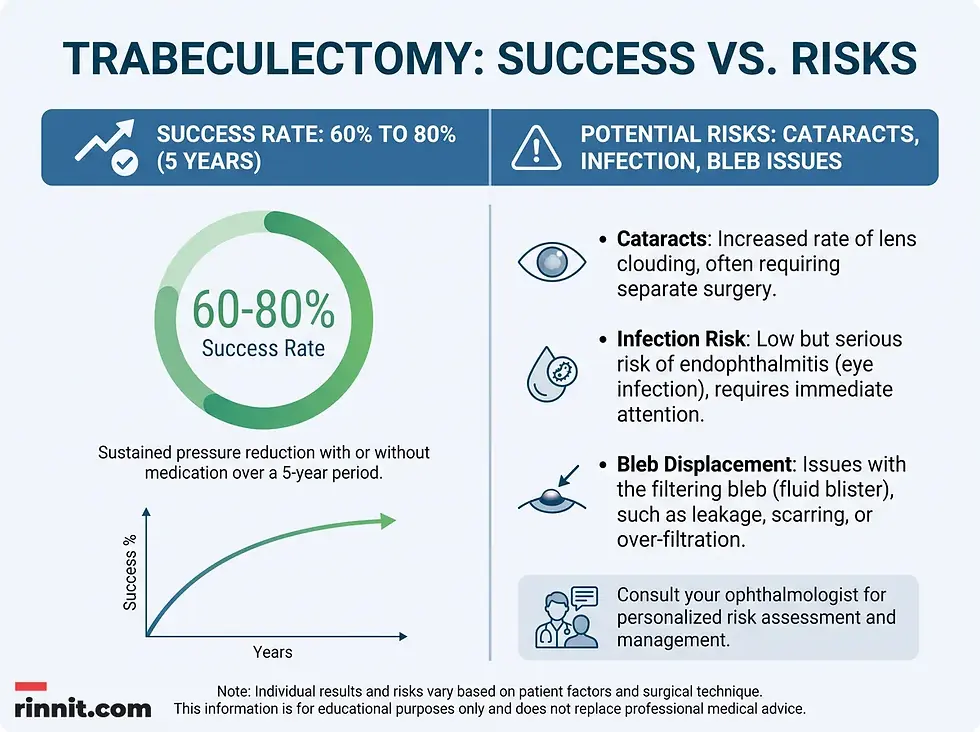
Trabeculectomy has a strong success rate, with 60% to 80% of procedures remaining effective five years after surgery [1]. However, like any invasive procedure, it carries specific risks. The most common side effect is the accelerated formation of cataracts, which can be corrected with subsequent surgery. Other potential complications include infection, bleeding, and changes in the bleb that may lead to a droopy eyelid (ptosis) [1].
Conclusion
Trabeculectomy is a vital surgical tool for preserving vision in patients with advanced glaucoma. By establishing a reliable drainage mechanism, it offers a path to long-term pressure stability and optic nerve protection. If you are experiencing symptoms of uncontrolled glaucoma or have been advised that other treatments are no longer effective, consult with an eye specialist to determine if this procedure is the right step for your ocular health.
Frequently Asked Questions
Can trabeculectomy reverse vision loss?
No, the procedure is designed to lower eye pressure and prevent further damage to the optic nerve. It cannot restore vision that has already been lost due to glaucoma.
How long does the surgery take?
The surgical procedure itself typically takes about one hour, not including the time required for pre-operative preparation and post-operative monitoring.
Is trabeculectomy a first-line treatment?
No, it is generally considered a fallback option when other treatments, such as medicated eye drops or laser procedures, have failed to control intraocular pressure.
What is a bleb?
A bleb is a small, fluid-filled reservoir created under the upper eyelid during surgery. It serves as a collection point for drained fluid before it is reabsorbed by the body.
Will I be awake during the procedure?
Most patients receive local anesthesia and are awake but relaxed during the surgery. General anesthesia is available for those who require it for specific medical reasons.
How successful is the procedure?
Trabeculectomy has a success rate of 60% to 80% within five years of the procedure, making it a highly effective option for long-term pressure management.
Can I rub my eye after surgery?
No, you must avoid rubbing your eye as it can interfere with the healing process and cause pain or damage to the surgical site.
What are the warning signs of infection?
You should contact your provider immediately if you experience severe pain, fever, unusual discharge, or sudden vision loss, as these may indicate an infection.
Do I need to wear an eye shield?
Yes, you will typically need to wear a protective eye shield while sleeping for at least one month following the surgery to keep the eye safe.
Are the results of trabeculectomy permanent?
While the procedure is designed for long-term pressure control, its effectiveness is monitored over years. Some patients may eventually require additional treatments or adjustments.
How do I prepare for trabeculectomy?
Your surgeon first checks your eye health to confirm trabeculectomy is a good option for you. [1] Tell them about all your medicines and supplements so they can decide which to keep or stop, follow any fasting instructions, and arrange for someone to drive you to and from the procedure and help you afterward. [1]
When should I call my doctor after trabeculectomy?
Call your eye care specialist immediately if you have severe pain. [1] Also contact them for a fever, unusually watery eyes, discharge, oozing or bleeding from the eye, or sudden vision loss. Report signs of eye infection even months or years later, because the eye stays more vulnerable to infection. [1]
Related Reading
References
Cleveland Clinic. Trabeculectomy. Cleveland Clinic. Last updated August 29, 2024. https://my.clevelandclinic.org/health/procedures/trabeculectomy
Bhatti MI, Qadri M, Asif A, et al. Comparative efficacy and safety of ab-interno XEN 45 gel implantation versus trabeculectomy for glaucoma: a systematic review and meta-analysis. Ther Adv Ophthalmol. 2026;18:25158414261472730. PMID 42539846. https://doi.org/10.1177/25158414261472730
Elhusseiny AM, Alzein AF, Dihan QA, et al. Endophthalmitis following glaucoma drainage device surgery. Eye (Lond). 2026. PMID 42768080. https://doi.org/10.1038/s41433-026-04876-5
Medical disclaimer
The information provided in this article is for educational purposes only and should not be used as a substitute for professional medical advice, diagnosis, or treatment. Always seek the advice of your physician or other qualified health provider with any questions you may have regarding a medical condition.



Comments