Toasted Skin Syndrome: Causes, Symptoms, Treatment and Prevention

Updated: 3 days ago
Medically reviewed by Dr. Baraa Alnahhal, MD · Last reviewed: October 2026
Quick Answer: What is toasted skin syndrome?
Toasted skin syndrome, also called erythema ab igne, is skin damage caused by repeated, prolonged exposure to low-level heat from sources such as laptops, heating pads or space heaters. It produces patchy or netlike redness or darkening. Treatment starts by stopping use of the heat source, and many cases improve on their own, though continued exposure can cause lasting discoloration.
What the research says
Heat used for chronic pain is the most common cause, and the outlook is usually good. A clinical review describes erythema ab igne as damage from repeated or prolonged exposure to heat that is not hot enough to burn, developing over weeks to months. Applying heat for chronic pain is the most common cause and can be a clue to an underlying chronic illness. No therapies are approved by the US Food and Drug Administration for the darkening, but removing the heat source often leads to spontaneous resolution over time. Chronic cases have rarely been reported to progress to squamous cell carcinoma, poorly differentiated carcinoma, cutaneous marginal zone lymphoma or Merkel cell carcinoma (Harview & Krenitsky, Cutis, 2023). [1]
Laptops and heating pads may be bringing the condition back. A review found that newer heat sources such as laptops and heating pads may be creating a rebound, with younger patients than previously seen. A rash over an area of abdominal or lower back pain can be a sign of an underlying disorder. Removing the heat source usually leads to complete remission, while chronic cases with premalignant skin changes may need topical retinoids, 5-fluorouracil cream or laser treatment (Salgado et al., Int J Dermatol, 2018). [2]
In children, it can be mistaken for other conditions. A systematic case-based review of 32 pediatric cases (plus one new report) found that erythema ab igne can resemble livedo reticularis or vasculitis-related rashes, which can lead to immunological tests that could have been avoided. The authors stress asking directly about exposure to heat sources, and expect more cases in children and adolescents as technology devices are used more (Poddighe et al., Eur J Pediatr, 2023). [3]

What does toasted skin syndrome look like?
Toasted skin syndrome often begins as discoloration in one area. The skin may look red or darker than the surrounding skin. Over time, the rash can take on a netlike or patchy pattern.
The affected skin may become thinner or thickened and rough. Early in the condition, the rash may fade temporarily when you press on it. As it progresses, it may stop fading with pressure.
The rash appears where the heat touches the body. Common locations include the lower back, belly or abdomen, thighs and legs.

What does toasted skin syndrome feel like?
You may not feel anything at first because low-level heat damages the skin slowly. When symptoms occur, they may include mild stinging or itchy skin.
A rash that seems mild can still be a sign of repeated heat damage. Pay attention to where the discoloration appears and whether a laptop, heating pad, warmer, blanket or other heat source regularly touches that area.
What causes toasted skin syndrome?
Repeated heat exposure in one area can damage small blood vessels and pigment in the skin over weeks or months. This produces the characteristic netlike discoloration.
In the past, the condition was associated with open fires, wood-burning stoves and kerosene lamps. Modern cases are more often linked to everyday devices and comfort products.
Heat source | How exposure may happen |
Laptop | Resting a laptop directly on the skin for long periods. |
Heating pad | Repeatedly using a heating pad on the same area. |
Car seat warmer | Sitting against a warmer for extended periods. |
Heated blanket | Repeated contact with a heated blanket in the same area. |
Hot water bottle | Holding or resting against it repeatedly. |
Space heater | Staying close to a heater so the same skin area receives ongoing warmth. |
What increases the risk?
The main risk is regular contact with low-level heat over weeks to months. Repeatedly using a heating pad, space heater, laptop or other heat source on the same area can gradually damage the skin.
Ongoing pain or discomfort can also increase risk. A person with back pain or abdominal pain may use heat frequently and may not realize that the same area is being exposed again and again.
If you depend on heat because you are often cold or have persistent pain, stopping may be difficult. A healthcare provider can help identify safer options while addressing the reason you need frequent heat.
Is toasted skin syndrome dangerous?
Toasted skin syndrome is usually not dangerous, and most cases improve after the heat source is removed. Early removal helps prevent further skin damage.
Rarely, long-term changes in the affected area may be linked with precancerous or cancerous skin changes. Have a healthcare provider examine any area that becomes thickened, develops sores or does not improve after you stop the heat exposure.
Is toasted skin syndrome permanent?
Not always. Skin may slowly return toward its usual color after the heat source is removed, but this can take months to years.
Long-term or repeated exposure can cause permanent skin changes. Some people develop lasting darkening called hyperpigmentation. The longer the skin continues to receive heat, the greater the concern for persistent changes.
How is toasted skin syndrome diagnosed?
A healthcare provider usually diagnoses the condition by examining the skin and asking about your health history. They may ask whether a heating pad, laptop, warmer, blanket, hot water bottle or space heater has been used near the affected area over weeks or months.
The provider may also ask whether ongoing pain or discomfort led to frequent heat use. In most cases, no testing is needed.
If the skin has sores, thickened areas or does not improve, the provider may take a small skin sample called a biopsy. A biopsy can help rule out other skin conditions.
How is toasted skin syndrome treated?
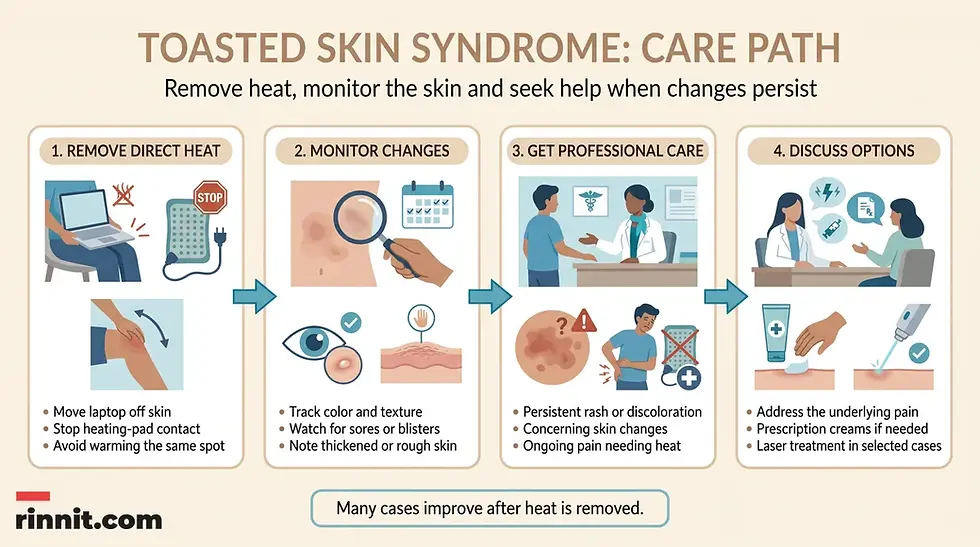
The most important treatment is to stop using the heat source that caused the rash. Removing the heat early helps prevent additional skin damage. Many cases improve without further treatment once exposure ends.
If discoloration continues, a healthcare provider may discuss options such as:
Treatment option | Purpose |
Tretinoin | A prescription retinoid cream that helps skin cells turn over. |
Hydroquinone | A cream that helps lighten dark spots. |
Laser treatment | May be used to remove pigmented or dark skin. |
These options are not appropriate for everyone. A qualified provider should decide whether one is suitable for the affected skin and explain how to use it.
How can you prevent toasted skin syndrome?
Toasted skin syndrome is preventable. The central prevention step is to avoid placing a heat source directly on your skin or repeatedly warming the same spot.
Prevention step | Practical example |
Avoid direct heat | Do not place a heating pad, hot water bottle or laptop directly on your body. |
Limit repeated exposure | Avoid using low-level heat on the same skin area for weeks or months. |
Address ongoing pain safely | Ask a healthcare provider about other pain-relief options and care for the underlying cause. |
Watch for early changes | Arrange an evaluation if a new netlike or discolored patch appears. |
Use safer distance | Keep laptops and heaters away from direct skin contact. |
What should I do if I need heat for pain?
Heat may feel helpful for back, abdominal or joint pain, but frequent use on the same area can damage skin. If you need heat regularly, discuss other pain-relief options with a healthcare provider.
A provider can also evaluate the underlying cause of the pain. This is safer than continuing repeated heat exposure without checking the skin or the pain itself.
When should I see a healthcare provider?
Arrange a visit if a rash or area of discoloration is not going away after you stop using the heat source. Professional evaluation is also important for unusual or concerning changes.
Contact a provider if the affected skin:
Develops sores.
Becomes thickened or rough.
Develops blisters.
Continues to darken or change.
Does not improve after heat exposure stops.
Seek care as well if you need to use heat for ongoing pain. A provider can help protect your skin while looking for safer ways to manage the discomfort.
What questions should you ask at a toasted skin syndrome visit?
Useful questions about toasted skin syndrome include whether a heat source is contributing, how long to avoid heat and what helps if discoloration persists.
Could this netlike rash be toasted skin syndrome or another skin condition?
Could a heating pad, laptop, warmer, blanket or other heat source be contributing?
How long should I avoid heat on the affected area?
Does the skin need a biopsy?
What can help if the discoloration persists?
Is tretinoin, hydroquinone or laser treatment appropriate for me?
How can I manage the pain that led me to use heat?
Which skin changes should prompt a follow-up visit?
Conclusion
Toasted skin syndrome, or erythema ab igne, develops when repeated low-level heat damages skin over time. It can cause a red, brown or darker netlike rash, mild stinging, itching, rough or thickened skin and lasting discoloration.
Laptops, heating pads, car seat warmers, heated blankets, hot water bottles and space heaters can all create repeated exposure. The most important treatment is to stop using the heat source on the affected area. Many cases improve, although skin color may take months to years to return toward normal.
Do not ignore a patch that becomes thickened, develops sores or blisters, or fails to improve after heat is removed. If frequent heat use is linked to ongoing pain, ask a qualified healthcare provider about safer options and evaluation of the underlying cause.
If you notice a persistent netlike rash or skin discoloration, stop direct heat exposure and schedule a visit with a qualified healthcare provider, especially if the area is thickened, sore, blistered or not improving.
Frequently Asked Questions
What is another name for toasted skin syndrome?
The medical name for toasted skin syndrome is erythema ab igne.
Can a laptop cause toasted skin syndrome?
Yes. A laptop resting directly on the skin can provide repeated low-level heat. Over weeks or months, this may damage the skin and create a patchy or netlike rash.
Can a heating pad cause a rash?
Yes. Repeated use of a heating pad on the same area can cause toasted skin syndrome. The heat may not feel hot enough to burn, but it can still damage skin over time.
Is toasted skin syndrome a burn?
Toasted skin syndrome is not a typical acute burn. Low-level heat damages the skin gradually and can create discoloration without the immediate injury associated with a burn.
Is toasted skin syndrome itchy?
Toasted skin syndrome can be. Possible symptoms include itchy skin and mild stinging. Some people have no symptoms at first.
Where does toasted skin syndrome appear?
Toasted skin syndrome appears where the heat touches the skin. Common locations include the lower back, abdomen, thighs and legs.
Does toasted skin syndrome go away?
Many cases improve after the heat source is removed. Skin color may take months to years to return toward normal, and long-term exposure can cause permanent darkening.
What is the first treatment for toasted skin syndrome?
The first treatment is to stop using the heat source on the affected area. Removing heat early helps prevent further skin damage.
Can creams treat toasted skin syndrome?
If discoloration persists, a healthcare provider may recommend tretinoin or hydroquinone. A provider may also discuss laser treatment. These options should be selected and used under professional guidance.
Does toasted skin syndrome increase cancer risk?
Rarely, long-term changes in the affected area may be linked with precancerous or cancerous skin changes. Have a provider examine skin that becomes thickened, develops sores or does not improve.
Should I see a provider for a netlike rash?
See a provider if the rash persists after heat exposure stops, becomes thickened or rough, develops sores or blisters, or is associated with ongoing pain that leads to frequent heat use.
How can I prevent toasted skin syndrome?
Avoid placing heating pads, hot water bottles or laptops directly on your body. Limit repeated heat on the same spot and ask a provider about safer options if you need heat for chronic pain.
Related Reading
Burns: Symptoms, Causes, Treatment, and Prevention in One Complete Guide explains burn types, first aid and prevention.
Skin Biopsy: Types, What to Expect, Results and Aftercare describes the test used when a long-standing skin change looks unusual.
Squamous Cell Carcinoma of the Skin: Symptoms, Causes, and Treatment Explained covers the skin cancer that can rarely develop in heat-damaged skin.
Heat Rash: Symptoms, Types, Causes & How to Treat It explains another heat-related skin rash and how to relieve it.
References
Harview CL, Krenitsky A. Erythema ab igne: a clinical review. Cutis. 2023;111(4):E33-E38. PMID 37289686. https://doi.org/10.12788/cutis.0771
Salgado F, Handler MZ, Schwartz RA. Erythema ab igne: new technology rebounding upon its users? Int J Dermatol. 2018;57(4):393-396. PMID 28369761. https://doi.org/10.1111/ijd.13609
Poddighe D, Assylbekova M, Almukhamedova Z, et al. Pediatric erythema ab igne: clinical aspects and diagnostic issues. Eur J Pediatr. 2023;182(11):4807-4832. PMID 37661206. https://doi.org/10.1007/s00431-023-05155-1
National Library of Medicine. Skin Conditions. MedlinePlus. Last updated April 23, 2024. https://medlineplus.gov/skinconditions.html
Disclaimer
This article is for general educational purposes and is not a substitute for professional medical advice, diagnosis or treatment. Always seek the advice of a qualified health provider with any questions you may have regarding a medical condition.
It is educational content, not a diagnosis, prognosis or personalized treatment plan. A qualified healthcare professional should interpret persistent skin changes, biopsy needs, prescription creams, laser treatment and safer options for ongoing pain. If a skin area is rapidly changing, develops a sore or blister, or causes significant concern, seek prompt professional care.



Comments