Swollen Lymph Nodes in the Groin: Causes, Symptoms, and Care

Updated: 2 days ago
Medically reviewed by Dr. Baraa Alnahhal, MD · Last reviewed: October 2026
Quick Answer
Swollen lymph nodes in the groin usually mean the immune system is responding to an infection such as a skin infection, urinary tract infection or jock itch. These bean-shaped nodes filter lymph fluid, are often tender, and usually shrink once the infection is treated. See a provider if nodes are hard, growing or accompanied by night sweats or weight loss.
What the research says
Most swollen nodes have a benign cause. A review for primary care physicians notes that most people with peripheral lymphadenopathy have an easily identifiable benign or self-limited cause, and the prevalence of malignancy among primary care patients has been estimated at as low as 1.1% (Bazemore & Smucker, Am Fam Physician, 2002) [1]. This review covers swollen nodes in general, not only in the groin.
Certain features raise concern. The same review lists older age, a firm and fixed node, swelling that lasts longer than two weeks, and a location above the collarbone as key risk factors for malignancy (Bazemore & Smucker, Am Fam Physician, 2002) [1].
Persistent swelling needs testing, not just waiting. For unexplained swelling without signs of serious disease, the authors suggest observation for up to one month, after which specific testing or biopsy should be performed, with excisional biopsy as the initial procedure of choice when a biopsy is needed (Bazemore & Smucker, Am Fam Physician, 2002) [1]. Do not wait that long on your own: see a provider if swelling lasts more than two weeks.
What Are Swollen Lymph Nodes in the Groin?
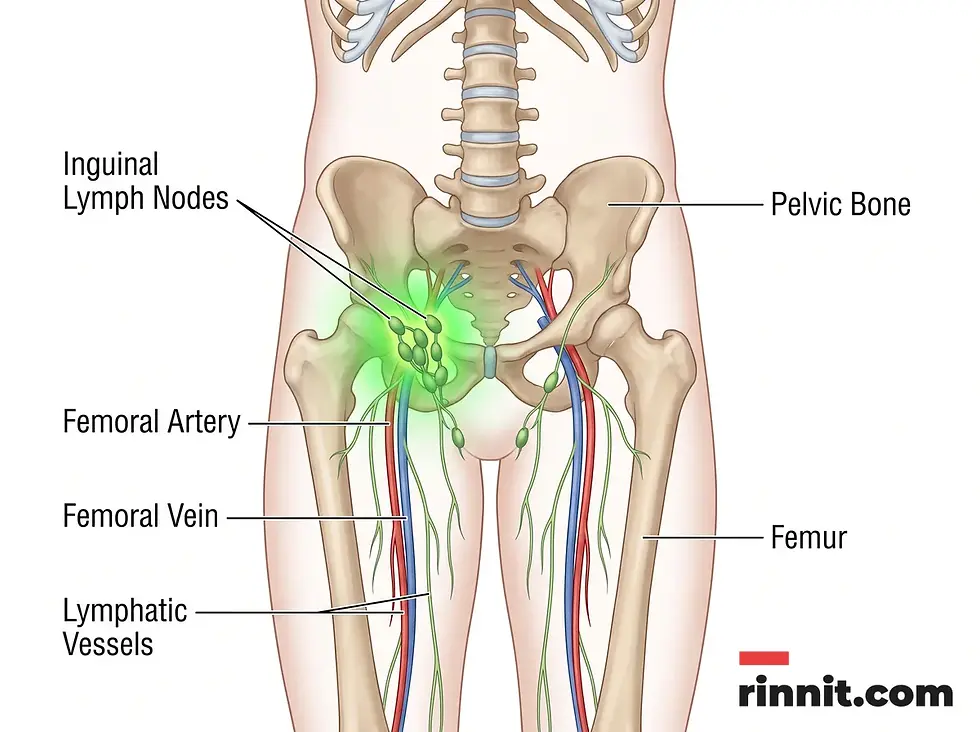
Lymph nodes are small, bean-shaped structures that act as filters for the immune system. They are spread throughout the body, and a large cluster sits in the groin, known as the inguinal lymph nodes. These nodes lie in the upper thigh, just below the pelvis. Their job is to filter germs, abnormal cells, and other harmful particles from the lymph fluid as it moves through the lower body. For more background, see our guide to how lymph nodes work.
When these nodes swell, it is a sign that the immune system is responding to a perceived threat. This is most often triggered by an infection in the legs, genitals, or pelvic region.
What are the symptoms of swollen lymph nodes in the groin?
The most obvious sign is a noticeable bump under the skin that may be tender or painful to touch. Depending on the cause, you may also have whole-body symptoms that reflect your immune system's activity.
Symptom Category | Common Signs and Features |
|---|---|
Local signs | Bumps felt under the skin; tenderness or pain on pressure. |
Systemic reactions | Fever, chills, fatigue, and night sweats. |
Regional issues | Genital sores, itching, or bumps; painful or frequent urination. |
Warning signs | Unexplained weight loss; nodes that feel hard or fixed in place. |
What causes swollen lymph nodes in the groin?
Healthcare providers first look for an infection as the main driver of groin node swelling. Even minor problems, such as an insect bite or an ingrown toenail, can trigger a response. It is important to separate common infectious triggers from more complex medical conditions. For example, a spreading skin infection such as cellulitis in the leg can cause the nodes to swell.
Cause Category | Specific Examples |
|---|---|
Infections (common) | Fungal infections (jock itch), skin infections (cellulitis), sexually transmitted infections (STIs), and urinary tract infections (UTIs). |
Autoimmune | Conditions in which the immune system mistakenly attacks healthy tissue. |
Malignancy | Certain cancers, including leukemia, lymphoma, melanoma, or genital cancers. |
Other factors | Reactions to medications (for example, some blood pressure medicines) or tissue swelling (lymphedema). |
How are swollen lymph nodes in the groin diagnosed?
A provider usually starts with a physical exam, feeling the groin to assess the size, texture, and mobility of the nodes. They will also review your medical history, including medications, vitamins, and supplements.
In many cases the exam alone is enough to find the cause. If the diagnosis is unclear or a more serious condition is suspected, the following tests may be recommended:
Blood tests: to look for signs of infection or other whole-body problems.
Imaging studies: ultrasound or pelvic CT scans give a detailed view of the nodes.
Biopsy: removal of a small tissue sample to rule out or confirm cancer.
How are swollen lymph nodes in the groin managed?
Treatment depends on the underlying cause. Once the main problem is addressed, the swelling usually starts to go down.
Condition Type | Standard Treatment Approach |
|---|---|
Bacterial infection | Antibiotics prescribed to clear the infection. |
Fungal or viral infection | Antifungal or antiviral medicines. |
Autoimmune disease | Immunosuppressants or immunomodulators to calm the immune response. |
Malignancy | A combination of surgery, radiation therapy, or chemotherapy. |
Medication-induced | Adjusting the dose or switching medicines under your doctor's guidance. |
When to Seek Medical Advice
Swollen groin lymph nodes are usually not a sign of serious illness [1], but some features need prompt medical attention. Contact a healthcare provider if the swelling does not improve with initial treatment or lasts more than two weeks, if the nodes keep growing, or if they feel hard and do not move when pressed. Persistent night sweats or unexplained weight loss should always be checked by a professional.
What are the next steps for swollen lymph nodes in the groin?
If you notice a new bump or lasting swelling in your groin, do not ignore it. Book a consultation with a healthcare provider to find the cause and start the right treatment.
Frequently Asked Questions
1. What are the lymph nodes in the groin called?
The lymph nodes in the groin are known as inguinal lymph nodes.
2. What is the most common cause of swelling?
Most cases are caused by the body fighting an infection in the lower half of the body.
3. Can an ingrown toenail cause groin swelling?
Yes. Even minor skin infections, such as an infected ingrown nail, can trigger a response in the groin nodes.
4. What do swollen lymph nodes feel like?
Swollen lymph nodes feel like small, bean-shaped bumps under the skin and may be tender to the touch.
5. Are swollen groin nodes always serious?
No. They are often a normal sign that your immune system is working.
6. How long does it take for the swelling to go down?
If an infection is the cause, it usually takes a few days to a few weeks with treatment.
7. What infections are linked to groin swelling?
Common links include jock itch, cellulitis, UTIs, and sexually transmitted infections.
8. Can medications cause lymph nodes to swell?
Yes. Some medicines, including certain blood pressure medicines, can trigger swelling.
9. When should I worry about the swelling?
See a doctor if the nodes are hard, fixed, growing, last more than two weeks, or do not improve with treatment.
10. What systemic symptoms might occur?
Fever, chills, night sweats, and fatigue often accompany the swelling.
11. How do doctors test the nodes?
Doctors use a physical exam, blood tests, imaging such as ultrasound, or a biopsy.
12. Is a biopsy always necessary?
No. It is usually only recommended when cancer needs to be ruled out.
13. Can jock itch cause swollen lymph nodes?
Yes. This common fungal infection is a frequent cause of groin node swelling.
14. How can I prevent these infections?
Good hygiene, prompt care of cuts and skin infections, and safer sex practices can reduce the risk of many infectious causes.
15. What if the swelling returns?
Consult a healthcare provider to re-evaluate the underlying cause.
Related Reading
Trusted External Resources
References
Bazemore AW, Smucker DR. Lymphadenopathy and malignancy. Am Fam Physician. 2002;66(11):2103-2110. PMID 12484692. https://pubmed.ncbi.nlm.nih.gov/12484692/
Medical Disclaimer
This article is for informational purposes only and does not constitute medical advice. Always seek the advice of your physician or other qualified health provider with any questions you may have regarding a medical condition. Never disregard professional medical advice or delay in seeking it because of something you have read in this article. If you think you may have a medical emergency, call your doctor or your local emergency number immediately.



Comments