Subclavian Artery: Anatomy, Essential Functions, and Care

Updated: 3 days ago
Medically reviewed by Dr. Baraa Alnahhal, MD · Last reviewed: October 2026
The subclavian artery supplies oxygen-rich blood to the head, neck, and arms [1]. It originates from different points on the right and left sides of the chest [1]. Major branches include the vertebral and internal thoracic arteries [1]. Arterial health is maintained through blood pressure management, exercise, and avoiding tobacco [1].
Quick Answer: What is the subclavian artery?
The subclavian artery is a major blood vessel that carries oxygenated blood from the heart to the upper body, including the head, neck and arms [1]. Located just below the collarbones, the right and left arteries follow different paths but serve the same function [1]. Keeping them healthy helps prevent conditions like atherosclerosis and subclavian steal syndrome that impair circulation.
What the research says
Subclavian artery narrowing is more common than many people expect, especially in people with risk factors. In a cross-sectional analysis of 4,223 people, subclavian stenosis (defined as an interarm blood pressure difference of 15 mmHg or more) was present in 1.9% of two free-living cohorts and 7.1% of two clinical cohorts. It was linked to current smoking (odds ratio 2.61), past smoking (odds ratio 1.80), higher systolic blood pressure (odds ratio 1.90 per 20 mmHg) and peripheral arterial disease (odds ratio 5.11) (Shadman et al., Journal of the American College of Cardiology, 2004 [2]).
Checking blood pressure in both arms is a useful clue. A meta-analysis of 17 studies found that a difference of 10 mmHg or more in systolic pressure between the arms was associated with peripheral arterial disease (risk ratio 2.22, 95% CI 1.41–3.5; 8 cohorts, 4,774 people), and two invasive studies linked it to subclavian stenosis (Singh et al., Journal of the American Society of Hypertension, 2015 [3]).
Anatomy and Primary Functions
The subclavian arteries are primary conduits for oxygenated blood leaving the heart. While they serve the same anatomical regions, their points of origin differ: the right subclavian artery begins at the brachiocephalic artery, whereas the left subclavian artery originates directly from the aortic arch [1]. Both vessels travel between the scalene muscles of the neck and extend to the first rib, where they transition into the axillary arteries [1].
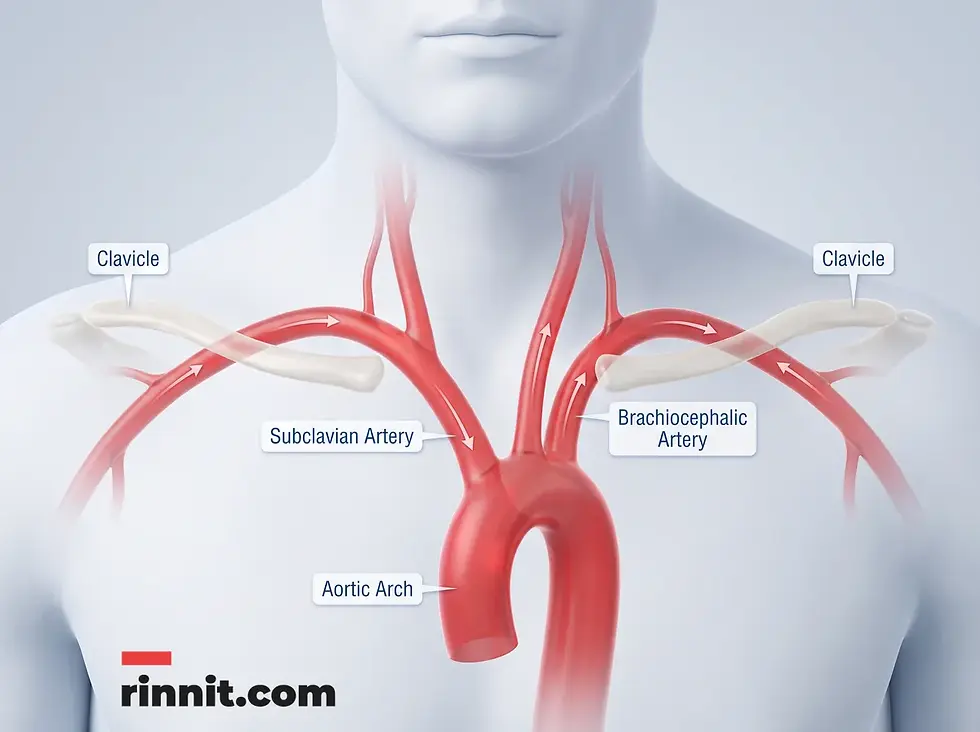
Structurally, the subclavian artery is about 0.7 to 1.0 centimeters in diameter and consists of three layers: a flexible inner lining, a muscular middle layer, and a protective outer layer [1]. Its function is divided into three sections based on the regions they supply.
Functional Sections of the Subclavian Artery
Section | Region Supplied |
First Section | Supplies blood to the chest, thyroid, and the brain's circle of Willis. |
Second Section | Sends blood to the costocervical trunks located in the neck. |
Third Section | Delivers blood to the arms, including the biceps, shoulders, and forearms. |
Common Conditions and Disorders
Several vascular diseases can compromise the function of the subclavian artery, leading to restricted blood flow and systemic symptoms. Because these arteries supply the brain and arms, blockages can have significant clinical consequences.
Atherosclerosis: The buildup of plaque (fat and cholesterol) that can cause narrowing or a complete blockage of the artery [1].
Thoracic Outlet Syndrome: A condition where the artery is compressed or narrowed, often affecting blood flow to the arms [1].
Takayasu’s Arteritis: A form of vasculitis that causes inflammation in the artery walls, potentially leading to oxygen deprivation in the head or limbs [1].
Subclavian Steal Syndrome: A phenomenon where a blockage in the subclavian artery causes blood to be "stolen" or diverted from the brain to the arm [1].

Diagnostic Testing for Arterial Health
Healthcare providers use various assessments to evaluate the integrity and flow of the subclavian arteries, especially when symptoms of vascular disease are present.
Test Type | Purpose of Evaluation |
Dual-Arm BP Check | Compares blood pressure readings in both arms to detect potential blockages. |
Vascular Ultrasound | Uses sound waves to visualize blood flow and identify arterial narrowing. |
CT / MRI Scans | Provides high-resolution images of the arterial structure and surrounding tissues. |
Adson Maneuver | A physical test to check for radial pulse changes during specific neck movements. |
Angiogram | A specialized X-ray using contrast dye to map the entire arterial pathway. |
Care and Prevention Strategies
Protecting the subclavian artery involves adopting a comprehensive approach to cardiovascular wellness. Maintaining arterial flexibility and preventing plaque buildup are the primary goals of vascular care.
Blood Pressure Management: Monitor and control blood pressure levels to reduce strain on the arterial walls [1].
Cholesterol Control: Manage cholesterol through diet and, if necessary, medication to prevent plaque formation [1].
Tobacco Cessation: Avoid all tobacco products, as smoking is a leading cause of arterial inflammation and damage.
Regular Physical Activity: Engage in consistent exercise to promote circulation and maintain a healthy weight [1].
Routine Medical Checkups: Attend regular appointments to screen for early signs of circulatory system issues [1].

Conclusion
The subclavian artery is a critical pathway for delivering life-sustaining oxygen to the upper body and brain. Its complex anatomy and strategic location make it essential for both daily function and clinical health. By prioritizing cardiovascular wellness and monitoring for symptoms of vascular distress, individuals can support the long-term health of these vital blood vessels.
Next step: If you experience unexplained arm pain, dizziness, or a significant difference in blood pressure between your arms, consult a healthcare provider for a thorough evaluation.
Frequently Asked Questions
What is the primary role of the subclavian artery?
The primary role of the subclavian artery is to supply oxygen-rich blood from the heart to the head, neck, and arms.
Where is the subclavian artery located?
The subclavian artery is located deep in the chest and neck, running just below the collarbone (clavicle) on both the right and left sides.
How do the right and left subclavian arteries differ?
The right subclavian artery starts at the brachiocephalic artery, while the left subclavian artery originates directly from the aortic arch.
What is subclavian steal syndrome?
Subclavian steal syndrome is a condition where a blockage in the subclavian artery causes blood to flow backward from the brain to the arm, "stealing" blood from the brain.
What are the symptoms of a subclavian artery blockage?
Symptoms include dizziness, fainting, arm pain or weakness, numbness, and a significant blood pressure difference between the two arms.
What is thoracic outlet syndrome?
Thoracic outlet syndrome is a condition where the subclavian artery or nearby nerves are compressed, often leading to pain and circulation issues in the arms.
Can atherosclerosis affect the subclavian artery?
Yes, atherosclerosis is a common cause of blockages in the subclavian artery due to the buildup of fat and cholesterol plaque.
How is a subclavian artery problem diagnosed?
Doctors use blood pressure checks in both arms, ultrasounds, CT scans, MRIs, and physical maneuvers like the Adson maneuver.
What treatments are available for arterial blockages?
Treatments include medications like aspirin or statins, physical therapy, angioplasty with stenting, or bypass surgery.
What lifestyle changes protect the subclavian artery?
Managing blood pressure, exercising regularly, avoiding tobacco, and maintaining a healthy weight are key to protecting arterial health.
Related Reading
What Is Arterial Thoracic Outlet Syndrome? A Plain-Language Guide to the Arm Blood Flow Problem That Rarely Gets Spotted Early explains how compression of the subclavian artery causes arm symptoms.
Aberrant Right Subclavian Artery: Symptoms, Causes, Diagnosis, and Treatment covers a birth variation in the path of the right subclavian artery.
Brachiocephalic Artery: The Essential Gateway to Upper Body Circulation describes the artery that gives rise to the right subclavian artery.
Carotid Artery: Anatomy, Function, and Stroke Prevention explains the neck arteries that supply the brain and stroke prevention.
References
Cleveland Clinic. Subclavian Artery. Cleveland Clinic. Last updated August 3, 2022. https://my.clevelandclinic.org/health/body/23990-subclavian-artery
Shadman R, Criqui MH, Bundens WP, et al. Subclavian artery stenosis: prevalence, risk factors, and association with cardiovascular diseases. Journal of the American College of Cardiology. 2004;44(3):618-623. PMID 15358030. https://doi.org/10.1016/j.jacc.2004.04.044
Singh S, Sethi A, Singh M, et al. Simultaneously measured inter-arm and inter-leg systolic blood pressure differences and cardiovascular risk stratification: a systemic review and meta-analysis. Journal of the American Society of Hypertension. 2015;9(8):640-650.e12. PMID 26160261. https://doi.org/10.1016/j.jash.2015.05.013
Medical disclaimer
The information provided in this article is for educational purposes only and should not be used as a substitute for professional medical advice, diagnosis, or treatment. Always seek the advice of your physician or other qualified health provider with any questions you may have regarding a medical condition.



Comments