Semen: Understanding the Composition and Role of Seminal Fluid

Updated: 3 days ago
Medically reviewed by Dr. Baraa Alnahhal, MD · Last reviewed: October 2026
Semen is a whitish-gray fluid that transports, protects and nourishes sperm. It is made of fluid from the seminal vesicles and prostate plus 1% to 5% sperm, and it carries nutrients such as fructose that give sperm energy to swim. [1] Persistent changes in color, volume or smell, or blood in semen, should be checked by a provider. Quitting smoking, limiting alcohol, staying active and using condoms support semen and reproductive health.
Quick Answer
Semen is a thick, sticky, whitish-gray fluid released from the penis during ejaculation that carries sperm and helps protect and nourish them. [1] It is mostly seminal vesicle and prostate fluid, with only a small share of sperm, plus nutrients such as fructose. See a provider for persistent changes in color, volume or smell, or blood in semen.
What the research says
Normal semen values come from large datasets of fertile men. Pooling data from more than 3,500 men in twelve countries, researchers found that the lower (5th-centile) reference values for fertile men were a sperm concentration of 16 million per mL, 30% progressive motility (42% total motility) and 4% normal forms; the authors stress these are not exact limits between fertile and subfertile men (Campbell et al., Andrology, 2021) [2].
Body weight is linked to sperm numbers. A meta-analysis of 21 studies and 13,077 men found higher odds of very low or absent sperm counts than in normal-weight men: an odds ratio of 1.11 for overweight, 1.28 for obese and 2.04 for morbidly obese men; the authors note it is still unclear whether weight loss improves sperm parameters (Sermondade et al., Human Reproduction Update, 2013) [3].
Smoking is linked to more sperm DNA damage. A systematic review and meta-analysis of 190 studies of factors tied to sperm DNA fragmentation found that smoking increased it by an average of 9.19% (95% CI 4.33 to 14.06), the largest effect among the lifestyle factors examined (Szabó et al., Reproductive Biology and Endocrinology, 2023) [4].
What is semen made of, and how is it produced?
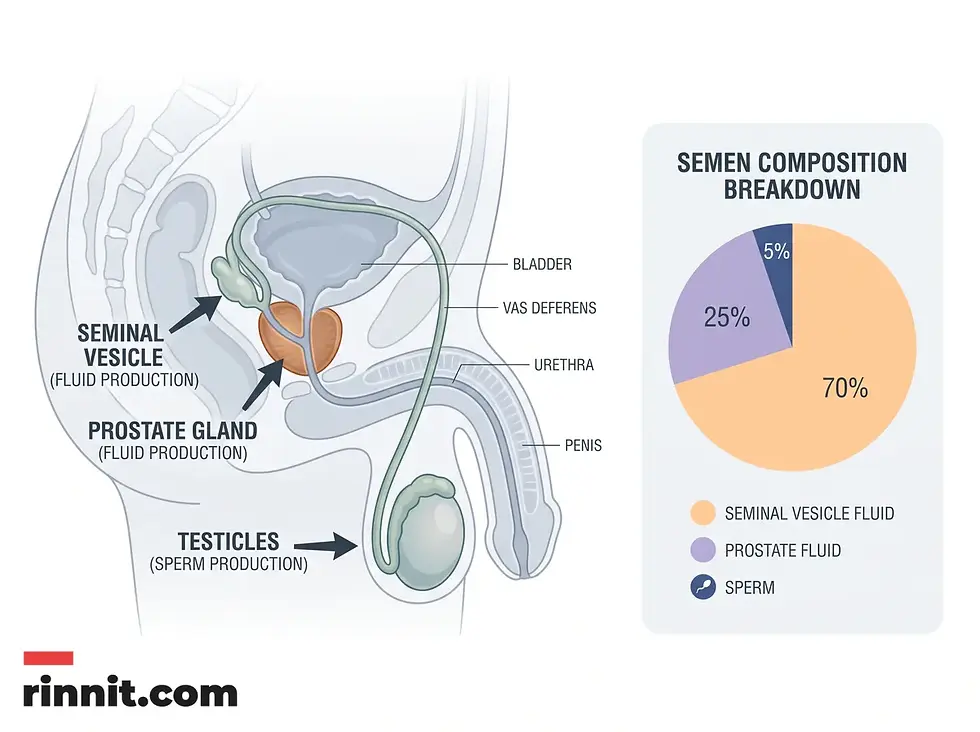
Semen is a thick, sticky fluid designed to transport and protect sperm. Sperm are made in the testicles and stored in the epididymis, a tube at the back of each testicle, until they mature. [1] At ejaculation they combine with fluid from the seminal vesicles and the prostate gland to form semen. It consists mainly of water, mucus (a lubricating substance, not the same as nasal mucus) and plasma. [1]
Semen also contains small amounts of calcium, citrate, fructose, glucose, lactic acid, magnesium, potassium and zinc. These nutrients help nourish sperm and give them the energy they need to swim. [1]
Component | Source | Approximate share | Role |
Seminal vesicle fluid | Seminal vesicles | 65% – 75% | Makes up most of the volume and helps nourish sperm |
Prostate fluid | Prostate gland | 25% – 30% | Adds fluid that helps carry and nourish sperm |
Sperm | Testicles | 1% – 5% | Carry the genetic material needed for fertilization |
What does semen do?
The main job of semen is to transport sperm out of the body and into the female reproductive system, where one sperm may fertilize an egg. [1] Its fluids also help nourish sperm and make it easier to deposit them toward the back of the vagina. [1]
Semen usually comes out during ejaculation, typically after orgasm, but it can be released without an orgasm. [1] Volume and texture vary from person to person. Semen and sperm are not the same thing: sperm are only 1% to 5% of semen, and the rest is fluid that supports them.
Function | What it means |
Transport | Carries sperm out of the body and into the reproductive tract |
Nourishment | Supplies sugars such as fructose and glucose, and minerals, that give sperm energy |
Protection | Provides a fluid medium that helps protect sperm as they travel |

Which common conditions affect semen health?
Semen can be affected by sexually transmitted infections, pyospermia, retrograde ejaculation and, rarely, semen allergy. Many sexually transmitted infections (STIs), including HPV, herpes simplex, gonorrhea and HIV, can be passed on through semen. [1] Pyospermia means a high number of white blood cells in the semen and is commonly linked to infections, STIs, or inflammation of the urethra or prostate. [1] In retrograde ejaculation, semen travels backward into the bladder instead of out through the penis. [1] Semen allergy, a reaction to proteins in semen, is rare. [1]
Changes in how semen looks or how much there is can also be a clue. Yellow semen can have temporary causes such as certain foods, smoking, or some medicines and supplements, and it may appear with age; jaundice and infections can also turn semen yellow. [1] Blood in semen (hematospermia) can come from a burst blood vessel during ejaculation, recent surgery, an injury to the genitals or certain STIs. [1] Low ejaculate volume can be caused by a blockage, retrograde ejaculation or hormonal imbalances. [1] A semen analysis, the most common semen test, measures how much semen you produce, the quantity and health of your sperm, and signs of inflammation. [1]
Health tip: If you notice a sudden or lasting change in the color, volume or smell of your semen, or you see blood, talk to a healthcare provider rather than guessing the cause.

How can you support semen health?
You can support semen health by quitting smoking, limiting alcohol, eating plenty of fruits and vegetables, staying active and maintaining a healthy weight.
Quit smoking: Quitting smoking may improve semen and sperm quality.
Limit alcohol: Limiting alcohol consumption may improve semen and sperm quality.
Eat plenty of fruits and vegetables: An eating pattern rich in fruits and vegetables may support semen and sperm quality.
Maintain a healthy weight for you: Overweight and obesity are linked to lower sperm counts in the research above. [3]
Stay active: Increasing your physical activity may improve semen and sperm quality.
Use protection: Condoms, female condoms and dental dams help protect you from STIs during sex. [1]
Talk to a healthcare provider before you make major changes to your lifestyle or habits.
Conclusion
Semen is a nutrient-rich fluid that transports, protects and nourishes sperm. Knowing what is typical, and how smoking, alcohol, body weight and infections can affect it, helps you spot changes early and support your reproductive health over the long term.
Next step: If you see blood in your semen, notice a lasting change in color, volume or smell, or you and your partner are having trouble getting pregnant, talk to a healthcare provider about a semen analysis.
Frequently Asked Questions
What is semen?
Semen is a thick, sticky, whitish-gray fluid that helps transport, protect and nourish sperm. It is released from the penis during ejaculation and is made of sperm from the testicles plus fluid from the seminal vesicles and prostate.
Is semen the same as sperm?
No. Sperm are a small part of semen, about 1% to 5% of it. Semen is made of sperm, seminal vesicle fluid and prostate fluid.
Where is semen produced?
Sperm are made in the testicles and stored in the epididymis until they mature. The seminal vesicles and the prostate gland make the fluid that mixes with sperm to form semen.
What is the main function of semen?
Semen's main job is to transport sperm out of the body and into the female reproductive system, while helping to nourish them, so that one may fertilize an egg.
Why is semen thick and sticky?
Semen contains mucus, a lubricating substance, along with fluid from the seminal vesicles and prostate. This helps nourish sperm and makes it easier to deposit them toward the back of the vagina.
What does yellow semen mean?
Temporary causes include certain foods, smoking, and some medicines or supplements, and semen may also look yellowish with age. Jaundice and infections can also turn semen yellow, so see a provider if the color persists.
Is blood in semen dangerous?
Blood in semen (hematospermia) can come from a burst blood vessel during ejaculation, recent surgery, an injury to the genitals or certain STIs. Because the cause is not always obvious, have it checked by a healthcare provider.
What is a normal sperm count?
A typical sperm count may range from 15 million to more than 200 million per milliliter of semen. Fewer than about 16 million (the current WHO lower reference value) is called oligospermia, and no sperm is called azoospermia. A semen analysis shows where you stand.
Can lifestyle affect semen quality?
Yes. Quitting smoking, limiting alcohol, eating plenty of fruits and vegetables, maintaining a healthy weight, being more active and using protection may improve semen and sperm quality. Talk to a provider before making major changes.
Is pre-ejaculate (precum) semen?
No. Pre-ejaculate is a clear lubricant released before orgasm. It usually does not contain sperm, but sperm left in the urethra from an earlier ejaculation can mix with it, so pregnancy is possible if it enters the vagina.
Related Reading
Learn more in our guide to Semen Analysis: Purpose, How to Prepare and What Results Mean.
References
Cleveland Clinic. Semen. Cleveland Clinic. Last updated July 26, 2024. https://my.clevelandclinic.org/health/body/semen
Campbell MJ, Lotti F, Baldi E, et al. Distribution of semen examination results 2020 - A follow up of data collated for the WHO semen analysis manual 2010. Andrology. 2021;9(3):817-822. PMID 33528873. https://doi.org/10.1111/andr.12983
Sermondade N, Faure C, Fezeu L, et al. BMI in relation to sperm count: an updated systematic review and collaborative meta-analysis. Human Reproduction Update. 2013;19(3):221-231. PMID 23242914. https://doi.org/10.1093/humupd/dms050
Szabó A, Váncsa S, Hegyi P, et al. Lifestyle-, environmental-, and additional health factors associated with an increased sperm DNA fragmentation: a systematic review and meta-analysis. Reproductive Biology and Endocrinology. 2023;21(1):5. PMID 36653793. https://doi.org/10.1186/s12958-023-01054-0
Medical disclaimer
The information provided in this article is for educational purposes only and should not be used as a substitute for professional medical advice, diagnosis, or treatment. Always seek the advice of your physician or other qualified health provider with any questions you may have regarding a medical condition.



Comments