Retroperitoneal Fibrosis (Ormond's Disease): Symptoms, Causes, and Treatments

Updated: 3 days ago
Medically reviewed by Dr. Baraa Alnahhal, MD · Last reviewed: October 2026
Quick Answer: What is retroperitoneal fibrosis?
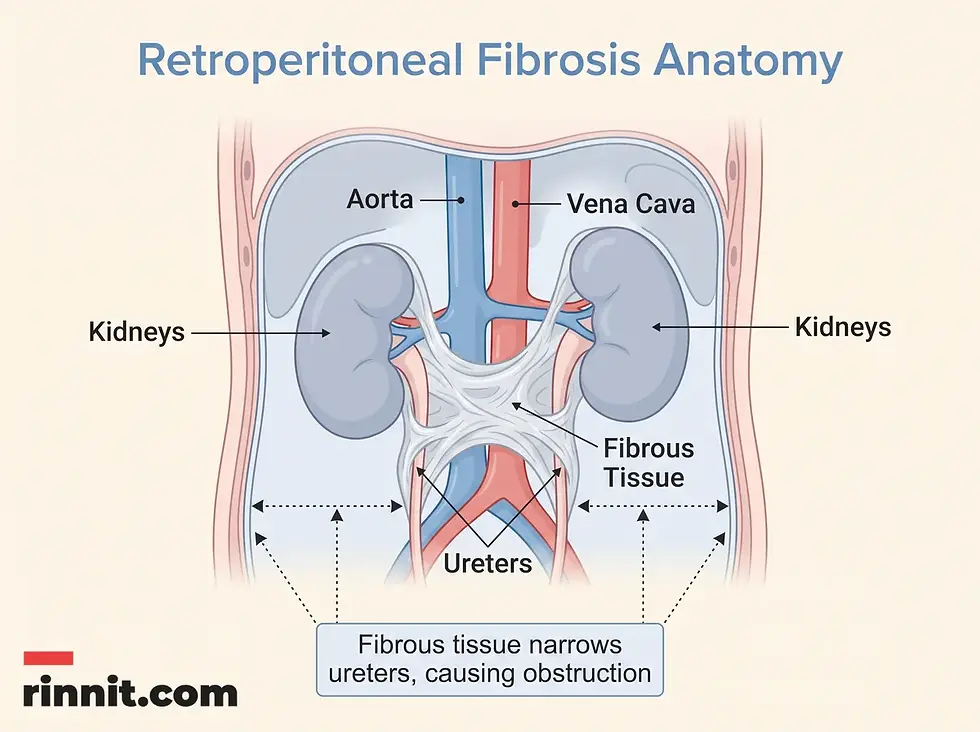
Retroperitoneal fibrosis is a rare inflammatory condition in which scar-like tissue forms in the space behind the abdominal cavity and can squeeze the ureters, aorta and vena cava. [1] [2] Common symptoms include belly, lower back or side pain and low urine output. [1] Treatment usually involves corticosteroids, immunomodulators to lower relapse risk and sometimes stents or surgery for blockages. [1] [2]
What the research says
Lower steroid doses worked as well as standard doses. In a randomized trial of 60 adults with newly diagnosed idiopathic retroperitoneal fibrosis, 89.7% (26 of 29) of those on methotrexate plus low-dose prednisone were in remission at 9 months, compared with 80.6% (25 of 31) on standard-dose prednisone alone. The low-dose combination was non-inferior and used a lower total prednisone dose (Peyronel et al., J Autoimmun, 2025) [3].
Treatments work for most people, but relapses happen. A systematic review of 83 studies with 1,044 patients found high summary success rates, between 80% and 97.9%, for fibrosis regression, freedom from ureteral stents, and clinical improvement, with a summary relapse rate of 18.1%. No treatment approach was clearly better than another (Steimer & Becker, BMC Rheumatol, 2025) [4].
Medical therapy is the cornerstone of treatment. A 2026 Lancet seminar describes retroperitoneal fibrosis as a rare immune-mediated disease that can cause acute or chronic kidney injury, caval occlusion, and deep vein thrombosis. Glucocorticoids are effective, B-cell-targeting therapies are increasingly used, and relapses are frequent after treatment is stopped (Vaglio et al., Lancet, 2026) [2].
What Is Retroperitoneal Fibrosis?
Retroperitoneal fibrosis, also called Ormond's disease, is a rare condition in which scar-like tissue develops in the retroperitoneum, the space behind the abdominal cavity. [1] This space holds your urinary system, the aorta, the vena cava, and the adrenal glands. Inflammation also affects these organs. [1]
As the fibrous tissue grows and hardens, it can surround and squeeze these organs. [1] The ureters, the tubes that carry urine from the kidneys to the bladder, are the structures most often involved. [1] [2] When a ureter is squeezed, urine flow is blocked, which can make the kidneys swell and, without treatment, lead to kidney failure. [1]
What are the symptoms and warning signs of retroperitoneal fibrosis?
Symptoms vary depending on where the fibrosis is and how severe it is. In the early stages, the pain is often dull and hard to pinpoint. [1] Some people have no symptoms at all. [1]
Category | Common Symptoms |
|---|---|
Pain | Dull ache in the belly, lower back, or sides; pain in the testicles in people who have them. |
Urinary | Low urine output (oliguria) or, in severe cases, an inability to urinate (anuria). |
General | Fatigue and unplanned weight loss. |
Legs and Circulation | Leg swelling, pain, or color change due to blood vessel compression; difficulty moving the legs; swelling in the scrotum. |
What causes retroperitoneal fibrosis, and who is at risk?
Most cases of retroperitoneal fibrosis have an unknown cause, which is called idiopathic retroperitoneal fibrosis. [1] In other cases, it comes from medicines, cancer, infections, radiation therapy, or tissue damage from trauma or surgery. [1]
Potential Causes
Medications: Beta-blockers such as propranolol, metoprolol, and atenolol; dopamine antagonists; hydralazine for high blood pressure; migraine medicines such as ergotamine; and pain medicines (analgesics). [1]
Medical conditions: Cancer, including Hodgkin and non-Hodgkin lymphoma; fibroinflammatory disorders; infections such as tuberculosis; previous radiation therapy; and tissue damage from trauma or surgery. [1]
Environmental exposure: Asbestos exposure and tobacco use raise the risk. Having both raises it even more, and avoiding even one can reduce your risk. [1]
The condition often occurs in males between 40 and 60 years old [1], but it can happen at any age and in females.
If it is not treated, advanced fibrosis can lead to complications including kidney failure, anemia, an inability to urinate, high blood pressure, jaundice, nausea and vomiting, nervous system problems, tissue death in the intestines, unplanned weight loss, and blood clots. [1]
How is retroperitoneal fibrosis diagnosed and tested?
Healthcare providers often diagnose retroperitoneal fibrosis using a physical exam, blood tests and imaging studies, with CT and MRI typically preferred. [1] Your provider may use these tests:
Physical exam: Including pressing on your belly to check for abnormal masses. [1]
Blood tests: To look for early signs of kidney disease [1] and for problems such as anemia or inflammation.
Imaging studies: A kidney ultrasound can assess fibrosis and blockage. CT scans, MRI, or nuclear medicine imaging measure how severe the fibrosis is and how well the kidneys are working. Providers typically prefer CT and MRI. [1]
Pyelogram: A special X-ray of the urinary system that shows a blockage. Providers use it more often while managing a blockage they have already identified [1] (see our guide to the retrograde pyelogram).
Biopsy: You may need a biopsy if treatments do not work or if your provider is concerned about cancer. [1]

How is retroperitoneal fibrosis treated and managed?
Treatment includes medicines and surgery. The best care for you depends on where the fibrosis is and how far it has spread. If your provider can identify the condition causing it, such as cancer, treatment focuses on that condition. [1]
Medical Therapies
Corticosteroids: These medicines quickly lower inflammation and stop the scarring from getting worse. [1] [2]
Immunomodulators: Medicines such as methotrexate and rituximab change immune system activity and lower the risk of future fibrosis episodes. [1]
Medication management: If a medicine is the cause, your provider may change the drug or the dose. [1]
Surgical and Procedural Interventions
If the fibrosis is advanced or is blocking a ureter or a blood vessel, you may need more invasive treatment:
Ureteral stents: A small, hollow tube placed in a blocked ureter to keep it open so urine can flow to the bladder. [1]
Surgery: To remove scar tissue and repair damage to nearby tissue. The operation may include wrapping the ureter in a layer of abdominal fat (omentum), which makes it harder for fibrosis to come back. [1]
Angioplasty or stent placement: To open a blocked blood vessel and improve blood flow. [1]
You may feel better after a few days of corticosteroids, and your kidney function should improve within two weeks of starting the medicine. [1] Recovery from other treatments takes longer.

What is the outlook for retroperitoneal fibrosis, and can it be prevented?
In general, the outlook for retroperitoneal fibrosis is very good with treatment, and many people make a full recovery. [1] Early detection gives the best chance of successful treatment. The fibrosis can come back months or years after treatment, and if steroids helped the first time, they are likely to help again. [1] If cancer is the cause, the outlook is typically significantly worse. [1]
Because the condition often happens for no known reason, it is hard to prevent. [1] It is a known complication of certain medicines, especially if you take them long term, so your provider will watch for symptoms if you are on these drugs.
Conclusion
Retroperitoneal fibrosis is rare but treatable. Although complications such as kidney failure are serious, early detection and modern treatment lead to a good outlook for most people. Ongoing monitoring is essential, because the fibrosis can come back even years after successful treatment. If you have persistent belly or back pain, talk to a healthcare provider for a thorough evaluation.
What are the next steps if you have retroperitoneal fibrosis?
If you have been diagnosed with retroperitoneal fibrosis, follow your treatment plan closely and attend every follow-up appointment. You may get blood tests and imaging every three to six months during the first year, with checkups becoming less frequent over time. [1]
Trusted resources: National Organization for Rare Disorders, MedlinePlus, StatPearls.
Frequently Asked Questions
Is retroperitoneal fibrosis a type of cancer?
No, it is generally a non-cancerous inflammatory condition. However, cancer, including Hodgkin and non-Hodgkin lymphoma, can be the underlying cause. If cancer is the cause, the outlook is typically significantly worse.
Can I make a full recovery from Ormond's disease?
Many people do. The outlook is very good with treatment, and early detection gives you the best chance of success. The fibrosis can come back months or years later.
What happens if the condition is left untreated?
Advanced fibrosis can lead to kidney failure, anemia, high blood pressure, blood clots, and other serious complications.
Does the scar tissue ever go away?
Corticosteroids lower inflammation and stop the scarring from getting worse. In advanced cases, surgery may be needed to remove scar tissue and repair damage to nearby tissue.
How rare is this condition?
Retroperitoneal fibrosis is a rare disease. It often occurs in males between 40 and 60 years old, but it can happen in people of all ages and in females.
Can medications cause retroperitoneal fibrosis?
Yes. Drugs linked to it include some beta-blockers, dopamine antagonists, hydralazine, migraine medicines such as ergotamine, and pain medicines. Your provider will watch for symptoms if you take these drugs long term.
Is retroperitoneal fibrosis hereditary?
There is no strong evidence that it is directly inherited. Most cases have an unknown cause.
How long does treatment last?
In a randomized trial, remission was assessed after nine months of treatment. Some people need ongoing monitoring or immunomodulators to lower the risk of relapse, and your provider will tailor the plan to you.
Will I need surgery?
Not everyone does. Surgery or procedures such as ureteral stents may be needed for advanced fibrosis, especially when a ureter or blood vessel is blocked.
Can I still work while being treated?
Many people can keep working, but you may need time off for recovery if you have surgery or if fatigue is significant. Ask your provider what is right for you.
What is the most common early symptom?
Pain in the belly, lower back, or sides is common in the early stages. It can be hard to pinpoint exactly where it hurts.
Does smoking affect the condition?
Tobacco use is a risk factor. Having both asbestos exposure and tobacco use raises the risk even more, and avoiding even one of them can reduce your risk.
How often will I need follow-up tests?
You may get blood tests and imaging every three to six months during the first year. Checkups happen less often over time.
Can it affect blood vessels?
Yes. The fibrosis can surround blood vessels such as the aorta and vena cava, and complications can include high blood pressure and blood clots.
What should I do if my symptoms return?
Contact your healthcare provider. If steroids helped you the first time, they are likely to help again if the condition comes back.
References
Cleveland Clinic. Retroperitoneal Fibrosis. Cleveland Clinic. September 4, 2025. https://my.clevelandclinic.org/health/diseases/23168-retroperitoneal-fibrosis
Vaglio A, Peyronel F, Bajema IM, et al. Retroperitoneal fibrosis. Lancet. 2026;408(10555):649-664. PMID 41905382. https://doi.org/10.1016/S0140-6736(26)00037-1
Peyronel F, Palmisano A, Maritati F, et al. Methotrexate and low-dose prednisone in idiopathic retroperitoneal fibrosis: a randomised clinical trial. J Autoimmun. 2025;157:103487. PMID 40974866. https://doi.org/10.1016/j.jaut.2025.103487
Steimer A, Becker MO. Treatment approaches for idiopathic retroperitoneal fibrosis: a systematic review with meta-analysis. BMC Rheumatol. 2025;9(1):12. PMID 39910636. https://doi.org/10.1186/s41927-024-00445-z
Medical Disclaimer
This article is for informational purposes only and does not constitute medical advice. Always seek the advice of your physician or other qualified health provider with any questions you may have regarding a medical condition. Never disregard professional medical advice or delay in seeking it because of something you have read in this article.



Comments