Recognizing Overtraining Syndrome: The Three Stages of Athletic Burnout

Updated: 2 days ago
Medically reviewed by Dr. Baraa Alnahhal, MD · Last reviewed: September 2026
TL;DR: Overtraining Syndrome (OTS) is a medical condition caused by excessive exercise without adequate rest, leading to a significant drop in athletic performance and systemic health issues. Unlike normal workout soreness, OTS affects the nervous system, hormonal balance, and mental health. It is categorized into three stages—functional, sympathetic, and parasympathetic—each with distinct symptoms ranging from insomnia to chronic fatigue. Recovery requires extended rest, often lasting from several weeks to months.
Quick answer: Overtraining syndrome (OTS) is a complex condition that occurs when an athlete trains beyond their body's ability to recover. It is not just physical exhaustion; it is a systemic failure of the body’s stress-response mechanisms. OTS is most common in competitive athletes, particularly those in endurance sports like running, swimming, and cycling, but it can affect anyone who ramps up training intensity too quickly.
The condition manifests in three stages. Stage 1 (Functional Overtraining) presents as mild muscle stiffness and poor sleep. Stage 2 (Sympathetic OTS) triggers the "fight-or-flight" system, causing restlessness, high blood pressure, and a fast resting heart rate. Stage 3 (Parasympathetic OTS) is the most severe, characterized by deep depression, chronic fatigue, and an unusually slow heart rate. Because there is no single test for OTS, diagnosis involves ruling out other conditions and evaluating training history, nutrition, and mental health. The primary treatment is complete or significantly reduced activity for a period prescribed by a healthcare provider.
The Three Stages of Overtraining Syndrome
Healthcare providers categorize OTS based on the part of the nervous system affected and the severity of the symptoms.
Stage 1: Functional Overtraining; Key Characteristics: Warning signs of improper recovery; Typical Symptoms: Muscle pain, stiffness, mild anxiety, poor sleep.
Stage 2: Sympathetic OTS; Key Characteristics: Overstimulation of the "fight-or-flight" response; Typical Symptoms: Insomnia, irritability, tachycardia (>100 bpm), hypertension.
Stage 3: Parasympathetic OTS; Key Characteristics: Most severe; overstimulation of the "rest" response; Typical Symptoms: Chronic fatigue, depression, bradycardia (<60 bpm), loss of motivation.

Symptoms and Complications
Overtraining syndrome impacts both the body and the mind, often leading to long-term health issues if ignored.
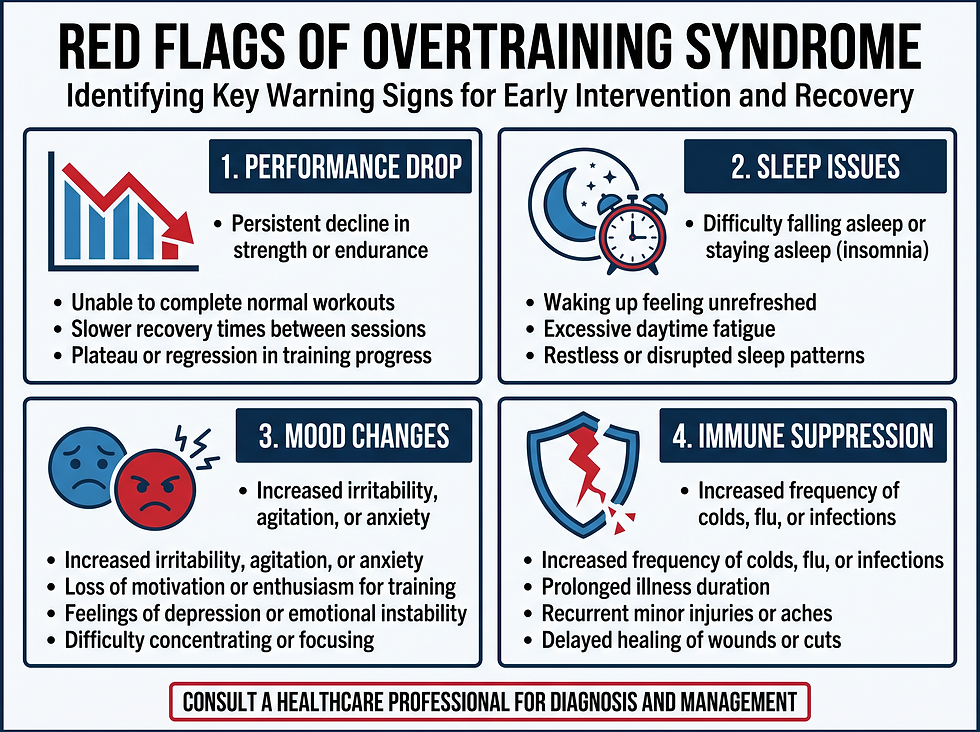
Physical and Mental Symptoms
Performance Drop: A sudden, unexplained decrease in athletic ability despite continued training.
Sleep Disturbances: Difficulty falling asleep (insomnia) or waking up feeling unrefreshed.
Mood Changes: Increased irritability, agitation, or clinical depression.
Immune Suppression: Getting sick more frequently with minor illnesses like colds.
Weight Fluctuations: Unexpected weight loss or gain.
Potential Complications
Pushing through OTS significantly increases the risk of acute and chronic sports injuries, including:
Stress Fractures and Joint Injuries
Repetitive Strain Injuries
Tendinitis and Muscle Strains
Chronic Overtraining Syndrome: Permanent or long-term damage to performance and metabolic health.
Causes and Risk Factors
The root cause is a mismatch between training volume/intensity and the body's recovery capacity.
Common Triggers
Sudden Intensity Spikes: Doubling training distance or intensity without adequate conditioning.
Inadequate Rest: Training every day without "off" days for muscle and nervous system repair.
The "No Pain, No Gain" Mentality: Ignoring pain signals and pushing past safe limits.
Who is at Risk?
Elite and Competitive Athletes: High pressure to perform leads to excessive volume.
Endurance Sport Participants: Runners, swimmers, and cyclists are statistically most affected.
Early Specialization in Youth: Kids and teens who focus exclusively on one sport year-round.
High-Pressure Environments: Athletes who feel external pressure to win at any cost.
Diagnosis and Recovery
Because OTS mimics many other conditions, diagnosis is often a process of elimination.
Diagnostic Testing
Physical Exam: Review of training logs, nutrition, sleep, and mental health.
Blood Tests: Checking for muscle damage enzymes (creatine kinase) and markers like high urea or ammonia.
Urine Tests: Measuring cortisol levels, which are often elevated in OTS.
Heart and Lung Tests: EKG and pulmonary function tests to evaluate systemic impact.
The Path to Recovery
Recovery is not instantaneous and must be managed by a professional.
Complete Rest: A period of no training to allow the nervous system to reset.
Gradual Return: Slowly reintroducing light activity only after symptoms subside.
Monitoring: Closely tracking heart rate, sleep quality, and mood during the return to sport.
Nutrition and Hydration: Ensuring the body has the fuel necessary for repair.

Conclusion
Overtraining syndrome is a serious reminder that rest is just as important as the workout itself. For athletes, recognizing the early warning signs of Stage 1 overtraining can prevent the debilitating effects of the later stages. By prioritizing recovery and listening to the body’s signals, you can maintain peak performance and avoid the long-term physical and mental setbacks associated with OTS.
Next step: If you notice a sudden drop in your performance or persistent changes in your mood and sleep, stop training immediately and consult a sports medicine specialist or healthcare provider.
Frequently Asked Questions (FAQ)
Is overtraining syndrome the same as just being tired?
No. Normal fatigue disappears after a day or two of rest. OTS involves systemic changes to the nervous and hormonal systems that can last for months.
How common is overtraining syndrome?
It is very common among high-level athletes. Studies estimate that up to two-thirds of elite runners and one-third of all runners will experience it.
What is the difference between Stage 2 and Stage 3 OTS?
Stage 2 (Sympathetic) keeps your body in a high-stress "fight-or-flight" state (fast heart rate, insomnia). Stage 3 (Parasympathetic) is a "crash" state (extreme fatigue, slow heart rate, depression).
Can overtraining syndrome cause depression?
Yes. The hormonal and neurological imbalances caused by OTS are a known trigger for clinical depression and loss of motivation.
How long does recovery take?
Recovery depends on severity but typically ranges from a few weeks to several months of rest.
Can I still do light exercise during recovery?
Only if cleared by a doctor. Ramping up too early can lead to chronic overtraining syndrome, which is much harder to treat.
Does OTS affect the immune system?
Yes. One of the hallmark signs is "getting sick all the time," as the body’s resources are redirected away from immune defense to handle training stress.
What blood markers indicate overtraining?
High levels of creatine kinase, urea, uric acid, and ammonia can indicate muscle damage and metabolic stress associated with OTS.
Why are endurance athletes at higher risk?
Endurance sports like running and cycling involve high-volume, repetitive stress that can easily exceed the body's recovery threshold if not carefully managed.
Can children get overtraining syndrome?
Yes, especially those who specialize in one sport early or feel intense pressure to perform competitively.
What is tachycardia in the context of OTS?
It is an unusually fast resting heart rate (over 100 bpm), which is a common symptom of Stage 2 overtraining.
What is bradycardia in the context of OTS?
It is an unusually slow resting heart rate (under 60 bpm), which occurs in the severe Stage 3 of the syndrome.
How can I prevent overtraining syndrome?
Ensure you have scheduled rest days, maintain proper nutrition, get adequate sleep, and avoid sudden spikes in training intensity.
Is "no pain, no gain" good advice?
Generally, no. While training requires effort, pushing through significant pain or systemic fatigue is the primary cause of OTS and injury.
When should I see a doctor?
As soon as you notice a performance dip that rest doesn't fix, or if you experience unexplained mood changes and sleep issues.
Source date: February 28, 2024. This article is current based on the most recent available data from the primary source.
Health information, not medical advice. This article is for general education and is not a substitute for professional diagnosis or treatment. Always consult a qualified healthcare provider about your own health, and seek emergency care for urgent symptoms.
Comments