Porphyrophobia: Understanding the Intense Fear of the Color Purple

Updated: 2 days ago
Medically reviewed by Dr. Baraa Alnahhal, MD · Last reviewed: October 2026
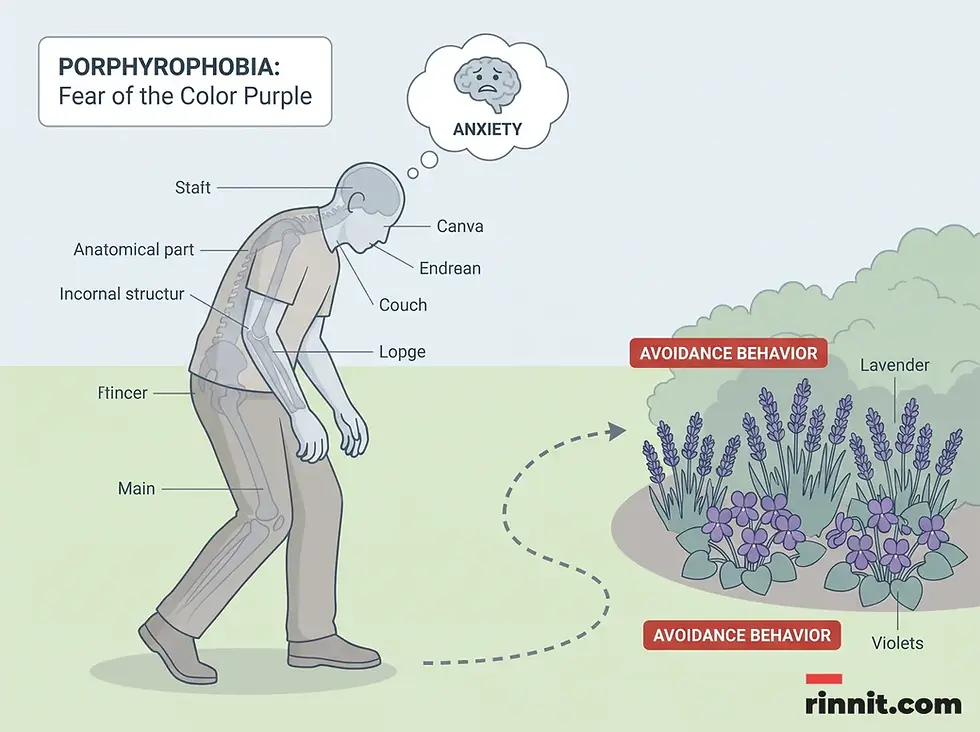
Porphyrophobia is a specific phobia characterized by an intense and extreme fear of the color purple. It can lead to severe avoidance behaviors, such as staying away from certain grocery aisles, gardens, or branded stores. Exposure to purple can trigger panic attacks, heart palpitations, dizziness, and nausea. Highly effective therapies include Cognitive Behavioral Therapy (CBT) and Exposure Therapy, with a reported 90% success rate.
Quick Answer: What is porphyrophobia?
Porphyrophobia is an anxiety disorder, a type of chromophobia, involving an intense fear of the color purple. People with it perceive purple objects as threatening, leading to intense distress or panic attacks. The fear often stems from traumatic associations, family history or the color's symbolic meanings. Professional psychotherapy helps most people manage their triggers and return to normal routines. [1]
What the research says
Exposure-based therapy is the best-supported treatment for specific phobias. A meta-analysis of 33 randomized treatment studies found that exposure-based treatment produced large effect sizes relative to no treatment and outperformed both placebo conditions and alternative psychotherapies. These studies covered specific phobias in general, not fear of purple specifically (Wolitzky-Taylor et al., Clin Psychol Rev, 2008).
A single exposure session can work as well as multiple sessions. Across 30 multi-session and 55 single-session exposure studies (1,758 participants), a meta-analysis found no significant difference in effectiveness between the two formats at post-treatment or follow-up. Effect sizes were large, and single-session treatment took less total time (Odgers et al., Behav Res Ther, 2022).
Specific phobia is among the most common mental disorders, especially in women. In surveys of 156,331 adults across 29 countries, specific phobia was one of the two most prevalent disorders among women (alongside major depressive disorder), while lifetime prevalence of any mental disorder was 28.6% in men and 29.8% in women (McGrath et al., Lancet Psychiatry, 2023).
Research summaries are based on article abstracts retrieved from PubMed.
How does porphyrophobia (fear of the color purple) present?
Porphyrophobia manifests as more than just a simple dislike; it is a profound psychological response that can disrupt daily life. Because the color purple appears frequently in nature and modern branding, individuals may find themselves constantly scanning their environment for potential triggers. This hyper-vigilance can lead to social withdrawal and significant stress. The name itself is derived from "porphura," the ancient Greek term for the dye historically reserved for royalty and high-status individuals. [1]
For many, the fear is not just about the visual stimulus but the emotions and concepts the color represents. Purple has long been associated with luxury, magic, and mysticism, but it can also signify frustration or sadness. When these associations become linked with past trauma or systemic anxiety, the resulting phobia requires targeted clinical intervention to deconstruct these negative thought patterns. [1]
What are the symptoms and possible causes of porphyrophobia?
Exposure to the color purple can trigger a wide range of physical and emotional symptoms, often culminating in a full-scale panic attack. These symptoms are the body's natural "fight or flight" response to a perceived threat, even when the stimulus is objectively harmless. [1]
Symptom Category | Common Physical Responses |
Autonomic Response | Excessive sweating (hyperhidrosis), heart palpitations, and chills. |
Gastrointestinal | Nausea, upset stomach, and indigestion (dyspepsia). |
Respiratory | Shortness of breath (dyspnea) and a feeling of chest tightness. |
Neurological | Dizziness, lightheadedness, and trembling or shaking. |
The development of porphyrophobia is rarely linked to a single cause. Instead, it often arises from a combination of genetic predisposition and environmental factors. Individuals with a family history of anxiety disorders are at a higher risk. Additionally, experiencing a traumatic event where the color purple was prominent can create a lasting psychological association between the color and danger. [1]

How is porphyrophobia diagnosed and treated?
A formal diagnosis of porphyrophobia is typically made when the fear is persistent—lasting for six months or longer—and significantly interferes with a person's ability to function. Healthcare providers must rule out other overlapping conditions, such as Obsessive-Compulsive Disorder (OCD) or other color-specific phobias, before finalizing a treatment plan. [1]
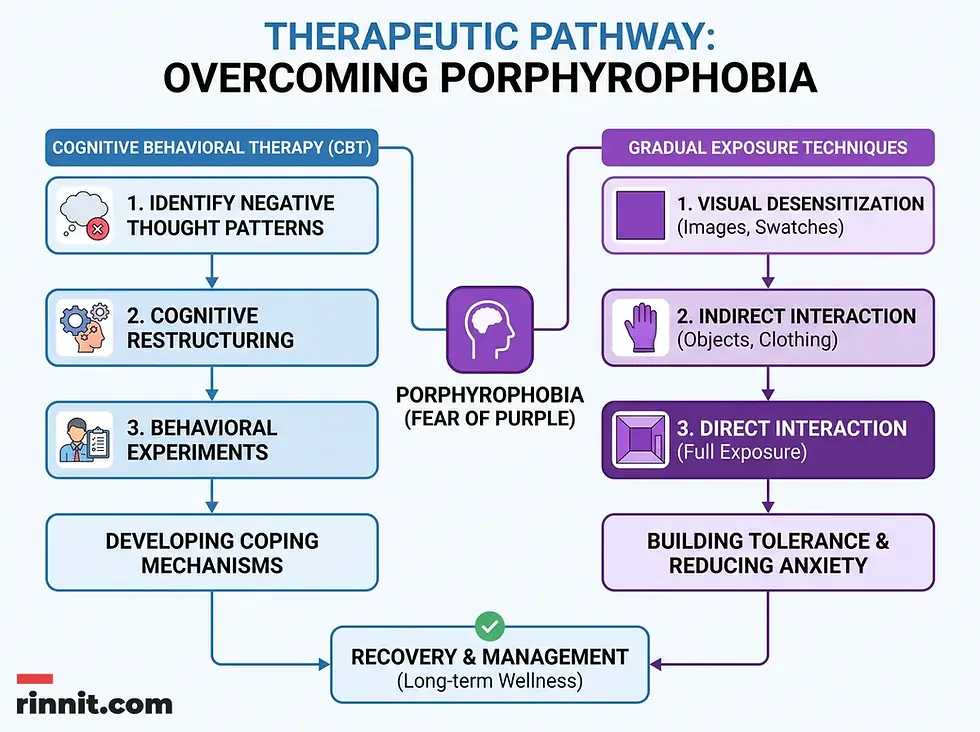
The prognosis for those seeking help is excellent. Cognitive Behavioral Therapy (CBT) helps patients identify and reframe their negative thoughts about the color, while Exposure Therapy gradually desensitizes them to the stimulus. Through a controlled process of looking at purple images and eventually interacting with purple objects, approximately 90% of patients are able to overcome their fear and lead a normal life. [1]
Conclusion
Porphyrophobia is a challenging condition that can make the world feel like a threatening place. However, it is a highly treatable form of anxiety. By understanding the root causes and utilizing proven therapeutic techniques, individuals can regain control over their environment and their emotional responses. Seeking professional guidance is the first step toward a life free from the constraints of color-based fear.
Frequently Asked Questions
What is porphyrophobia?
Porphyrophobia is an intense, extreme fear of the color purple, classified as a type of chromophobia (fear of colors).
What does the name porphyrophobia mean?
The name comes from "porphura," the ancient Greek word for purple, which was a dye originally produced for royalty.
What are common triggers for this fear?
Triggers can include anything purple, such as flowers (lavender), fruits (eggplants), clothing, or branded signage.
Can seeing purple cause a panic attack?
Yes, for individuals with porphyrophobia, the sight or even the thought of the color can trigger a severe panic attack.
Is porphyrophobia the same as porphyria?
No. Porphyrophobia is a psychological fear, while porphyria is a group of physical disorders involving chemical buildup in the body.
How common are specific phobias like this?
About 12% of adults in the U.S. experience a specific phobia at some point, with the condition being more common in women.
What causes someone to fear a color?
Causes include traumatic associations, a family history of anxiety, or strong symbolic associations with concepts like power or magic.
How is this condition diagnosed?
Diagnosis is based on a persistent fear (6+ months) that causes significant avoidance and interferes with daily functioning.
What is the best treatment for porphyrophobia?
Psychotherapy, specifically Cognitive Behavioral Therapy (CBT) and Exposure Therapy, is considered the most effective treatment.
Is it possible to completely overcome the fear of purple?
Yes, approximately 90% of people with specific phobias can successfully manage or overcome their fear through therapy.
Related Reading
What Is Chromophobia (Fear of Colors)? Causes, Symptoms, Diagnosis, Treatment and Outlook explains the broader fear of colors and how it is managed.
Understanding Melanophobia: The Fear of the Color Black covers the intense fear of the color black and its treatment.
Understanding Leukophobia: Causes, Symptoms, and Overcoming the Fear of White explains the fear of the color white and ways to overcome it.
Specific Phobias: Symptoms, Causes, and How Exposure Therapy Helps You Overcome Them explains how specific phobias develop and how exposure therapy treats them.
References
Cleveland Clinic. Porphyrophobia. Cleveland Clinic Health Library. Accessed October 11, 2026. https://my.clevelandclinic.org/health/diseases/23236-porphyrophobia
Wolitzky-Taylor KB, Horowitz JD, Powers MB, et al. Psychological approaches in the treatment of specific phobias: a meta-analysis. Clin Psychol Rev. 2008;28(6):1021-1037. PMID: 18410984. DOI: https://doi.org/10.1016/j.cpr.2008.02.007
Odgers K, Kershaw KA, Li SH, et al. The relative efficacy and efficiency of single- and multi-session exposure therapies for specific phobia: a meta-analysis. Behav Res Ther. 2022;159:104203. PMID: 36323055. DOI: https://doi.org/10.1016/j.brat.2022.104203
McGrath JJ, Al-Hamzawi A, Alonso J, et al. Age of onset and cumulative risk of mental disorders: a cross-national analysis of population surveys from 29 countries. Lancet Psychiatry. 2023;10(9):668-681. PMID: 37531964. DOI: https://doi.org/10.1016/S2215-0366(23)00193-1
Medical disclaimer
This article is for informational purposes only and is not a substitute for professional medical advice, diagnosis, or treatment. Always seek the advice of your physician or other qualified health provider with any questions you may have about a medical condition.



Comments