Understanding Melanophobia: The Fear of the Color Black

Updated: 2 days ago
Medically reviewed by Dr. Baraa Alnahhal, MD · Last reviewed: September 2026
TL;DR
Melanophobia is a specific phobia characterized by an intense, overwhelming fear of the color black or dark colors. Often linked to cultural associations with death and mourning, this condition can cause severe anxiety and panic attacks. Treatment typically involves exposure therapy and cognitive behavioral therapy (CBT) to help individuals regain control over their daily lives.
Quick Answer
Melanophobia is an extreme and unhealthy fear of the color black or dark shades. While not a standalone medical diagnosis, it is classified as a specific phobia where the fear is significantly greater than any actual danger. Individuals may avoid black objects, feel panic at night, or refuse to leave home. Effective treatments include gradual exposure therapy, stress reduction techniques, and professional counseling to address the underlying psychological associations.
What is Melanophobia?
Melanophobia is a neurological and psychological condition where an individual experiences an extreme, irrational fear of the color black. While most people may feel uneasy in total darkness or associate dark colors with certain moods, those with melanophobia face a disruption to their daily lives. This condition is categorized as a specific phobia, meaning the fear is focused on a particular object or situation—in this case, a color.
It is common for individuals with one specific phobia to experience others. Melanophobia is frequently associated with related fears, such as nyctophobia (fear of the dark), thanatophobia (fear of death), and chromophobia (a general fear of colors). The distress caused by these fears often stems from the deep-seated symbolic meanings attributed to dark colors across various cultures.
Symbolic Associations and Triggers
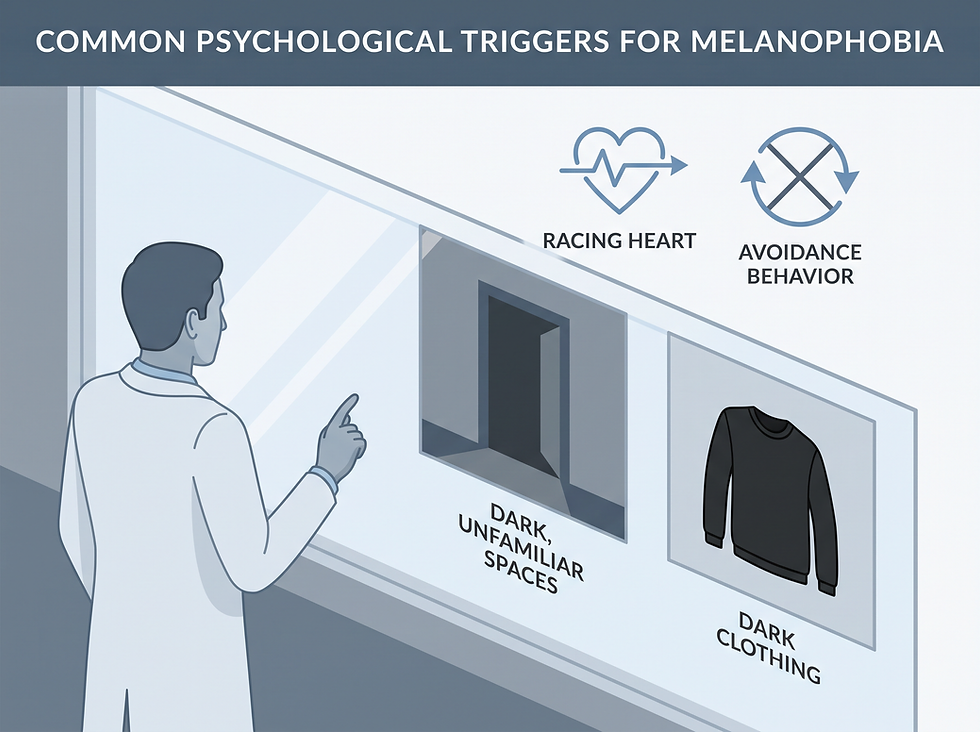
For many, the fear of black is not about the color itself but what it represents in a psychological or cultural context. These associations can trigger intense emotional and physical responses.
Mourning and Death: Funerals, cemetery visits, or black clothing.
Danger and Evil: Dark alleys, nighttime environments, or "villainous" imagery.
Loneliness and Despair: Feeling lost in the dark or emotional isolation.
The Unknown: Fear of closing one's eyes or what might be hidden in shadows.
Symptoms and Behavioral Changes
The symptoms of melanophobia manifest in both physical responses and significant changes in behavior. When confronted with the color black, an individual may experience a loss of control or intense panic.
Behavioral Signs
People living with this phobia often go to great lengths to avoid their trigger. This can include refusing to use essential items like medication containers if they have black labels, or avoiding social situations where dark colors are prevalent, such as Halloween events or formal gatherings. In extreme cases, a person may refuse to leave their home or even fear closing their eyes, as it brings about total darkness.
Physical and Mental Responses
The body's reaction to the fear can be severe, often mimicking a panic attack. Common physical symptoms include nausea, abdominal pain, headaches, and difficulty concentrating. Mentally, the phobia can lead to chronic anxiety and, if left untreated, may contribute to the development of depression.
Causes and Risk Factors
Researchers believe that melanophobia arises from a combination of genetic and environmental factors. A family history of mood disorders or anxiety can make an individual more prone to developing specific phobias.
Environmental trauma is another significant factor. If a person has experienced a traumatic event—such as a loss or an accident—that they closely associate with the color black, the brain may develop a phobic response as a protective mechanism. Additionally, cultural influences that consistently link black with negativity or evil can reinforce these fears from a young age.

Diagnosis and Clinical Assessment
Diagnosing melanophobia involves a detailed discussion between a patient and a healthcare provider. Because there is no laboratory test for a phobia, the diagnosis relies on the clinical presentation of symptoms and their impact on the patient's life.
Providers typically assess:
Frequency and Intensity: How often the fear occurs and how overwhelming it feels.
Avoidance Behaviors: Whether the patient has changed their daily routine to avoid dark colors.
Duration: How long the symptoms have been present.
History: Any personal or family history of anxiety disorders or relevant cultural beliefs.
Pathways to Recovery
While living with melanophobia can be isolating, the condition is highly treatable. Most individuals can learn to manage their fear and lead a normal life through professional intervention.
Primary Treatments
Exposure Therapy: This is the most common treatment. It involves gradual, controlled exposure to the color black. A patient might start by looking at a small black dot on a page and eventually progress to holding entirely black objects.
Cognitive Behavioral Therapy (CBT): A therapist helps the patient explore the thoughts and feelings associated with dark colors, working to replace negative associations with healthier coping mechanisms.
Medications: While not a cure, antidepressants or anti-anxiety medications can help manage symptoms during particularly challenging times, such as attending a funeral.
Self-Management and Coping
In addition to professional therapy, lifestyle changes can help lower overall anxiety levels. Reducing caffeine and alcohol intake, practicing deep-breathing exercises, and spending time with supportive loved ones can all contribute to a successful recovery.

Frequently Asked Questions
1. What is melanophobia?
It is an intense and overwhelming fear of the color black or very dark colors.
2. Is melanophobia a common condition?
While specific phobias are common, melanophobia is considered a rarer variant of chromophobia (fear of colors).
3. What causes someone to fear the color black?
It is often caused by a combination of genetic predisposition and traumatic events associated with the color.
4. Can melanophobia be cured?
While "cure" is a strong word, most people can successfully manage the condition through therapy.
5. What is exposure therapy?
It is a treatment where a person is gradually and safely exposed to their fear until it no longer triggers an intense reaction.
6. Does melanophobia affect daily life?
Yes, it can lead to avoiding common items, staying indoors, or having difficulty at night.
7. Is it the same as a fear of the dark?
No, fear of the dark is called nyctophobia, though the two conditions can occur together.
8. What are the physical symptoms of a spasm?
In the context of a phobia, it can cause nausea, headaches, and rapid heartbeat during a panic attack.
9. Can children have melanophobia?
Yes, phobias can develop at any age, though they are often diagnosed in adulthood.
10. How does CBT help?
CBT helps identify the irrational thoughts behind the fear and provides tools to change those thought patterns.
11. Are there specific triggers for this phobia?
Common triggers include black clothing, dark rooms, or even black text on a screen.
12. Should I avoid the color black if I have this fear?
Actually, avoidance can make the phobia worse. Gradual exposure under professional guidance is recommended.
13. Can medication help?
Medication can help manage the anxiety associated with the phobia but does not treat the underlying cause.
14. What should I do if I have a panic attack?
Deep-breathing exercises and grounding techniques are often recommended to manage immediate panic.
15. When should I see a doctor?
You should seek help if your fear starts to interfere with your work, relationships, or daily activities.
Medical Disclaimer: The information provided in this article is for educational purposes only and should not be used as a substitute for professional medical advice, diagnosis, or treatment. Always seek the advice of a qualified healthcare provider with any questions you may have regarding a medical condition.
Comments