Persistent Genital Arousal Disorder: Symptoms and Management

Updated: 2 days ago
Medically reviewed by Dr. Baraa Alnahhal, MD · Last reviewed: October 2026
Persistent Genital Arousal Disorder (PGAD), also known as genitopelvic dysesthesia, is a rare condition involving unwanted and distressing sensations of genital arousal without sexual desire. First identified in 2001, it is a chronic condition that can significantly impact mental health and quality of life. While the exact cause is unknown, it is often managed through a combination of physical treatments, medications, and psychological therapies. Early consultation with a sexual health specialist is key to finding an effective management plan.
Quick Answer
Persistent genital arousal disorder (PGAD) is a condition causing spontaneous, unwanted and persistent sensations of genital arousal, such as tingling or throbbing, without sexual interest. These sensations are often distressing and may not be relieved by orgasm. Neurological, hormonal or vascular factors can trigger it, and management typically combines medication, pelvic floor therapy and cognitive behavioral therapy. [1]
What the research says
Evidence on PGAD is limited: a 2015–2025 systematic review found 14 studies and no randomized trials. Of 799 records screened, 14 studies (surveys, case-control or cohort studies, and case series) were included. Diagnosis was inconsistent, and the most often implicated causes were neuropathic or structural, such as sacral radiculopathy, Tarlov cysts, and pudendal or small-fiber neuropathy. Treatments included pelvic-floor physiotherapy, cognitive-behavioral approaches, medicines such as gabapentinoids and benzodiazepines, neuromodulation, and selected surgical decompression, with mixed outcomes and limited follow-up (Bhowmik et al., Urol Ann, 2026).
Causes remain unconfirmed and much of the evidence comes from case reports. A literature review through April 2016 found that most research on PGAD’s causes and treatments was published as case studies, that no cause had been confirmed, and that treatments, from electroconvulsive therapy to oral medication, had variable success. Online surveys suggested a negative effect on mental health and sexual functioning (Jackowich et al., Sex Med Rev, 2016).
Research summaries are based on article abstracts retrieved from PubMed.
What are persistent genital arousal disorder (PGAD) and genitopelvic dysesthesia?
Persistent Genital Arousal Disorder (PGAD) is a relatively new medical diagnosis, first formally recognized by researchers in 2001. The condition is also referred to as genitopelvic dysesthesia (GPD), reflecting the abnormal and often painful sensations (dysesthesia) experienced in the pelvic region. Unlike healthy sexual arousal, which is associated with desire and pleasure, the sensations in PGAD are involuntary, intrusive, and highly distressing for the individual [1].
While the majority of clinical studies have focused on women, PGAD can also affect men. In men, the condition is sometimes compared to priapism, which involves an unwanted erection lasting for four hours or more. Because the condition is rare and can be embarrassing to discuss, many individuals suffer in silence, which can lead to severe impacts on their mental well-being and social interactions [1].
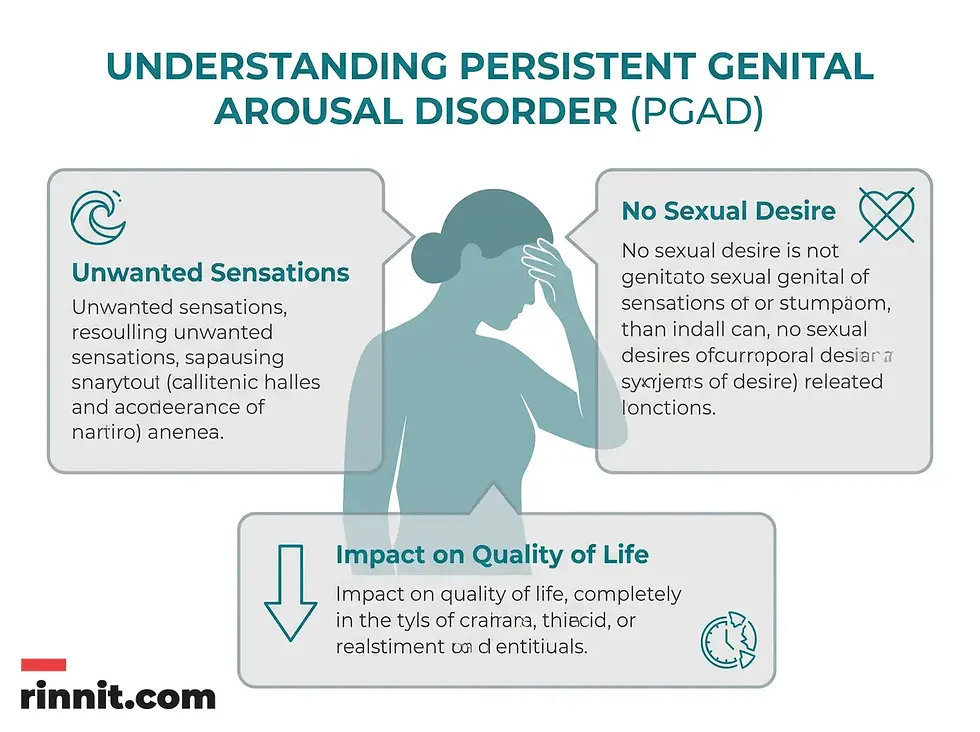
What are the symptoms of persistent genital arousal disorder?
The hallmark of PGAD is the sudden onset of unwanted genital arousal that can last for hours or even days. These sensations are often described using various sensory terms and can involve the clitoris, labia, perineum, or anus. For many, orgasms provide only brief relief or may even worsen the discomfort, leading to a cycle where sexual release is associated with pain management rather than pleasure [1].
Symptom Category | Common Sensations |
Physical Sensations | Pulsating, throbbing, pounding, burning, or tingling. |
Genital Changes | Increased blood flow, tension, and spontaneous lubrication. |
Breast Symptoms | Nipple sensitivity and breast enlargement. |
Muscle Activity | Involuntary vaginal contractions and unpredictable orgasms. |
The Psychological Impact
Beyond the physical symptoms, PGAD can take a significant toll on mental health. The constant, uncontrollable nature of the sensations can lead to chronic stress, anxiety, and depression. In severe cases, the distress may lead to suicidal thoughts, making it imperative for patients to have access to crisis resources like the 988 Suicide & Crisis Lifeline [1].
What causes persistent genital arousal disorder, and who is at risk?
The exact causes of persistent genital arousal disorder (PGAD) are not yet fully understood, but it likely involves vascular, neurological and hormonal factors. Certain physical activities, such as riding a bicycle or having a full bladder, have been identified as potential triggers for symptoms in some individuals [1].
Neurological Factors: Pinched pelvic nerves, brain damage, or spinal issues like herniated disks or Tarlov cysts.
Vascular and Hormonal: Pelvic varicose veins and hormonal shifts during pregnancy or menopause.
Medication Side Effects: Symptoms may be triggered by the discontinuation of certain antidepressants, specifically SSRIs.
Associated Conditions: Patients with restless legs syndrome, irritable bowel syndrome, or chronic pelvic pain may be at a higher risk [1].

How is persistent genital arousal disorder diagnosed?
Diagnosing PGAD can be challenging due to its rarity and the lack of widespread clinical awareness. Healthcare providers typically begin with a thorough medical history and a detailed review of the patient’s symptoms. It is essential for patients to be as open as possible about when their symptoms start and what factors seem to influence them [1].
A physical examination, including a pelvic exam, is usually performed to rule out other potential causes. Providers may also recommend blood tests or imaging studies to look for underlying issues like cysts or nerve compression. Finding a specialist who is familiar with sexual health can be particularly beneficial for navigating the diagnostic process [1].
How is persistent genital arousal disorder treated, and how can people cope?
Because there is no standard treatment for PGAD, management often requires a trial-and-error approach to find what works best for each individual. The goal of treatment is to reduce the frequency and intensity of the sensations and to improve the patient’s overall quality of life [1].
Multidisciplinary Management
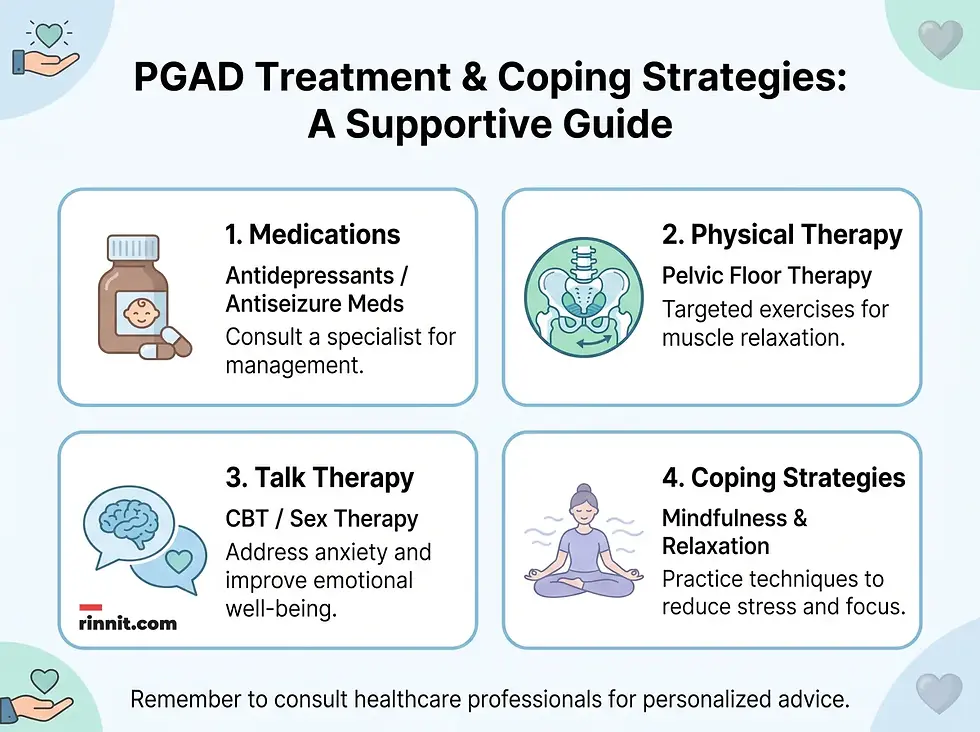
Treatment plans often combine several different approaches to address both the physical symptoms and the psychological impact of the disorder [1].
Treatment Type | Examples and Approaches |
Physical | Botox injections, pelvic floor exercises, and nerve stimulation (TENS). |
Medication | Antidepressants, antiseizure drugs, or smoking cessation aids. |
Psychological | Cognitive behavioral therapy (CBT) and specialized sex therapy. |
Identifying personal triggers and using relaxation or distraction techniques can also be effective components of a long-term management strategy. Couples therapy can help partners navigate the challenges PGAD poses to intimacy and relationship health [1].
Conclusion
Persistent Genital Arousal Disorder is a complex and often misunderstood condition that requires compassionate, specialized care. While it can be a chronic and distressing experience, recovery and symptom relief are possible through a combination of medical and psychological interventions. If you are experiencing unwanted genital sensations, reaching out to a healthcare provider is the first step toward reclaiming your quality of life.
Frequently Asked Questions
What is the difference between PGAD and high libido?
PGAD involves unwanted, spontaneous physical sensations of arousal without sexual desire, whereas a high libido involves a strong and pleasurable desire for sexual activity.
Can men be diagnosed with PGAD?
Yes, although it is more commonly studied in women, men can experience similar unwanted sensations, sometimes referred to as a form of priapism.
Is PGAD a psychological disorder?
While PGAD has significant psychological impacts like anxiety and depression, it is considered a physical condition likely caused by neurological or vascular issues.
Can orgasms cure PGAD?
No, orgasms typically do not cure PGAD. They may provide very brief relief, but in many cases, the symptoms return quickly or the orgasm itself may be painful.
What should I do if I have suicidal thoughts due to PGAD?
If you are in crisis, please call or text the 988 Suicide & Crisis Lifeline immediately, or contact your local emergency services. Help is available 24/7.
Are there specific medications for PGAD?
There are no FDA-approved medications specifically for PGAD, but doctors often prescribe antidepressants, antiseizure medications, or nerve-numbing agents to manage symptoms.
Does riding a bike make PGAD worse?
For some individuals, the physical pressure from activities like bicycle riding can trigger or worsen PGAD symptoms.
Is PGAD related to restless legs syndrome?
Some studies have found an association between PGAD and restless legs syndrome, suggesting a potential shared neurological link.
How long do PGAD symptoms typically last?
Symptoms can vary; they may be constant or occur in episodes that last for hours, days, or even longer.
How is PGAD diagnosed?
There is no single test. A provider asks about your symptoms and health history, does an exam, and may order imaging or nerve tests to look for causes such as nerve irritation in the pelvis.
Related Resources
External resource for deeper reading:
Cleveland Clinic. Persistent Genital Arousal Disorder. Cleveland Clinic Health Library. Last updated March 19, 2026. https://my.clevelandclinic.org/health/diseases/23998-persistent-genital-arousal-disorder
Related Reading
Hypertonic Pelvic Floor: Understanding Muscle Tension and Relief explains tight pelvic floor muscles and therapies that ease them.
Pudendal Nerve: Function, Anatomy, Symptoms and Care describes the pelvic nerve often involved in genital sensations.
What Is Restless Legs Syndrome? A Plain-Language Guide to the Urge to Move Your Legs at Night covers a nerve condition that has been linked with PGAD.
Priapism: Symptoms, Causes & Emergency Treatment explains prolonged unwanted erections and why they need urgent care.
References
Cleveland Clinic. Persistent Genital Arousal Disorder. Cleveland Clinic Health Library. Last updated March 19, 2026. https://my.clevelandclinic.org/health/diseases/23998-persistent-genital-arousal-disorder
Bhowmik P, Shafiq MU, Sultan L, et al. Persistent genital arousal disorder: A systematic review of diagnosis, etiology, and treatment approaches (2015-2025). Urol Ann. 2026;18(2):95-105. PMID: 42088141. DOI: 10.4103/ua.ua_157_25
Jackowich RA, Pink L, Gordon A, et al. Persistent Genital Arousal Disorder: A Review of Its Conceptualizations, Potential Origins, Impact, and Treatment. Sex Med Rev. 2016;4(4):329-342. PMID: 27461894. DOI: 10.1016/j.sxmr.2016.06.003
Medical disclaimer
This article is for informational purposes only and is not a substitute for professional medical advice, diagnosis, or treatment. Always seek the advice of your physician or other qualified health provider with any questions you may have about a medical condition.



Comments