Pudendal Nerve: Function, Anatomy, Symptoms and Care

Updated: 2 days ago
Medically reviewed by Dr. Baraa Alnahhal, MD · Last reviewed: October 2026
Quick Answer: What is the pudendal nerve?
The pudendal nerve is a major peripheral nerve on each side of the pelvis that carries sensation from the genitals, perineum and anus and controls the anal and urethral sphincters. It arises from the S2 to S4 nerve roots. Trauma, surgery, childbirth or cycling pressure can affect it, so discuss chronic pelvic pain or incontinence with a professional.
What the research says
The pudendal nerve’s branching pattern varies from person to person. In a dissection study of 28 cadavers, a nerve plexus linking the inferior rectal and perineal branches was found near the anal sphincters in 5, and an additional nerve arising from the pudendal nerve at the level of the sacrotuberous and sacrospinous ligaments was found in 11. This is a small anatomical study; it shows that anatomy varies, not how common nerve problems are (Schraffordt et al., ANZ Journal of Surgery, 2004). [1]
Pudendal nerve entrapment is diagnosed from clinical criteria. A literature review (PRISMA method) combined with a formal expert consensus recommended the “4+1” Nantes criteria for diagnosing pudendal nerve entrapment, and noted a lack of effect of opiates and a lack of controlled data for several other treatments (Levesque et al., European Journal of Pain, 2022). [2]
A pudendal block did not ease contraction pain well in late labor. In a randomized trial of 111 women in advanced labor (cervical dilation above 7 cm), 56 received a pudendal nerve block. Ten minutes later, 40 of them reported no improvement in pain during contractions and only 16 reported less painful contractions; the comparison group received a spinal block (Pace et al., Annals of the New York Academy of Sciences, 2004). [3]
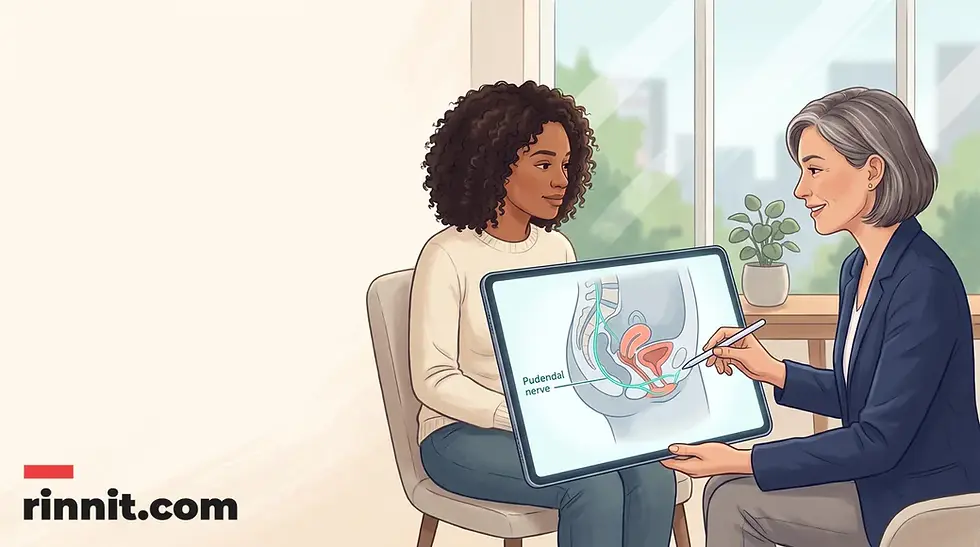
What is the pudendal nerve?
The pudendal nerve is a major nerve in the pelvic region. It is part of the peripheral nervous system, which carries signals between the brain and spine and the limbs and certain organs.
The pudendal nerve carries both motor and sensory information. Its motor signals help control pelvic sphincter muscles. Its sensory signals carry information about touch, pleasure, pain and temperature from parts of the pelvic region.
The nerve runs through the pelvic-floor muscles that support pelvic organs and ends at the external genitalia. Because it contributes to both sensation and muscle control, problems involving it can affect pain, sexual function, urination or bowel control.

What does the pudendal nerve do?
The pudendal nerve has two broad roles: motor control and sensation.
Its motor function controls the anal sphincter muscles and urethral sphincter muscles. These muscles help a person hold in or release stool and urine.
Its sensory function carries information from the penis or vagina, perineum, anal canal and anus. The information includes touch, pleasure, pain and temperature.
Pudendal nerve role | What it supports |
Motor control | Movement of the anal and urethral sphincter muscles |
Bowel control | Helps hold in or release stool |
Bladder control | Helps hold in or release urine |
Pelvic sensation | Touch, pleasure, pain and temperature |
Sexual sensation | Sensory information from the penis or clitoris and surrounding genital tissues |
Perineal sensation | Information from the skin between the anus and external genitalia |
Anal sensation | Information from the anal canal and anus |
The pudendal nerve does not act alone. Pelvic organs, muscles, spinal nerves and other peripheral nerves also contribute to pelvic sensation and function.
Where is the pudendal nerve located?
The body has two pudendal nerves, one on the left side and one on the right. Each arises from the sacral plexus, a bundle of nerves at the back of the pelvis in the lowest part of the spine.
The nerve connects to the S2 to S4 sacral spinal nerve roots. It then travels through the pelvis and the buttock region near the upper end of the femur, or thigh bone.
The pudendal nerve passes through an opening in the pelvic bone called the greater sciatic foramen. It exits the buttock region through a smaller opening called the lesser sciatic foramen. It then travels alongside the pudendal artery and vein into the pudendal canal, also called the Alcock canal.
Inside the pudendal canal, the nerve divides into smaller branches.
Part of the route | Description |
Sacral plexus | The nerve arises from this pelvic nerve network |
S2 to S4 roots | Sacral spinal nerve roots connected to the nerve |
Pelvis and buttock region | The nerve travels near the upper femur |
Greater sciatic foramen | Opening through which the nerve passes |
Lesser sciatic foramen | Opening through which it exits the buttock region |
Pudendal canal | Narrow pelvic tunnel that carries the nerve alongside an artery and vein |
The pudendal nerve’s deep, winding path helps explain why pelvic pain can be difficult to localize and why several different conditions may produce similar symptoms.
What are the pudendal nerve branches?
After entering the pudendal canal, the nerve divides into the inferior rectal nerve, perineal nerve and dorsal nerve.
Branch | Main functions described |
Inferior rectal nerve | Controls the anal sphincter and carries sensation from the anal sphincter and anal canal |
Perineal nerve | Controls pelvic-floor muscles and the urethral sphincter; carries sensation from the perineum and the labia or scrotum |
Dorsal nerve | Carries touch and pleasure sensation from the skin of the penis or clitoris and supports sexual pleasure and erections |
The branches overlap with several important pelvic functions. A symptom in one area does not necessarily reveal which branch is involved, so evaluation should be guided by a healthcare professional.
What conditions can affect the pudendal nerve?
Pressure on the pudendal nerve can cause pain or neuropathy, which means nerve damage.
Pudendal nerve entrapment syndrome is a rare type of nerve-compression syndrome. In this condition, an injury or another problem puts pressure on the pudendal nerve. It can cause pudendal neuralgia, described as chronic stabbing pain.
The condition is described as affecting about 1 in 100,000 people. This figure is a population description, not a personal risk estimate, and pelvic pain does not by itself mean that entrapment is present.
Condition or problem | How it may affect the nerve |
Pudendal neuropathy | Nerve damage may alter pelvic sensation or function |
Pudendal nerve entrapment | Pressure or compression may cause chronic nerve pain |
Pudendal neuralgia | Chronic stabbing pain associated with nerve irritation or compression |
Trauma | An accident or injury may damage or irritate the nerve |
Pelvic surgery | Surgery may cause a complication involving the nerve |
Many pelvic symptoms have causes outside the pudendal nerve. A professional evaluation is needed to distinguish nerve symptoms from conditions involving muscles, joints, organs or other nerves.
What causes pudendal nerve problems?
Possible causes of pudendal nerve damage or irritation include accidents and trauma, complications from pelvic surgeries, diabetes and diabetes-related neuropathy, difficult labor and delivery, prolonged pressure from activities such as cycling, radiation therapy and tumors or cysts.
A cause may not be obvious from the beginning. The nerve passes through a complex pelvic area, and symptoms can overlap with other conditions.
Possible contributor | Context |
Accidents or trauma | Injury can affect the nerve or nearby tissues |
Pelvic surgery | Complications may follow procedures such as prostatectomy or pelvic-organ-prolapse repair |
Diabetes | Diabetes-related neuropathy can damage peripheral nerves |
Labor and delivery | Difficult labor may affect pelvic nerves |
Cycling or prolonged pressure | Repeated pressure may irritate the nerve |
Radiation therapy | Treatment may affect nearby nerves or tissues |
Tumors or cysts | A mass may put pressure on the nerve or surrounding structures |
These are possible contributors, not a checklist for self-diagnosis.
What symptoms can pudendal nerve problems cause?
Pudendal nerve problems may cause chronic pain in the pelvic region, pain that becomes worse while seated, sexual dysfunction or urinary or fecal incontinence.
The quality of pain can vary. Pudendal neuralgia is described as chronic stabbing pain, but not every person with pelvic pain has neuralgia, and not every person with a pudendal nerve problem has the same symptoms.
Symptom or change | Why it deserves attention |
Chronic pelvic pain | May reflect nerve irritation or another pelvic condition |
Pain worse while seated | A pattern that should be discussed with a healthcare professional |
Sexual dysfunction | May involve sensation, erection, pleasure or pain |
Urinary incontinence | May reflect impaired control of the urethral sphincter or another condition |
Fecal incontinence | May reflect impaired control of the anal sphincter or another condition |
Contact a healthcare professional for chronic pelvic pain, seated pain, sexual dysfunction or urinary or fecal incontinence.
Seek prompt medical evaluation for sudden severe pelvic or abdominal pain, new weakness or numbness, inability to urinate or pass stool, new loss of bladder or bowel control, fever or rapidly worsening symptoms. These signs require assessment and do not identify one diagnosis.
How are pudendal nerve problems evaluated?
Evaluation begins with a conversation about symptoms, timing, triggers, medical conditions, injuries, surgeries, childbirth, cycling or other prolonged pressure. A healthcare professional may also consider changes in sensation, sexual function, urination or bowel control.
The specific examination and testing plan depends on the person’s symptoms and history. A single test does not confirm every pudendal nerve problem, and the symptom pattern should not be used for self-diagnosis.
Evaluation focus | Examples of information to discuss |
Pain pattern | Location, duration, quality and whether sitting worsens it |
Pelvic function | Changes in urination, bowel control or sexual function |
Possible injury | Accidents, trauma, surgery, childbirth or cycling pressure |
Nerve-health factors | Diabetes, diabetes-related neuropathy, radiation therapy or other conditions |
Associated symptoms | Numbness, altered sensation, fever, weakness or rapidly worsening symptoms |
A symptom pattern can guide evaluation, but it cannot establish a diagnosis by itself.

What is a pudendal nerve block during childbirth?
A pudendal nerve block is a clinician-provided form of pain relief that may be used during childbirth. It may be suggested when an epidural, a form of spinal anesthesia, cannot be used or is not wanted, or when extra pain relief is needed during repair.
A pudendal nerve block takes effect quickly. It can reduce pain during the pushing stage of childbirth or before an episiotomy. It does not relieve the pain from contractions.
Pain-relief decisions during labor are personal and clinical. Discuss available options, expected effects and limitations with the maternity-care team rather than relying on general descriptions.
Pudendal nerve block feature | What to know |
Purpose | Localized pain relief during part of childbirth |
Timing | May be used during the pushing stage or before an episiotomy |
Onset | Takes effect quickly |
Limitation | Does not relieve contraction pain |
Decision-making | Discuss the option with the maternity-care team |
How can someone support general nerve health?
General habits described for supporting the nervous system include avoiding prolonged sitting, taking breaks while cycling, managing stress through meditation, walking or other healthful approaches, eating a nutritious diet and maintaining a healthy weight.
Managing conditions such as diabetes and high blood pressure may help reduce factors that can damage nerves. People who smoke can seek help to quit because tobacco use slows blood flow to nerves.
These measures support general health. They do not guarantee prevention of pudendal nerve problems and should not replace evaluation of pelvic pain, incontinence or sexual dysfunction.
Supportive habit | Practical approach |
Limit prolonged sitting | Change position and take regular movement breaks |
Take cycling breaks | Reduce continuous pressure during rides |
Manage stress | Consider meditation, walking or another healthful approach |
Eat nutritiously | Choose a balanced pattern of nourishing foods |
Maintain a healthy weight | Discuss sustainable options with a healthcare professional when needed |
Manage diabetes and high blood pressure | Follow an individualized care plan |
Quit smoking | Seek professional support when appropriate |
Do not use a general stretching, exercise or self-treatment plan to explain away persistent pelvic symptoms.
What questions should you ask about pudendal nerve symptoms?
Questions about pudendal nerve symptoms can cover possible causes of pelvic pain or numbness, relevant history, which tests are appropriate and which symptoms need urgent care.
Could my pelvic pain, seated pain or altered sensation involve the pudendal nerve or another structure?
What details about timing, triggers and severity would help with evaluation?
Could prior pelvic surgery, childbirth, cycling, trauma, diabetes or radiation therapy be relevant?
Could my urinary or bowel-control changes have another cause?
What should I know about sexual symptoms that may involve pelvic sensation or nerve function?
Which examination or tests are appropriate for my symptoms?
What symptoms should prompt urgent or emergency care?
If a pudendal nerve block is being discussed during childbirth, what pain would it help and what pain would it not relieve?
Which general health changes are safe and realistic for me?
When should I return for follow-up if symptoms continue?
Conclusion
The pudendal nerve is a major peripheral nerve in the pelvis. One nerve runs on each side of the body, carrying sensation from the external genitals, perineum, anal canal and anus while helping control the sphincter muscles involved in bladder and bowel release.
It arises from the S2 to S4 sacral spinal nerve roots, travels through the pelvis and buttock region, enters the pudendal canal and divides into inferior rectal, perineal and dorsal branches. Pressure, trauma, surgery, diabetes-related neuropathy, difficult labor, prolonged cycling pressure, radiation therapy, tumors or cysts can affect it.
Chronic pelvic pain, pain that worsens while seated, sexual dysfunction or urinary or fecal incontinence deserves professional evaluation. General nerve-supportive habits may help overall health, but symptoms should not be self-diagnosed or managed indefinitely without care.
Want a clearer next step for pelvic-neurology questions? Read more about pelvic nerve health and talk with a healthcare professional about any symptoms before making decisions.
Frequently Asked Questions
What is the pudendal nerve?
The pudendal nerve is a major peripheral nerve in the pelvic region. It carries sensation from the external genitals, perineum, anal canal and anus and controls the anal and urethral sphincter muscles.
What does the pudendal nerve control?
The pudendal nerve's motor function controls the anal and urethral sphincters, which help hold in or release stool and urine. Its sensory function carries information about touch, pleasure, pain and temperature.
Where does the pudendal nerve come from?
The pudendal nerve arises from the sacral plexus and connects to the S2 to S4 sacral spinal nerve roots in the lowest part of the spine.
Does everyone have two pudendal nerves?
There is one pudendal nerve on each side of the body, so the typical arrangement is a left and right pudendal nerve.
What are the pudendal nerve branches?
The main branches described are the inferior rectal nerve, perineal nerve and dorsal nerve. They support anal sphincter control, pelvic-floor and urethral-sphincter function and sensation from the perineal and external-genital areas.
What is pudendal neuralgia?
Pudendal neuralgia is chronic stabbing pain associated with irritation or pressure affecting the pudendal nerve. Pelvic pain alone does not prove that pudendal neuralgia is present.
What is pudendal nerve entrapment?
Pudendal nerve entrapment syndrome is a rare nerve-compression syndrome in which an injury or another problem puts pressure on the pudendal nerve. It can cause pudendal neuralgia.
What can damage or irritate the pudendal nerve?
Possible contributors include trauma, pelvic surgery, diabetes-related neuropathy, difficult labor and delivery, prolonged pressure from activities such as cycling, radiation therapy, tumors or cysts.
Why does pudendal nerve pain worsen when sitting?
Pain that becomes worse while seated is a symptom that should be discussed with a healthcare professional. It can occur with pudendal nerve problems, but it does not identify the cause on its own.
Can pudendal nerve problems affect bladder or bowel control?
Yes. Because the nerve controls the urethral and anal sphincter muscles, a problem affecting it may be associated with urinary or fecal incontinence. These symptoms can also have other causes and deserve evaluation.
Can pudendal nerve problems affect sex?
Pudendal nerve problems can affect pelvic sensation and sexual function. Sexual dysfunction should be discussed respectfully with a healthcare professional, especially when it is new, persistent or associated with pain or altered sensation.
What is a pudendal nerve block during childbirth?
A pudendal nerve block is a clinician-provided pain-relief option that may reduce pain during the pushing stage of childbirth or before an episiotomy. It takes effect quickly but does not relieve contraction pain.
How can someone support pudendal nerve health?
General guidance includes avoiding prolonged sitting, taking breaks while cycling, managing stress, eating a nutritious diet, maintaining a healthy weight, managing diabetes and high blood pressure and seeking help to quit smoking. These measures do not replace evaluation for symptoms.
When should someone seek care?
Contact a healthcare professional for chronic pelvic pain, pain that worsens while seated, sexual dysfunction or urinary or fecal incontinence. Seek prompt evaluation for sudden severe pelvic or abdominal pain, new weakness or numbness, inability to urinate or pass stool, new loss of bladder or bowel control, fever or rapidly worsening symptoms.
Related Reading
Pudendal Nerve Block: Uses, Procedure and Side Effects explains pudendal nerve blocks.
References
Schraffordt SE, Tjandra JJ, Eizenberg N, et al. Anatomy of the pudendal nerve and its terminal branches: a cadaver study. ANZ J Surg. 2004;74(1-2):23-26. PMID 14725700. https://doi.org/10.1046/j.1445-1433.2003.02885.x
Levesque A, Bautrant E, Quistrebert V, et al. Recommendations on the management of pudendal nerve entrapment syndrome: a formalised expert consensus. Eur J Pain. 2022;26(1):7-17. PMID 34643963. https://doi.org/10.1002/ejp.1861
Pace MC, Aurilio C, Bulletti C, et al. Subarachnoid analgesia in advanced labor: a comparison of subarachnoid analgesia and pudendal block in advanced labor: analgesic quality and obstetric outcome. Ann N Y Acad Sci. 2004;1034:356-363. PMID 15731325. https://doi.org/10.1196/annals.1335.037
National Institute of Neurological Disorders and Stroke. Peripheral Neuropathy. NINDS. Last reviewed March 13, 2026. https://www.ninds.nih.gov/health-information/disorders/peripheral-neuropathy
American College of Obstetricians and Gynecologists. Medications for Pain Relief During Labor and Delivery (FAQ086). ACOG. Last updated December 2022; last reviewed October 2024. https://www.acog.org/womens-health/faqs/medications-for-pain-relief-during-labor-and-delivery
Disclaimer
This article is for general educational purposes and is not a substitute for professional medical advice, diagnosis or treatment. Always seek the advice of a qualified health provider with any questions you may have regarding a medical condition.
It explains pudendal nerve function, pelvic sensation, sphincter control, anatomy, branches, nerve compression, possible causes, symptoms, childbirth-related nerve blocks and general nerve-supportive habits. It does not diagnose pudendal neuralgia, pudendal nerve entrapment, neuropathy or another cause of pelvic pain, and the approximate 1-in-100,000 figure is a population description, not a personal risk estimate.



Comments