Papyrophobia (Fear of Paper): Symptoms, Causes, and Therapy

Updated: 2 days ago
Medically reviewed by Dr. Baraa Alnahhal, MD · Last reviewed: September 2026
TL;DR: Papyrophobia is a rare specific phobic disorder characterized by an illogical and persistent fear of paper. Individuals with this condition may experience intense anxiety when seeing, touching, or writing on paper, often stemming from fears of paper cuts or germ contamination. While not formally recognized in the DSM-5, it is a manageable anxiety disorder. Treatment typically involves psychotherapy, such as cognitive behavioral therapy (CBT) and exposure therapy, to help individuals regain their quality of life.
Quick Answer: What is Papyrophobia?
Papyrophobia is a specific phobic disorder involving an intense, illogical fear of paper. Derived from the Greek "papyro" and "phobos," it manifests as severe anxiety triggered by touching, writing on, or even seeing various types of paper, including newspapers, currency, and receipts. Common symptoms include rapid heart rate, sweating, and a feeling of dread. This rare condition can significantly impair daily functioning, as paper is ubiquitous in modern society. Fortunately, it is highly treatable through professional mental health interventions like exposure therapy and cognitive behavioral therapy (CBT), which focus on desensitization and changing fear-based responses.
Understanding Papyrophobia
Papyrophobia is classified as a specific phobic disorder, a type of anxiety disorder where a particular object—in this case, paper—triggers a fear response that is disproportionate to any actual danger.

What People Fear
Individuals with papyrophobia may experience fear related to:
Physical Contact: Touching or writing on any type of paper surface.
Visual Stimuli: Seeing wallpaper, large sheets of paper, or crumpled paper.
Auditory Triggers: The sound of paper being torn or crumpled.
Specific Risks: An intense worry about getting a paper cut or coming into contact with germs on paper money and receipts.
Currency: Handling bills, which often combines a fear of the material with concerns about cleanliness.
Symptoms and Related Conditions
When confronted with paper, individuals with papyrophobia often experience physical and emotional symptoms characteristic of a panic response.
Physical Symptoms
The body’s "fight or flight" response can cause several noticeable symptoms:
Symptom Category | Common Manifestations |
Cardiovascular | Rapid heart rate, chest tightness, and palpitations. |
Respiratory | Shortness of breath and rapid breathing (hyperventilation). |
Gastrointestinal | Nausea, vomiting, or diarrhea. |
General Physical | Dizziness, dry mouth, profuse sweating, and trembling. |
Emotional | An extreme feeling of dread, terror, or an impending sense of doom. |
Associated Phobias
It is common for people to struggle with multiple interrelated phobias. Those with a fear of paper may also experience:
Chrometophobia: Fear of money (specifically paper bills).
Cogombophobia: Fear of cardboard boxes.
Hemophobia: Fear of blood (often linked to the fear of paper cuts).
Mysophobia: Fear of germs (germophobia).
Dendrophobia: Fear of trees (the source of paper).
Causes and Risk Factors
While the exact cause of papyrophobia isn't always clear, several factors can increase the likelihood of developing a specific phobia.
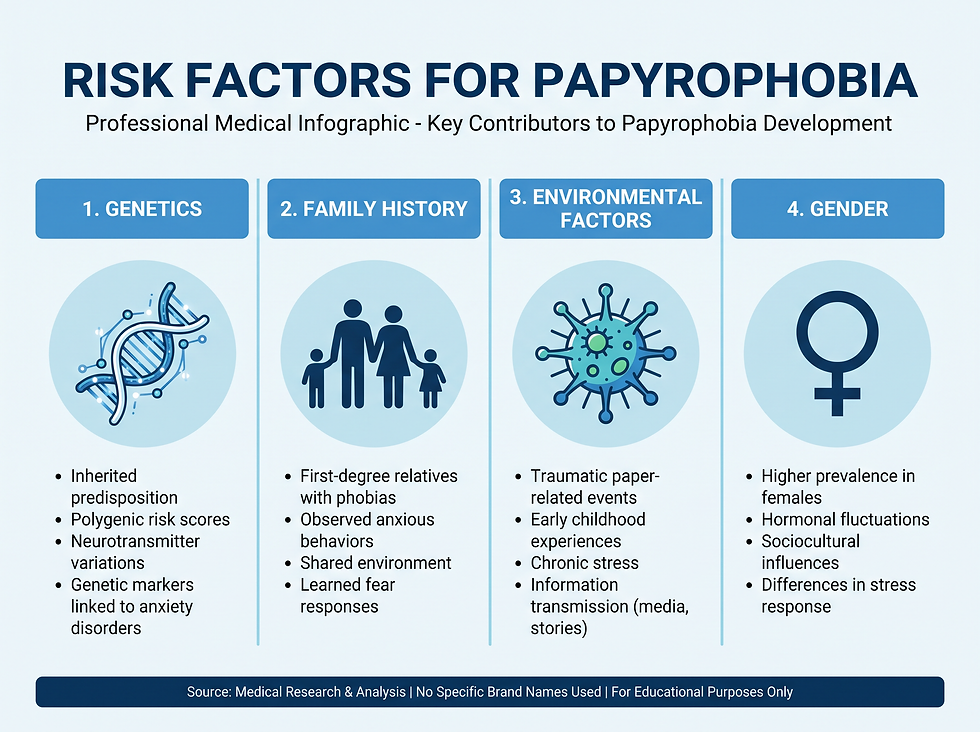
Primary Risk Factors
Family History: Growing up with a parent or relative who has an anxiety disorder or phobia can influence a person's own fear responses.
Genetics: Certain gene changes may make some individuals more prone to developing anxiety-related conditions.
Gender: Females are statistically more likely than males to experience phobic disorders.
Environmental Concerns: Concerns about germ transmission (such as during the COVID-19 pandemic) can exacerbate fears of touching shared paper items like money.
Diagnosis and Treatment
Although papyrophobia is not a standalone diagnosis in the DSM-5, it falls under the category of "Specific Phobia." A mental health professional evaluates symptoms based on their duration (typically at least six months) and the extent to which they interfere with daily life.
Effective Therapies
Treatment focuses on reducing the anxiety response and helping the individual function normally in environments where paper is present.
Treatment Type | How It Works |
Exposure Therapy | The most common treatment. It involves gradual, controlled exposure to paper to desensitize the individual over time. |
Cognitive Behavioral Therapy (CBT) | Helps patients identify and change the illogical thought patterns that fuel their fear of paper. |
Dialectical Behavior Therapy (DBT) | Teaches coping skills and relaxation techniques, such as meditation, to manage symptoms. |
Hypnotherapy | Used alongside other therapies to help uncover the root cause of the phobia in a relaxed state. |
Medication | Anti-anxiety drugs or antidepressants may be prescribed temporarily to manage severe symptoms. |

Conclusion
Papyrophobia is a rare but challenging condition that can make navigating a paper-filled world difficult. However, it is not something that must be faced alone or without hope. Through professional guidance and evidence-based therapies like exposure therapy and CBT, individuals can successfully manage their symptoms and overcome their fear. If you find that an avoidance of paper is limiting your career or social life, reaching out to a mental health specialist is the first step toward recovery.
Is a fear of paper affecting your daily life or career? Consult a mental health professional for a supportive evaluation.
Frequently Asked Questions
1. Is papyrophobia a real medical condition?
Yes, while rare, it is recognized by mental health professionals as a specific phobic disorder, which is a type of anxiety disorder.
2. What is the main cause of papyrophobia?
There is no single cause, but it often involves a combination of genetics, family history, and personal experiences or fears, such as a fear of germs or paper cuts.
3. Can papyrophobia be cured?
Most people can successfully overcome or manage their fear through professional treatments like exposure therapy and cognitive behavioral therapy (CBT).
4. Is the fear of paper cuts part of papyrophobia?
Yes, for many people, the fear of paper is rooted in the anxiety of getting a painful paper cut or the sight of blood (hemophobia).
5. How rare is papyrophobia?
Specific phobias are common (affecting about 1 in 10 adults), but papyrophobia specifically is considered a rare form.
6. Can I be afraid of money if I have papyrophobia?
Yes, a fear of paper money (chrometophobia) is frequently associated with papyrophobia.
7. Does papyrophobia affect daily life?
It can be very disruptive since items like receipts, mail, tickets, and money are essential for most daily activities.
8. What happens during exposure therapy?
A therapist gradually introduces you to paper in a safe environment, starting with just looking at it and eventually progressing to touching or writing on it.
9. Can children have papyrophobia?
Yes, phobias can develop at any age, and children who witness a parent’s anxiety may be more likely to develop similar fears.
10. Is there a link between papyrophobia and germophobia?
Often, yes. Some people fear paper because they believe it carries germs (mysophobia), especially shared items like library books or currency.
11. What are the physical signs of a panic attack triggered by paper?
Signs include rapid heart rate, sweating, shaking, nausea, and a feeling of intense dread or terror.
12. Are there medications for papyrophobia?
While not a cure, anti-anxiety medications or antidepressants can help manage symptoms while you undergo therapy.
13. How long does treatment usually take?
The duration varies by individual, but many see significant improvement within a few months of consistent therapy.
14. What is the difference between fear and a phobia?
A fear is a natural response to danger, while a phobia is an extreme, illogical, and persistent anxiety about something that isn't actually harmful.
15. Can I manage papyrophobia on my own?
While relaxation techniques help, professional therapy is usually necessary to address the root cause and achieve long-term desensitization.
Medical Disclaimer: This content is for informational purposes only and does not constitute medical advice. Always seek the advice of your physician or other qualified health provider with any questions you may have regarding a medical condition.
Comments