Orthostatic Intolerance: Symptoms, Types, and Management

Updated: 3 days ago
Medically reviewed by Dr. Baraa Alnahhal, MD · Last reviewed: November 9, 2026
Orthostatic intolerance (OI) describes a group of conditions where standing up triggers symptoms like dizziness, lightheadedness, or fainting, which typically resolve upon sitting or lying down. This occurs when the body fails to properly adjust blood pressure and heart rate against the pull of gravity, resulting in insufficient blood flow to the brain. OI encompasses several specific types, including orthostatic hypotension and Postural Orthostatic Tachycardia Syndrome (POTS). Causes range from dehydration and viral illnesses to autonomic nervous system disorders. While there is often no absolute cure, most patients successfully manage symptoms through behavioral adjustments, such as standing up slowly and increasing fluid intake, or specialized medications.
Quick Answer: What is orthostatic intolerance?
Orthostatic intolerance is a condition in which standing causes lightheadedness, dizziness or fainting because not enough blood reaches the brain, as the body fails to adjust to the gravity-driven drop in blood pressure. Symptoms usually improve immediately on sitting or lying down. Management includes standing slowly, staying hydrated, compression stockings and sometimes medication.
What the research says
Orthostatic hypotension is common in older adults. A systematic review and meta-analysis of 20 studies in community-dwelling older people (24,967 participants) and 6 studies in long-term care (2,694 participants) found a pooled prevalence of 22.2% (95% CI 17 to 28) and 23.9% (95% CI 18.2 to 30.1), respectively, with large variation between studies and in how it was measured (Saedon et al., J Gerontol A Biol Sci Med Sci, 2020) [2].
Orthostatic hypotension is linked to falls. A systematic review of 63 studies (51,800 individuals), with 50 studies (49,164 individuals) in the meta-analysis, found that orthostatic hypotension was associated with higher odds of falls in older adults (odds ratio 1.73, 95% CI 1.50 to 1.99) (Mol et al., J Am Med Dir Assoc, 2019) [3].
Evidence for POTS treatments is still limited. A systematic review of 21 randomized clinical trials (750 patients) from 2000 to 2023 covered medicines and non-drug measures such as dietary sodium, exercise training, and compression. It concluded that many small trials exist and that large randomized trials are needed to determine which treatments should be used first (Kwok et al., Trends Cardiovasc Med, 2025) [4].
Study details retrieved from PubMed.
What Is Orthostatic Intolerance?
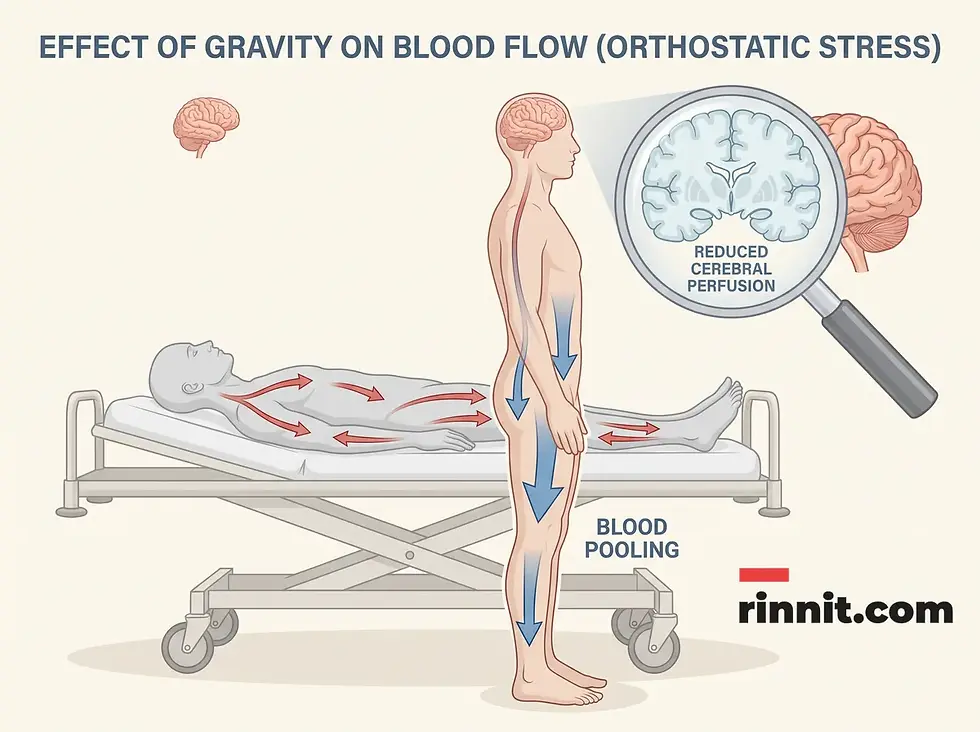
Orthostatic intolerance (OI) is not a single disease but rather a clinical syndrome characterized by the body's inability to maintain stable blood pressure and heart rate when moving from a horizontal to a vertical position. When a person stands, gravity naturally pulls blood toward the lower extremities. In a healthy system, the body compensates by narrowing blood vessels and increasing the heart rate slightly. In those with OI, these compensatory mechanisms fail, leading to a significant drop in blood pressure or an excessive rise in heart rate. [1]
Common Types of Orthostatic Intolerance
The condition is categorized based on the timing and nature of the body's response to standing.
Type | Timing of Response | Key Characteristics |
Classical Orthostatic Hypotension | Within 3 minutes | Significant drop in blood pressure. |
Initial Orthostatic Hypotension | Within 15 seconds | Rapid, brief drop in blood pressure. |
Delayed Orthostatic Hypotension | After 3 minutes | Gradual blood pressure drop over time. |
POTS | Within 10 minutes | Rapid heart rate increase without a BP drop. |
Neurally Mediated Hypotension | Variable | Quick BP drop accompanied by a slow heart rate. |
What are the symptoms of orthostatic intolerance?
Symptoms of orthostatic intolerance are primarily triggered by standing and are often exacerbated by heat, large meals, or prolonged periods of inactivity.
Physical Signs
The most common experience is a sensation of lightheadedness or "near-fainting" (presyncope). Other frequent symptoms include:
Dizziness and Syncope: Feeling faint or actually losing consciousness.
Sensory Changes: Blurred vision, inability to focus, or muffled hearing.
Systemic Distress: Fatigue, nausea, headaches, and shortness of breath.
Autonomic Responses: Excessive sweating, anxiety, and a flushing or warmth sensation.
What causes orthostatic intolerance and who is at risk?
OI can be triggered by temporary factors or underlying chronic conditions that disrupt the autonomic nervous system.
Primary Causes
Fluid and Volume Loss: Dehydration or the use of certain medications that lead to fluid loss.
Infection and Injury: Recent viral illnesses (like the flu) or physical trauma.
Nervous System Issues: Problems with the autonomic nervous system, which controls involuntary functions like blood pressure.
Prolonged Bed Rest: Recovery after surgery or long periods of lying down can decondition the body's response to gravity.
Who Is at Risk?
While OI can affect anyone, individuals over the age of 65 are at higher risk due to aging heart function and the frequent use of blood pressure medications. Other risk factors include standing up too quickly after a long period of sitting or being in warm environments that cause blood vessels to dilate. [1]

How is orthostatic intolerance diagnosed?
To diagnose OI, healthcare providers focus on how your blood pressure and heart rate react to changes in position.
Diagnostic Procedures
Active Standing Tests: Monitoring vitals while you stand near a bed or against a wall.
Tilt Table Test: Lying on a specialized table that slowly moves you to a vertical position while monitoring your body's reaction.
Blood Pressure Logs: Providers often ask patients to bring a log of blood pressure readings taken at home during symptomatic episodes.
How is orthostatic intolerance managed with lifestyle adjustments?
Orthostatic intolerance treatment focuses on managing symptoms rather than a permanent cure, and many people find relief through simple daily habits. [1]
Behavioral Strategies
The Slow Transition: Always sit on the edge of the bed before standing up.
Muscle Tensing: Tensing arm and leg muscles when standing can help push blood back toward the heart.
Environmental Control: Use fans to stay cool and avoid extremely hot showers or environments.
Dietary Changes: Eating smaller, more frequent meals can prevent blood from rushing to the digestive system after a large meal.
Medical Interventions
If lifestyle changes are insufficient, providers may recommend:
Increased Hydration: Significantly increasing fluid and salt intake (under medical supervision).
Compression Therapy: Wearing compression stockings to prevent blood pooling in the legs.
Medications: Drugs such as midodrine or fludrocortisone may be prescribed to help the body retain fluid or constrict blood vessels.

When should you contact a professional about orthostatic intolerance?
You should schedule an appointment with a healthcare provider if you experience frequent dizziness, fainting episodes, or shortness of breath when standing. Keeping a detailed log of what you were doing when symptoms occurred can provide vital clues for your diagnosis. [1]
What are the next steps for managing orthostatic intolerance?
Don't let the fear of fainting limit your daily life. If you experience lightheadedness when standing, start a symptom log today and consult a healthcare provider to discuss a personalized management plan.
Frequently Asked Questions
Why do I feel dizzy only when I stand up?
Dizziness only when standing up is the hallmark of orthostatic intolerance. Gravity pulls blood to your legs, and if your body doesn't react quickly enough to push it back up, your brain temporarily lacks enough oxygen, causing dizziness.
Does orthostatic intolerance go away?
Symptoms usually improve when you lie down. Long-term, the condition often gets better if the underlying cause (like dehydration or a specific medication) is addressed.
Can dehydration cause orthostatic intolerance?
Yes. Dehydration reduces your total blood volume, making it much harder for your body to maintain blood pressure when you stand up.
What is a tilt table test?
A tilt table test is a diagnostic test where you lie on a table that is tilted to different angles to see how your heart rate and blood pressure respond to the change in position.
Is POTS the same as orthostatic intolerance?
POTS (Postural Orthostatic Tachycardia Syndrome) is one specific type of orthostatic intolerance characterized by a rapid heart rate increase without a significant drop in blood pressure.
Should I eat more salt if I have OI?
Increasing salt can help retain fluid and raise blood pressure, but you must consult your healthcare provider before doing so, as it can be dangerous for people with certain heart or kidney conditions.
Can exercise help with OI?
Yes, but "horizontal" exercises like swimming, rowing, or recumbent biking are often recommended because they don't require you to stand while your heart is working hard.
Are compression stockings helpful?
Yes, they apply pressure to your lower legs, which helps prevent blood from pooling there and encourages it to return to your heart and brain.
When is dizziness an emergency?
Seek immediate care if dizziness is accompanied by a high fever, chest pain, sudden shortness of breath, or confusion.
Related Reading
Tilt Table Test: How It Works, What to Expect and What Results Mean explains how this test helps find the cause of fainting.
References
Cleveland Clinic. Orthostatic intolerance. Cleveland Clinic. Medically reviewed; last updated November 7, 2025. https://my.clevelandclinic.org/health/diseases/orthostatic-intolerance
Saedon NI, Pin Tan M, Frith J. The prevalence of orthostatic hypotension: a systematic review and meta-analysis. J Gerontol A Biol Sci Med Sci. 2020;75(1):117-122. PMID: 30169579. DOI: 10.1093/gerona/gly188
Mol A, Bui Hoang PTS, Sharmin S, et al. Orthostatic hypotension and falls in older adults: a systematic review and meta-analysis. J Am Med Dir Assoc. 2019;20(5):589-597.e5. PMID: 30583909. DOI: 10.1016/j.jamda.2018.11.003
Kwok CS, Lee S, Hall M, et al. The evidence for treatments for postural orthostatic tachycardia syndrome: a systematic review of randomized trials. Trends Cardiovasc Med. 2025;35(8):517-527. PMID: 40653179. DOI: 10.1016/j.tcm.2025.07.001
Medical disclaimer
This article is for general informational purposes only and is not a substitute for professional medical advice, diagnosis, or treatment. Always consult a qualified healthcare professional about your health.



Comments