Oligospermia Comprehensive Guide: Causes, Diagnosis, and Treatment for Low Sperm Count

Updated: 2 days ago
Medically reviewed by Dr. Baraa Alnahhal, MD · Last reviewed: October 2026
Quick Answer: Oligospermia at a Glance
Oligospermia is a low sperm count, defined as fewer than 15 million sperm per 1 mL of semen. [1] The main symptom is being unable to conceive after one year of regular unprotected sex. [1] Varicoceles are a common cause [1] [2], and heat and smoking raise risk. [1] It is diagnosed by semen analysis and treated with lifestyle changes, medicines, surgery or IVF. [1]
Feature | Details |
Medical definition | Fewer than 15 million sperm per 1 mL of semen. [1] |
Severe oligospermia | Fewer than 5 million sperm per 1 mL of semen. [1] |
Main symptom | Not being able to conceive after one year of regular sex without birth control. Most people have no other signs. [1] |
Common cause | Varicoceles (swollen veins in the scrotum), found in about 4 out of 10 males with low sperm counts. [1] |
Key risk factors | |
Main diagnosis | Semen analysis. [1] |
Common treatments | Lifestyle changes, antibiotics, hormone supplements, surgery, or assisted reproduction such as IVF. [1] |
What the research says
Varicocele is linked to lower sperm concentration and more sperm DNA damage. A systematic review and meta-analysis of observational studies (35 studies in the quantitative synthesis) found that men with varicocele had lower sperm concentration than men without it (mean difference −29 million/mL; 95% CI −37 to −21) and higher sperm DNA fragmentation (mean difference 15.34; 95% CI 9.74–20.9). These studies show an association; they did not test whether repair restores sperm counts. (Palani et al., World J Mens Health, 2025) [2]
Higher body weight is linked to poorer semen quality. A meta-analysis of 28 observational studies that used the WHO 2010 criteria found that total sperm count and progressive motility were significantly lower in overweight men than in normal-weight men, and obese men also had lower sperm concentration. Because the studies were observational, they show an association rather than proving cause. (Santi et al., Andrology, 2023) [3]
What Is Oligospermia?
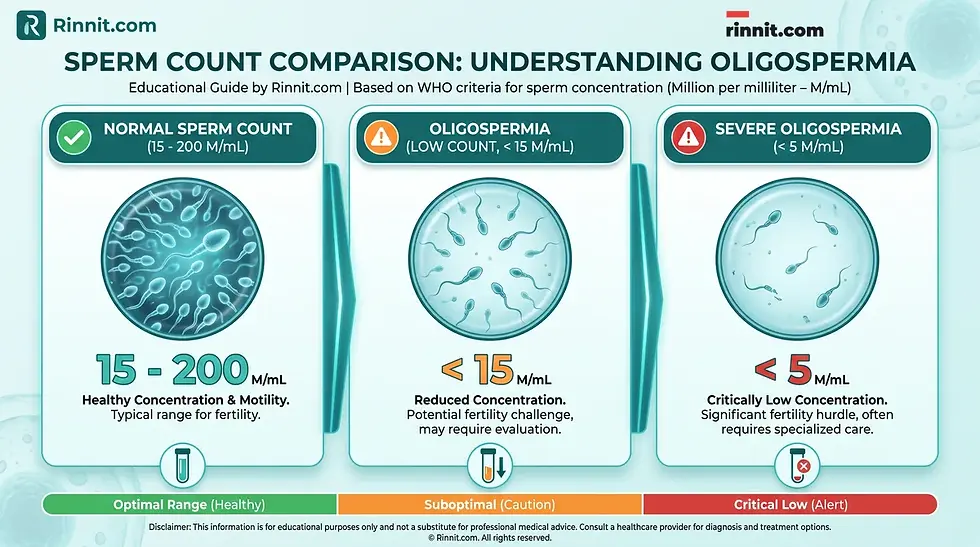
Oligospermia, also called oligozoospermia, is a condition in which semen contains a lower-than-normal concentration of sperm. [1] A typical sperm count ranges from 15 million to over 200 million sperm per milliliter of semen. [1] With oligospermia, the count is below 15 million, and below 5 million it is called severe oligospermia. [1] Cut-offs can differ slightly between laboratories and editions of the WHO manual, so ask your doctor how your result is interpreted.
A low sperm count can make it harder for a partner to become pregnant, but it does not mean pregnancy is impossible. [1] Conception may simply take longer or be more challenging [1], and many people with oligospermia can still father children.
What are the signs of oligospermia (low sperm count)?
Oligospermia usually has no obvious signs, and its main symptom is not being able to conceive after one year of regular sex without birth control. [1] Depending on the underlying cause, some people notice other changes:
What are the common causes of oligospermia?
Sperm production can be disrupted by many internal and external factors, including certain conditions, environmental toxins, heat, lifestyle factors, and medications. [1] Finding the cause is the first step toward treatment.
Medical Conditions
Varicoceles, which are swollen veins that drain the testicle, are one of the most common causes of oligospermia. [1] [2] About 4 out of 10 males with low sperm counts have one. [1] Other conditions include:
Infections: bacterial and viral infections, including urinary tract infections (UTIs) and sexually transmitted infections (STIs) such as gonorrhea and HIV. [1]
Blockages: blockages in the reproductive system that stop sperm from leaving the body. [1]
Hormone conditions: conditions that affect hormones, such as hypogonadism. [1]
Genetic disorders: such as Klinefelter syndrome and cystic fibrosis. [1]
Heat, Toxins, and Lifestyle Factors
The testicles work best at a temperature slightly lower than body temperature. [1] Undescended testicles, varicoceles, and spending a long time in very hot environments such as a hot tub can all raise the temperature and affect sperm production. [1] Other contributors include:
Substance use: smoking or using other tobacco products, drinking a lot of alcohol over long periods, and recreational drugs such as marijuana and cocaine. [1]
Weight and stress: a body mass index (BMI) over 25 and stress. [1] [3]
Toxins: heavy metals such as arsenic, cadmium, lead, and mercury, and industrial chemicals such as insecticides and pesticides. [1]
Medications: certain prescription and nonprescription drugs, including testosterone, prednisone, finasteride, and paroxetine. [1]

How is oligospermia diagnosed and treated?
A healthcare provider will review your medical history and do a physical exam. [1] If they suspect a low sperm count, they will recommend a semen analysis, in which a sample is evaluated in a lab. [1] They may also recommend genetic testing, imaging of the reproductive organs (such as testicular ultrasound), hormone tests, or urinalysis to find the cause. [1]
How to Improve Sperm Count
Whether a low count can be corrected depends on the cause. [1] Treatment may include:
Lifestyle changes: cutting back on alcohol, quitting smoking, marijuana, cocaine, and other substances, and keeping a weight that’s healthy for you through regular activity and healthy eating. [1]
Medical treatment: antibiotics for infections, hormone supplements, and counseling for issues such as erectile dysfunction. [1]
Surgery: to treat an enlarged scrotal vein (varicocele) or a blockage. [1]
Assisted reproduction: when the count can’t be raised, options such as in vitro fertilization (IVF) may be suggested. [1]
If you’re thinking about supplements such as coenzyme Q10, L-carnitine, or vitamin C, talk to a healthcare provider first. [1]

What is the bottom line on oligospermia?
Many causes of oligospermia are reversible. [1] Understanding the causes, from lifestyle habits to medical conditions, lets you take practical steps to protect your reproductive health. A low sperm count says nothing about your worth as a person and doesn’t mean you can’t be a parent. [1] If you’re concerned about your fertility, a healthcare provider or urologist can help you find the cause and plan next steps.
Looking for support? For more information on male reproductive health and fertility support, visit Rinnit.com.
Frequently Asked Questions
Can I still have a baby if I have oligospermia?
Often, yes. A low sperm count doesn’t mean your partner can’t get pregnant, but it can take longer or be more challenging. [1] Pregnancy may still be possible through unprotected sex, and assisted reproductive techniques such as IVF are options. [1]
What is the normal range for a sperm count?
A typical sperm count ranges from 15 million to over 200 million sperm per milliliter of semen. [1] Cut-offs can differ slightly between laboratories, so ask your doctor how your result is interpreted.
Is oligospermia the same as being sterile?
No. Oligospermia means a measurable amount of sperm is present but lower than expected. Azoospermia means there are no sperm in the semen. [1]
How is a low sperm count diagnosed?
A provider reviews your medical history, does a physical exam, and orders a semen analysis, in which a sample is evaluated in a lab. [1] Genetic testing, ultrasounds, hormone tests, and urinalysis may be used to find the cause. [1]
Can hot tubs lower my sperm count?
They can. The testicles work best at a temperature slightly lower than body temperature, and spending a long time in very hot environments such as a hot tub can affect sperm production. [1]
Are there vitamins that can help with sperm count?
Malnutrition can affect sperm health, and supplements such as coenzyme Q10, L-carnitine, and vitamin C may help. [1] Talk to a healthcare provider before trying any of them.
Does smoking affect fertility?
It can. Smoking or using other tobacco products is a lifestyle factor that may contribute to a low sperm count. [1]
What is a varicocele?
A varicocele is a swelling of the veins in the scrotum. It is one of the most common causes of oligospermia, found in about 4 out of 10 males with low sperm counts. [1]
Can stress cause a low sperm count?
Stress is one of the lifestyle factors that may contribute to oligospermia. [1]
Is a low sperm count permanent?
Not necessarily. It depends on the cause. Stopping medications or behaviors that contribute to it may raise the count [1], and antibiotics, hormone supplements, or surgery can help in some cases. [1] When the count can’t be raised, options such as IVF may be suggested. [1]
What is severe oligospermia?
Severe oligospermia means fewer than 5 million sperm per milliliter of semen. [1]
Can medications cause oligospermia?
Yes. Examples include testosterone, prednisone, finasteride, and paroxetine, among others. [1] Don’t stop a prescribed medication without talking to your provider first.
How long should we try to conceive before seeing a doctor?
The main sign of a low sperm count is not being able to conceive after one year of regular sex without birth control. [1] If you and your partner can’t get pregnant, reach out to a healthcare provider for testing.
Does alcohol affect sperm health?
Drinking a lot of alcohol over long periods may contribute to oligospermia [1], and cutting back is one of the lifestyle changes a provider may suggest.
Can infections lead to a low sperm count?
Yes. Bacterial and viral infections, including urinary tract infections (UTIs) and sexually transmitted infections (STIs) such as gonorrhea and HIV, can cause oligospermia. [1]
Related Reading
Learn more in our guide to Semen Analysis: Purpose, How to Prepare and What Results Mean.
References
Cleveland Clinic. Oligospermia. Cleveland Clinic. Updated February 27, 2025. https://my.clevelandclinic.org/health/diseases/22477-oligospermia-low-sperm-count
Palani A, et al. Sperm DNA Fragmentation in Men with Varicocele: A Systematic Review and Meta-Analysis. World J Mens Health. 2025;44(2):268-289. PMID 40583011. https://doi.org/10.5534/wjmh.250025
Santi D, et al. Does an increase in adipose tissue 'weight' affect male fertility? A systematic review and meta-analysis based on semen analysis performed using the WHO 2010 criteria. Andrology. 2023;12(1):123-136. PMID 37226894. https://doi.org/10.1111/andr.13460
Medical disclaimer
This article is for informational purposes only and does not constitute medical advice. Always seek the advice of your physician or other qualified health provider with any questions you may have regarding a medical condition.



Comments