Nicotine Poisoning: A Complete Guide to Symptoms and Emergency Care

Updated: 2 days ago
Medically reviewed by Dr. Baraa Alnahhal, MD · Last reviewed: October 2026
Quick Answer: Key Facts About Nicotine Poisoning
Nicotine poisoning, often called being nic sick, is an overdose of nicotine most often caused by vape liquid or smokeless tobacco, and children and pets are at highest risk. [1] Early symptoms include nausea, vomiting, pale skin and a rapid heart rate, followed later by low blood pressure, weakness and confusion. [1] Call 911 or Poison Control at 800-222-1222 right away. [1]
Feature | Details |
Common name | Often called being “nic sick.” [1] |
High-risk group | Children and pets, because of their small body size. [1] |
Major culprits | Liquid nicotine for vapes and smokeless tobacco are the leading causes. Nicotine pouches, patches, gum, and lozenges can also cause poisoning if overused. [1] |
Early symptoms | Nausea, vomiting, pale skin, extra saliva, dizziness, and a rapid heart rate. [1] |
Late symptoms | Diarrhea, low blood pressure, slow heart rate, muscle weakness, and confusion. [1] |
How long it lasts | About 1 to 2 hours after mild exposure; up to 18 to 24 hours after severe exposure. [1] |
Emergency contact | Call your local emergency number right away. In the US, call 911 or the Poison Center hotline at 800-222-1222. [1] |
What the research says
Vape liquid poisonings are rising, and young children are the most common victims. A review of exposure cases reported to US poison control centers since 2010 found an increase in e-cigarette and liquid nicotine exposures, mostly through swallowing, inhaling, or contact with the eyes or skin. Children under 5 were usually exposed by accident, while adults had both accidental and intentional exposures. Outcomes ranged from minor symptoms to life-threatening effects and death. (Ahmed, J Pharm Pharm Sci, 2022 [3])
Nicotine pouches can cause poisoning with repeated use. A case report (a single patient) described a 21-year-old man who used 15 extra-strength pouches (10.9 mg each) over 12 hours. He came to the emergency department with bizarre behavior and was admitted for ongoing confusion and nausea, which cleared after 24 hours. The authors call it the first reported case of acute nicotine toxicity from pouches and note that the pouches lack clear warning labels. (Kent et al., Nicotine Tob Res, 2025 [4])
What Is Nicotine Poisoning?
Nicotine poisoning, or nicotine toxicity, is a serious condition that happens when you have too much nicotine in your body. [1] Nicotine is a natural toxic substance found in all tobacco products, and it is also the chemical that makes them addictive. [1]
Nicotine poisoning can affect anyone of any age. The greatest risk is to children who accidentally swallow tobacco products or liquid nicotine. Because children weigh less and are smaller, even a small amount of nicotine can lead to serious complications. [1] In recent years, e-cigarettes (vapes) and highly concentrated liquid nicotine have made poisoning a growing public health concern. [1]
How Does Nicotine Poisoning Happen?
Nicotine poisoning happens when nicotine enters the body by swallowing, through the skin or through the lining of the mouth. [1] Any tobacco or nicotine product can cause poisoning if you take enough of it. Common sources include:
Vaping products: Liquid nicotine for e-cigarettes is highly concentrated and often flavored, which makes it especially dangerous for children. [1] [2]
Traditional tobacco: Cigarettes, cigars, pipe tobacco, and smokeless tobacco (chew and snuff). [1]
Nicotine pouches: Small pouches placed between the cheek and gum that release concentrated nicotine. [4]
Nicotine replacement products: Using too much nicotine gum, too many patches or lozenges, or overusing inhalers or nasal sprays. [1]

What are the two phases of nicotine poisoning symptoms?
Nicotine poisoning usually happens in two stages: an early phase and a late phase. Spotting the signs early can save a life, especially in children.
Early phase (15 minutes to 1 hour)
Early symptoms are the body’s first reaction to the stimulant effects of nicotine. They include nausea and vomiting, pale skin, extra saliva, dizziness, headache, abdominal pain, sweating, and a faster heart rate. [1] Some people also have rapid, heavy breathing, trouble with balance and walking, or tremors and muscle twitching. [1]
Late phase (30 minutes to 4 hours)
As poisoning gets worse, the body’s systems can begin to slow down. Late-phase symptoms are more serious and include diarrhea, low blood pressure (which can cause dizziness and fainting), a slow heart rate (bradycardia), abnormal heart rhythms, confusion and agitation, and muscle weakness or paralysis. [1]

What complications and risks come with nicotine poisoning?
Mild nicotine poisoning usually does not cause complications. [1] Severe poisoning can lead to seizures, shallow breathing, respiratory failure, coma, and death. [1] The most dangerous outcome is respiratory failure, which happens when the muscles that control breathing become paralyzed. This can occur within an hour of severe exposure, and children are especially at risk. [1]
Death is not common in adults because of their larger body size, but using more than one type of nicotine product at the same time may raise the risk. [1]
How is nicotine poisoning diagnosed and treated in an emergency?
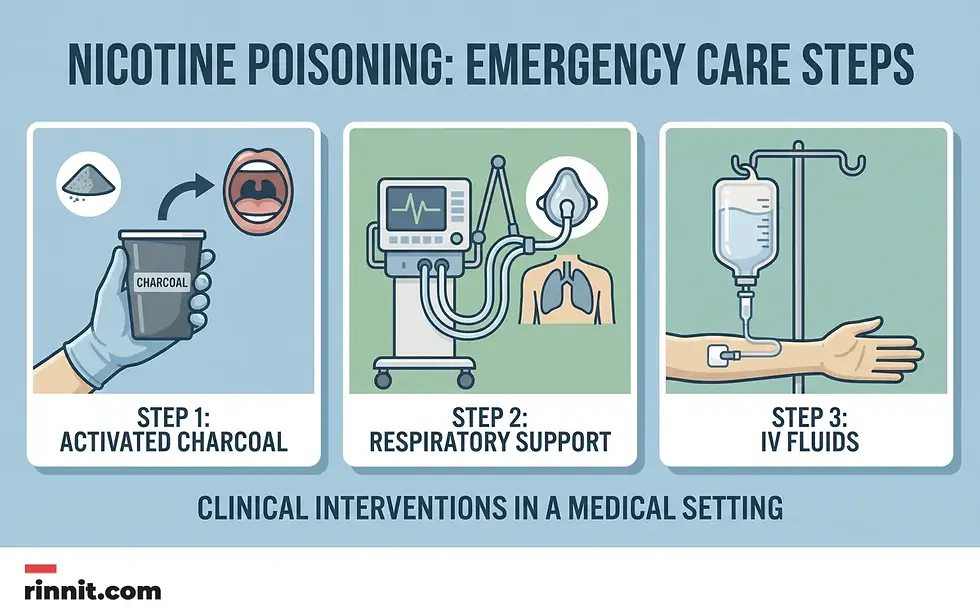
If you suspect nicotine poisoning, get medical help immediately rather than waiting to see how symptoms develop. Healthcare providers will ask about your symptoms and exposure, do a physical exam, check vital signs, and may test urine for nicotine. [1] Because poisoning can get worse quickly, treatment often starts before test results come back. [1] Treatment is given in a hospital and may include:
There is no specific antidote. Care focuses on managing symptoms and supporting vital functions until the nicotine clears from the body.
How can you keep your home safe from nicotine poisoning?
The best way to handle nicotine poisoning is to prevent it, especially in homes with children or pets.
Prevention tip | What to do |
Secure storage | Keep all nicotine products, especially liquid nicotine for vapes, out of reach and out of sight of children and pets. [1] |
Original containers | Always store nicotine products in their original container. [1] |
Safe disposal | Seal used nicotine containers before throwing them away, in case children or pets dig them out of the trash. [1] |
Quit support | Consider quitting nicotine products. Your healthcare provider can help. [1] |
What is the bottom line on nicotine poisoning?
Nicotine poisoning is preventable, but it is a dangerous medical emergency. As high-concentration products like vape liquid and nicotine pouches become more common, it matters more than ever to know the signs and store these products safely. If exposure happens, calling emergency services or a poison control center right away can mean the difference between a mild illness and a life-threatening complication.
Protect your loved ones today. Store every nicotine product out of reach, in its original container. If a child or pet may have been exposed, do not wait for symptoms. Call your local emergency number or poison control center right away.
Frequently Asked Questions
How much nicotine is poisonous?
The toxic dose depends on age and body weight. For a small child, even a tiny amount of liquid nicotine can be fatal. The American Academy of Pediatrics notes that a teaspoon of concentrated liquid nicotine can be fatal for the average 26-pound toddler.
Can you get nicotine poisoning through your skin?
Yes. Liquid nicotine can be absorbed through the skin, so wash the area right away if a spill happens and call a poison center.
How long does nicotine poisoning last?
Symptoms usually last 1 to 2 hours after mild exposure. After severe exposure, they can last up to 18 to 24 hours.
What should I do if my child eats a cigarette?
Call the Poison Center hotline at 800-222-1222 (US) or your local emergency number right away. Do not wait for symptoms to appear.
Is “nic sick” the same as nicotine poisoning?
Yes. “Nic sick” is a common name for nicotine poisoning. Mild cases may only cause early symptoms such as nausea and dizziness.
Can vaping cause nicotine poisoning?
Yes. Liquid nicotine for e-cigarettes is a leading cause of nicotine poisoning because it is so concentrated.
Are nicotine patches safe?
Nicotine patches are safe when used as directed, but poisoning can happen if several patches are worn at once or if a child finds and applies one.
What are the first signs of nicotine poisoning?
The earliest signs are usually nausea, vomiting, pale skin, extra saliva, and a rapid heart rate.
Can pets get nicotine poisoning?
Yes. Dogs and cats are very sensitive to nicotine if they eat tobacco products or lick spilled vape liquid. Keep all nicotine products, and used containers, out of their reach.
Does drinking water help with nicotine poisoning?
No. Water will not neutralize nicotine. Get professional medical help immediately.
Can you get nicotine poisoning from second-hand vapor?
Acute poisoning from second-hand vapor is unlikely, but the vapor does contain nicotine and can be harmful, especially to infants.
Why is liquid nicotine more dangerous than cigarettes?
Liquid nicotine is far more concentrated, so a very small amount contains a large, potentially deadly dose.
Can a teenager get nicotine poisoning from a single vape?
Yes. If the nicotine concentration is high or they use a lot in a short time, they can develop toxicity.
What is activated charcoal used for in poisoning?
Activated charcoal helps trap the poison in the gut so less of it is absorbed into the bloodstream.
Is there an antidote for nicotine poisoning?
No. Treatment focuses on managing symptoms and supporting breathing, heart rate, and blood pressure until the nicotine clears.
Related Reading
Stomach Pumping (Gastric Lavage): Why It's Done and What Happens explains stomach pumping.
References
Cleveland Clinic. Nicotine poisoning. Cleveland Clinic. Last updated March 27, 2026. https://my.clevelandclinic.org/health/diseases/21582-nicotine-poisoning
American Academy of Pediatrics. Liquid nicotine used in e-cigarettes can kill children. HealthyChildren.org. Last updated March 31, 2021. https://www.healthychildren.org/English/safety-prevention/at-home/Pages/Liquid-Nicotine-Used-in-E-Cigarettes-Can-Kill-Children.aspx
Ahmed A. A Review of Electronic Cigarettes and Liquid Nicotine Poisoning Exposure Cases in the United States. J Pharm Pharm Sci. 2022;25:354-368. PMID 36423643. https://doi.org/10.18433/jpps33141
Kent JT, Mok G, Austin E. Nicotine Toxicity From Repeat Use of Nicotine Pouches. Nicotine Tob Res. 2025;27(4):767-768. PMID 39087735. https://doi.org/10.1093/ntr/ntae111
Medical disclaimer
This article is for general informational purposes only and does not constitute medical advice. Always consult a qualified healthcare professional for diagnosis and treatment decisions. If you think someone has been poisoned, call your local emergency number or poison control center right away.



Comments