Mycoplasma Infections: Types, Symptoms, Treatment and Prevention

Updated: 2 days ago
Medically reviewed by Dr. Baraa Alnahhal, MD · Last reviewed: October 2026
Quick Answer: What is Mycoplasma?
Mycoplasma is a type of bacteria without cell walls that can infect the lungs, reproductive organs or urinary tract, so penicillin-type antibiotics do not work well against it. Some infections need no treatment, while others need a suitable antibiotic. Seek care for persistent or worsening symptoms; difficulty breathing or a lasting high fever requires emergency evaluation.
What the research says
Macrolide resistance in Mycoplasma pneumoniae varies widely by region. In a systematic review and meta-analysis of studies from 2017 to 2023, the overall pooled prevalence of macrolide resistance was 53% (95% CI 41%–65%), with 62% in Asia (29 studies), 9% in America (3 studies) and 6% in Europe (3 studies); the authors noted that low prevalence in many countries could be underestimated (Darazam et al., Iran J Public Health, 2025). [3]
In children with macrolide-resistant pneumonia, tetracyclines did better than macrolides in one meta-analysis. Eleven studies (1,143 children) compared the two drug classes; in a pooled estimate of 5 studies, fever lasted 1.64 days longer (95% CI 0.68–2.59) and hospital stay 1.22 days longer (95% CI 0.82–1.62) with macrolides than with tetracyclines, and therapeutic efficacy was lower with macrolides (OR 0.33, 95% CI 0.20–0.57); the authors called for further research before guidelines are changed (Bolormaa et al., Pediatr Infect Dis J, 2025). [4]
Genital infection with Mycoplasma genitalium is uncommon in people without symptoms. In a systematic review and meta-analysis of 63 studies, prevalence in randomly selected general-population samples was 1.3% (95% CI 1.0%–1.8%) in countries with higher levels of development and 3.9% (95% CI 2.2%–6.7%) in countries with lower levels; it was 0.9% in pregnant women and 0.8% in asymptomatic clinic attenders, and the authors concluded these low estimates do not support expanding testing to those groups (Baumann et al., Sex Transm Infect, 2018). [5]

What are the three main types of Mycoplasma?
Different Mycoplasma species tend to affect different body sites. The name of the species matters because symptoms, transmission and evaluation can differ.
Species | Usual body area or context | Key points |
Mycoplasma pneumoniae | Lungs and respiratory system | Can cause a chest-cold-like illness or mild pneumonia, sometimes called walking pneumonia. |
Mycoplasma genitalium | Reproductive organs | Can spread through sexual intercourse; symptoms may resemble a sexually transmitted infection. |
Mycoplasma hominis | Urinary tract and genitals | Can cause infection in people with weakened immune systems and may pass from parent to child during childbirth, particularly in premature babies. |

Why do some antibiotics not work against Mycoplasma?
Many antibiotics destroy bacteria by weakening their cell walls. Mycoplasmas do not have cell walls, so those antibiotics do not work effectively against them.
This does not mean every Mycoplasma infection needs an antibiotic or that one particular antibiotic is right for everyone. Treatment depends on the species, body site, severity, test results, health history and clinician judgment.
Do not use leftover antibiotics or share medication. If an antibiotic is prescribed, take it exactly as directed and contact the prescribing professional if symptoms do not improve or return after treatment.
What are the symptoms of a Mycoplasma infection?
Some Mycoplasma infections cause no symptoms. When symptoms occur, they may begin two to three weeks after exposure and may last from a few days to about a month, depending on the infection.
Respiratory symptoms
The most common symptoms of Mycoplasma pneumoniae infection include:
Dry cough.
Fatigue.
Fever.
Headache.
Sore throat.
Shortness of breath.
Abnormal lung sounds.
Rarely, a Mycoplasma infection can cause a rash that ranges from mild redness to painful blisters.
Genital or urinary symptoms
Mycoplasma genitalium can cause symptoms similar to a sexually transmitted infection, including pain during sex and discharge from the vagina or penis. Mycoplasma hominis can affect the urinary tract and genitals and may cause infection in people with weakened immune systems.
Symptoms in the genital or urinary area can have many causes. A clinician can help determine which tests and treatments are appropriate.
How does Mycoplasma spread?
Mycoplasma is contagious. Mycoplasma pneumoniae can spread from an infected person to nearby people through tiny droplets released when the person coughs or sneezes.
Respiratory Mycoplasma infections are contagious for an average of 10 days. Crowded or group environments can make exposure more likely, including schools, residence halls, hospitals, nursing homes and correctional facilities.
Mycoplasma genitalium can spread through sexual intercourse. Mycoplasma hominis can pass from parent to child during childbirth, particularly in premature babies.
Who is more likely to get Mycoplasma pneumoniae?
M. pneumoniae can affect anyone, but infections most commonly affect children ages 5 to 17. A preexisting lung condition such as asthma or a weakened immune system may increase risk.
Spending time in crowded environments can also increase exposure. Risk is not the same as certainty: being in a group setting does not mean that an infection will occur.
Risk context | Why it matters |
Age 5 to 17 | Respiratory infections caused by M. pneumoniae most commonly affect this age group. |
Asthma or another lung condition | An existing lung condition may increase the chance of infection or make respiratory symptoms more important to monitor. |
Weakened immune system | May increase the chance of infection or complications. |
Crowded or group settings | Close contact can make respiratory droplet exposure more likely. |
What complications can Mycoplasma cause?
Most infections are not severe, but complications can occur. Possible complications include asthma attacks, empyema, encephalitis, hemolytic anemia, kidney problems, pleural effusion, severe pneumonia and skin diseases such as Stevens-Johnson syndrome.
A new or worsening symptom should be discussed with a healthcare professional. Severe breathing symptoms, or a high fever lasting more than a couple of days, should not wait for a routine appointment.
How is a Mycoplasma infection diagnosed?
A healthcare professional may ask about symptoms, medical history and exposure to crowded environments, then perform a physical examination. A chest X-ray may help confirm M. pneumoniae infection. Sometimes a CT scan or another imaging test is used.
Laboratory testing depends on the suspected species and body site.
Test | What it may show |
PCR | A nose or throat swab can detect Mycoplasma genetic material. |
Serology | A blood sample can show antibodies indicating an immune response to infection. |
Coombs test | Checks for antibodies that can harm red blood cells. |
Chest X-ray | Can help evaluate or confirm a respiratory infection. |
CT scan | May provide additional imaging when a clinician considers it appropriate. |
A test result is interpreted in the context of symptoms, timing, exposure, examination and health history. Do not try to match a test to yourself without clinical guidance.
How is Mycoplasma treated?
Some Mycoplasma infections resolve on their own, especially when symptoms are very mild. Over-the-counter medicines may help relieve congestion or cough, but they do not replace evaluation when symptoms persist, worsen or involve breathing.
When treatment is needed, a healthcare professional may prescribe an antibiotic effective against Mycoplasma. The clinical information describes macrolides such as azithromycin, clarithromycin and erythromycin, and other possible options such as doxycycline. A fluoroquinolone such as levofloxacin may be considered for someone who is immunocompromised.
This list is educational, not a recommendation for self-treatment. Antibiotic selection depends on the infection, allergies, age, pregnancy status, other medicines, resistance patterns and health history.
After antibiotics begin, symptoms often decrease after two to three days. Respiratory infections may still take weeks to resolve, and a cough can last for a few weeks after treatment. Contact the healthcare professional if you remain ill or still have symptoms after completing antibiotics.
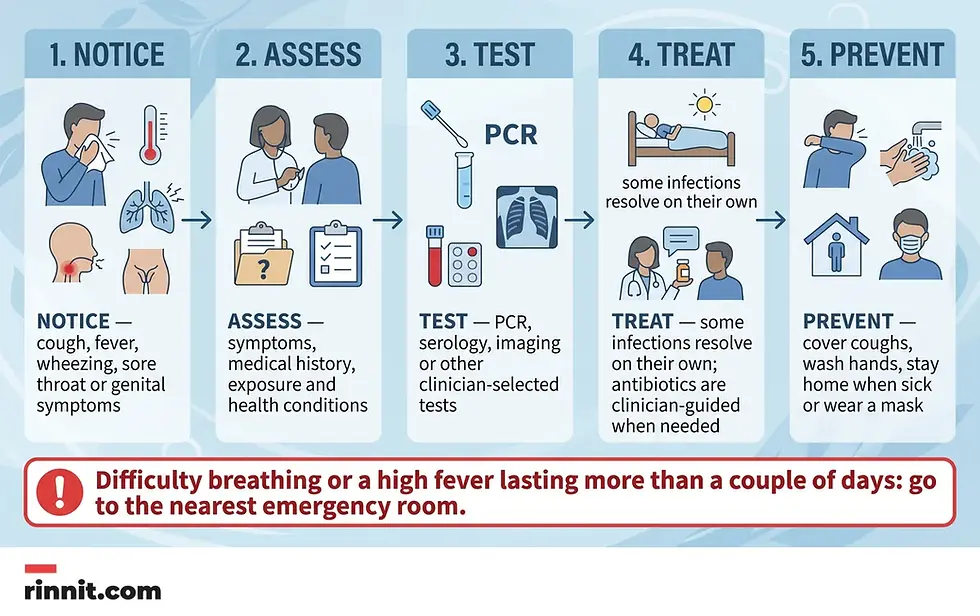
When should you see a healthcare professional?
See a healthcare professional if symptoms persist, such as a cough or fever, or worsen, such as wheezing. Clinical evaluation is also important for genital symptoms, possible exposure through sexual intercourse or infection risk related to a weakened immune system.
Go to the nearest emergency room immediately for difficulty breathing or a high fever that lasts more than a couple of days.
Situation | Recommended action |
Persistent cough or fever | Arrange a healthcare evaluation. |
Worsening wheezing or breathing symptoms | Seek prompt medical care. |
Pain during sex or genital discharge | Contact a healthcare professional for appropriate evaluation and testing. |
Difficulty breathing | Go to the nearest emergency room immediately. |
High fever lasting more than a couple of days | Seek emergency evaluation. |
Symptoms after completing antibiotics | Contact the prescribing healthcare professional. |
How can you prevent Mycoplasma infections?
Mycoplasma infections have no vaccine, so prevention relies on practical infection-control habits. Because the bacteria can spread between people, practical infection-control habits matter.
Cover your mouth and nose when coughing or sneezing.
Wash your hands often with soap and water.
Stay home when sick or wear a mask to reduce spread.
Take doctor-prescribed antibiotics exactly as instructed.
If a clinician discusses sexual transmission or testing, follow the recommended plan and communicate with partners as advised.
Prevention steps reduce risk but cannot guarantee that infection will not occur.
How long does a Mycoplasma infection last?
The course varies by species and infection location. With antibiotics, symptoms often begin to fade after a couple of days. Some symptoms can persist after treatment and resolve over the following weeks.
With M. pneumoniae, a cough may last a few weeks after antibiotics are finished. If symptoms do not improve, worsen or return, contact a healthcare professional.
What questions should you ask a provider about Mycoplasma infections?
Useful questions about Mycoplasma infections cover which species is suspected, needed tests, antibiotic expectations, relevant health conditions, preventing spread and emergency warning signs.
Which Mycoplasma species or infection site are you considering?
Do my symptoms require testing?
Would a PCR, serology test, chest X-ray or another test be useful?
If an antibiotic is prescribed, what should I expect and when should I call back?
Are any of my conditions, such as asthma or immune suppression, relevant to treatment?
Could my symptoms or exposure involve sexual transmission?
What should I do to reduce the chance of spreading infection?
Which warning signs mean I should seek emergency care?
Conclusion
Mycoplasma is a group of bacteria that can affect the lungs, urinary system and genitals. M. pneumoniae commonly causes a respiratory illness, while M. genitalium and M. hominis are associated with reproductive or urinary sites.
Because Mycoplasmas do not have cell walls, penicillin-like antibiotics do not work effectively against them. Still, not every infection needs treatment, and antibiotic decisions should be based on the suspected species, symptoms, tests and health history.
Persistent cough or fever, worsening wheezing, genital symptoms or symptoms after treatment deserve professional review. Difficulty breathing or a high fever lasting more than a couple of days requires emergency evaluation.
If you have persistent or worsening symptoms, contact a healthcare professional and describe when they began, any exposure to crowded settings, your relevant health conditions and any treatment already taken. If breathing is difficult, go to the nearest emergency room immediately.
Frequently Asked Questions
Is Mycoplasma a virus?
No. Mycoplasma is a type of bacteria. Different species can affect the lungs, urinary system or genitals.
What is Mycoplasma pneumoniae?
M. pneumoniae is a species that causes lung infections. The illness may resemble a chest cold or mild pneumonia and is sometimes called walking pneumonia.
What are common Mycoplasma pneumoniae symptoms?
Dry cough, fatigue, fever, headache, sore throat, shortness of breath and abnormal lung sounds are common symptoms. Some infections may cause no symptoms.
How does Mycoplasma pneumoniae spread?
Mycoplasma pneumoniae can spread through tiny droplets released by an infected person when coughing or sneezing. Respiratory infections are contagious for an average of 10 days.
What is Mycoplasma genitalium?
M. genitalium is a Mycoplasma species that lives in reproductive organs and can spread through sexual intercourse. Possible symptoms include pain during sex and discharge from the vagina or penis.
What is Mycoplasma hominis?
M. hominis can live in the urinary tract and genitals. It can cause infection in people with weakened immune systems and can pass from parent to child during childbirth, particularly in premature babies.
Do all Mycoplasma infections need antibiotics?
No. Some infections resolve on their own, especially when symptoms are very mild. A healthcare professional decides whether testing or antibiotic treatment is appropriate.
Why does penicillin not work well against Mycoplasma?
Penicillin and similar antibiotics target bacterial cell walls. Mycoplasmas do not have cell walls, so those medicines do not effectively kill them.
How is Mycoplasma diagnosed?
Evaluation may include a physical examination, symptom and medical-history review, chest X-ray or CT scan and laboratory tests such as PCR, serology or a Coombs test, depending on the suspected infection.
How soon do symptoms improve after antibiotics?
Symptoms often decrease after two to three days, but respiratory infections can take weeks to fully resolve. A cough may last a few weeks after treatment.
What should I do if I still feel sick after antibiotics?
Contact the healthcare professional who prescribed the treatment. Some symptoms persist for a while, but ongoing or worsening symptoms need review.
Can Mycoplasma cause a rash?
Rarely, a Mycoplasma infection can cause a rash ranging from mild redness to severe painful blisters. Contact a healthcare professional for new or severe skin symptoms.
When is Mycoplasma an emergency?
Difficulty breathing or a high fever lasting more than a couple of days requires emergency evaluation. Worsening wheezing or severe illness should also prompt urgent care.
Is there a vaccine for Mycoplasma?
No vaccine prevents Mycoplasma infections. Handwashing, covering coughs and sneezes, staying home when sick or wearing a mask and following prescribed treatment can help reduce spread.
Related Reading
Mycoplasma pneumoniae Infection: Symptoms, Causes, Testing and Treatment explains the lung infection known as walking pneumonia in detail.
Pneumonia: Complete Guide to Symptoms, Causes, and Treatment explains the causes, symptoms and treatment of lung infections.
Macrolides: Antibiotic List, Uses, Side Effects & Safety explains the antibiotic group often used to treat Mycoplasma.
Bronchitis: Symptoms, Causes, and Treatment explains airway inflammation that Mycoplasma can cause.
References
Centers for Disease Control and Prevention. Healthy Habits: Antibiotic Do’s and Don’ts. Centers for Disease Control and Prevention. Reviewed September 23, 2025. https://www.cdc.gov/antibiotic-use/about/index.html
World Health Organization. Sexually transmitted infections (STIs). World Health Organization. September 10, 2025. https://www.who.int/news-room/fact-sheets/detail/sexually-transmitted-infections-(stis)
Darazam IA, Rabiei MM, Gharehbagh FJ, et al. Recent macrolide resistance pattern of Mycoplasma pneumonia in the world: a systematic review and meta-analysis. Iran J Public Health. 2025;54(3):530-541. PMID 40330176. https://doi.org/10.18502/ijph.v54i3.18246
Bolormaa E, Park JY, Choe YJ, et al. Treatment of macrolide-resistant Mycoplasma pneumoniae pneumonia in children: a meta-analysis of macrolides versus tetracyclines. Pediatr Infect Dis J. 2025;44(3):200-206. PMID 39383346. https://doi.org/10.1097/INF.0000000000004568
Baumann L, Cina M, Egli-Gany D, et al. Prevalence of Mycoplasma genitalium in different population groups: systematic review and meta-analysis. Sex Transm Infect. 2018;94(4):255-262. PMID 29440466. https://doi.org/10.1136/sextrans-2017-053384
Disclaimer
This article is for general educational purposes and is not a substitute for professional medical advice, diagnosis or treatment. Always seek the advice of a qualified healthcare professional with any questions about a medical condition or treatment.
Do not self-prescribe antibiotics, use leftover medicine or assume that symptoms identify a specific species. Seek emergency care for difficulty breathing or a high fever lasting more than a couple of days.



Comments