Understanding MRKH Syndrome: Symptoms, Types, and Care

Updated: 2 days ago
Medically reviewed by Dr. Baraa Alnahhal, MD · Last reviewed: September 2026
TL;DR: Mayer-Rokitansky-Küster-Hauser (MRKH) syndrome is a rare congenital condition in which the uterus and upper vagina are missing or underdeveloped, while the ovaries and external genitals usually develop normally. It is often discovered in adolescence when menstruation does not begin. It can be managed with medical and surgical options, and although natural pregnancy is not possible, people with functioning ovaries can pursue biological children through IVF and gestational surrogacy.
Quick answer: MRKH syndrome is a rare condition present from birth that causes the uterus and upper vagina to be missing or underdeveloped. It is typically identified when a teenager has not started her period by age 16. The ovaries usually function normally. Treatment focuses on expanding or creating a vaginal canal with dilators or surgery, and biological children are often possible with IVF and a gestational carrier.
What Is MRKH Syndrome?
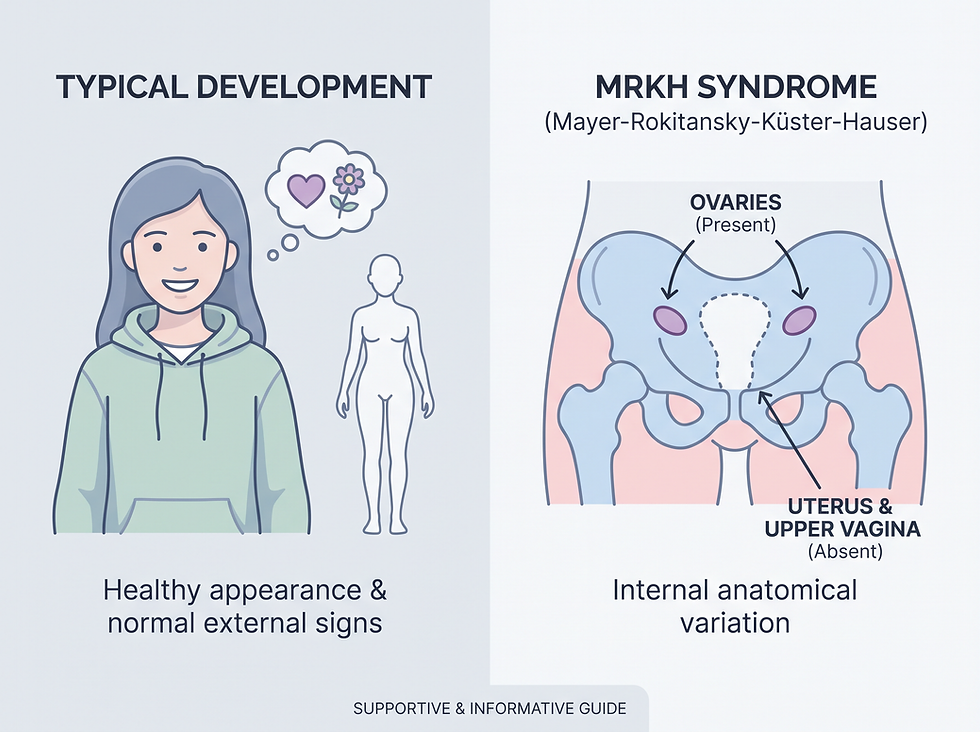
Mayer-Rokitansky-Küster-Hauser (MRKH) syndrome is a rare congenital condition characterized by the absence or underdevelopment of the uterus and the upper portion of the vagina. Despite these internal differences, people with MRKH syndrome typically have normally developing ovaries and external genitals (vulva). The condition is also called Müllerian agenesis, Müllerian aplasia, and Rokitansky syndrome.
The syndrome is usually identified during the teenage years, when a young person does not begin her menstrual cycle as expected. While the diagnosis can be emotionally challenging, it is not life-threatening, and many people go on to live healthy, fulfilling lives with appropriate medical support. A related Müllerian difference is covered in our guide to double uterus.
Types of MRKH Syndrome
Doctors classify MRKH syndrome into two types, depending on whether other organ systems are affected alongside the reproductive system.
Type 1: The uterus and cervix are missing, and the upper vagina is blocked or missing. The ovaries and fallopian tubes function normally, and no other organs are affected. Small uterine remnants may sometimes cause pain.
Type 2: The same reproductive differences are present, but the ovaries or tubes may be affected or displaced, and other organs are involved. These can include the kidneys (for example a missing kidney), spine (such as scoliosis), heart, or hearing.
Symptoms and Identification
The most common sign of MRKH syndrome is the absence of a first menstrual period (menarche) by age 16. Because the ovaries produce hormones normally, other signs of puberty, including breast development and the growth of underarm and pubic hair, typically occur on a standard timeline.
Some people notice bloating or mood changes linked to a hormonal cycle without any visible bleeding. When beginning intimate relationships, some find that vaginal intercourse is painful or not possible because the vaginal canal is shorter, narrower, or thinner than usual. In Type 2, symptoms from other affected organs may appear, such as hearing loss, kidney problems, or spinal curvature (see our guide to scoliosis).
Causes and Development
MRKH syndrome develops during the first weeks of fetal growth. It occurs when the Müllerian ducts, which normally form the fallopian tubes, uterus, cervix, and upper vagina, fail to finish developing. The ovaries develop from a different embryonic structure, which is why they are usually unaffected.
The exact cause is unknown, but it is linked to genes and chromosomes. MRKH is not caused by anything done during pregnancy. It can occasionally run in families, though many cases occur in people with no family history.
Diagnostic Procedures
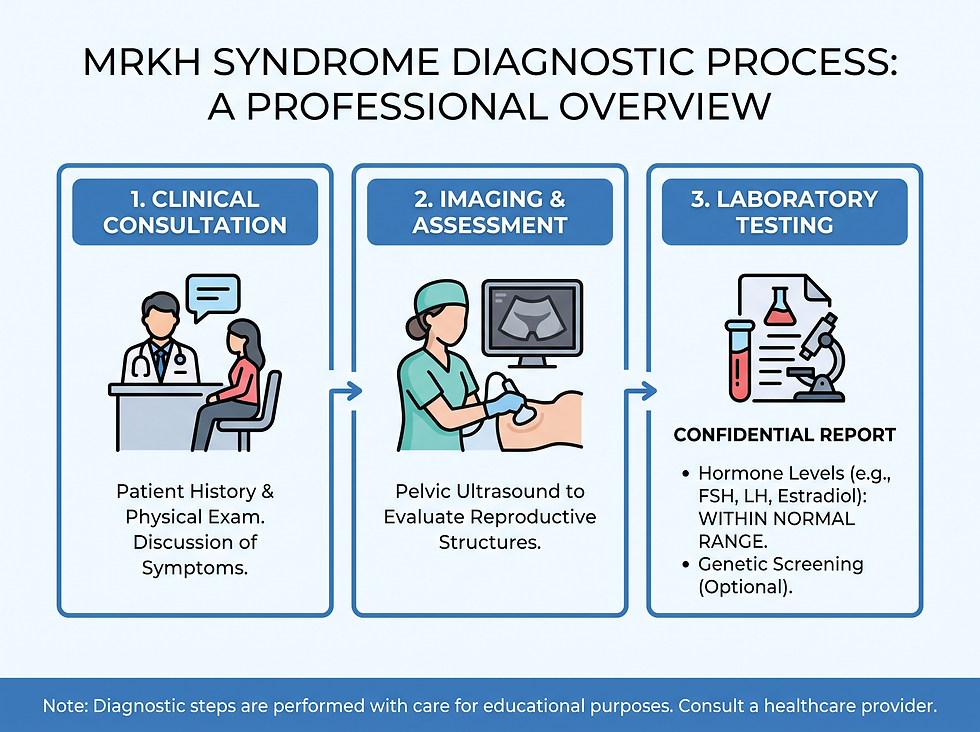
Diagnosis usually begins when a teenager or her parents consult a healthcare provider about a missing period. Several steps confirm the condition and check for related organ problems:
Physical examination: A gentle exam to measure the depth and width of the vagina.
Imaging: Ultrasound or MRI to view the internal anatomy, confirm the status of the uterus, and check the kidneys and spine.
Blood tests: To confirm that hormone levels are in the normal range, showing functional ovaries.
Management and Treatment Options
Treatment is personalized and depends on the person's goals, such as comfort during intimacy or future family plans.
Creating or Expanding the Vagina
Vaginal dilators: Tube-like devices made of plastic or silicone that gradually stretch and expand the vaginal canal over time.
Vaginoplasty: A surgical procedure to create a functional vagina, often using tissue grafts from other parts of the body.
Addressing Other Complications
If uterine remnants (small pieces of undeveloped uterine tissue) contain active lining, they can cause cyclic pelvic pain or endometriosis, and surgery may be needed to remove them. For Type 2 MRKH, ongoing monitoring by specialists, such as kidney specialists, is essential.
In summary, treatment falls into three categories:
Non-surgical: Vaginal dilators, psychological counseling, and support groups.
Surgical: Vaginoplasty and removal of uterine remnants.
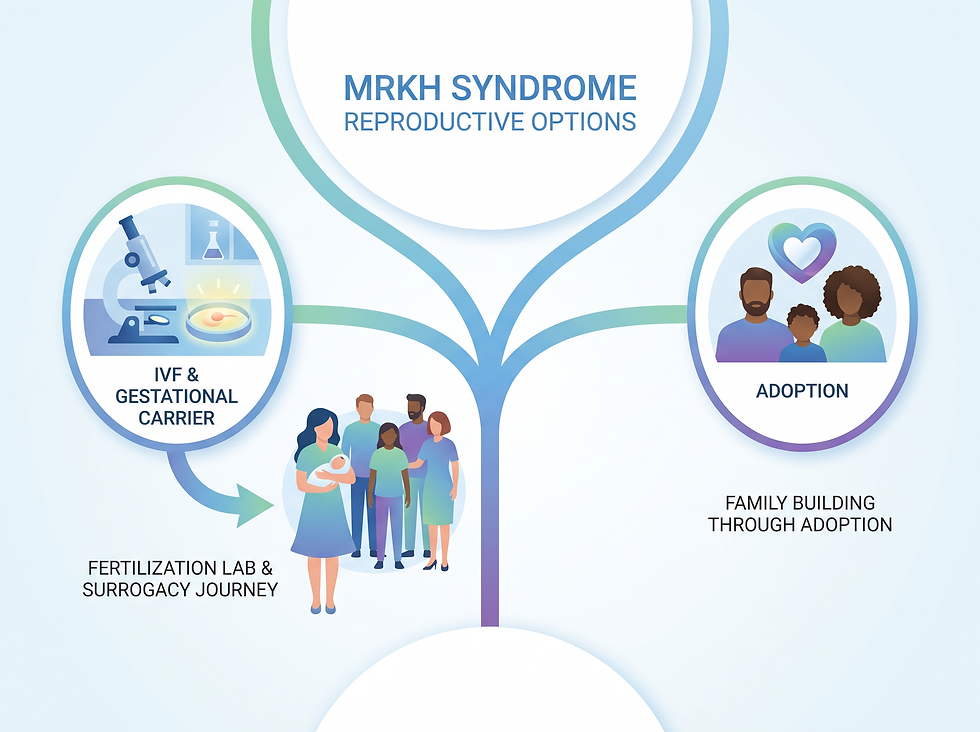
Reproductive: IVF, gestational surrogacy, and, rarely, uterus transplant.
Fertility and Family Planning
Carrying a pregnancy naturally is not possible without a uterus, but there are several pathways to biological parenthood. If the ovaries produce eggs, In Vitro Fertilization (IVF) can create embryos that are carried by a gestational surrogate. Read our IVF patient guide to learn how the process works. A uterus transplant is a newer, rare option that may allow a person to carry and deliver a child, but it is a complex, major medical undertaking.
Conclusion
A diagnosis of MRKH syndrome can feel overwhelming, but it is manageable and there are many paths forward. With a multidisciplinary medical team and access to modern treatments, people can address physical symptoms, manage related health issues, and pursue their goals for intimacy and family.
Seek professional guidance: If you or your child have not started a period by age 16, or you have concerns about vaginal pain or development, contact a healthcare professional for a thorough evaluation and support.
Frequently Asked Questions
What is the main cause of MRKH syndrome?
The exact cause is unknown, but it involves genetic and chromosomal factors during early fetal development.
Can I still have sex if I have MRKH?
Yes. Vaginal dilators or surgery (vaginoplasty) can create or expand the vaginal canal for comfortable intimacy.
Will I still go through puberty?
Yes. Because the ovaries usually function normally, breasts and body hair develop on a typical schedule.
How common is this condition?
MRKH syndrome is considered rare, and exact prevalence varies by region and population.
Is it my fault or my mother's fault?
No. MRKH is a congenital condition that occurs early in fetal development and is not caused by anything done during pregnancy.
Can MRKH syndrome be cured?
The missing organs cannot be grown back, but symptoms and function can be managed effectively with medical care.
What is the difference between Type 1 and Type 2?
Type 1 affects only the reproductive organs, while Type 2 also involves other organs such as the kidneys, spine, or heart.
Does MRKH affect my hormones?
Usually not. The ovaries typically produce normal levels of estrogen and other hormones.
Can I have a baby?
Biological children are possible through IVF and a gestational carrier if your ovaries produce eggs.
What are uterine remnants?
They are small pieces of undeveloped uterine tissue that may remain in the body and sometimes cause pain.
Is a uterus transplant common?
No. It is a rare and complex procedure performed only at specialized centers.
How is MRKH diagnosed?
Diagnosis usually involves a physical exam, hormone tests, and imaging such as ultrasound or MRI.
Should I see a therapist?
Many providers recommend counseling or support groups to help with the emotional impact of the diagnosis.
Can I still get kidney stones?
People with Type 2 MRKH may have a higher risk of kidney stones or urinary tract infections.
At what age is MRKH usually found?
Most cases are discovered between ages 14 and 16, when a period does not occur.
Medical Disclaimer
The information in this article is for educational purposes only and is not a substitute for professional medical advice, diagnosis, or treatment. Always seek the advice of a qualified healthcare provider with any questions you may have about a medical condition.
Source date: May 7, 2026.
Comments