Low Birth Weight: Understanding Causes, Risks, and Neonatal Care

Updated: 2 days ago
Medically reviewed by Dr. Baraa Alnahhal, MD · Last reviewed: September 2026
TL;DR: Low birth weight refers to infants born weighing less than 5 pounds, 8 ounces. The main causes are preterm birth and intrauterine growth restriction, which can stem from various pregnancy complications. Some small babies are perfectly healthy, while others need immediate specialized care in a neonatal intensive care unit (NICU) to manage risks such as respiratory distress and feeding difficulties. Long-term monitoring is essential to support healthy development.
Quick Answer: Low birth weight is defined as a newborn weighing less than 2,500 grams (5 lbs 8 oz). It is often caused by premature delivery or restricted growth during pregnancy. These infants frequently need specialized medical support, such as temperature-controlled environments and specialized feeding, to overcome early challenges with immunity and weight gain. With timely care and consistent follow-up, many low-birth-weight infants catch up in growth and lead healthy lives.
Defining Low Birth Weight Categories
Birth weight is a critical indicator of a newborn's immediate health and is recorded within the first hours of life. The average full-term infant weighs between 5 pounds 11.5 ounces and 8 pounds 5.75 ounces, and those below 5 pounds 8 ounces are classified as having low birth weight. A low weight at birth does not necessarily predict a child's future size or health, since some small infants are perfectly healthy.
Medical providers use specific weight thresholds to decide what level of specialized care an infant may need. These classifications help neonatologists anticipate possible complications and tailor treatment plans.
Classification | Weight Threshold (Grams) | Weight Threshold (Pounds/Ounces) |
Low Birth Weight (LBW) | Less than 2,500 g | Less than 5 lbs 8 oz |
Very Low Birth Weight (VLBW) | Less than 1,500 g | Less than 3 lbs 5 oz |
Extremely Low Birth Weight (ELBW) | Less than 1,000 g | Less than 2 lbs 3 oz |

Primary Causes and Contributing Factors
The two biggest drivers of low birth weight are preterm birth and intrauterine growth restriction (IUGR). Preterm birth occurs when a baby is born before 37 weeks of pregnancy, leaving less time to gain weight and develop body fat in the uterus. IUGR occurs when a fetus does not reach its growth potential because of problems with the placenta, the parent's health, or the baby's own health. To learn about early warning signs, see our preterm labor guide.
Several risk factors can raise the likelihood of a low-birth-weight delivery. These include chronic illness, infections, and inadequate weight gain during pregnancy. Environmental exposures such as lead or unhealthy air, and social factors such as limited access to healthcare, also play a role. Parental age is another recognized factor, specifically those aged 17 or younger or 35 and older.
Immediate Health Risks and Complications
Infants born with low birth weight often look much thinner than average newborns, sometimes with a head that appears large in proportion to the body. Because they have very little body fat, these babies often struggle to keep a stable body temperature and may have trouble fighting off infections.
The medical complications linked to low birth weight can be serious and often need immediate treatment. They include respiratory distress syndrome, low blood sugar, and jaundice. More severe cases may involve bleeding in the brain or heart problems such as patent ductus arteriosus. The lower the birth weight, the higher the statistical risk of these immediate complications.
Complication Type | Specific Medical Issues |
Respiratory & Heart | Acute respiratory distress syndrome (ARDS), patent ductus arteriosus (PDA) |
Gastrointestinal | Feeding difficulties, necrotizing enterocolitis |
Neurological & Sensory | Brain bleeding, retinopathy of prematurity (ROP) |
General Health | Jaundice, low blood sugar, difficulty staying warm |
Specialized Care and Management
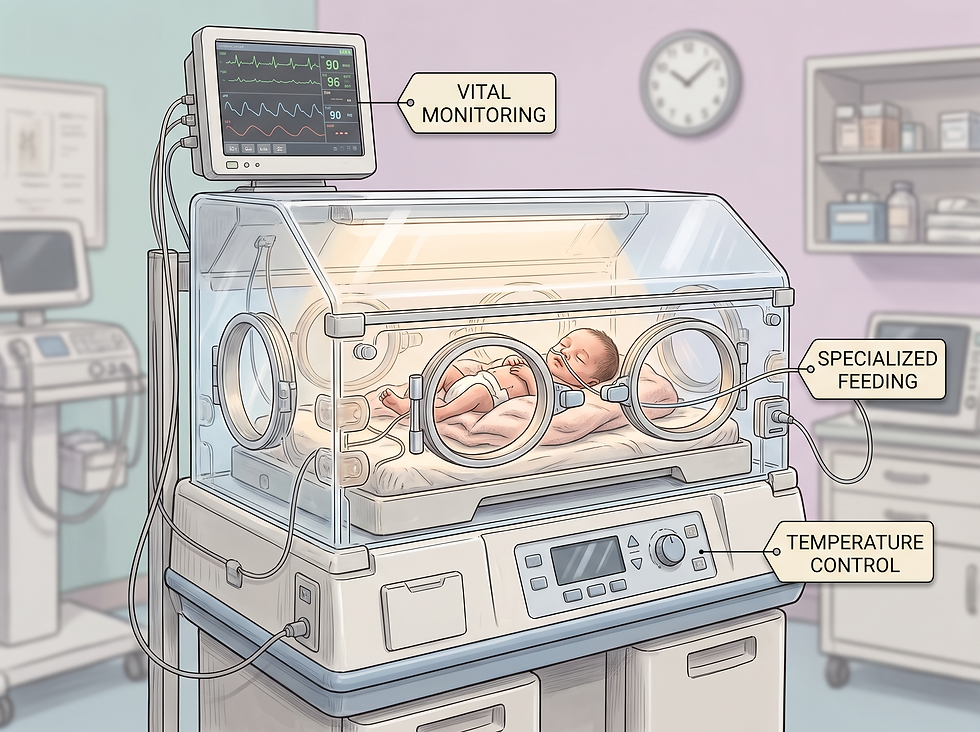
Treatment for low-birth-weight infants is highly individualized and based on gestational age and overall health. Most of these babies need specialized care in a neonatal intensive care unit (NICU). There, they are placed in temperature-controlled beds to help them stay warm, and they may receive nutrients through an intravenous (IV) line or a stomach tube if they are too small to feed normally. Some preterm babies also need help with breathing pauses, which our guide to apnea of prematurity explains.
As these infants grow, consistent follow-up care with a pediatrician is essential. Many low-birth-weight babies catch up in physical growth, but they face a higher risk of long-term developmental delays or learning differences. Regular well-child check-ups allow providers to monitor milestones and address emerging concerns early.
Strategies for Prevention
Not every case of low birth weight can be prevented, for example those caused by sudden accidents or unavoidable complications, but many risks can be reduced through proactive prenatal care. Maintaining a healthy diet that meets recommended calorie and nutrient intake is fundamental. Monitoring blood sugar is also crucial for people with gestational or pre-existing diabetes.

Avoiding alcohol and tobacco during pregnancy significantly reduces the risk of growth restriction. Regular prenatal visits allow healthcare providers to monitor fundal height and use ultrasound to track fetal development, so that any signs of slowed growth are found and managed as early as possible.
Conclusion
Low birth weight is a significant clinical marker that calls for careful management and specialized support. The first days in the NICU can be hard for families, but advanced neonatal care today allows many small infants to thrive. With solid prenatal care and dedicated neonatal support, the risks linked to low birth weight can be effectively managed, paving the way for healthy long-term development.
If you are pregnant or planning a pregnancy, talk with your healthcare provider about how to optimize your prenatal health. Consistent check-ups and following nutritional guidelines are the best ways to support your baby's healthy growth and development.
Related reading: Premature Birth: Complete Guide to Signs, Causes, and Care | Preterm Labor Guide: Symptoms, Causes, Diagnosis, and Treatment | Apnea of Prematurity: Why Preterm Babies Pause Breathing and How NICU Care Helps Them Grow
Frequently Asked Questions
1. What weight is considered low birth weight?
A baby is considered to have low birth weight if they weigh less than 5 pounds, 8 ounces (2,500 grams) at birth.
2. What is the difference between LBW and VLBW?
LBW is less than 2,500 g, while very low birth weight (VLBW) is less than 1,500 g (3 lbs 5 oz).
3. What are the two main causes of low birth weight?
The primary causes are preterm birth (before 37 weeks) and intrauterine growth restriction (IUGR).
4. Does low birth weight mean my child will always be small?
Not necessarily. Many low-birth-weight infants catch up in physical growth as they get older, provided there are no other complications.
5. Why do small babies have trouble staying warm?
Low-birth-weight babies have very little body fat, which makes it hard for their bodies to maintain a stable temperature.
6. What are the immediate health risks for these babies?
Common immediate risks include jaundice, low blood sugar, respiratory distress, and difficulty fighting infections.
7. Can low birth weight affect a child's brain development?
Yes. These infants have a higher risk of developmental delays, learning differences, and intellectual disabilities.
8. What is intrauterine growth restriction (IUGR)?
IUGR is a condition in which a baby does not grow as expected during pregnancy because of placental, parental, or fetal health issues.
9. How is low birth weight diagnosed before the baby is born?
Providers monitor the parent's weight gain, measure fundal height, and use ultrasound to track the baby's growth.
10. What kind of care do these babies receive in the hospital?
They often stay in a NICU, in temperature-controlled incubators, and receive specialized feeding through tubes or IV lines.
11. How long do babies typically stay in the NICU?
The stay varies, but it generally lasts until the baby has gained enough weight and is healthy enough to go home.
12. Are there long-term physical health risks for adults born with LBW?
Yes. They may have a higher risk of high blood pressure, heart disease, diabetes, and obesity later in life.
13. Can low birth weight be prevented?
Many cases can be prevented through regular prenatal care, a healthy diet, and avoiding alcohol and tobacco.
14. What should I do once my low-birth-weight baby leaves the hospital?
Make sure they attend all well-child check-ups, follow nutritional advice for weight gain, and stay active as they grow.
15. Do low-birth-weight babies need special vaccines?
They should receive all standard vaccinations at their routine check-ups to protect their more vulnerable immune systems from disease.
Medical Disclaimer: The information provided in this article is for educational purposes only and is not intended as medical advice, diagnosis, or treatment. Always seek the advice of your physician or other qualified health provider with any questions you may have regarding a medical condition. Never disregard professional medical advice or delay in seeking it because of something you have read here.
Comments