Liver Cysts: Understanding the Causes, Symptoms, and Treatment

Updated: 3 days ago
Medically reviewed by Dr. Baraa Alnahhal, MD · Last reviewed: October 2026
Quick Answer
A liver cyst is a benign, fluid-filled sac on the liver that typically does not cause symptoms or require treatment. Most are present at birth and found incidentally during imaging. Large cysts (over 4 centimeters) or those caused by parasitic infections or polycystic liver disease may require drainage, surgical removal, or medication.
What the research says
Keyhole surgery relieves symptoms in most people with troublesome cysts. A systematic review and meta-analysis of 62 studies (1,314 patients) found symptom relief in 90.2% of patients after laparoscopic fenestration, with symptoms returning in 9.6%; recurrence was much higher (33.7%) in people with polycystic liver disease (Bernts et al., Surg Endosc, 2019 [2]).
A needle-based option works about as well for simple cysts. A systematic review of 34 studies (736 patients) found symptoms persisted in 3.5% of patients after aspiration and sclerotherapy versus 2.1% after laparoscopic deroofing, with major complications in 0.8% and 1.7%, respectively (Furumaya et al., HPB (Oxford), 2021 [3]).
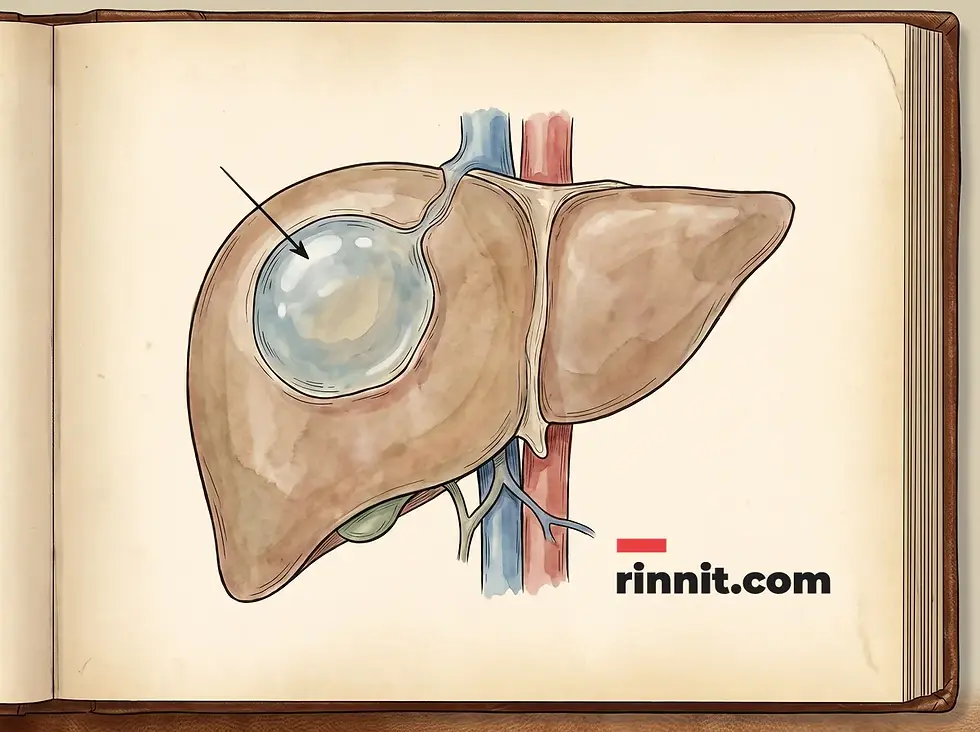
What is a Liver Cyst?
A liver cyst, medically known as a hepatic cyst, is a fluid-filled sac that appears on the liver tissue. The vast majority of these cysts are benign, meaning they are noncancerous and generally do not interfere with liver function. Simple cysts are common and often go undetected for years because they rarely grow large enough to cause physical discomfort.
While most cysts are harmless, certain types of cystic liver disease require more intensive management. These include hydatid disease, which is a parasitic infection, and polycystic liver disease (PLD), a rare genetic disorder that causes clusters of cysts to form, potentially leading to liver enlargement over time.
Type of Cyst | Description | Severity |
Simple Cyst | Benign, fluid-filled sac; most common type. | Usually Harmless |
Hydatid Cyst | Caused by a parasitic infection; can affect other organs. | Potentially Fatal |
Polycystic Liver Disease | Rare genetic disorder causing clusters of cysts. | Serious / Chronic |

What are the symptoms of liver cysts?
Most people with liver cysts do not experience any symptoms. However, when a cyst grows large enough to place pressure on the liver or surrounding organs, it may cause noticeable physical changes.
Common Physical Signs
If a liver cyst becomes significant in size, the most common symptom is a dull pain or discomfort in the upper right area of the abdomen. Other signs include:
Abdominal Changes: Bloating, a swollen belly, or a palpable lump that can be felt with the fingers.
Digestive Issues: A lack of appetite, feeling full after eating very little, nausea, and vomiting.
Respiratory Impact: Large cysts may press against the diaphragm, leading to shortness of breath.
Healthcare providers may treat liver cysts by monitoring them. If a cyst is large, precancerous or linked to more serious liver diseases, you’ll likely need medication or surgery.
What causes liver cysts and who is at risk?
The exact cause of most liver cysts remains unknown, though medical experts believe the majority are present at birth. While they are congenital, they are often not diagnosed until an individual reaches age 40 or older.
Research indicates that liver cysts are more prevalent in females than in males. While the reason for this disparity is not fully understood, some experts suggest a potential link to estrogen, as females naturally have higher levels of this hormone. Most people diagnosed with simple liver cysts do not have a family history of the condition, except in cases of polycystic liver disease.
How are liver cysts diagnosed, and what complications can they cause?
Liver cysts are typically discovered incidentally when a healthcare provider performs imaging tests for an unrelated health concern. Common diagnostic tools include ultrasound, computed tomography (CT) scans, and magnetic resonance imaging (MRI).
Potential Complications
Although rare, complications can occur if a cyst is not managed properly:
Bile Duct Obstruction: A large cyst may block the bile ducts, potentially leading to jaundice (yellowing of the skin and eyes).
Cyst Rupture: If a cyst bursts, it can cause a severe internal infection characterized by intense abdominal pain and fever.
Malignancy: While only about 5% of liver cysts are cancerous, a biopsy may be necessary if imaging suggests a mass is not a simple cyst.

What are the treatment options for liver cysts?
Treatment is generally not required for small, asymptomatic simple cysts. In these cases, a provider may recommend periodic monitoring through follow-up imaging every three months for a year to ensure the cyst is not changing.
Surgical and Medical Procedures
If a cyst is cancerous, precancerous, or large enough to cause symptoms (typically over 4 centimeters), intervention is necessary. Common procedures include:
Cyst Fenestration: A surgical procedure that removes the wall of the cyst, causing it to collapse.
Percutaneous Aspiration: Draining the fluid using a needle guided by imaging, though the cyst may reform without further treatment.
Hepatic Resection: Surgical removal of the specific area of the liver affected by the cysts.
Transarterial Embolization (TACE): Used mainly in some people with polycystic liver disease (as transarterial embolization, without anti-cancer drugs), this blocks blood vessels feeding cyst-filled parts of the liver to shrink them.
Conclusion and Next Steps
Most liver cysts are benign and will never impact your quality of life. Regular checkups and monitoring are the most effective ways to manage the condition and ensure that any changes are addressed early. If you have been diagnosed with a liver cyst, consult your healthcare provider about a monitoring schedule or potential treatment if you experience new symptoms.
Frequently Asked Questions
Are liver cysts cancerous?
The vast majority (95%) of liver cysts are benign and noncancerous. Only a small percentage are malignant.
What causes liver cysts to grow?
While the exact cause is unknown, most are present at birth. Hormonal factors like estrogen may play a role in their development.
Can liver cysts go away on their own?
Yes, some benign simple cysts may resolve without any medical intervention.
How large can a liver cyst get?
Cysts are generally considered large if they exceed 4 centimeters, at which point they are more likely to cause symptoms.
Is polycystic liver disease hereditary?
Yes, polycystic liver disease is a rare genetic disorder that can be passed down through families.
What should I eat if I have liver cysts?
A healthy diet rich in nutrients supports overall liver function. Consult a provider for specific dietary recommendations.
Can I drink alcohol with a liver cyst?
It is recommended to avoid alcohol or consume it only in moderation to protect liver health.
What is hydatid disease?
Hydatid disease is a parasitic infection that causes cysts on the liver and other organs, requiring prompt treatment.
How is a liver cyst diagnosed?
Cysts are typically found using imaging tests like ultrasound, CT scans, or MRI.
What are the signs of a ruptured liver cyst?
Intense abdominal pain and fever are the primary signs of a cyst rupture and infection.
Related Reading
Understanding Polycystic Liver Disease: A Comprehensive Guide explains the inherited condition that causes many liver cysts.
Hydatid Disease: A Comprehensive Guide to Symptoms, Causes, and Recovery covers parasitic cysts that can form in the liver.
Polycystic Kidney Disease (PKD): Symptoms, Types, and Treatment Options Explained explains a kidney condition that often comes with liver cysts.
Abdominal Ultrasound: Why It's Done, How to Prepare, What to Expect and Results describes the scan most often used to find liver cysts.
References
Cleveland Clinic. Liver Cysts: Symptoms, Causes, Types & Treatment. Cleveland Clinic. December 24, 2025. https://my.clevelandclinic.org/health/diseases/17178-liver-cyst
Bernts LHP, Echternach SG, Kievit W, et al. Clinical response after laparoscopic fenestration of symptomatic hepatic cysts: a systematic review and meta-analysis. Surg Endosc. 2019;33(3):691-704. PMID: 30334152. DOI: https://doi.org/10.1007/s00464-018-6490-8
Furumaya A, van Rosmalen BV, de Graeff JJ, et al. Systematic review on percutaneous aspiration and sclerotherapy versus surgery in symptomatic simple hepatic cysts. HPB (Oxford). 2021;23(1):11-24. PMID: 32830070. DOI: https://doi.org/10.1016/j.hpb.2020.07.005
Medical disclaimer
This article is for informational purposes only and is not a substitute for professional medical advice, diagnosis, or treatment. The clinical information in this guide reflects source material last reviewed in December 2025.



Comments