Levator Ani Syndrome: Symptoms, Causes, and Relief Strategies

Updated: 3 days ago
Medically reviewed by Dr. Baraa Alnahhal, MD · Last reviewed: October 2026
Levator ani syndrome is a type of pelvic floor dysfunction in which spasms of a muscle near the anus and vagina cause pain or pressure in the rectum, vagina, or pelvis that comes and goes. It is not life-threatening, but it can be painful and persistent, and it often feels worse after sitting for a long time. Treatment usually combines physical therapy, biofeedback, and medicines that relax the affected muscles [1].
Quick Answer: What is levator ani syndrome?
Levator ani syndrome is spasm of the levator ani, a pelvic floor muscle, causing a dull ache or sharp pain in the rectum and pelvis, often like sitting on a ball, which worsens after prolonged sitting. The pain comes and goes. It is diagnosed with a physical and digital rectal exam, and physical therapy, biofeedback and muscle relaxers help. [1]
What the research says
Biofeedback worked better than electrogalvanic stimulation or massage. In a randomized trial of 157 people who each had 9 sessions, among those very likely to have levator ani syndrome (tenderness when the levator muscles were pulled on exam), adequate relief was reported by 87% with biofeedback, 45% with electrogalvanic stimulation, and 22% with massage; pain days per month fell from 14.7 to 3.3 with biofeedback, and improvements were maintained for 12 months (Chiarioni et al., Gastroenterology, 2010 [2]).
Only people with tenderness on rectal examination benefited. In the same trial, people with only a possible diagnosis (no levator tenderness on exam) did not benefit from any of the three treatments, which is why a careful physical exam matters (Chiarioni et al., Gastroenterology, 2010 [2]).
Levator ani syndrome is one of several causes of chronic anal pain. A clinical review groups chronic anal pain into local causes, functional anorectal pain, and neuropathic pain syndromes, and covers levator ani syndrome alongside proctalgia fugax, pudendal neuralgia, and coccygodynia (Knowles and Cohen, Cleve Clin J Med, 2022 [3]).
What Is Levator Ani Syndrome?
Levator ani syndrome is a type of pelvic floor dysfunction. It happens when you have spasms (tightening) in your levator ani, a pelvic floor muscle near your anus and vagina. Your levator ani does many things, such as supporting organs in your pelvis and controlling when you poop [1].
Other names for the condition are pelvic floor myalgia, pelvic floor myofascial pain, and pelvic floor muscle spasm. It isn't serious or life-threatening, but it is painful and won't go away without treatment. Many people feel self-conscious talking about it, but healthcare providers can treat levator ani syndrome and ease the spasms [1].

The levator ani is part of the pelvic floor muscle group, where spasms cause pain.
What are the symptoms of levator ani syndrome?
The most common symptom of levator ani syndrome is a dull ache or pressure in the rectum, vagina or pelvis. The pain and pressure may [1]:
Feel like you are sitting on a ball, or like there is a ball inside your rectum.
Be more noticeable when you sit for a long time and go away when you stand up.
Last for hours, but may suddenly get worse.
Cause pain during sexual intercourse.

Many people describe the pressure as feeling like sitting on a ball.
Feature | Description of discomfort |
|---|---|
Pain character | Typically a dull ache, but it can be sharp. |
Positional impact | Often more noticeable when sitting and may ease when you stand. |
Duration | Episodes can last for hours and may suddenly get worse. |
Spread | Pain may spread to the buttocks or upper thighs. |
The pain may start in the morning and get worse throughout the day. In some cases it starts during sleep and is strong enough to wake you [1].
What triggers levator ani syndrome?
Experts don't know exactly why the levator ani muscle spasms in levator ani syndrome, but long periods of sitting, stress, intercourse and pooping may trigger it. Research suggests some activities may trigger the spasms, including [1]:
Long-distance car travel: long periods of sitting.
Stress: believed to contribute to muscle tension in the pelvic floor.
Sexual intercourse.
Pooping.
Hemorrhoids cause rectal discomfort, but they do not cause levator ani syndrome [1].
How is levator ani syndrome diagnosed?
There is no single test for diagnosing levator ani syndrome [1]. A healthcare provider relies on a clinical evaluation, which includes:
Physical examination: a general assessment of the pelvic area.
Digital rectal examination (DRE): the provider checks the rectal muscles for tenderness or spasm.
Pelvic examination: to evaluate the surrounding muscles and organs.
You may start with a primary care provider, who may refer you to a gastroenterologist, a gynecologist, or a colorectal surgeon [1].
How is levator ani syndrome treated and managed?
There are several ways to treat levator ani syndrome [1].
Therapeutic Approaches
Biofeedback therapy: a physical therapist uses special sensors and video to watch your levator ani as you try to relax or clench it, then gives feedback to improve muscle coordination.
Pelvic floor physical therapy: exercises to stretch your lower back, pelvis, and pelvic floor muscles.
Sitz baths: sitting in a warm, shallow bath to help the levator ani relax.
Myofascial release therapy: massage using a device to work on trigger points in the levator ani.
Medical Interventions
Providers may prescribe muscle relaxers, such as methocarbamol, diazepam, or cyclobenzaprine, to ease spasms. Another option is electrogalvanic stimulation, in which a provider inserts a probe into the rectum that delivers a very mild electrical current to relax the rectal muscles [1].
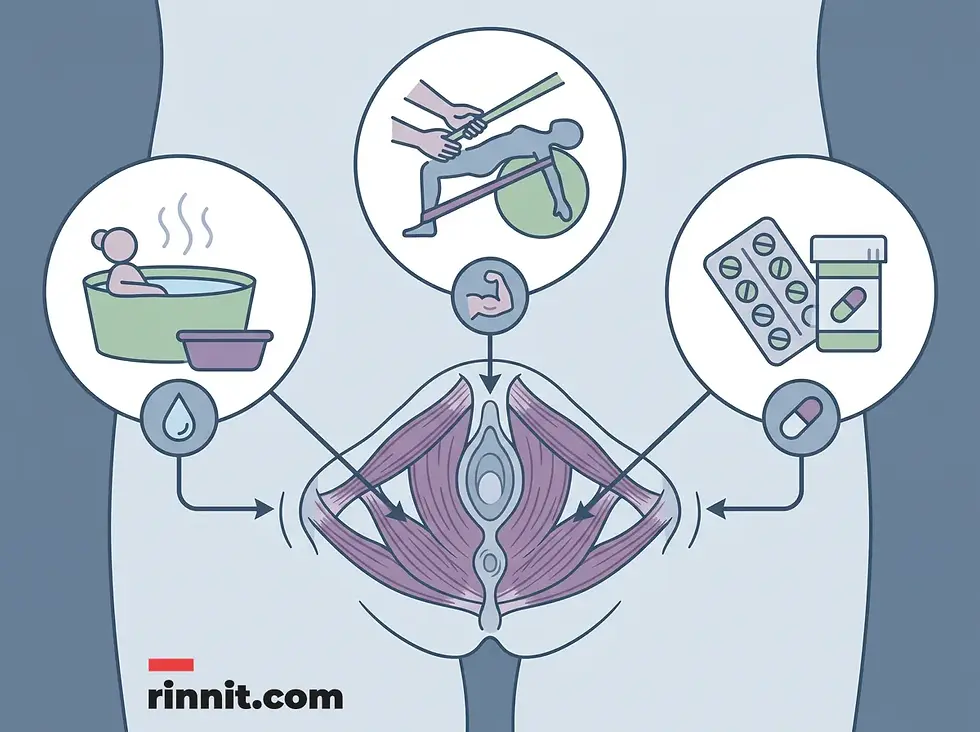
Treatment often combines warm sitz baths, physical therapy, and medication.
What is the bottom line on levator ani syndrome?
Levator ani syndrome can be treated. For most people, a combination of medication and physical therapy should ease symptoms [1]. A careful exam is important because, in research, treatment benefited people who had levator tenderness on rectal examination [2].
Your next step: contact your provider if symptoms come back during treatment or get worse, or if you notice rectal bleeding or new pain in your rectum or vagina [1].
Frequently Asked Questions
What is levator ani syndrome?
Levator ani syndrome is a condition in which the levator ani, a pelvic floor muscle near the anus and vagina, goes into painful spasms [1].
Is it the same as proctalgia fugax?
No. Proctalgia fugax pain is very sharp, comes on quickly, and often goes away within 20 minutes. Levator ani syndrome pain can be sharp but is typically a dull ache that may come and go or last for several hours [1].
What does the pain feel like?
Many people describe a dull ache or pressure, often like sitting on a ball or having a ball inside the rectum [1].
Can stress cause these spasms?
Stress is one of the activities and situations that research suggests may trigger spasms, along with long-distance car travel, sexual intercourse, and pooping [1].
Does sitting make it worse?
Often, yes. The pain may be more noticeable when you sit for a long time and may go away when you stand up [1].
Are there medications for this?
Providers may prescribe muscle relaxers, such as methocarbamol, diazepam, or cyclobenzaprine, to ease the spasms [1].
How is it diagnosed?
There is no single test. A provider does a physical examination, including a digital rectal examination and a pelvic examination [1].
What is biofeedback therapy?
Biofeedback therapy is a treatment in which a physical therapist uses special sensors and video to watch your levator ani while you practice relaxing or clenching it, then coaches you to improve muscle coordination [1].
Can hemorrhoids cause this syndrome?
No. Hemorrhoids are swollen veins in the rectum or anus and do not cause levator ani syndrome [1].
Is levator ani syndrome serious?
Levator ani syndrome is not serious or life-threatening, but it is painful and won't go away without treatment [1].
Related Reading
Hypertonic Pelvic Floor: Understanding Muscle Tension and Relief explains overly tight pelvic floor muscles and how therapy relaxes them.
Coccydynia: Tailbone Pain Causes, Symptoms, Treatment, and Relief explains tailbone pain, a common look-alike of levator ani syndrome.
Anal Fissures: The Most Common Cause of Anal Pain — What Causes the Tear, Why It Hurts So Much, and How It Heals explains small anal tears that cause sharp pain during bowel movements.
Chronic Pelvic Pain: Symptoms, Causes & Treatment — A Clear Guide explains long-lasting pelvic pain, its many causes and treatment options.
References
Cleveland Clinic. Levator Ani Syndrome. Cleveland Clinic. November 22, 2024. https://my.clevelandclinic.org/health/diseases/levator-ani-syndrome
Chiarioni G, Nardo A, Vantini I, et al. Biofeedback is superior to electrogalvanic stimulation and massage for treatment of levator ani syndrome. Gastroenterology. 2010;138(4):1321-1329. PMID 20044997. https://doi.org/10.1053/j.gastro.2009.12.040
Knowles CH, Cohen RC. Chronic anal pain: a review of causes, diagnosis, and treatment. Cleve Clin J Med. 2022;89(6):336-343. PMID 35649568. https://doi.org/10.3949/ccjm.89a.21102
Medical disclaimer
This article is for informational purposes only and is not a substitute for professional medical advice, diagnosis, or treatment. The clinical information in this guide reflects source material last reviewed in November 2024.



Comments