Leaky Heart Valve: Causes, Symptoms, and Treatment Options

Updated: 3 days ago
Medically reviewed by Dr. Baraa Alnahhal, MD · Last reviewed: October 2026
A leaky heart valve, also called valve regurgitation, occurs when one of the heart's four valves does not close tightly and lets blood flow backward. Mild cases often need no treatment, but moderate to severe leakage can strain the heart and cause fatigue and shortness of breath. Care ranges from routine monitoring and medication to surgical repair or valve replacement [1].
Quick Answer: What is a leaky heart valve?
A leaky heart valve, medically called regurgitation or insufficiency, occurs when one of the heart's four valves does not seal completely, so blood leaks backward with each heartbeat. Mild leaks often cause no symptoms, while severe ones cause chest pain, shortness of breath and leg swelling. An echocardiogram diagnoses it, and treatment ranges from monitoring to valve repair or replacement. [1]
What the research says
Valve disease is common and becomes much more common with age. In a Lancet analysis that pooled population-based echocardiography studies of 11,911 adults, the age- and sex-adjusted US prevalence of moderate or severe valve disease (all types) was 2.5% (95% CI 2.2–2.7), rising from 0.7% in adults aged 18–44 to 13.3% in those aged 75 and older; valve disease was linked to higher mortality (adjusted risk ratio 1.36, 95% CI 1.15–1.62) (Nkomo et al., Lancet, 2006 [2]).
In selected patients, repairing a leaking mitral valve with a catheter improved outcomes. In the COAPT randomized trial of 614 patients with heart failure and moderate-to-severe or severe secondary mitral regurgitation who stayed symptomatic despite maximal medical therapy, transcatheter mitral-valve repair plus medical therapy lowered heart-failure hospitalizations to 35.8% per patient-year versus 67.9% with medical therapy alone (hazard ratio 0.53, 95% CI 0.40–0.70), and 24-month death from any cause was 29.1% versus 46.1% (hazard ratio 0.62, 95% CI 0.46–0.82) (Stone et al., N Engl J Med, 2018 [3]).
What Is a Leaky Heart Valve?
The heart contains four valves that work like one-way doors, keeping blood flowing in the correct direction through the heart's chambers and out to the rest of the body [1]. When one of these doors does not close tightly, some blood flows backward, and the heart has to work harder to keep enough blood moving forward [1].
Other names for the condition include heart valve regurgitation, insufficiency, and incompetence. Regurgitation is named for the valve that is affected [1]:
Valve affected | Where blood leaks backward |
|---|---|
Mitral valve regurgitation | Back into the left atrium (left side of the heart) |
Aortic valve regurgitation | Back into the left ventricle (left side of the heart) |
Tricuspid valve regurgitation | Back into the right atrium (right side of the heart) |
Pulmonary (pulmonic) valve regurgitation | Back into the right ventricle (right side of the heart) |
Trace amounts of leakage are common and often harmless, but more significant regurgitation can strain the heart over time. In the United States, mitral valve regurgitation is the most common form of heart valve disease [1].
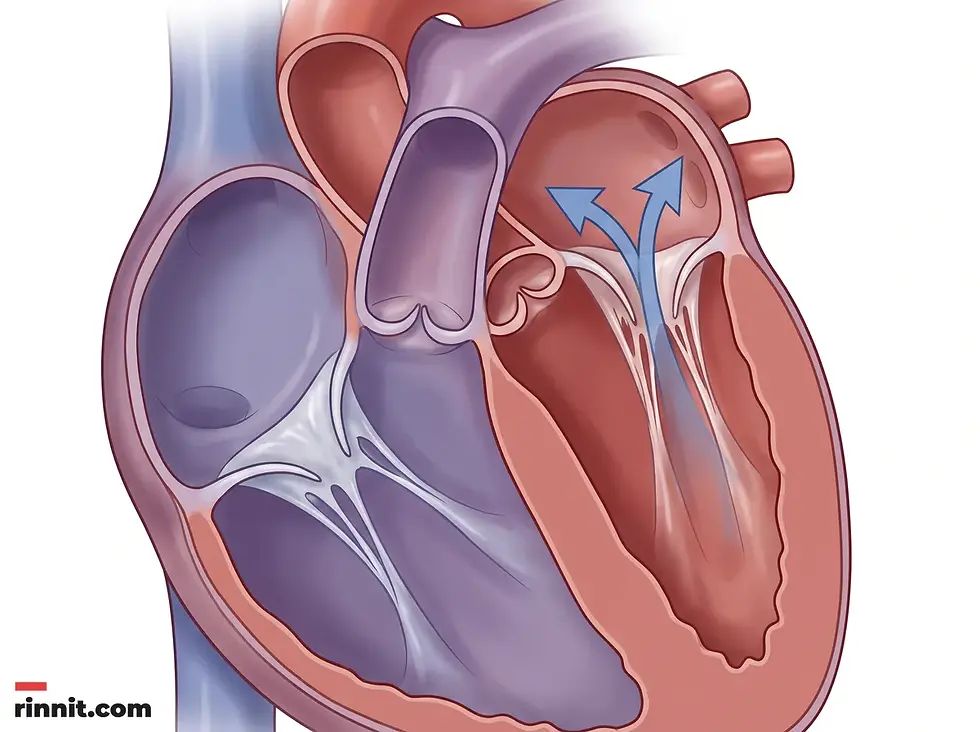
A leaky valve does not close tightly, so some blood flows backward (blue arrows) with each heartbeat.
What are leaky heart valve symptoms, and how severe can they be?
How serious a leaky valve is depends on how much blood leaks backward and how that affects the heart's ability to pump oxygen-rich blood to the body. Providers also consider your symptoms and the anatomy of your valve [1]. Many people with trace or mild regurgitation have no symptoms for years and find out during a routine exam or imaging test [1].
Symptom category | Common signs of moderate to severe regurgitation |
|---|---|
Physical sensation | Chest pain or pressure, and heart palpitations. |
Daily activity | Fatigue, weakness, and shortness of breath during physical activity. |
Fluid retention and cough | Coughing and swelling (edema) in the legs and feet. |
If left untreated, severe regurgitation can lead to serious complications because the heart must work harder to keep blood moving forward. These include atrial fibrillation, an enlarged heart (cardiomegaly), heart failure, pulmonary hypertension, and, in extreme cases, sudden cardiac arrest [1].
What are the common causes of leaky heart valve (valve regurgitation)?
A leaky heart valve can be present from birth because of a congenital heart defect, or it can develop later in life because of other conditions. Aging is a common factor, since valve tissue can break down over time, a process called myxomatous degeneration [1]. Other causes include:
Infections: endocarditis and rheumatic heart disease can scar and damage the valves [1].
Heart damage: a prior heart attack or cardiomyopathy can damage the heart so that the valves no longer close properly [1].
Structural problems: a thoracic aortic aneurysm or a heart tumor can also lead to regurgitation [1].
How is a leaky heart valve diagnosed?
Diagnosis usually starts with a physical exam. Your provider will ask about your symptoms and medical history, check your vital signs, look for swelling in your legs and abdomen, and listen to your heart with a stethoscope for murmurs, which are abnormal sounds that may signal valve disease [1].
The main test used to confirm a leaky valve is an echocardiogram, which uses high-frequency sound waves to create pictures of the inside of the heart [1]. Other tests you may need include:
Blood tests.
Electrocardiogram (EKG) to check the heart's rhythm.
Chest X-ray to assess the size of the heart.
Heart MRI for more precise images of the heart's structure.
Cardiac catheterization, in some cases, to measure the pressure inside the heart chambers.

An echocardiogram uses sound waves to show the heart's valves and any backward blood flow.
How is a leaky heart valve managed and treated?
Treatment is tailored to you: which valve is involved, how severe the leak is, whether you have other heart conditions, and your age and overall health [1]. Some people do not need treatment right away, and their provider simply monitors the condition over time. Treatment may become necessary if the regurgitation causes symptoms, strains the heart, affects daily life, or threatens to shorten life span [1]. When treatment is needed, the options are:
Medication: diuretics and other drugs can ease symptoms such as fluid buildup and help prevent or manage complications [1]. Medication cannot repair the valve itself.
Valve repair: surgeons can often repair the existing valve and preserve your own tissue, sometimes with minimally invasive techniques that use smaller incisions [1].
Valve replacement: if the valve is too damaged to repair, it can be replaced with a mechanical or biological tissue valve, through traditional surgery or catheter-based procedures [1].
Catheter-based repair can also help carefully selected patients. In the COAPT trial, people with heart failure and significant secondary mitral regurgitation who stayed symptomatic despite medication had fewer heart-failure hospitalizations and lower mortality after transcatheter repair [3].

Valves can be repaired or replaced through surgery or catheter-based procedures.
What is the bottom line on leaky heart valves?
A leaky heart valve is a common condition that ranges from a minor finding to a serious medical concern. By recognizing the symptoms and keeping up with regular checkups, people can manage the condition and help prevent long-term heart damage. Advances in minimally invasive surgery and catheter-based treatments continue to improve the outlook for people who need intervention, allowing many to return to an active, healthy life.
Your next step: if you have unexplained fatigue, shortness of breath, or persistent swelling in your legs, see a doctor or cardiologist for a full evaluation. An echocardiogram is the most effective way to detect and track heart valve disease. Call your local emergency number right away for symptoms of a heart attack or stroke [1].
Frequently Asked Questions
What is a leaky heart valve?
A leaky heart valve, or regurgitation, occurs when one of the heart's valves does not close tightly, allowing blood to flow in the wrong direction.
What are the different names for this condition?
A leaky heart valve is also referred to as heart valve regurgitation, insufficiency, or incompetence.
Can you live a normal life with a leaky heart valve?
Yes, many people with mild regurgitation have no symptoms and require no treatment, though regular monitoring is usually recommended.
What are the main symptoms to look for?
Key symptoms include shortness of breath, fatigue, chest pain, heart palpitations, and swelling in the legs or feet.
How is a leaky heart valve diagnosed?
The most common diagnostic tool is an echocardiogram, which provides images of the heart and its valves using sound waves.
What causes a heart valve to leak?
Common causes include aging, congenital heart defects, heart attacks, infections like endocarditis, and rheumatic heart disease.
Is surgery always necessary for a leaky valve?
No, surgery is typically reserved for moderate to severe cases that cause symptoms or put significant strain on the heart.
What are the complications of untreated regurgitation?
Potential complications include heart failure, an enlarged heart, atrial fibrillation, and pulmonary hypertension.
What is the difference between valve repair and replacement?
Repair involves fixing the patient's own valve tissue, while replacement involves installing a new mechanical or biological valve.
Can medication cure a leaky heart valve?
Medication cannot fix the physical structure of the valve, but it can help manage symptoms and prevent complications.
Related Reading
Annuloplasty: Heart Valve Repair, Recovery and Results explains annuloplasty heart valve repair.
References
Cleveland Clinic. Leaky Heart Valve. Cleveland Clinic. August 11, 2023. https://my.clevelandclinic.org/health/diseases/21484-leaky-heart-valve
Nkomo VT, Gardin JM, Skelton TN, et al. Burden of valvular heart diseases: a population-based study. Lancet. 2006;368:1005-1011. PMID 16980116. https://doi.org/10.1016/S0140-6736(06)69208-8
Stone GW, Lindenfeld J, Abraham WT, et al. Transcatheter mitral-valve repair in patients with heart failure. N Engl J Med. 2018;379:2307-2318. PMID 30280640. https://doi.org/10.1056/NEJMoa1806640
Medical disclaimer
This article is for informational purposes only and is not a substitute for professional medical advice, diagnosis, or treatment. The clinical information in this guide reflects source material last reviewed in August 2023.



Comments