Klebsiella Pneumoniae: Understanding the Risks and Treatment

Updated: 2 days ago
Medically reviewed by Dr. Baraa Alnahhal, MD · Last reviewed: October 2026
Quick Answer: Key Facts About Klebsiella Pneumoniae
Klebsiella pneumoniae is a gram-negative bacterium found in the gut and respiratory tract that can cause pneumonia, UTIs, bloodstream and wound infections. It spreads person-to-person and through medical devices, and risk is higher with hospitalization, diabetes, weakened immunity or catheters. Diagnosis uses blood, urine or tissue samples. Antibiotics, often in combinations due to resistance, are the main treatment.
Feature | Details |
Bacterium Type | Gram-negative bacteria found in gut and respiratory tract |
Common Infections | Pneumonia, UTIs, bloodstream infections, wound infections |
Transmission | Person-to-person contact, medical devices, contaminated water or soil |
Risk Factors | Hospitalization, diabetes, weakened immune system, catheters |
Diagnosis | Blood, urine, or tissue samples; imaging (CT scans) |
Primary Treatment | Antibiotics (often requiring combinations due to resistance) |
Key Prevention | Handwashing, sterilization, and proper medical device care |
What the research says
Resistance plus hypervirulence is an especially dangerous mix. A meta-analysis of 79 studies (4,240 patients) found pooled mortality of 21% (95% CI 15%–27%) for hypervirulent Klebsiella infections but 57% (95% CI 35%–78%) when the strain was also carbapenem-resistant; a pooled analysis of six studies found over 12-fold higher odds of death compared with carbapenem-susceptible strains (Nagendra et al., Infection, 2026) [2]
Gut colonization is common, and the strain may decide who gets sick. A review explains that all groups of Klebsiella can colonize the gastrointestinal tract, that the accessory genome may determine whether a colonizing strain stays harmless or progresses to disease, and that opportunistic strains are a common cause of healthcare-associated pneumonia, urinary tract infections and bloodstream infections (Martin & Bachman, Front Cell Infect Microbiol, 2018) [3]
Hypervirulent strains can infect healthy people. A clinical review reports that hypervirulent Klebsiella usually infects people in the community who are often healthy, frequently at multiple sites or by spreading to distant sites, with an increased ability to cause central nervous system infection and eye infection (endophthalmitis) (Russo & Marr, Clin Microbiol Rev, 2019) [4]
What is Klebsiella Pneumoniae?
Klebsiella pneumoniae is a type of bacteria that is naturally present in the human body, specifically within the digestive tract and the respiratory system. In its natural environment, it typically remains harmless. However, when these bacteria migrate to other parts of the body—such as the lungs, urinary tract, or bloodstream—they can cause severe and sometimes life-threatening infections. [1]
This bacterium is particularly concerning in medical circles because of its ability to develop resistance to standard antibiotics. Some strains, known as hypervirulent strains, are more likely to cause severe illness even in healthy individuals outside of a hospital setting. Understanding how it spreads and recognizing the early signs is essential for protecting yourself and your loved ones. [1]
What are the symptoms of a Klebsiella pneumoniae infection?
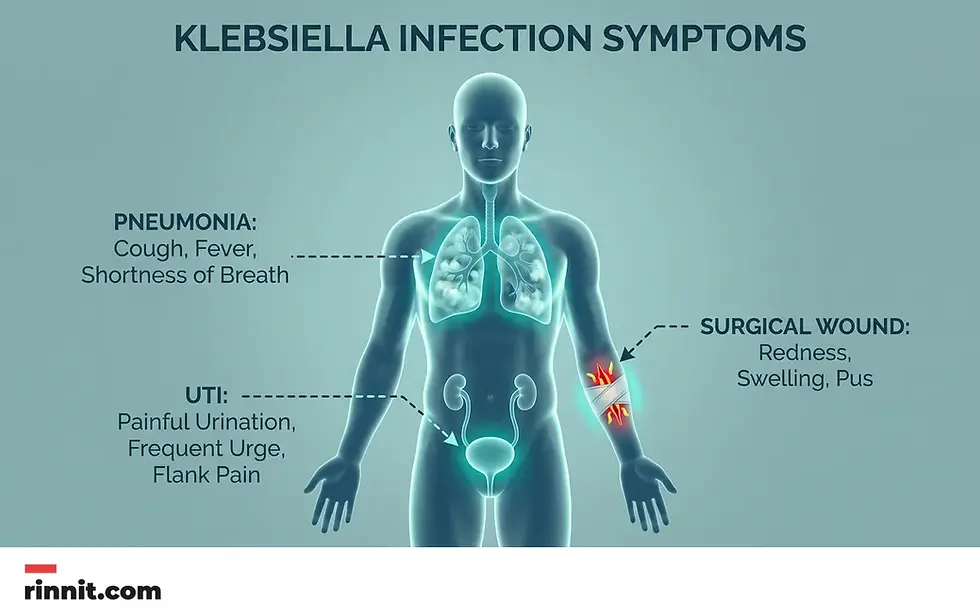
The symptoms of a Klebsiella infection vary significantly depending on which part of the body is affected. Because the bacteria can infect multiple systems, patients will rarely experience all possible symptoms at once. [1]
Infection Site | Common Symptoms |
Lungs (Pneumonia) | Persistent cough, shortness of breath, high fever, and chills. |
Urinary Tract (UTI) | Painful urination, difficulty peeing, and pelvic discomfort. |
Abdomen | Severe belly pain, which may indicate a liver abscess or peritonitis. |
Skin and Wounds | Redness, swelling, itching, or oozing pus at a surgical or injury site. |
Systemic (General) | Intense headache, sudden fever, and overall weakness. |
If you or someone you care for has recently undergone surgery or is using a medical device like a catheter, it is vital to monitor for these signs closely.
How does Klebsiella pneumoniae infection spread?
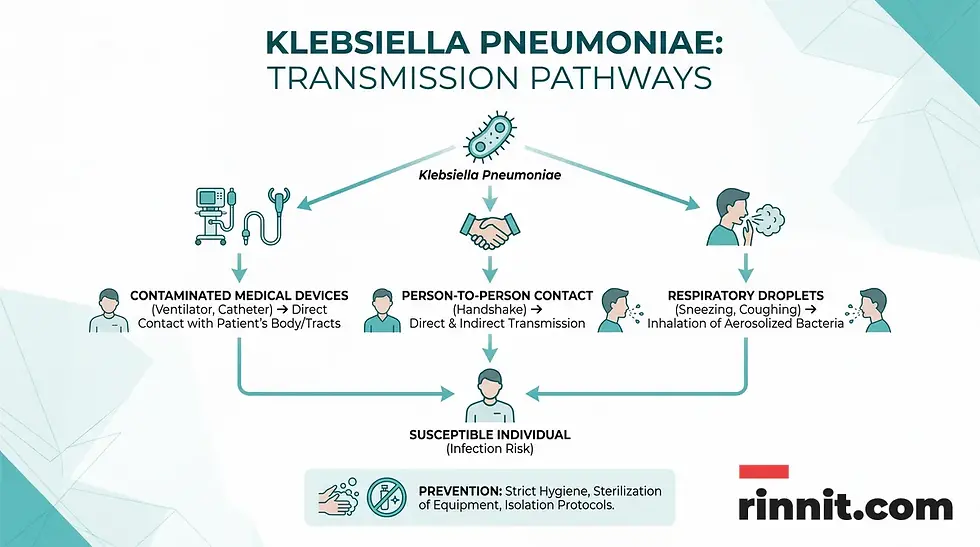
Klebsiella bacteria are resilient and can be transmitted through several different pathways. In healthcare environments, the most common route is through contaminated medical equipment, such as ventilators, urinary catheters, or intravenous tubes. [1]
Outside of hospitals, the bacteria can spread through direct skin-to-skin contact; Klebsiella does not spread through the air. It can also be found in contaminated soil or water in the environment. People with weakened immune systems, diabetes, or certain cancers are at a significantly higher risk of developing a severe infection if exposed.
How is Klebsiella pneumoniae diagnosed and treated?
To diagnose a Klebsiella infection, healthcare providers will test samples of blood, urine, or affected tissue to identify the presence of the bacteria. In cases where an internal infection is suspected, imaging tests like CT scans may be used to locate abscesses or assess organ damage. [1]
Treatment primarily involves the use of antibiotics. However, because Klebsiella is frequently resistant to many common medications, doctors often need to perform sensitivity tests to determine which specific antibiotic will be effective. In many cases, a combination of multiple antibiotics is required to successfully clear the infection. It is crucial to complete the entire course of medication as prescribed by your doctor to prevent the bacteria from developing further resistance.
How can Klebsiella pneumoniae infection be prevented?
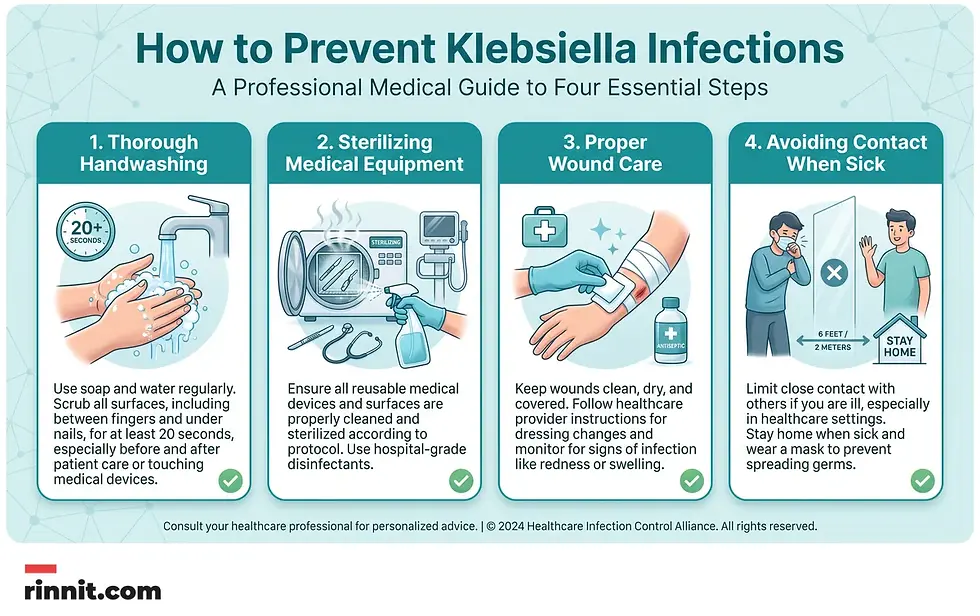
Preventing the spread of Klebsiella is a shared responsibility between healthcare providers and individuals. In hospitals, strict sterilization protocols and hand hygiene are the primary lines of defense. [1]
For individuals, the most effective prevention strategy is frequent and thorough handwashing, especially when caring for someone who is ill or has a compromised immune system. If you are using an invasive medical device at home, ask your provider for specific instructions on how to keep the device clean and how long it should remain in place. Covering your mouth and nose when sneezing and avoiding close contact with others when you are sick can also help limit the spread of the bacteria in the community.
Learn more. For more information on managing infections and maintaining a healthy immune system, visit Rinnit.com.
Frequently Asked Questions
Is Klebsiella pneumoniae contagious?
Yes, it can spread from person to person through direct contact, most commonly in healthcare settings via contaminated hands, surfaces or equipment. It does not spread through the air.
Can Klebsiella be cured?
Yes, most infections can be treated with the right combination of antibiotics, though antibiotic-resistant strains can make the process much more difficult.
What makes Klebsiella "hypervirulent"?
Hypervirulent strains are more aggressive and more likely to cause severe disease in otherwise healthy people, often spreading outside of hospitals.
Can I get Klebsiella from a swimming pool?
While the bacteria can live in water, properly maintained and chlorinated pools are unlikely to be a source of infection.
How long does treatment usually last?
The duration of treatment depends on the severity and location of the infection. Serious infections may need a longer course of antibiotics, sometimes lasting several weeks.
Is Klebsiella a "flesh-eating" bacteria?
While not its primary role, in rare and severe cases, it can cause necrotizing fasciitis, a condition that destroys skin and muscle tissue.
Should I be worried if I have Klebsiella in my gut?
No. It is a normal part of the human gut flora. It only becomes a problem if it enters other areas like the lungs or bloodstream.
Can diabetes increase my risk?
Yes, people with diabetes are at a higher risk for many infections, including Klebsiella, due to how the condition can affect the immune system.
What are the signs of sepsis?
Sepsis is a medical emergency. Signs include confusion, extreme shivering, high fever, and a rapid heart rate. Seek immediate care if these occur.
How can I protect my loved one in the hospital?
Ensure that everyone who enters the room, including visitors and staff, washes their hands or uses sanitizer before touching the patient or medical equipment.
Does Klebsiella cause permanent damage?
If treated early, most people recover fully. However, severe infections can lead to complications like tissue scarring or organ damage.
Can Klebsiella cause blindness?
In rare cases where the infection spreads to the eyes, it can cause severe inflammation and potential vision loss.
Is there a vaccine for Klebsiella?
Currently, there is no widely available vaccine for Klebsiella pneumoniae.
What should I do if my surgical wound looks red?
Contact your doctor immediately. Redness, swelling, and oozing are common signs of a post-surgical infection.
Why are some strains resistant to antibiotics?
Bacteria evolve over time to survive the drugs meant to kill them. Overuse or improper use of antibiotics contributes to this global health challenge.
Related Reading
References
Cleveland Clinic. Klebsiella pneumoniae. Cleveland Clinic. Last updated September 15, 2025. https://my.clevelandclinic.org/health/diseases/klebsiella-pneumoniae
Nagendra D, et al. Definitional ambiguity and the dual threat of hypervirulent Klebsiella pneumoniae infections: a systematic review and meta-analysis. Infection. 2026;54(2):645-681. PMID 41372726. https://doi.org/10.1007/s15010-025-02708-4
Martin RM, et al. Colonization, infection, and the accessory genome of Klebsiella pneumoniae. Front Cell Infect Microbiol. 2018;8:4. PMID 29404282. https://doi.org/10.3389/fcimb.2018.00004
Russo TA, et al. Hypervirulent Klebsiella pneumoniae. Clin Microbiol Rev. 2019;32(3):e00001-19. PMID 31092506. https://doi.org/10.1128/CMR.00001-19
Medical disclaimer
The information provided in this article is for educational purposes only and should not be considered medical advice. Always consult with a qualified healthcare provider for diagnosis and treatment of any medical condition.



Comments