Juvenile Idiopathic Arthritis (JIA): Symptoms, Types, Causes, Diagnosis & Treatment — Complete Guide

Updated: 2 days ago
Medically reviewed by Dr. Baraa Alnahhal, MD · Last reviewed: October 2026
Quick Answer
Juvenile idiopathic arthritis (JIA) is the most common type of arthritis in children younger than age 16, caused by an overactive immune system for unknown reasons. It causes persistent joint pain, swelling and stiffness that may last a few years or many. Some types cause slowed growth, joint damage or eye inflammation. Treatment eases symptoms and prevents long-term damage.
What the research says
About 1 in 8 children with JIA develops eye inflammation. A meta-analysis of 28 studies (22,834 children with JIA, 3,381 of whom developed uveitis) found an overall uveitis prevalence of 12.7% (95% CI 10.5–15.1%), and identified earlier age at JIA onset, a positive ANA test, and a higher ESR as risk factors. (Peng et al., Pediatr Rheumatol Online J, 2025) [3]
TNF-blocking biologics may help more children respond, but the evidence is still limited. A Cochrane review of nine trials (678 participants) found low-certainty evidence that TNF inhibitors increased the chance of a treatment response (pedACR70) within 16 weeks — 34% versus 14% with placebo (risk ratio 2.47, 95% CI 1.48–4.14; 4 studies, 245 participants) — while the effects on pain, function, and safety were very uncertain. (Cagnotto et al., Cochrane Database Syst Rev, 2025) [4]
At a Glance
Item | Summary |
What it is | The most common arthritis in children younger than 16; the immune system attacks its own cells |
Common signs | Limp, swelling (often knees), morning/rest stiffness, and sometimes fever, swollen lymph nodes, or rash |
3 main types | Oligoarticular (few joints), polyarticular (5+ joints), systemic (joints + fever/rash) |
Disease pattern | Comes in cycles — flare-ups followed by periods when symptoms improve |
Key complications | Eye inflammation (uveitis, often with no warning signs) and slowed growth |
Diagnosis | No single test; symptom review, 5 blood tests (ESR, CRP, ANA, RF, CCP), X-rays/MRI |
Treatment | NSAIDs, DMARDs (methotrexate), biologic agents, short-term corticosteroids, plus therapy and self-care |
Outlook | Most children have symptom-free periods with treatment; some outgrow JIA entirely; others need treatment into adulthood |
What Is Juvenile Idiopathic Arthritis?
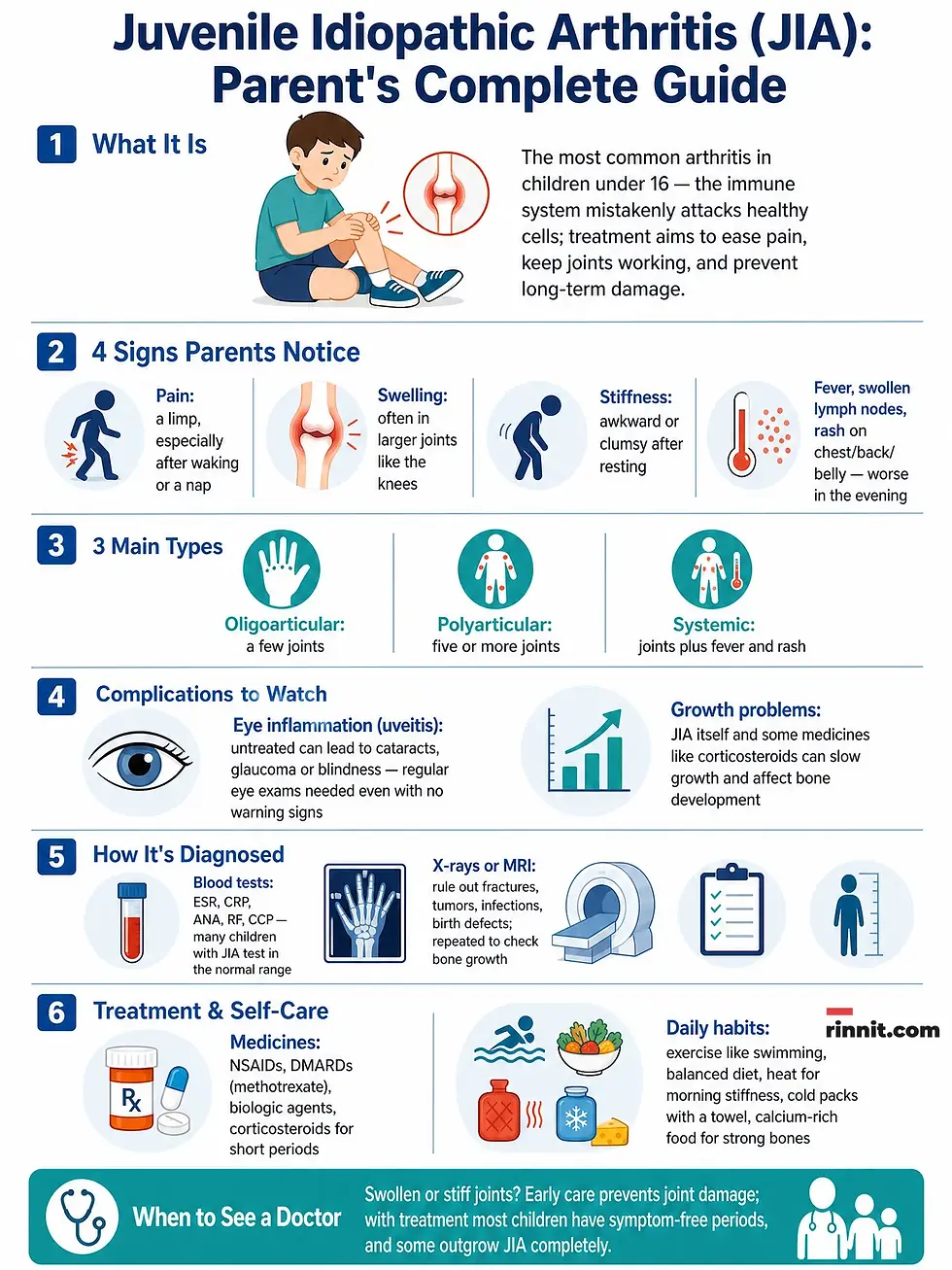
Juvenile idiopathic arthritis (JIA) is the most common type of arthritis in children younger than age 16. JIA is called idiopathic because the cause is not known. It happens when the immune system becomes overactive and causes inflammation in the body.
JIA can cause persistent joint pain, swelling, and stiffness. For some children, these symptoms may last only a few years. For others, they can continue for many years.

Certain types of JIA can lead to serious complications, including slowed growth, joint damage, and inflammation in the eyes. Treatment aims to lessen pain and swelling, help joints work better, and prevent long-term damage.
What are the four signs of juvenile idiopathic arthritis (JIA) that parents notice?
Juvenile idiopathic arthritis can affect one joint or many and often comes in cycles of flare-ups and calmer periods.
Sign | What you may notice |
Pain | Your child may not complain of joint pain, but you may notice a limp, especially first thing in the morning or after a nap. |
Swelling | This often happens in larger joints, such as the knees. |
Stiffness | Your child may seem more awkward or clumsy than usual, especially after sleeping or resting. |
Fever, swollen lymph nodes, and rash | In some cases, your child may have a high fever, swollen lymph nodes, or a rash on the chest, back, or stomach. These symptoms often get worse in the evening. |
JIA can affect one joint or many. Like other forms of arthritis, JIA often comes in cycles — there are times when symptoms get worse, called flare-ups, and times when symptoms improve.
The 3 Main Types of JIA
The type classification depends on your child's symptoms, how many joints are affected, and whether fever or rash are present:
Type | What it affects |
Oligoarticular JIA | Affects a few joints. |
Polyarticular JIA | Affects five or more joints. |
Systemic JIA | Affects the joints and causes symptoms throughout the whole body, such as fever or a rash on the back, belly, or chest. |
When to See a Doctor
It's important to see a healthcare professional early if your child has swollen or stiff joints. Waiting too long to start treatment can lead to joint damage, make the treatment less effective, and cause other health issues.
With treatment, most children have periods when they have no symptoms and the disease is not active. In some children, JIA goes away completely — no further treatment is needed. But for some, it may be a lifelong condition that requires treatment into adulthood.
What causes juvenile idiopathic arthritis (JIA)?
Juvenile idiopathic arthritis happens when the body's immune system mistakenly attacks its own healthy cells and tissues. It's not known why this happens, but both inherited traits and environmental factors may play a role.
What are the risk factors for juvenile idiopathic arthritis (JIA)?
Some forms of juvenile idiopathic arthritis are more common in girls than in boys. The reason for this is not fully understood, but researchers believe it may be linked to differences in hormones and the immune system.
Genetics also may play a role, as certain inherited traits can make a child more likely to develop JIA.
What are the complications of juvenile idiopathic arthritis (JIA)?
Juvenile idiopathic arthritis can lead to serious health conditions, but close symptom monitoring and regular medical care lower the risk. Watching your child's symptoms closely and getting regular medical care helps lower the risk of these complications:
Complication | Why it matters |
Eye issues (uveitis) | Some types of JIA can cause eye inflammation, also called uveitis. If not treated, this can lead to cataracts, glaucoma, or even blindness. Because eye inflammation often has no warning signs, children with JIA need regular checkups with an eye doctor, called an ophthalmologist. |
Growth problems | JIA can slow a child's growth and affect how bones develop. Some treatments, especially corticosteroids, can also slow growth. |
How is juvenile idiopathic arthritis (JIA) diagnosed?
Diagnosing juvenile idiopathic arthritis can be challenging because many conditions can cause joint pain. There's no single test to confirm JIA, but certain tests can help rule out other conditions with similar symptoms.
Your child's healthcare professional typically asks about symptoms and when they began. You may be asked about your child's family medical history, because autoimmune conditions like JIA can run in families. The provider may look for signs of trouble walking, moving the neck, or raising or closing the hands, and may check your child's eyes to look for issues that come from inflammation.
Blood Tests
Common blood tests your child's healthcare professional may order include:
Blood test | What it measures |
ESR (erythrocyte sedimentation rate) | Measures how quickly red blood cells settle at the bottom of a test tube. A higher number can mean there is inflammation in the body. |
CRP (C-reactive protein) | Measures inflammation using a different method than the ESR. |
ANA (antinuclear antibody) | Detects proteins often found in people with autoimmune diseases, including some types of arthritis. A positive ANA means a higher risk of eye inflammation — regular eye exams become important. |
RF (rheumatoid factor) | Looks for an antibody present in some children with JIA; it can signal a higher risk of joint damage. |
CCP (cyclic citrullinated peptide) | Looks for another antibody that, like RF, can be linked to a higher risk of joint damage. |
Keep in mind: many children with JIA have results in the standard range on these blood tests.
Imaging Scans
X-rays or MRI scans may be done to rule out other issues such as broken bones, tumors, infections, or birth defects. After diagnosis, imaging may be repeated from time to time to check how bones are growing and to look for signs of joint damage.
How is juvenile idiopathic arthritis (JIA) treated?
Juvenile idiopathic arthritis treatment aims to help your child stay active, take part in everyday life and avoid long-term health issues. Healthcare professionals often combine different treatments to:
Relieve pain and swelling.
Keep joints moving well and maintain strength and flexibility.
Prevent issues such as joint damage or growth delays.
Support your child's physical, emotional, and social development.
Most children with JIA need a mix of medicines and healthy habits, such as a balanced diet and exercise. The treatment plan depends on your child's age, the type of JIA they have, and how serious symptoms are.
Medications
Medicines are chosen to lessen pain, improve movement, and lower the risk of lasting joint damage:
Medicine class | What it does | Key notes |
NSAIDs (ibuprofen — Advil, Motrin IB; naproxen sodium — Aleve) | Lessen pain and swelling. | Side effects include stomach upset and, less often, kidney or liver issues. |
DMARDs (disease-modifying antirheumatic drugs; most common for children: methotrexate — Trexall, Xatmep) | Used when NSAIDs alone are not enough or joint-damage risk is higher. Slow the progress of JIA; may be taken with NSAIDs. | Possible side effects: nausea, low blood counts, liver issues, slightly higher infection risk. |
Biologic agents (biologic response modifiers) | Newer drugs that target the immune system in specific ways to lessen inflammation and protect joints. | TNF blockers include etanercept (Enbrel), adalimumab (Humira), golimumab (Simponi), and infliximab (Remicade). Others include abatacept (Orencia), rituximab (Rituxan), anakinra (Kineret), and tocilizumab (Actemra). May be used with DMARDs. All biologics raise infection risk. |
Corticosteroids (prednisone) | Quickly control symptoms, especially if inflammation affects areas outside the joints, such as the sac around the heart. | Because they can slow growth and increase infection risk, usually given for the shortest possible time. |
Therapies
Physical therapy — a physical therapist can teach your child exercises to keep joints flexible, maintain movement, and strengthen muscles.
Occupational therapy — an occupational therapist can show your child ways to protect their joints, suggest helpful equipment, and give tips for making daily tasks easier.
Counseling — mental health professionals help children cope with difficulties at home and at school that may come from living with JIA.
Joint supports or splints — devices that help protect joints and keep them in a healthy position for movement.
Surgery
In very serious cases, surgery may be needed to improve joint function or to treat cataracts.
How can parents help a child with juvenile idiopathic arthritis (JIA) with self-care?
Parents and caregivers can help children with juvenile idiopathic arthritis learn self-care habits that lessen symptoms and protect joint health.
Habit | How it helps |
Regular exercise | Staying active keeps muscles strong and joints flexible. Swimming is a great choice because it's gentle on the joints. |
Eating a healthy diet | Some children with JIA may lose their appetites, while others gain weight because of medicines or less activity. A balanced diet helps keep weight in a healthy range. |
Using cold or heat | Morning stiffness often improves with warmth — a heating pad or warm bath or shower. Cold packs can lessen swelling and discomfort after physical activity; always place a thin towel between a cold pack and your child's skin. |
Getting enough calcium | JIA, corticosteroid use, and less physical activity can increase the risk of weak bones. A calcium-rich diet helps keep bones strong. |
How can families cope with juvenile idiopathic arthritis (JIA) and find support?
Family support plays an important role in helping children manage juvenile idiopathic arthritis. Parents can take these actions:
Treat your child as much like their siblings and peers as possible.
Let your child share feelings, including frustration or anger about having JIA. Reassure your child that it's not their fault.
Encourage safe physical activities, following the advice of your child's healthcare team.
Communicate with teachers and school staff so they understand your child's needs and any necessary accommodations.
How should you prepare for a juvenile idiopathic arthritis (JIA) appointment?
If your child's pediatrician or family healthcare professional suspects JIA, you may be referred to a doctor who specializes in arthritis, called a rheumatologist, for diagnosis and treatment planning.
What You Can Do
Before the appointment, it can help to make a list that includes:
A detailed description of your child's symptoms.
Any past medical concerns your child has had.
Medical conditions that run in your family.
All the medicines and dietary supplements your child takes.
Your child's vaccination history.
Questions you want to ask.
What to Expect From Your Doctor
Your child's healthcare professional may ask questions such as:
Which joints seem to be affected?
When did the symptoms start? Do they come and go?
What makes the symptoms better or worse?
Is stiffness worse after resting or sleeping?
Frequently Asked Questions
What is juvenile idiopathic arthritis?
Juvenile idiopathic arthritis (JIA) is the most common type of arthritis in children younger than age 16. It happens when the immune system becomes overactive and attacks the body's own healthy cells and tissues, causing joint pain, swelling, and stiffness. It is called "idiopathic" because the exact cause is not known.
What are the first signs of JIA in a child?
Children with JIA may not complain of joint pain, so parents often notice a limp — especially first thing in the morning or after a nap. Other early signs include swelling in larger joints like the knees, awkwardness or clumsiness after resting, and sometimes a high fever, swollen lymph nodes, or a rash on the chest, back, or belly that gets worse in the evening.
How is JIA different from adult arthritis?
JIA is specific to children under 16 and comes in its own types, including systemic JIA, which causes whole-body symptoms like fever and rash in addition to joint problems. Children can also face complications adults with arthritis rarely encounter, such as slowed growth and eye inflammation without warning signs.
Can juvenile idiopathic arthritis go away?
In some children, JIA goes away completely and no further treatment is needed. With treatment, most children have periods when they have no symptoms and the disease is not active. But for some, it may be a lifelong condition that requires treatment into adulthood.
Why do children with JIA need eye exams even when their eyes seem fine?
Some types of JIA can cause eye inflammation, called uveitis, which often has no warning signs. Untreated, uveitis can lead to cataracts, glaucoma, or even blindness. That is why children with JIA need regular checkups with an ophthalmologist (eye doctor).
Is there a single test for JIA?
No — there is no single test to confirm JIA, and many children with JIA have blood tests in the standard range. Diagnosis combines a symptom review, family history, five blood tests (ESR, CRP, ANA, RF, and CCP), and X-rays or MRI to rule out other conditions such as fractures, tumors, infections, and birth defects.
What does treatment for JIA involve?
Treatment usually combines medicines — NSAIDs, DMARDs like methotrexate, biologic agents, and short courses of corticosteroids — with physical and occupational therapy, counseling, and joint supports, plus daily habits like exercise, a balanced diet, heat and cold, and enough calcium. The goal is to keep the child active and prevent long-term joint damage and growth delays.
Conclusion
Juvenile idiopathic arthritis can feel overwhelming for a parent — a young child dealing with pain that comes and goes, medicines with side effects, and the worry about eyes and growth. But this guide points to a hopeful reality: JIA is very treatable. With early care, most children enjoy long symptom-free periods, stay active in everyday life, and some outgrow the condition entirely. The practical essentials are simple to remember: watch for the limp and the swollen knee, don't wait to get care, keep up with the ophthalmologist visits even when eyes look fine, and lean on the full care team — rheumatologist, therapists, and school staff. This guide has covered the four signs parents notice, the three types of JIA, the two complications to watch, the five blood tests and imaging, and the full treatment and self-care toolkit.
Explore more condition guides at rinnit.com.
What are your next steps after reading about juvenile idiopathic arthritis (JIA)?
Next steps after reading about juvenile idiopathic arthritis include sharing your thoughts in the comments and signing up for new health guides, while seeking a physician's advice for medical questions.
Share your thoughts — comment below and tell us which condition you'd like us to cover next.
Stay updated — sign up on rinnit.com for new health guides delivered to your inbox.
This article is for general information only and is not a substitute for professional medical advice, diagnosis, or treatment. Always seek the advice of your physician or other qualified health provider with any questions you may have regarding a medical condition.
Related Reading
Learn more in our guide to Rheumatoid Factor (RF) Test: Normal Range and What a Positive Result Means.
References
Mayo Clinic Staff. Juvenile idiopathic arthritis (JIA) - Symptoms and causes. Mayo Clinic. May 28, 2026. https://www.mayoclinic.org/diseases-conditions/juvenile-idiopathic-arthritis/symptoms-causes/syc-20374082
Mayo Clinic Staff. Juvenile idiopathic arthritis (JIA) - Diagnosis and treatment. Mayo Clinic. May 28, 2026. https://www.mayoclinic.org/diseases-conditions/juvenile-idiopathic-arthritis/diagnosis-treatment/drc-20374088
Peng X, et al. The incidence and risk factors of uveitis in children with juvenile idiopathic arthritis (JIA): a meta -analysis and literature review. Pediatr Rheumatol Online J. 2025;23(1):71. PMID 40660199. https://doi.org/10.1186/s12969-025-01122-2
Cagnotto G, et al. Tumor necrosis factor (TNF) inhibitors for juvenile idiopathic arthritis. Cochrane Database Syst Rev. 2025;2(2):CD013715. PMID 39976227. https://doi.org/10.1002/14651858.CD013715.pub2



Comments